How to select a pump
Pump selection starts with flow and total dynamic head, then works through viscosity, hygiene, temperature, the seal, the motor and what the medium will not tolerate.
Flow and head are the easy part. The rest decides the build, and most pumps that fail early were specified without it.
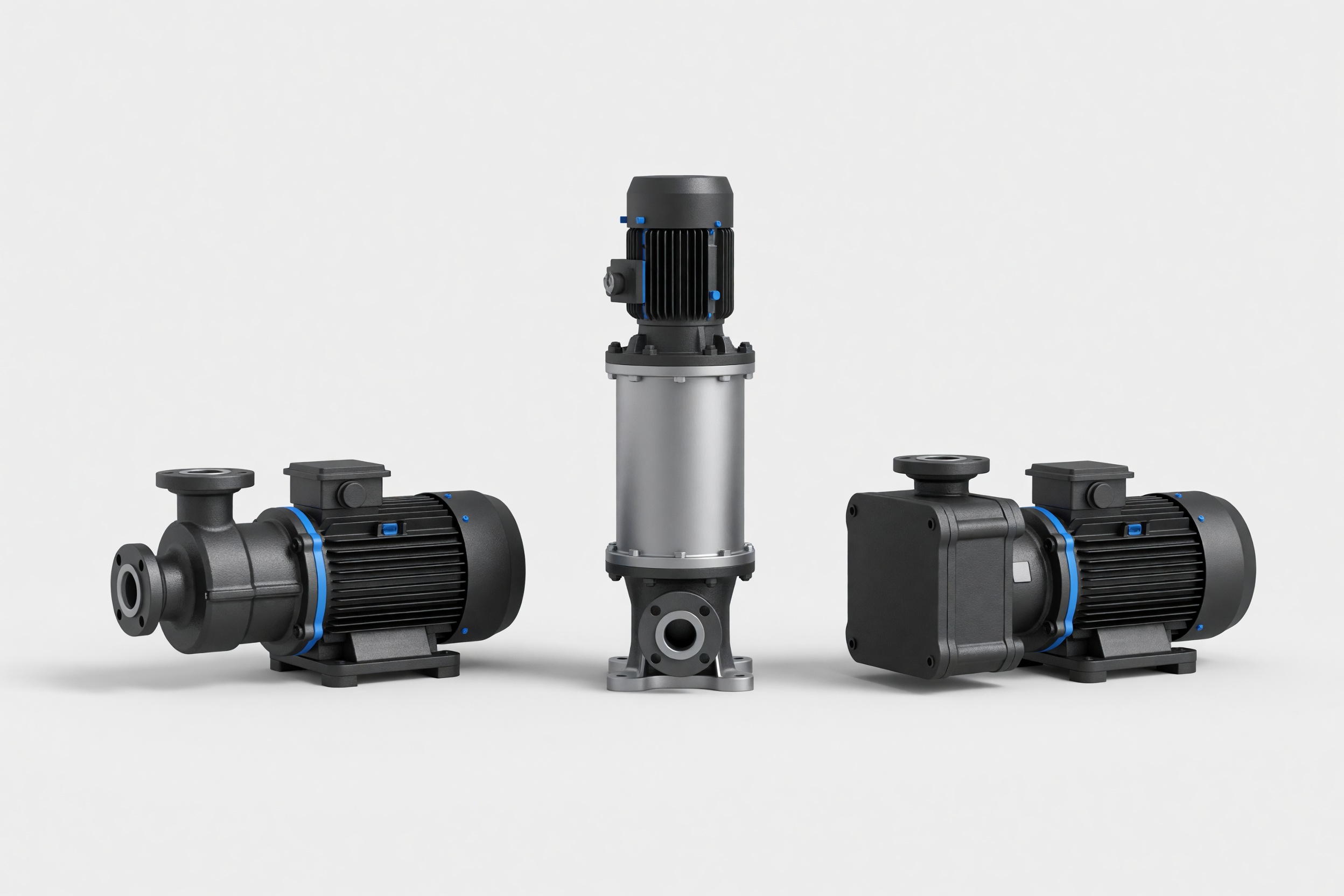
Most of what goes wrong was decided at specification
The pump is rarely the problem. The fault that lands on this desk most often is a pump specified as though the pipework and the suction tank belonged to somebody else, and frequently they genuinely did: installed by others, or inherited with the site. What then presents as a pump fault is a system fault.
The second pattern is narrower than it looks. Customers understand their own application. What they have not always worked through are the specifics that decide the build: the wetted materials, the sealing arrangement and elastomers, and the motor and electrical side. The flow and the head always arrive with the enquiry. The rest of it has to be asked for.
None of that is a criticism of the reader. A good site engineer has to be expert in a lot of things and pumps are rarely one of them. The job is asking the right questions, not expecting the right brief. What follows is the order we ask them in on the phone. Most applications do not need all eight.
Start with the flow, then the pipework
The duty comes from the application, not from any pump. These three questions fix it, and until they are answered a performance curve tells you nothing.
Fix the flow rate
Flow is the one figure a customer always has. Take it in m³/h or l/s, pick
one unit for the job and stay with it, and take the real demand rather than a
round number that feels safe. Where demand varies through the day, say what the
range is. A variable-speed drive is a better answer to a varying duty than a
bigger pump.
Work out the total dynamic head
Take the static suction head and the required discharge head, and take the difference between them. Then add the losses: pipe length, pipe bore, and how many bends and valves sit in the run. Those two parts together are the total dynamic head, in metres, and that is what you select against. Friction losses grow with flow, so work them out at the flow you have just fixed, not at rest.
Ask whether it is water, or as water
Viscosity moves the selection more than anything else on this list, and the question that gets a real answer is whether the medium is water or behaves as water. Then ask how thick it gets and how much it varies. Design for the worst case, not the typical one. A medium that pumps as water when the line is warm and stiffens overnight is sized on the overnight figure.
Then let the medium decide the build
With the duty fixed, the remaining questions specify the pump rather than size it. These are the ones an enquiry rarely mentions and the ones that decide whether the pump survives the medium.
Hygienic, or not?
This sets the wetted materials before anything else does. Food, dairy and pharmaceutical duties want stainless steel, a surface finish that cleans, and a build that drains. A wastewater or general transfer duty is usually fine in cast iron. Answering it late is expensive, because it invalidates the pump you had already chosen.
Take the temperature
Temperature, together with the medium, drives the sealing arrangement more than the pump body does. On the food side it is the sharp end: frying and other high-temperature processes make sealing difficult and narrow the choice of pump quickly. State the process temperature and the cleaning temperature separately. They are rarely the same, and the seal has to survive both.
Choose the seal, then ask what a seal failure would cost
Single, flush, double or cartridge is a decision about consequence as much as duty. Ask what a seal failure would do to the product, and to the room it happens in. The seal is the weak point in almost any pump. Where the choice is genuinely difficult, the seal manufacturer's advice is the one to take, and saying so is the practice here rather than an admission.
Read the power and the motor off the curve
Once the duty point is fixed, the absorbed power comes off the performance curve and the motor rating follows it. Read the efficiency and the NPSHr at the same point. See reading a performance curve for what else that chart tells you. If the pump sits in a hazardous area, state the zone and the medium here, so the pump and motor you specify are certified for use in that zone under the ATEX Directive 2014/34/EU.
Ask what the medium will not tolerate
Shear-sensitive product and abrasive media both want pumping slowly. That is a selection constraint and it never appears on a performance curve, which is exactly why it gets missed. A flocculated sludge, a food product that has to keep its solids intact, and a grit-laden medium all argue for a larger pump turned down rather than a small one worked hard.
Where centrifugal stops and positive displacement starts
The boundary between the two families sits at roughly 3–4% solids, as a trade rule of thumb. Below that, a centrifugal pump is the efficient answer for thin media at moderate head, and it is cheaper to buy and cheaper to run. Above it, move to positive displacement. Viscosity drives the same boundary, but solids content is the number people actually have to hand, which is why the rule gets stated that way.
Positive displacement is the forgiving side of the line. A rotary lobe pump or a progressive cavity pump will move broadly whatever you can get into it, from water through to thick food product or sludge, and with the right seal selection it tolerates a degree of cavitation. You get vibration rather than destruction. The flow is near-constant too. A centrifugal's flow swings as system pressure changes, where a positive displacement pump holds its rate to within a few per cent and takes the pressure change on the motor, as long as the power is there.
| Centrifugal | Positive displacement | |
|---|---|---|
| Solids | Up to roughly 3–4% | Above that, and thicker |
| Viscosity | Thin media, water or as water | Water through to sludge or thick food product |
| Flow as pressure changes | Swings with the pressure | Holds to within a few per cent |
| Dry running | Costs you the mechanical seal | Destroys a progressive cavity stator |
| Cost | Cheaper to buy and to run | Dearer, and the wet end wears |
What you give up is capital cost and a wet end that wears. So do not reach for positive displacement on a duty a centrifugal will do well. The trade-off runs both ways.
Oversizing is margin stacking, and nobody in the chain is careless
Oversizing is the default mistake in pump selection, and it arrives through a chain that looks reasonable at every link. The customer states a flow rate. The consultant adds margin, reasonably, for a future duty the site might grow into. The main contractor adds margin. The subcontractor doing the installation adds a bit more flow, or a bit more pressure. Every step is defensible on its own and nobody in that chain is being careless. The pump that comes out of the far end is far too big.
Two things then happen, and they are not independent.
The first is economics. Power rises with flow and with pressure, so stacked margin does not cost you a little, it costs you a motor size. A 3 kW application ends up with an 11 kW motor on it, and it stays uneconomical for the whole life of the installation. Those figures are an illustration of how the arithmetic runs, not a measurement of a particular job.
The second is hydraulics, and it is the worse of the two. A centrifugal pump sized
for a flow the system cannot deliver runs off the end of its performance curve,
where it needs back pressure it is not getting. Size for 10 m³/h when the tank
will only give you 5 m³/h and you are pumping air. That is cavitation. It damages
the pump, fails seals, and puts vibration and noise into the pipework of a factory
that may be sensitive to both.
NPSHa has to exceed NPSHr at the duty point
Cavitation is almost always a suction-conditions problem rather than a theory problem, which is why an oversized pump and a starved suction line arrive at the same failure. The pump needs a certain net positive suction head to keep the medium above its vapour pressure at the impeller eye. That is NPSHr, and you read it off the curve at your duty point. What the installation gives it is NPSHa. NPSHa has to exceed NPSHr at that point, with a margin between them. When it does not, you cavitate.
Almost every time, the cause is one of two things: a suction tank that is too small, or a suction head that is too small. A long suction lift, a restricted inlet and a hot medium all pull NPSHa down. The fixes are mostly on the system side rather than the pump side. Raise the source, shorten and open out the suction line, or lower the pump. Only when none of that is available do you go looking for a pump with a lower NPSHr, and you will pay for it elsewhere in the selection.
That is why a pump cannot be selected in isolation from the system it sits in. Tell us your duty and we will size it: flow, head, medium and connection, plus what the suction side actually looks like. We will tell you what the duty needs, including the times when that is a change to the pipework rather than a different pump.
Frequently asked
What is the most important factor in pump selection?
The duty point, which is the flow rate and the total dynamic head the pump has to work against. Every other choice, from the pump family to the motor rating, follows from it, so fix the flow and the head accurately before you look at a single pump.
How do I choose between a centrifugal and a positive displacement pump?
Solids content is the first test, at a trade rule of thumb of roughly 3–4%. Below that a centrifugal pump is the efficient choice for thin media at moderate head, and above it, or where the medium is viscous, shear-sensitive or has to be dosed accurately, use positive displacement.
What is NPSH and why does it matter for pump selection?
NPSH is net positive suction head. NPSHa is what the installation provides at the pump inlet and NPSHr is what the pump needs at its duty point, and NPSHa has to exceed NPSHr with a margin between them, or the pump cavitates and pits its own impeller.
Why is an oversized pump a problem?
An oversized pump costs you twice. The motor ends up a size or two larger than the duty needs, so the installation runs uneconomically for as long as it is in service, and a centrifugal pump asked for more flow than the system can deliver runs off the end of its curve and cavitates.
What information do you need to select a pump?
Flow, head, medium and connection to begin with, then the suction arrangement, the temperature, whether the duty is hygienic, and anything the medium will not tolerate. Send what you have if you do not have all of it, and the questions get you the rest.