
About Calpeda
Calpeda has made pumps since 1959, from a main site at Montorso Vicentino in northern Italy. The company says that site covers over 35,000 m² and that the entire product range is produced there; a second Italian plant sits at S. Vito al Tagliamento, in Pordenone. Behind them are 14 branches worldwide and a network of service centres and distributors. Since July 2022 Calpeda has been part of Wateralia, Ambienta's water-pump platform, alongside Caprari.
Calpeda builds to catalogue ranges rather than engineering one-offs, and that shapes what you get. The hydraulics are standard, the performance curves are published, and the same wear parts sit behind a large installed base. For a building services or general transfer duty that is what you want: a pump you can size off a curve, order without waiting on a special, and still get a service kit for years after it went in.
The honest scope of the range is water and light dirty water. Calpeda does not build sludge pumps or hygienic process pumps, and we will not specify it for either. Past the rough 3–4% solids rule of thumb, or once viscosity climbs, a centrifugal stops being the right selection and you want positive displacement. On those duties we will point you at a different technology, and often a different maker.
The Calpeda range we supply
View all →End suction and multistage centrifugal. The NM and the NMS are the same flanged cast iron end suction pump, both to EN 733, with two different drive ends, so the coupling is what you choose between, not the ports. On the NM the motor shaft is extended straight into the pump and carries the impeller directly, up to 22 kW. The NMS puts those hydraulics behind a bracket built to take a standard motor, on a stub shaft with an integrated thrust bearing, which is the version you want if you would rather source or rewind an off-the-shelf motor later than order a special. The NM4 and NMS4 are the four-pole versions of each, running at around 1450 rpm instead of 2900 rpm: slower, quieter, and easier on NPSHr, which is what you want when the suction conditions are marginal. The BNM(S) is the same pump with the casing and lantern bracket in bronze, for mildly aggressive and marine water.
Two ranges sit outside that family. The MXH is a horizontal multistage in chrome-nickel stainless, which Calpeda publishes at 1–66 m³/h and 5.5–97 m, for clean liquids without abrasives that are non-aggressive to stainless. The peripheral range is a regenerative turbine design, for low flows on clean liquids at heads to around 40 m. Neither will tolerate solids.
Submersible drainage and sewage. Here the impeller decides the pump, not the badge. The ranges split by duty and by impeller type.
| Range | Duty | Impeller |
|---|---|---|
| GX | Drainage, light dirty water | Single channel |
| GXR | Drainage | Open free-flow |
| GXV | Drainage | Vortex |
| GQR | Drainage | Open |
| GM | Sewage and drainage, cast iron | Single channel |
| GQN | Sewage | Single-channel non-clog |
| GQS | Sewage | Free-flow vortex |
| GQV | Sewage | Vortex |
| GQG | Sewage | Grinder |
Every impeller in that table costs you something. A vortex keeps the solid away from the vane and passes more of what arrives, and you pay for that in efficiency and power for the life of the installation. A single channel is the more efficient pump, but it has a defined passage, and rag will bridge a defined passage sooner or later. A grinder cuts solids so a small-bore rising main survives, and it will not save you indefinitely from wipes. If a station is ragging repeatedly, the answer is usually screening or maceration upstream rather than another pump, and we would rather say that than sell you the swap.
Borehole. The SD is a multistage submersible borehole pump, for water abstraction and well duties.
Packaged sets. The e-idos is a pressure boosting set with integrated electronics, for building services water pressure. The AUE is a firefighting set.
Send us the flow rate, the total dynamic head, the medium and whether there are solids in it, and we will pick the range and the impeller.
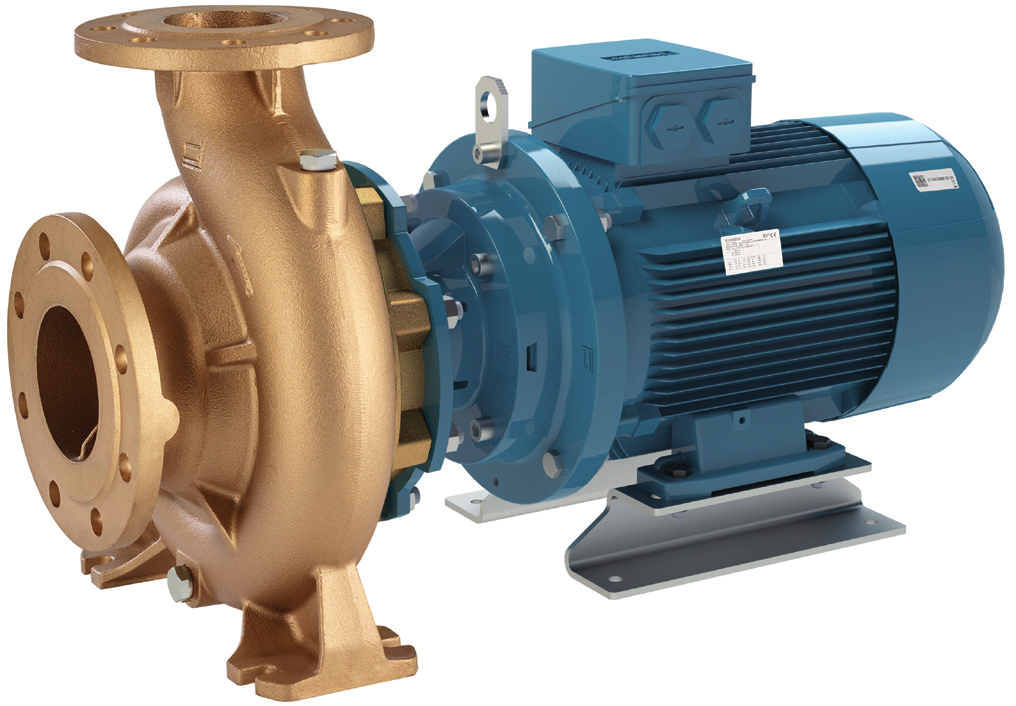
Calpeda BNM, BNMS, BNM4 and BNMS4 are the bronze versions of the NM, NMS end suction range, on EN 733 dimensions and rated to 10 bar.
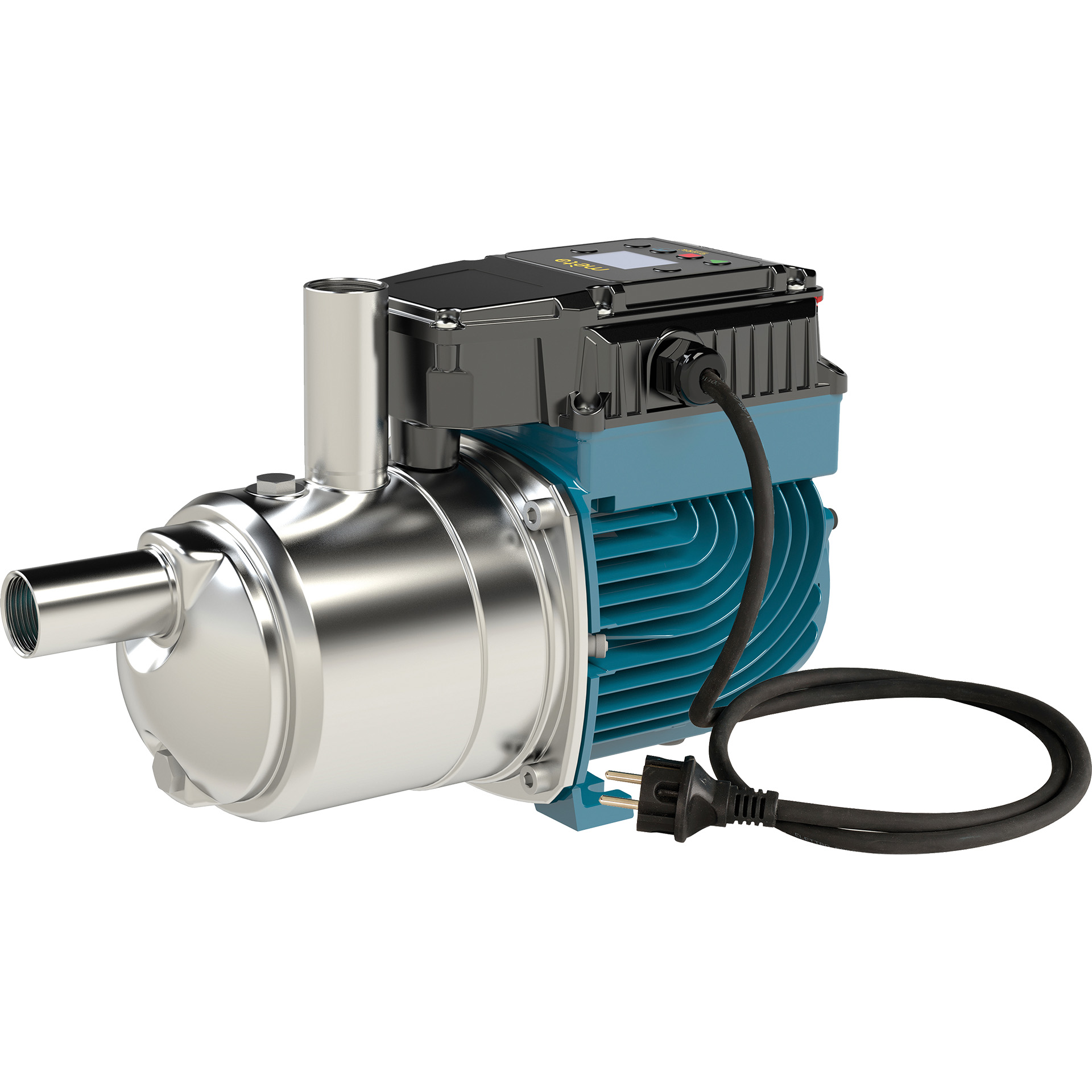
Calpeda e-idos pumps carry the pressure transducer and control on board. MÈTA, E-MXP, E-NGX and E-MPS, to 8 m³/h and 66.5 m per pump.
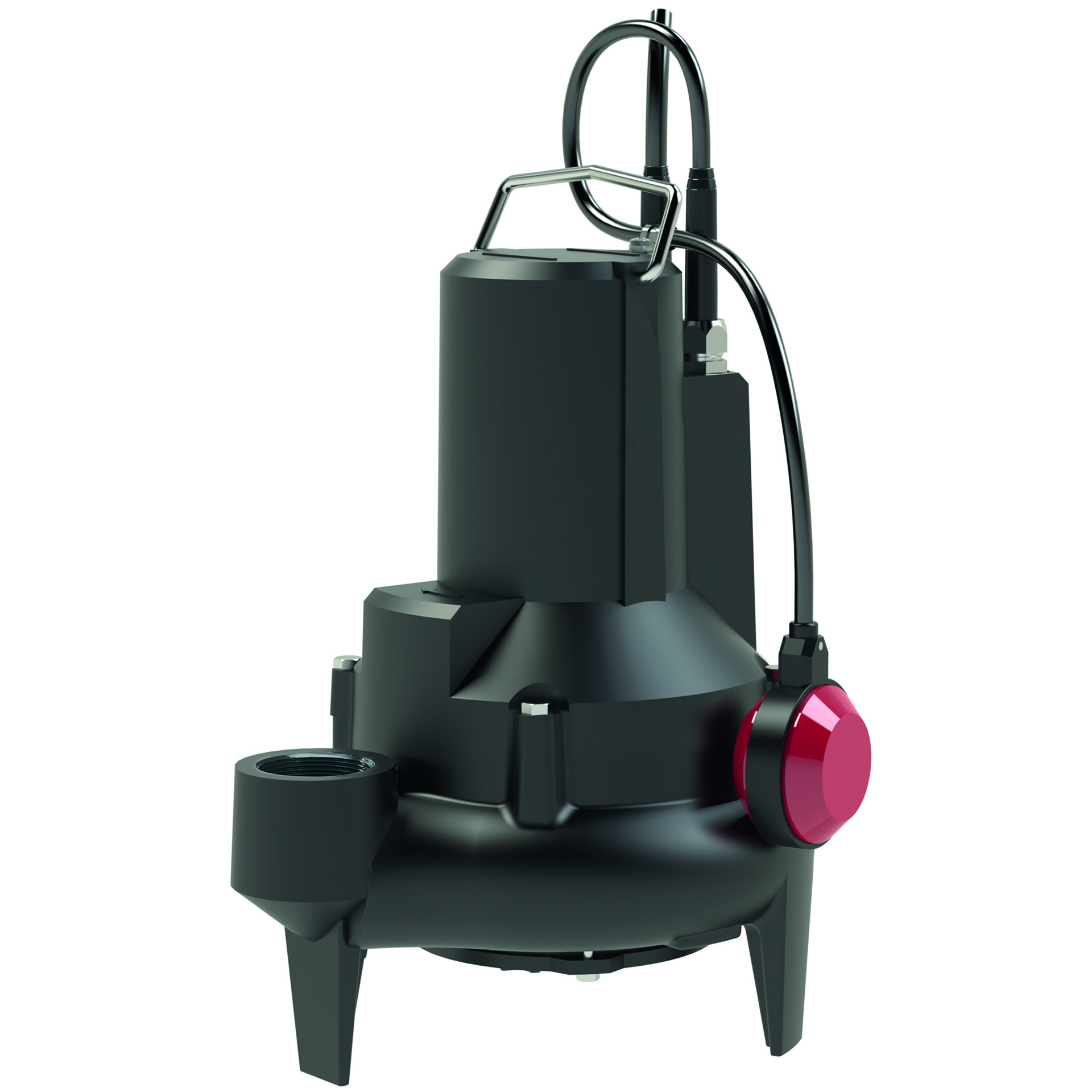
The Calpeda GM 50 is a cast iron submersible sewage pump. The GMC single-channel impeller passes 45 mm solids, the GMV free-flow vortex 50 mm.
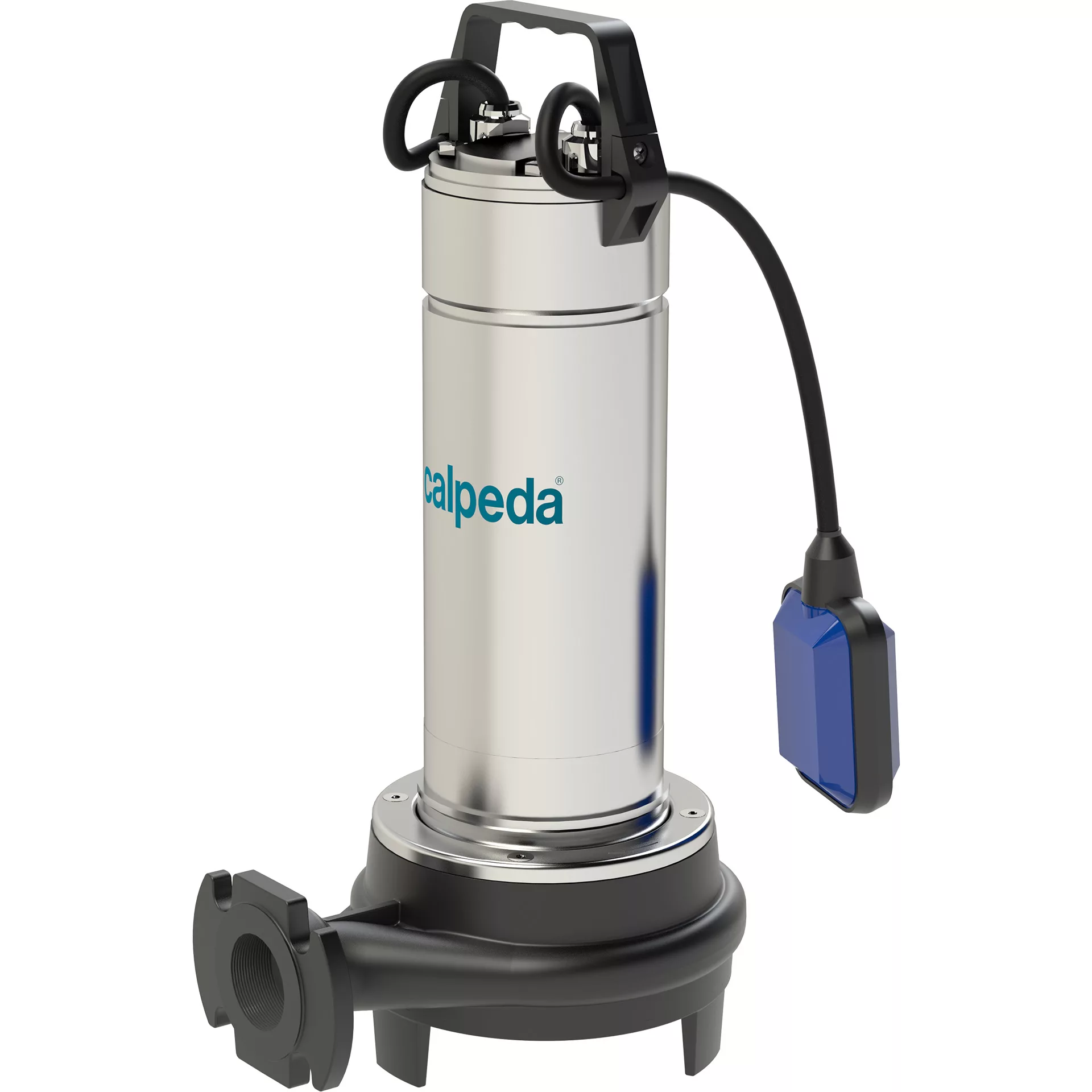
The Calpeda GQG cuts rag, paper and textile at the inlet and pumps it, giving 25 m of head on a DN32 line from 0.9 to 1.5 kW.
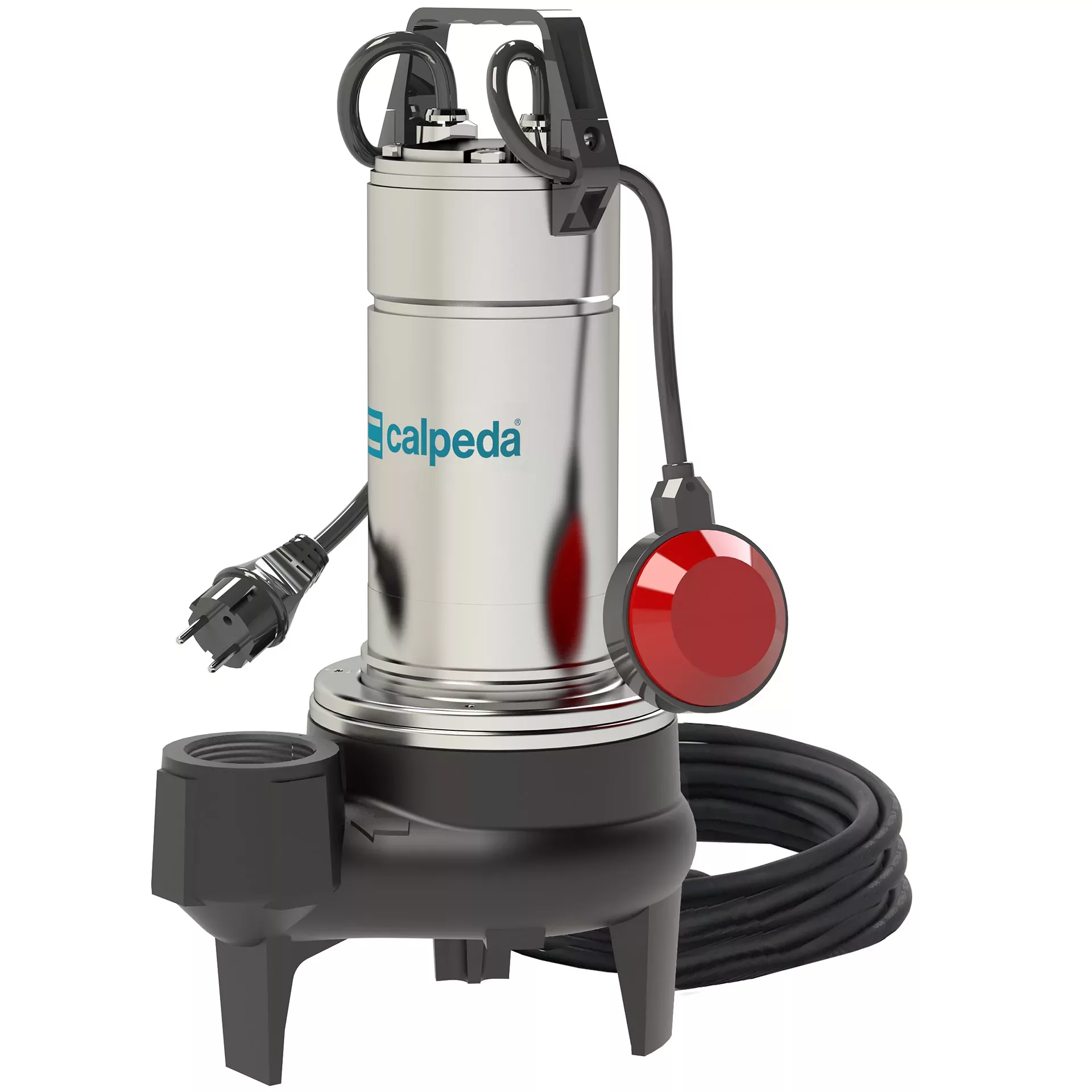
The Calpeda GQN is a cast iron submersible sewage pump with a channel impeller, passing 50 mm solids to 48 m³/h and 16.4 m on a G 2 discharge.
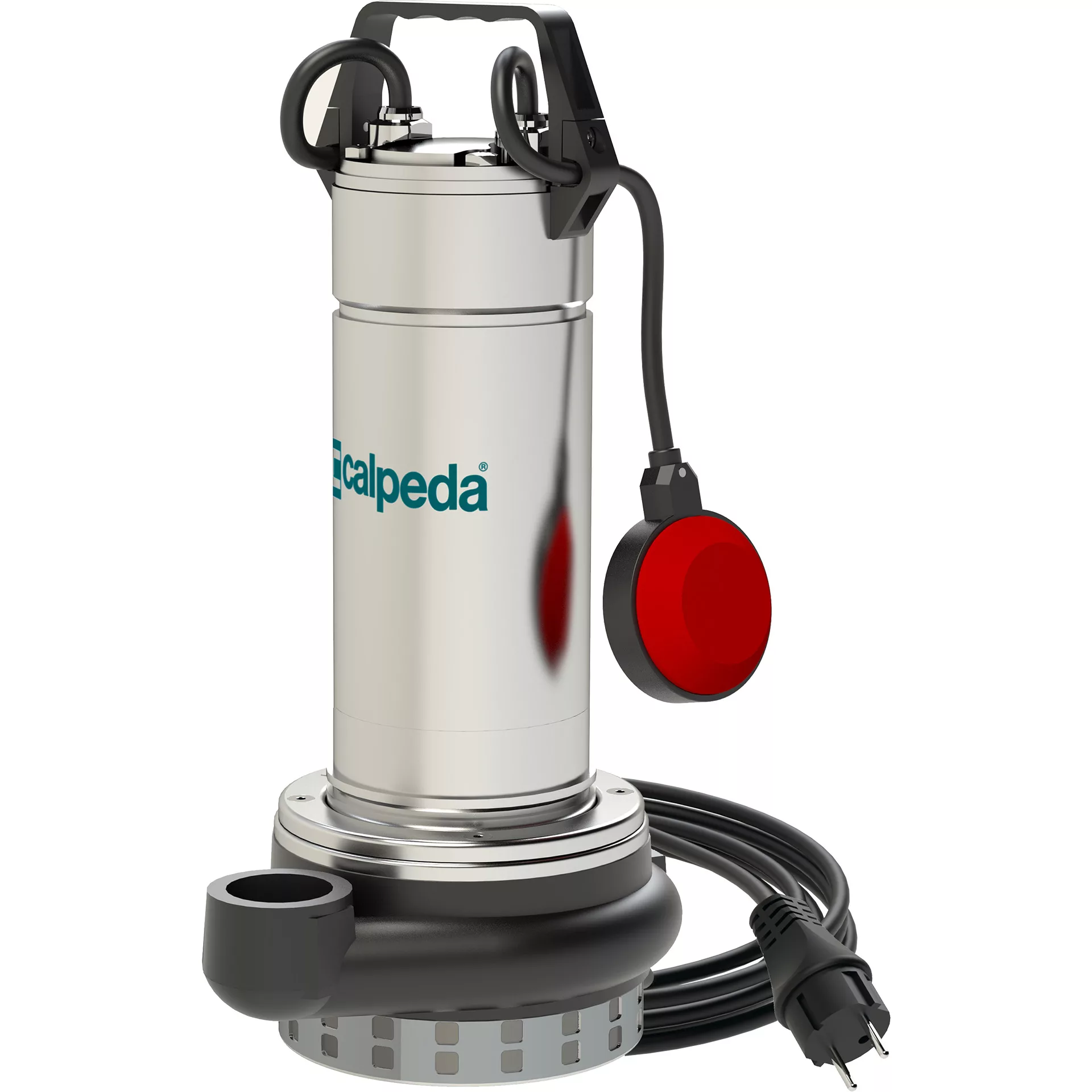
The Calpeda GQR is a submersible drainage pump with an open impeller and a stainless strainer, passing 6 or 10 mm solids to 52 m³/h and 30.2 m.
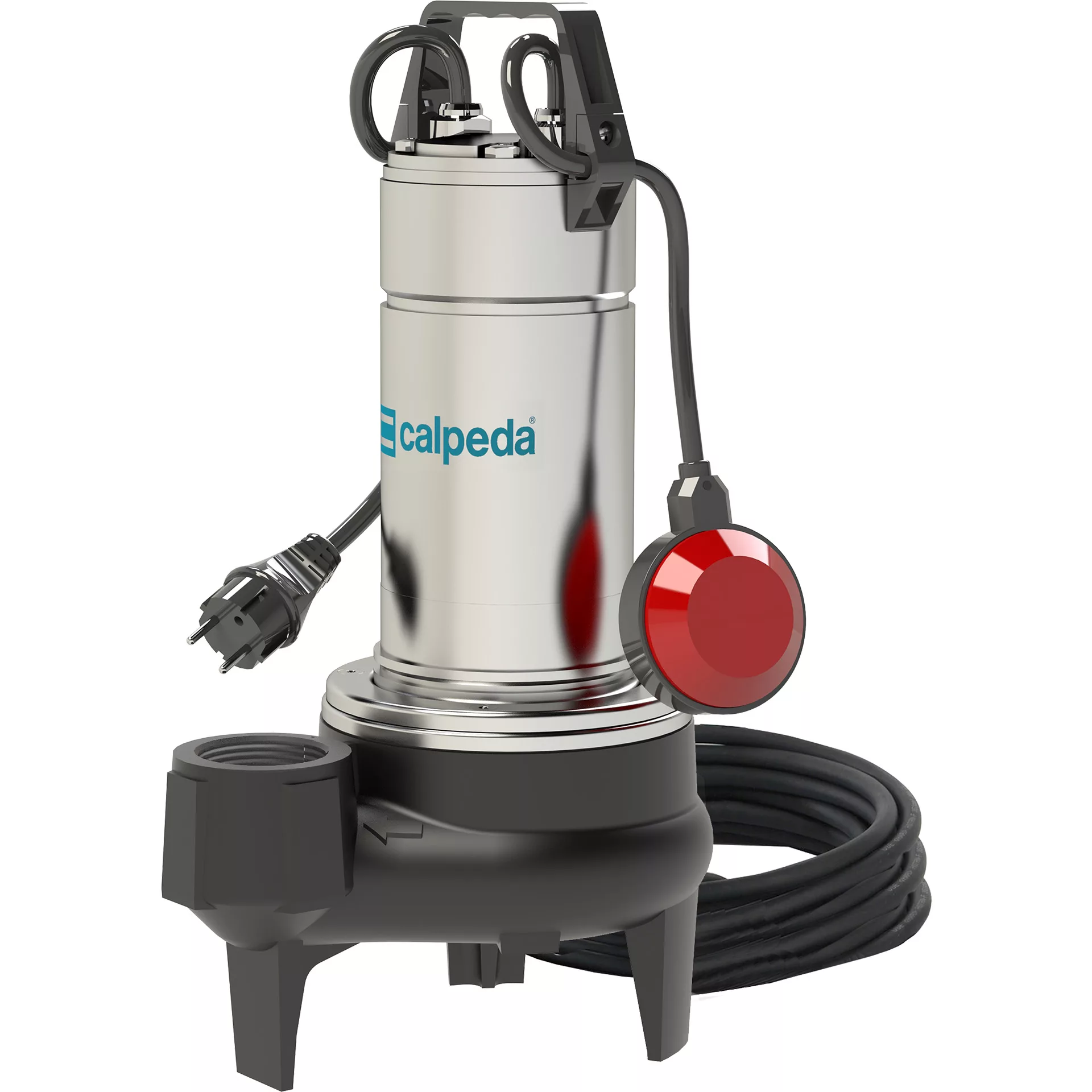
The Calpeda GQS is a submersible sewage pump with a free-flow vortex impeller, passing 40 or 50 mm solids to 36 m³/h and 15 m on a vertical port.
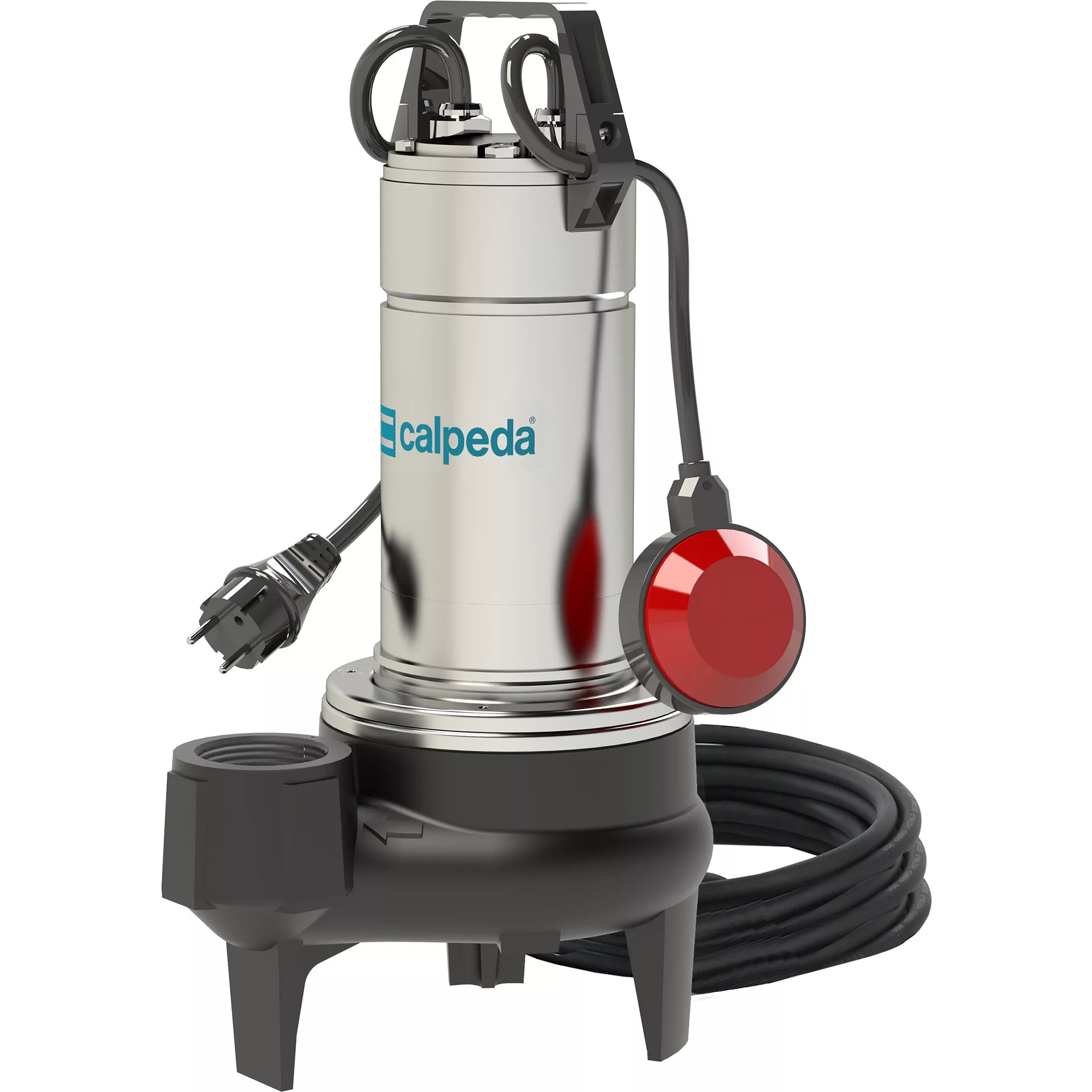
The Calpeda GQV is a free-flow vortex submersible sewage pump for rag and fibre, passing 50 or 65 mm solids to 57 m³/h, from 0.55 to 2.6 kW.
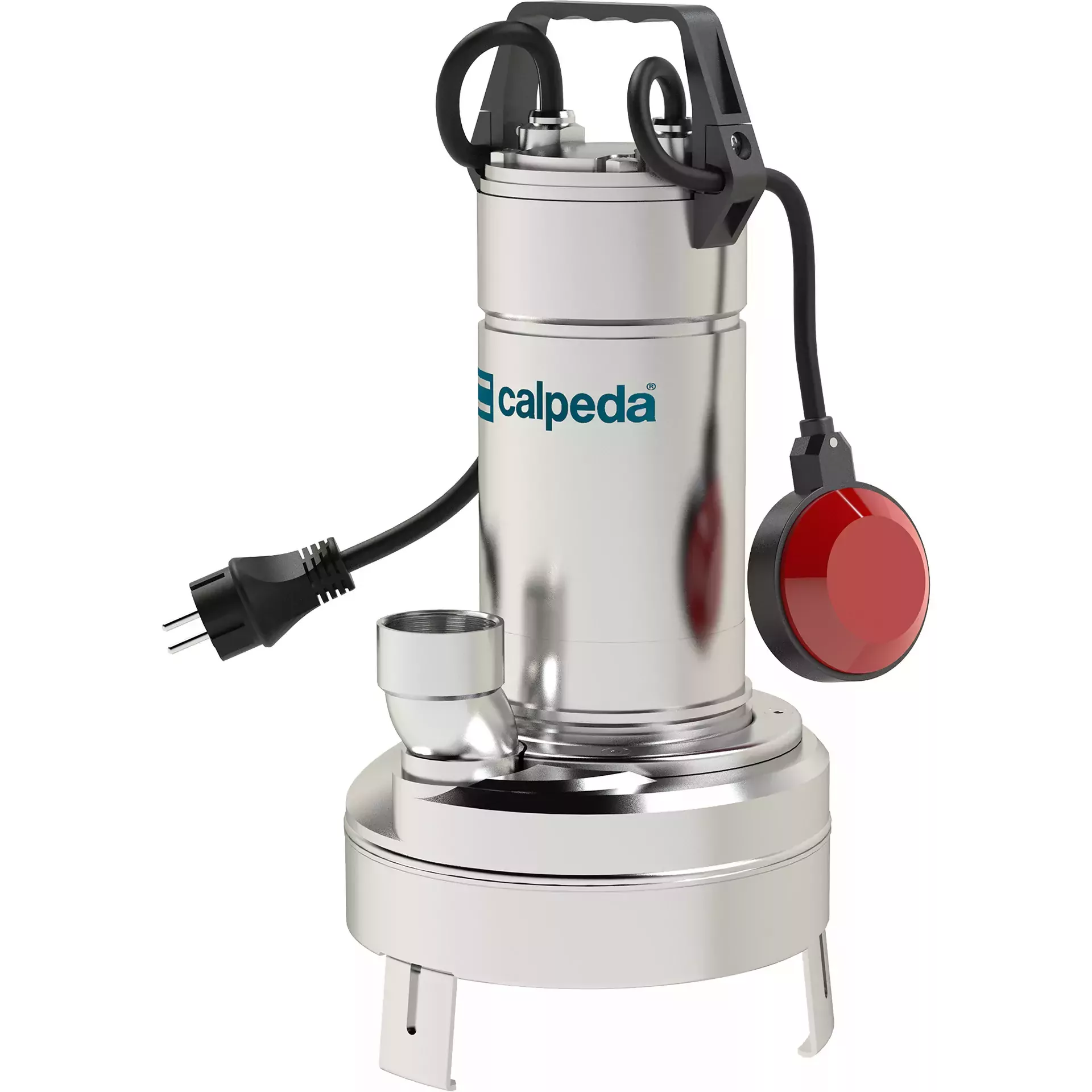
The Calpeda GX 40 is an AISI 304 submersible drainage pump passing 35 mm solids, built with a two-passage GXC impeller or a free-flow vortex GXV impeller.
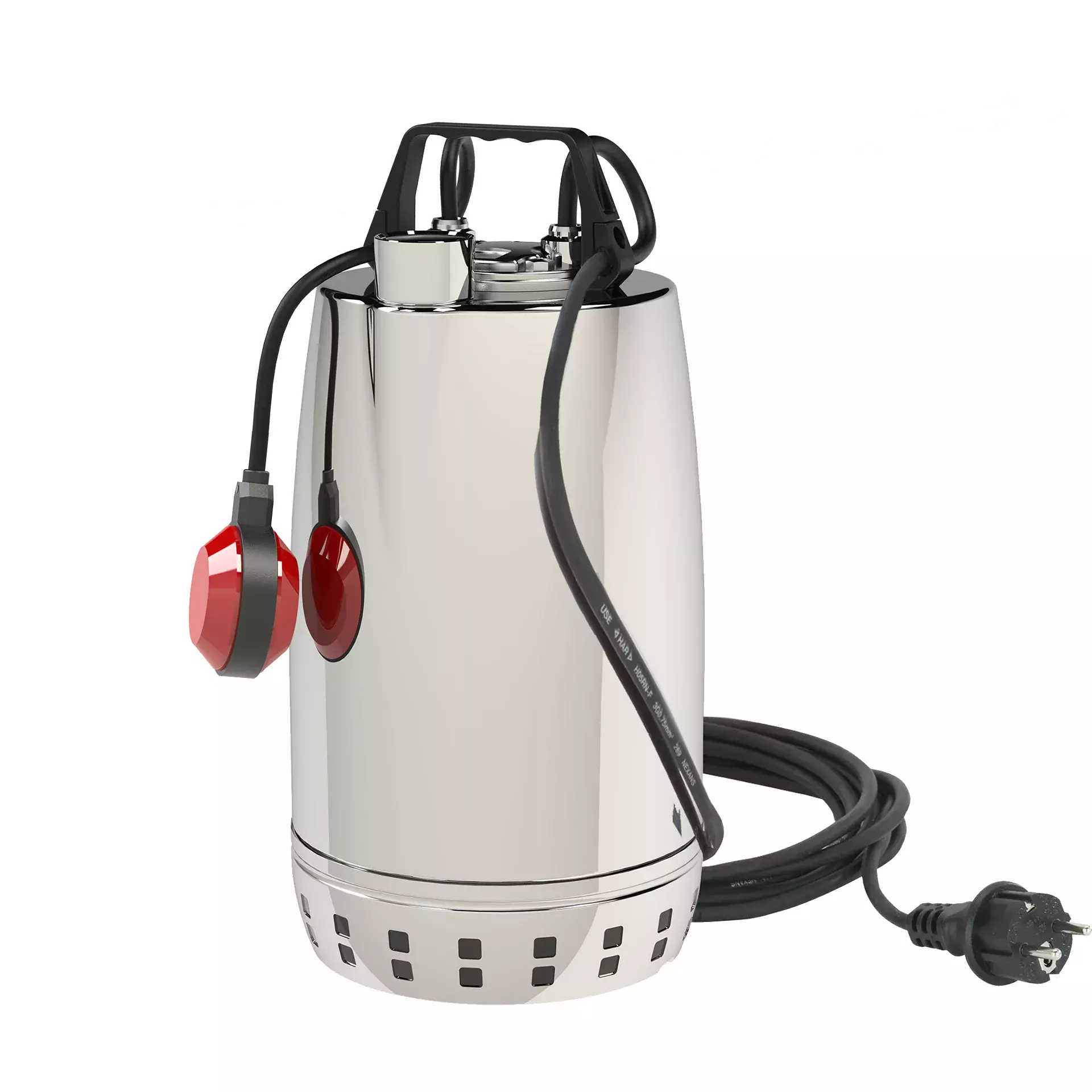
The Calpeda GXR is an AISI 304 submersible drainage pump with an open impeller, in two frames reaching 19.2 m and 30 m³/h on 12 mm solids.
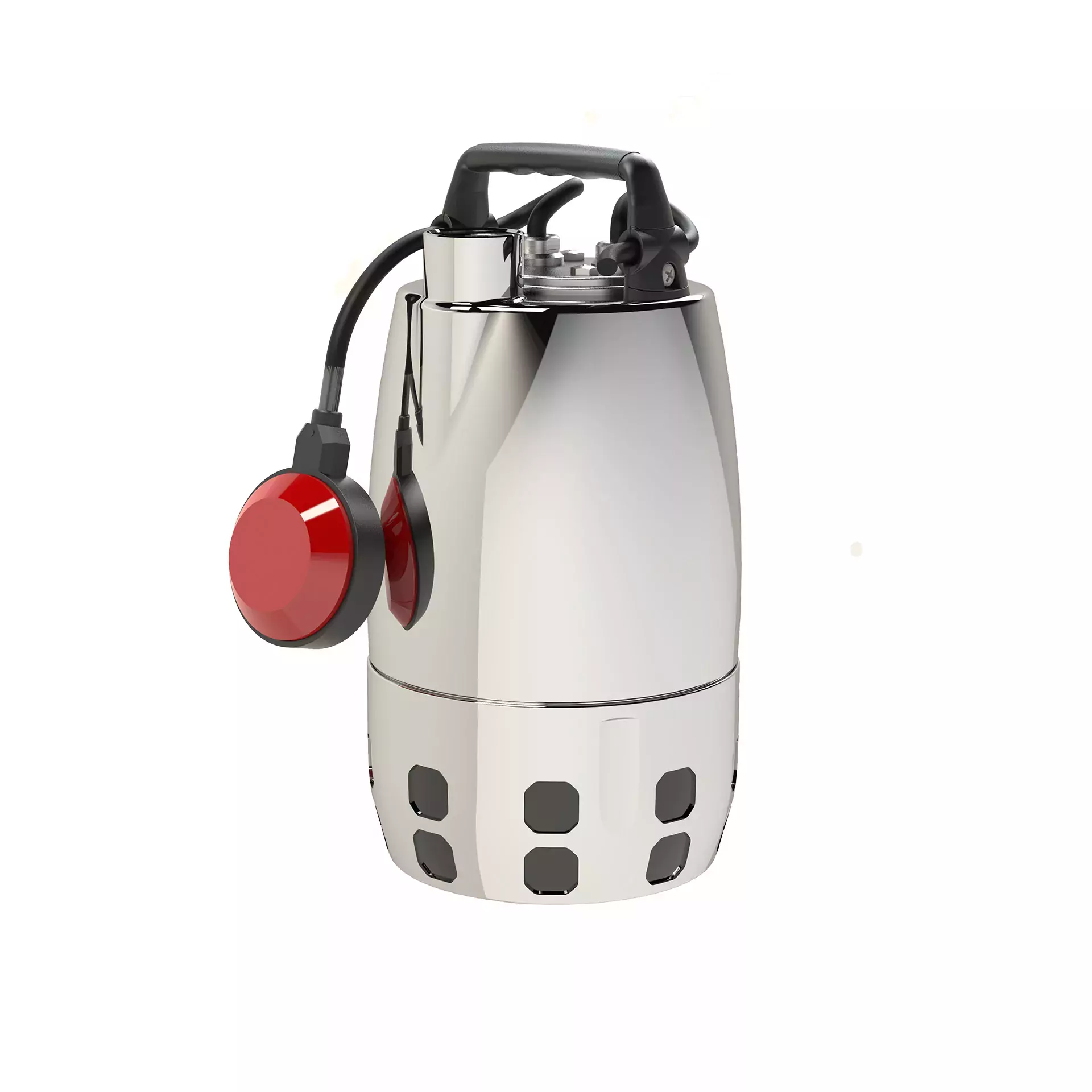
The Calpeda GXV 25 is an AISI 304 submersible pump with a free-flow vortex impeller, passing 25 mm solids to 13.2 m³/h and 10 m of head.
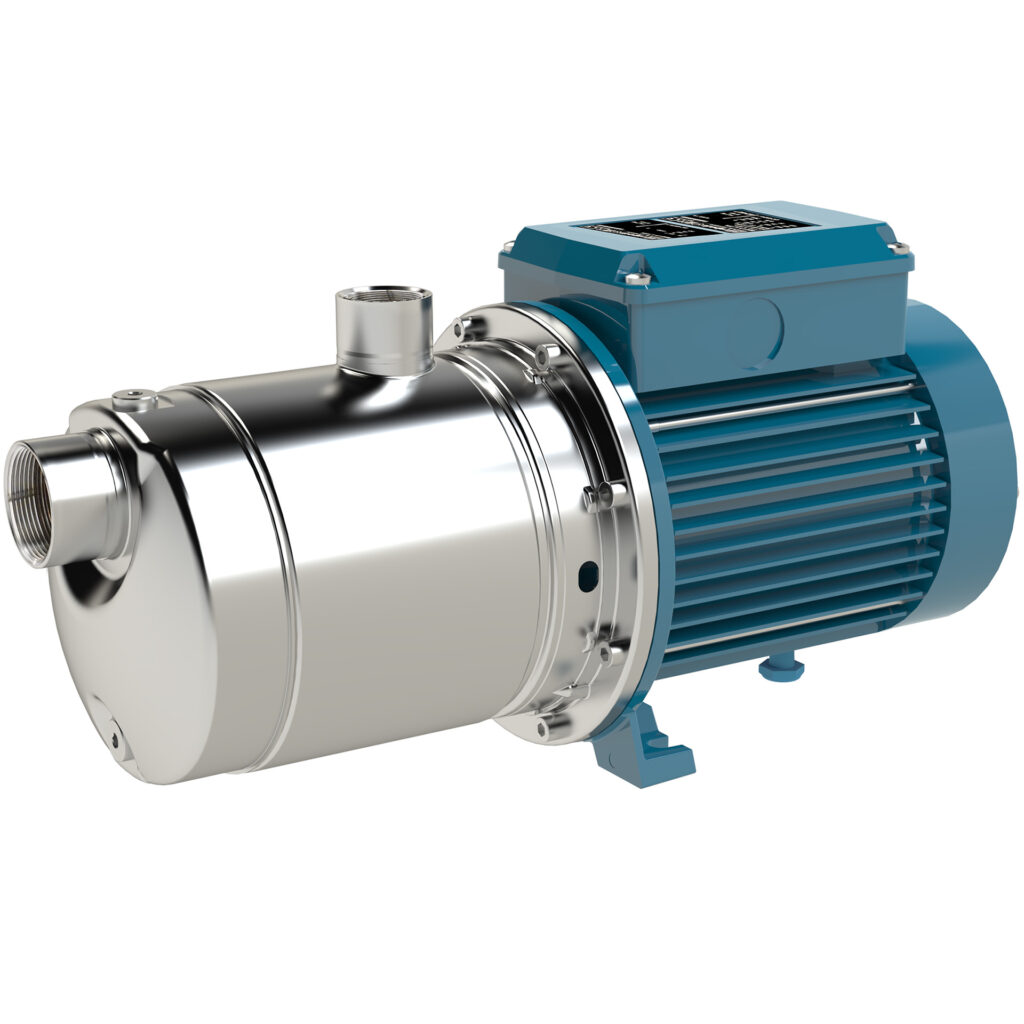
The Calpeda MXH is a WRAS approved horizontal multistage stainless steel pump for clean water to 66 m³/h and 97 m. Specs, sizes and UK supply.
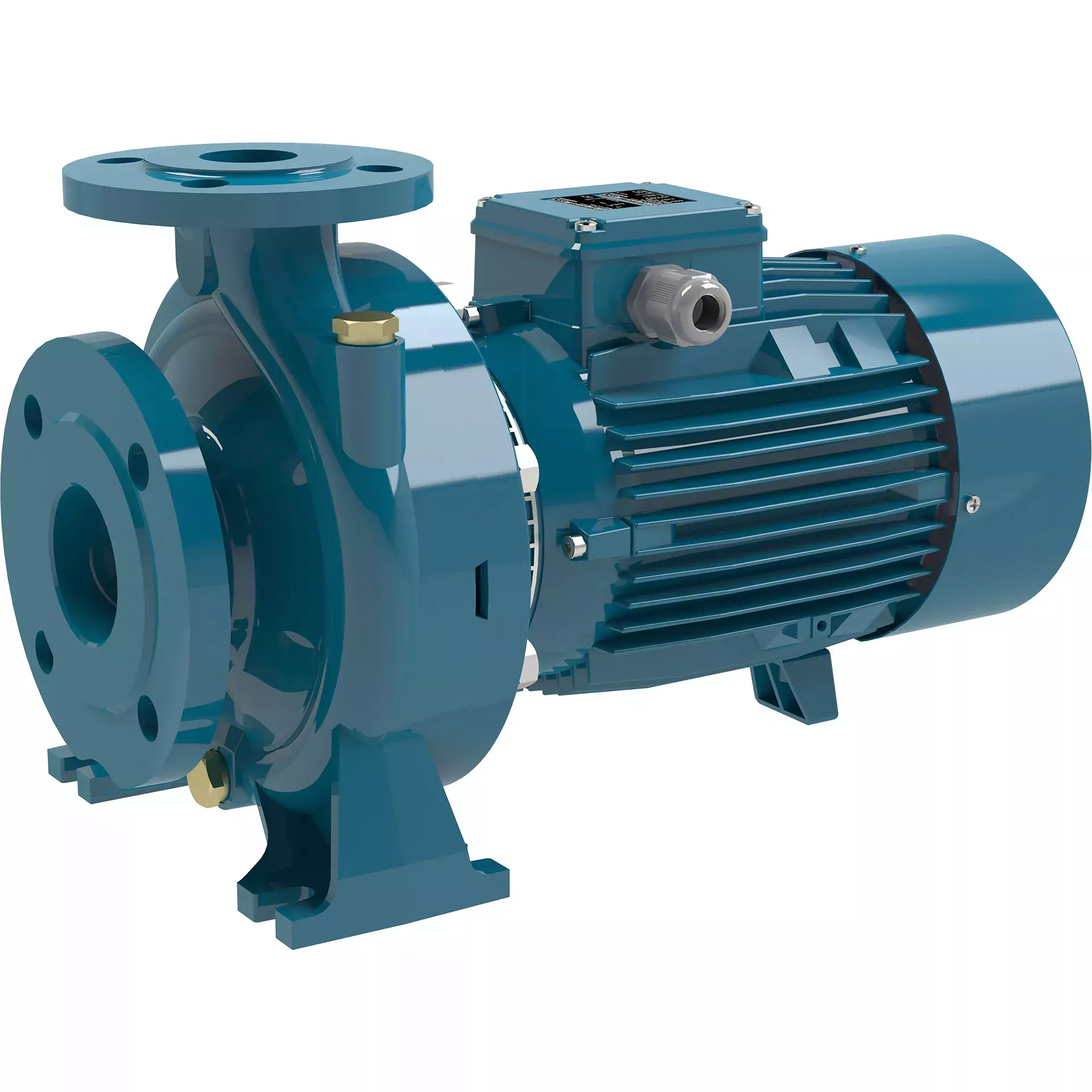
The Calpeda NM is a close-coupled EN 733 end suction pump for clean water to 240 m³/h and 93.8 m on 0.55–22 kW motors. Specifications, materials and UK supply.
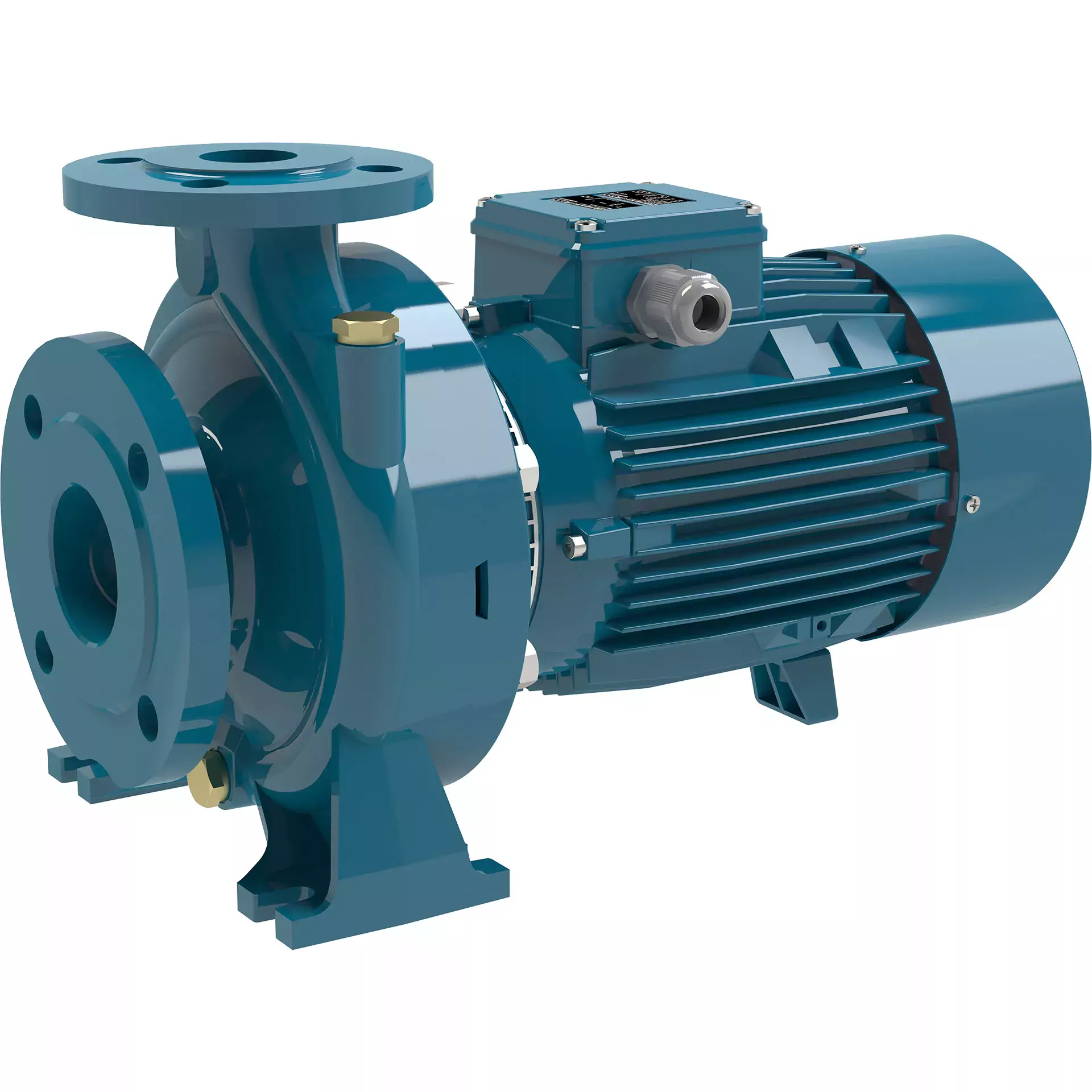
The Calpeda NM4 is the four-pole close-coupled EN 733 end suction pump for clean water, to 330 m³/h and 36.6 m on 0.37–15 kW motors at 1450 rpm.
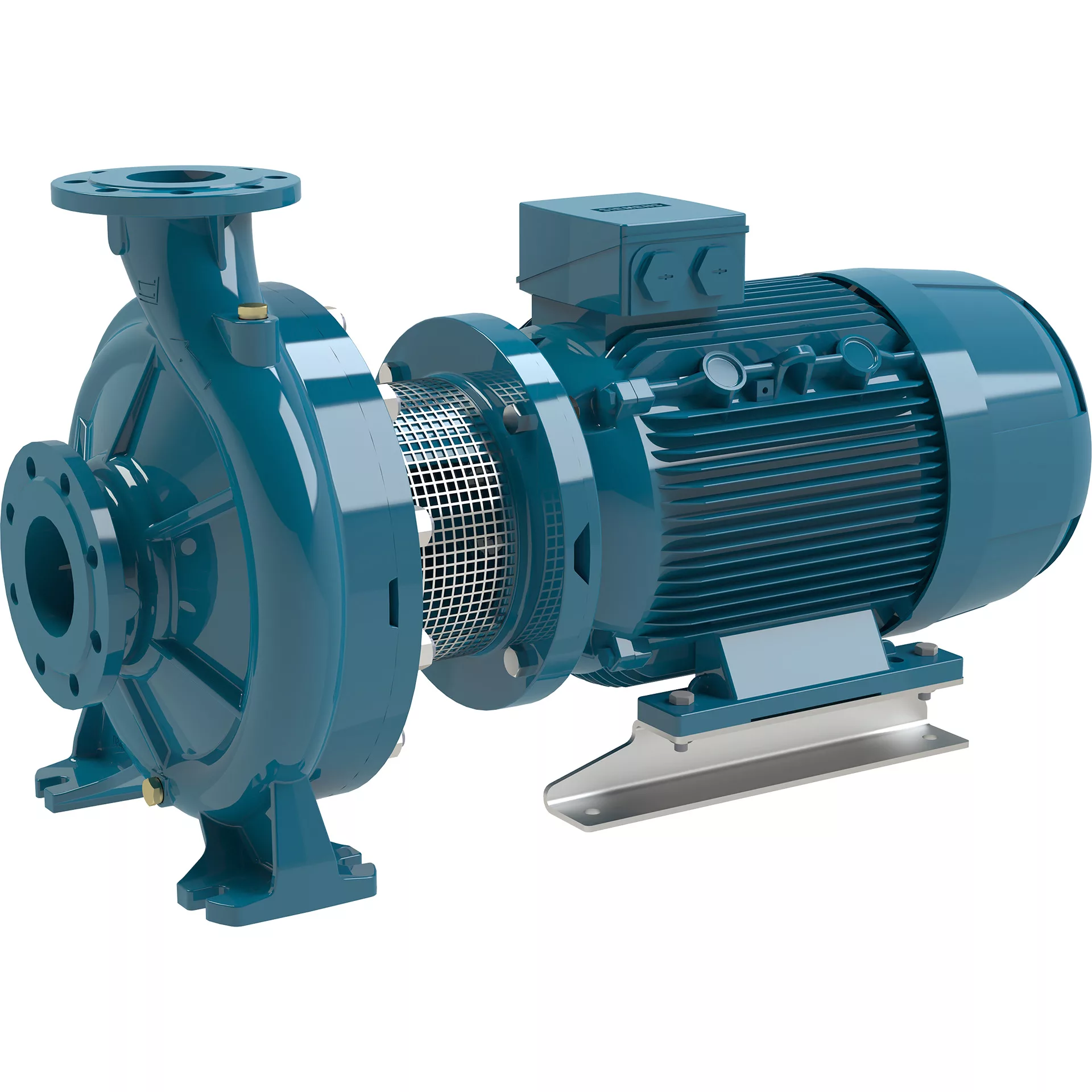
The Calpeda NMS is an EN 733 end suction pump on a stub-shaft bracket that takes a standard motor, to 300 m³/h and 95 m on 0.75–75 kW. Specs and UK supply.
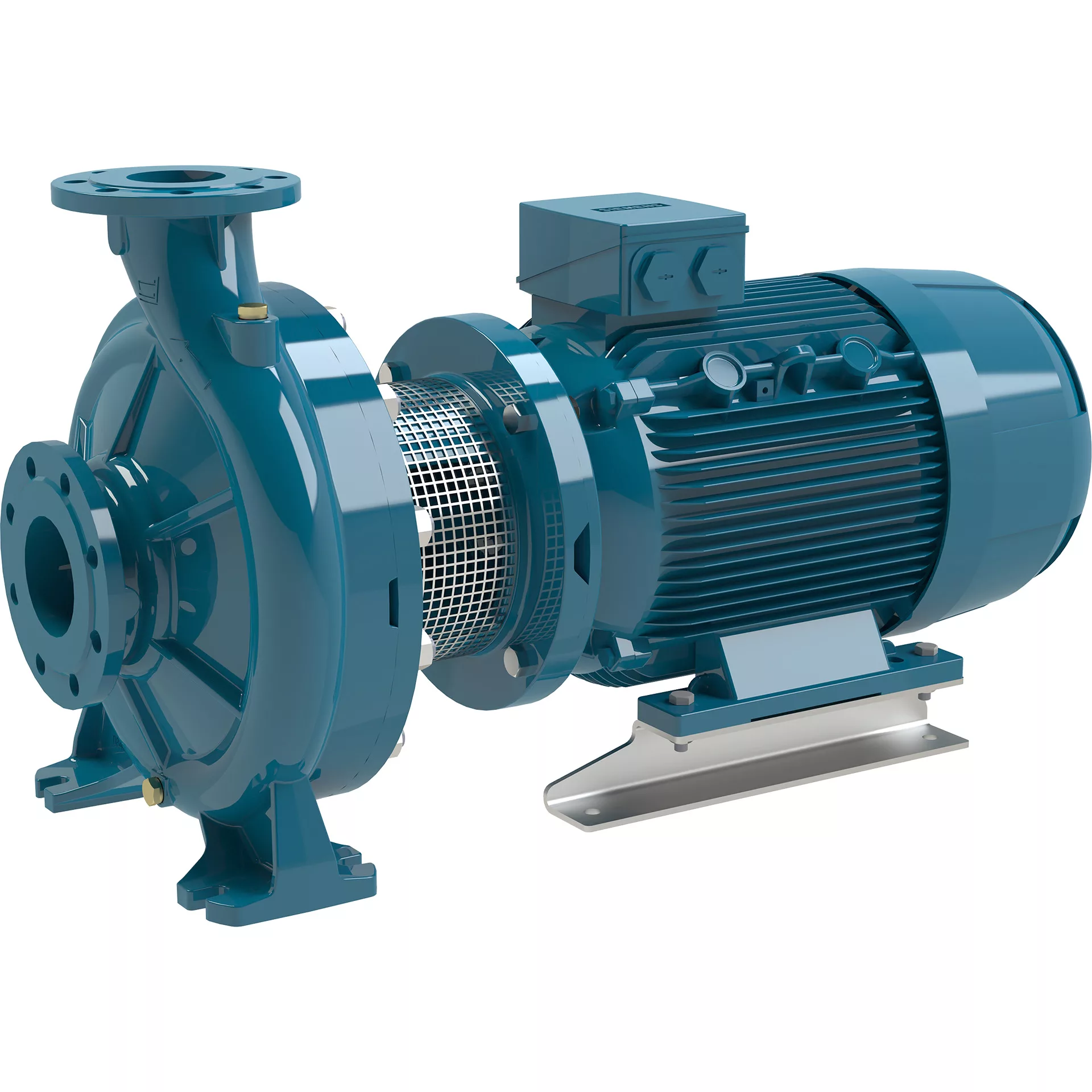
The Calpeda NMS4 is the four-pole stub-shaft EN 733 end suction pump for clean water, to 660 m³/h and 61.6 m on 0.75–90 kW standard motors at 1450 rpm.
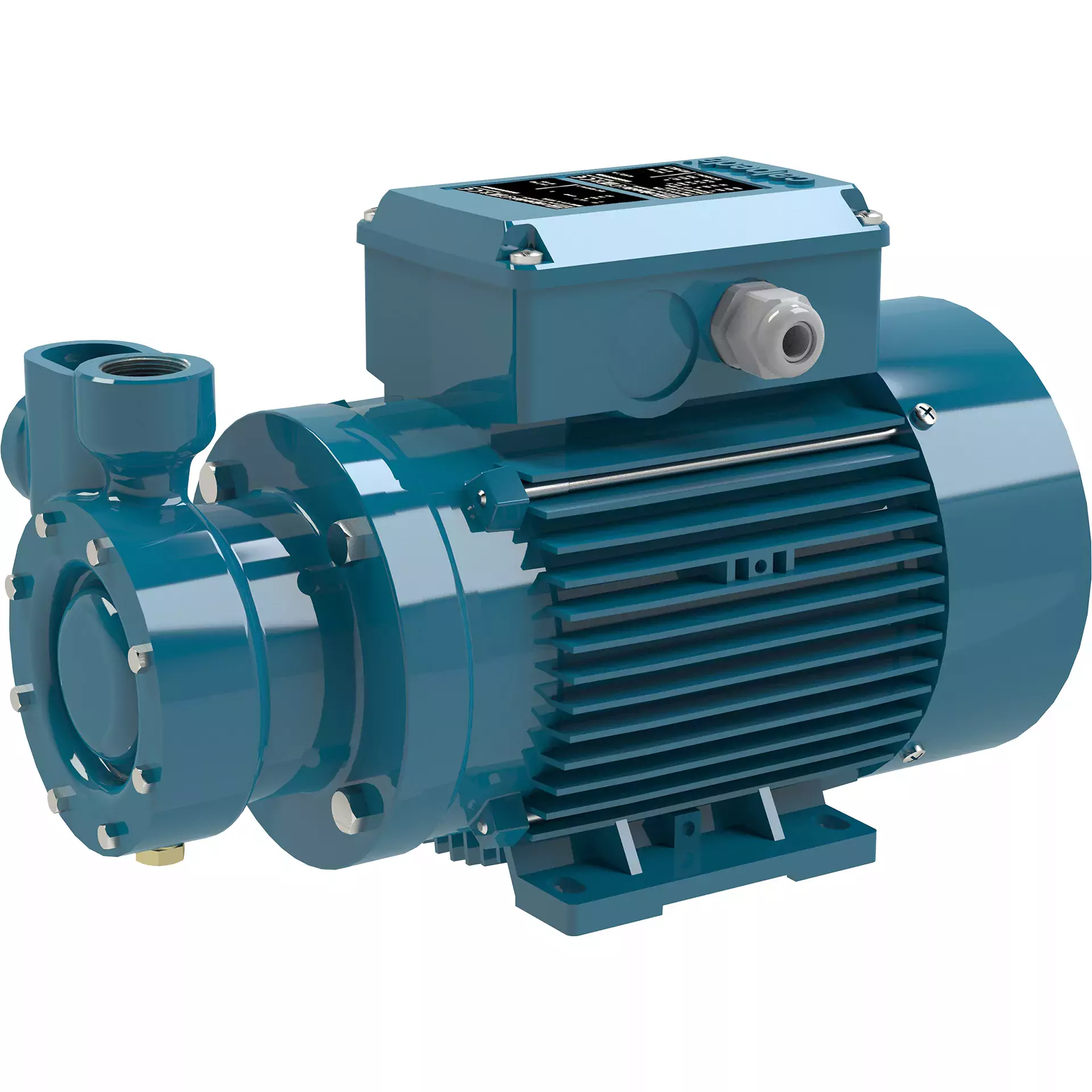
The Calpeda CT, T and TP are peripheral pumps: 3–165 m of head at 0.06–6 m³/h from one turbine impeller. Clean liquids only. Specs, sizes and UK supply.
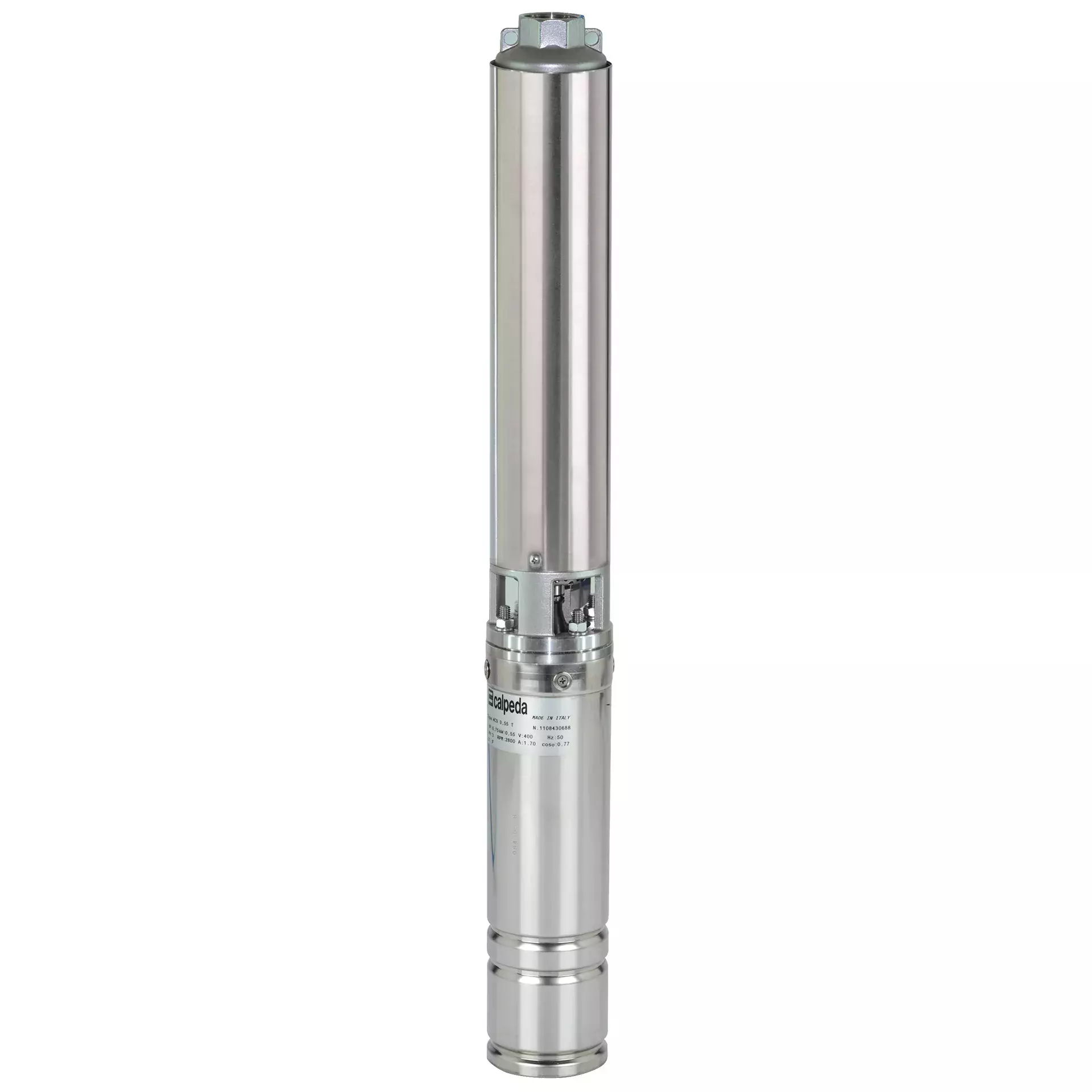
The Calpeda SD is a multistage submersible borehole pump for 4 and 6 inch wells, reaching 691 m and 40.2 m³/h on 0.37 to 37 kW.
Standards & quality
Calpeda holds three things worth naming on a specification: EN 733 on the NM and NMS end suction pumps, WRAS approval number 1906314 on the MXH range, and certified ISO 9001, ISO 14001 and ISO 45001 management systems at company level.
EN 733 fixes the main dimensions and rated performance of an end suction pump, so what it buys you is interchangeability: an EN 733 pump of the same size drops onto the footprint the last one sat on, and the suction and discharge line up. It does not make two pumps hydraulically identical, so check your duty point against the performance curve before you commit to the swap.
WRAS approval is tested to BS 6920 and covers the materials in contact with drinking water, not the performance of the pump. Approvals run on a renewal cycle, so ask us for the current certificate rather than working from the number.
A product certificate covers a specific build, not a family. So if the duty sits in a classified hazardous area, or the water is potable, or the wetted materials have to be stated on a spec sheet, tell us the zone or the requirement when you enquire. We will get the certificate covering the exact model and build out to you with the quote.
Frequently asked
Who makes Calpeda pumps?
Calpeda S.p.A. makes them, an Italian manufacturer founded in 1959 and based at Montorso Vicentino, near Vicenza. It has been part of Wateralia, Ambienta's water-pump platform, since July 2022.
Where are Calpeda pumps made?
In Italy. Calpeda's main plant is at Montorso Vicentino near Vicenza, which it says covers over 35,000 m² and produces the whole range, with a second Italian plant at S. Vito al Tagliamento in Pordenone.
What is the difference between the Calpeda NM and NMS?
The drive end, not the ports: both are flanged and both follow EN 733 for their main dimensions and performance. On the NM the motor shaft is extended straight into the pump and carries the impeller, up to 22 kW, while the NMS puts the same hydraulics behind a stub-shaft bracket with an integrated thrust bearing so it takes a standard motor.
What types of pump does Calpeda make?
Rotodynamic pumps in cast iron, bronze and stainless steel, for water and light dirty water. That covers end suction and multistage centrifugal pumps, peripheral pumps, submersible drainage and sewage pumps, borehole pumps, and packaged pressure boosting and firefighting sets.
Which Calpeda impeller should I choose for a sewage pump?
A vortex impeller passes more of what arrives and costs you efficiency and power for the life of the installation, while a single-channel impeller is more efficient but has a defined passage that rag will eventually bridge. A grinder cuts solids to protect a small-bore rising main. Send us the medium and the rising main size and we will choose.
Are Calpeda pumps suitable for sludge or hygienic process duties?
No. Calpeda builds rotodynamic pumps for water and light dirty water, and a hygienic process duty needs a sanitary design instead. Past the rough 3–4% solids rule of thumb, or once the medium gets viscous, a centrifugal stops being the right selection and you want positive displacement.
How do I identify my Calpeda pump and order the right service kit?
Read the nameplate and send us a photograph of it. The model and the serial number are both on there, and a service kit is quoted against that pair rather than against a description of the pump. If the nameplate has corroded off, a photograph of the installation and the pipework sizes usually gets us close enough to identify it.