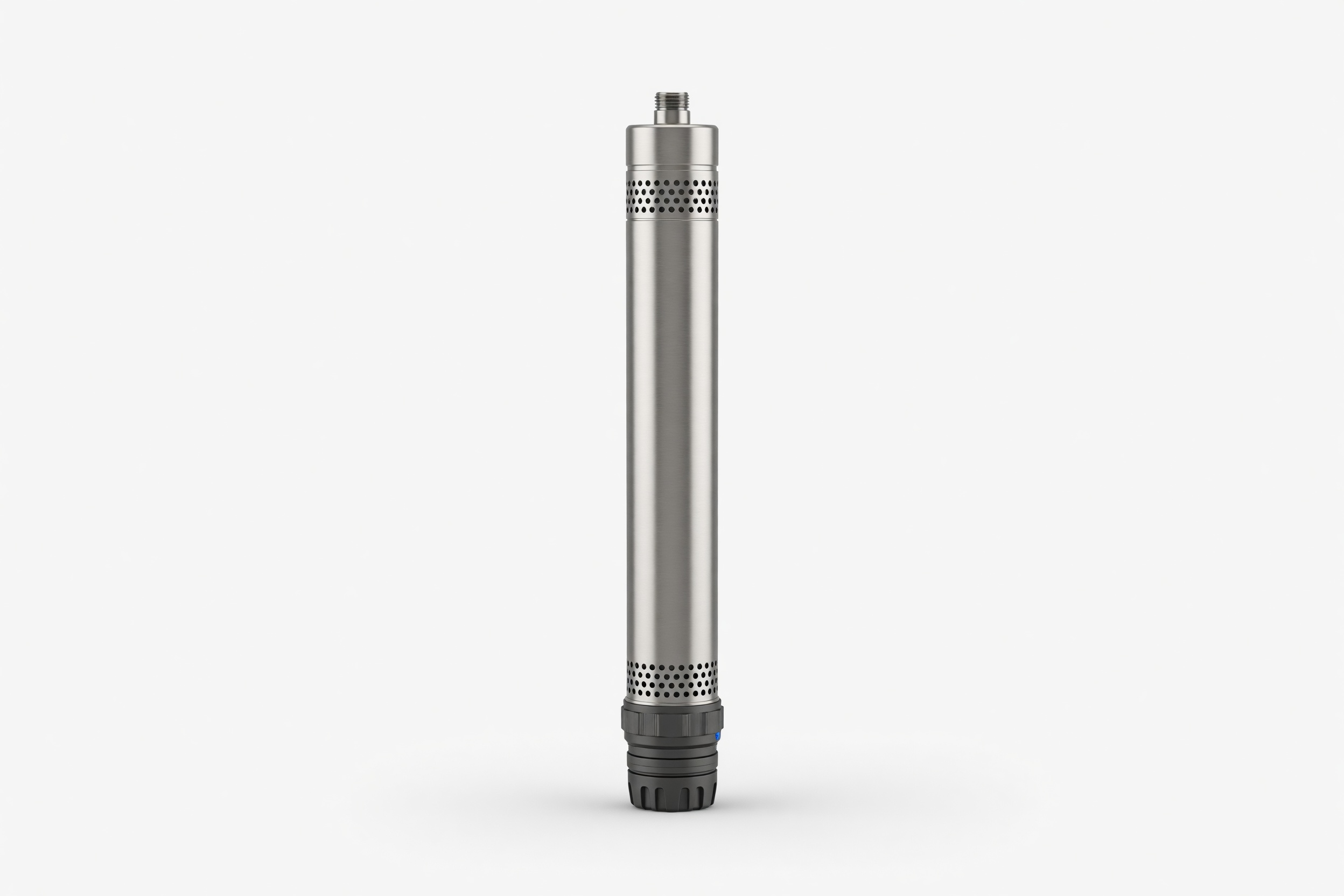
How a borehole pump works
Water is drawn in through a strainer between the motor and the pump end, then passes up through a stack of impellers and diffusers. Each stage adds head and hands the water to the next, so a 12-stage pump lifts around twice as far as a six-stage pump of the same diameter at the same flow.
The motor sits below the inlet, in the water. The flow past it carries the heat away, so a minimum velocity over the motor is part of the specification.
When to choose a borehole pump
Choose a borehole pump when the water sits deeper than a surface pump can lift it. Suction lift runs out at about 7 m in practice, and most boreholes are far deeper than that. Past that point the sensible answer is to put the pump in the water and push.
- Potable water abstraction from a drilled borehole or deep well
- Irrigation and livestock supply where a mains connection is absent or expensive
- Groundwater lowering and construction dewatering
- Making up process or wash-water demand from a private supply
- Filling a break tank that a booster set then draws from
- Water within a few metres of the surface. A surface-mounted or self-priming centrifugal pump costs less and is far easier to service.
- Sewage, sludge or anything carrying rag. That wants a solids-handling submersible, not a stack of narrow impellers.
- Sand-laden water from a borehole that was never properly developed. Sort the borehole first, or you will buy the pump twice.
- A model you have already decided on and just want shipped. A merchant will beat our price and we add nothing to that transaction.
Borehole pump strengths and trade-offs
The casing fixes the diameter, so lift comes from stage count. 4-inch and 6-inch bores cover most UK boreholes.
No fan and no ventilation at the surface, and nothing to hear from the wellhead. It does mean the pump needs flow to stay cool.
The pump sits under the water, so the NPSHa problems that bite a surface pump on a hot day do not arise.
Pump, rising main and cable all come out of the hole before anyone can look at it. Budget the lifting job, not just the pump.
Draw the level down to the inlet and the motor loses its cooling. Treat level or dry-run protection as standard, not an extra.
Abrasive water wears the stages, and the pump loses head for months before it fails outright.
Pumps we supply
View all →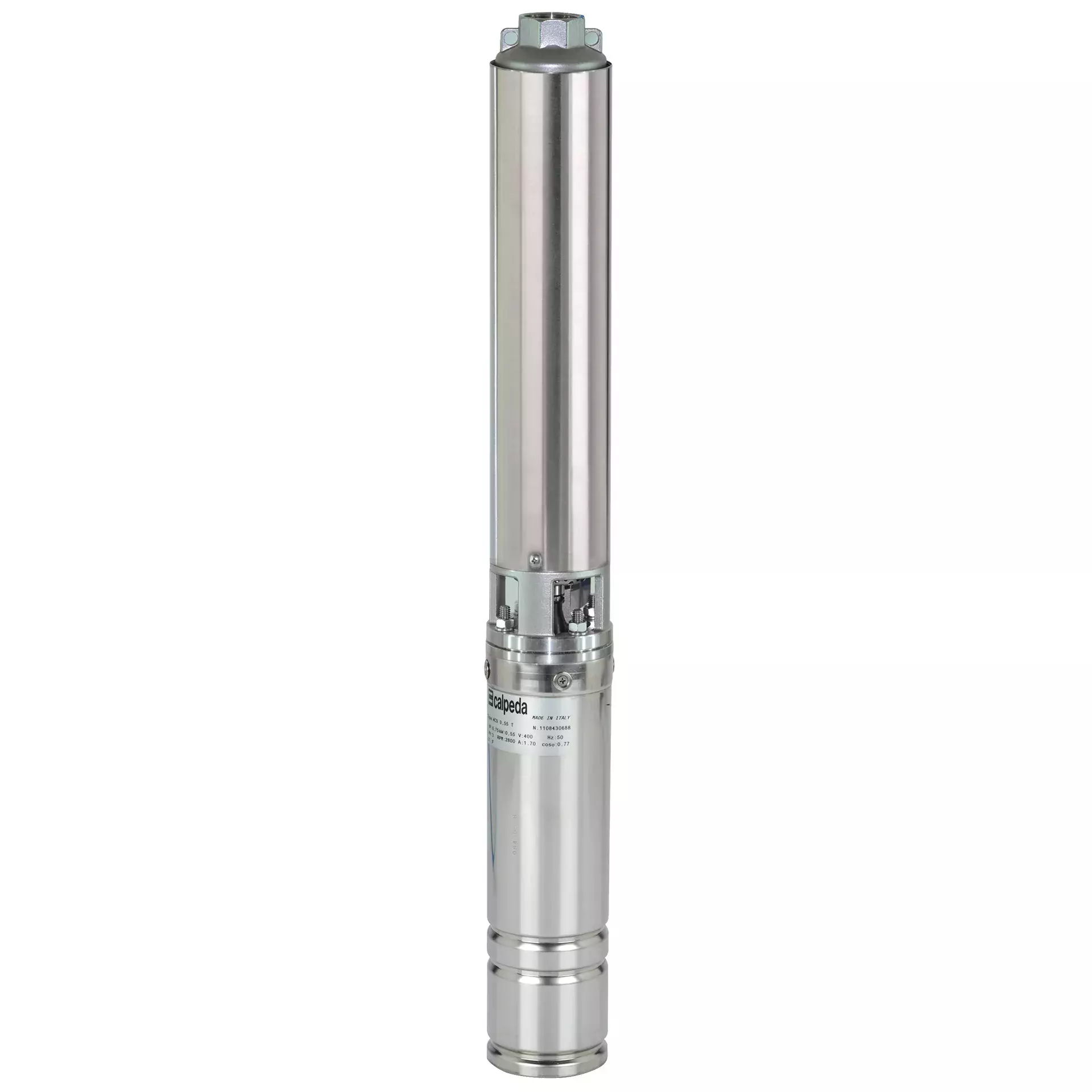
How to size and specify a borehole pump
Give us six things and we will come back with a specified pump: the borehole's tested yield, the pumping water level under drawdown, the setting depth, the rising main size and length, the discharge head at the far end, and the water quality.
Size against the drawn-down level, not the rest level. Confusing the two is behind most borehole pumps that cycle on and off, or run themselves dry when the water table drops in summer.
Frequently asked
What is a borehole pump?
A borehole pump is a multistage submersible pump installed down a drilled borehole, below the water level. Water enters through a strainer, passes up through a stack of impellers and leaves through a rising main to the surface. The motor is submerged beneath the pump and cooled by the water flowing past it.
How deep can a borehole pump go?
There is no single depth limit: stage count sets the lift, so the pump is built to the hole rather than picked against a fixed maximum. Calpeda's SD range, for example, is published to a maximum head of 650 m. What limits a real job is the borehole's yield and the cost of the rising main and cable.
What is the difference between a borehole pump and a well pump?
In UK usage they describe the same machine. Well pump and deep well pump are the older and the North American terms for a submersible set down a water supply. Borehole pump is what the UK trade calls the slim multistage version built to fit inside a drilled casing.
Do you supply Grundfos borehole pumps?
Grundfos is one of the manufacturers we carry. Whether a Grundfos set is right for your borehole depends on the yield, the setting depth and the water quality, so send those first. If the pump that fits the duty is a badge we do not hold an agreement for, we will normally source it rather than sell you something that fits the hole but not the duty.
Why does a borehole pump keep running dry?
Almost always because the pump takes more water than the borehole gives: the level draws down to the inlet, the motor loses its cooling water, and the pump stops or burns out. The other common cause is a valve somebody shut and forgot about. Check the tested yield against the pump's duty flow before you replace anything.