
About Vogelsang
Vogelsang started in 1929 as a sawmill in Bunnen, in Lower Saxony, set up by Hugo Vogelsang, a cooper. It made wooden barrels, then milk churn washers and fodder silos, then agricultural tankers. It moved to Essen (Oldenburg) in 1965 and it is still owner-managed, now in its third generation.
The date that matters if you are specifying a pump is 1970. That is when the company moved into metalworking and built its elastomer-coated rotary lobe pump. Vogelsang came at pumping from the slurry tanker end rather than from clean-water hydraulics, and the range still shows it. An elastomer-coated lobe gives where a rigid one would seize, which is a design answer to a medium with things in it that should not be there. The twisted HiFlo lobe geometry followed in 1996; a lobe that hands over between chambers gradually rather than all at once takes the edge off the pulsation a straight lobe produces.
So when you are choosing, this is what the history tells you. Vogelsang builds for media that defeat a centrifugal pump: slurry, sludge, and wastewater carrying rag and fibre. That is the ground we spend most of our time on, which is why the brand is here.
The Vogelsang range we supply
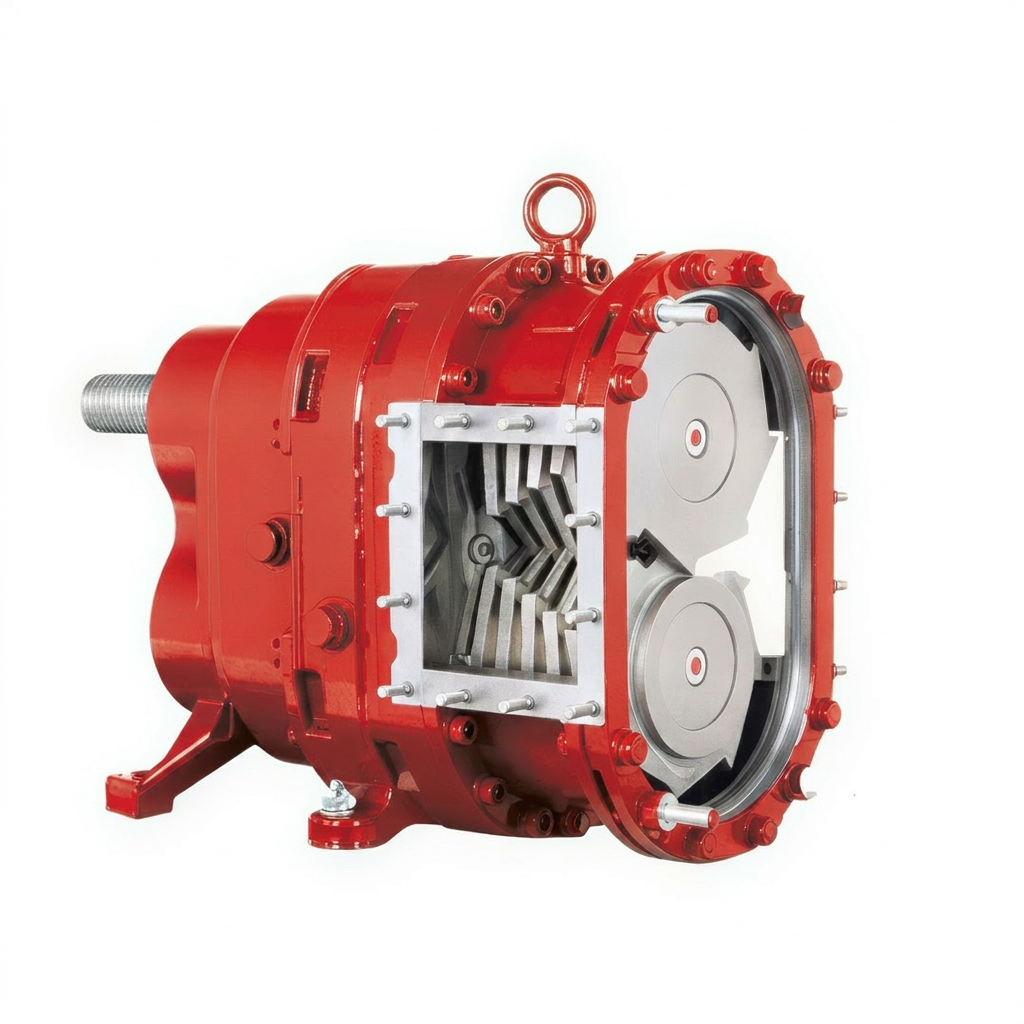
View all →Every Vogelsang pump we supply is a rotary lobe machine. What separates the ranges is the build, the pressure they will hold and the duty they are aimed at, not how they move the medium.
Take the principle first, because it is the reason to specify one at all. A rotary lobe pump is positive displacement. The trade rule of thumb puts the crossover from centrifugal at roughly 3–4% solids. Above that a centrifugal starts to struggle and a positive displacement pump takes over. It will move broadly whatever you can get into it, from water through to thick sludge, and it holds its flow rate to within a few per cent as the pressure moves, where a centrifugal's flow wanders with pressure.
The VX series is the general-purpose range and the one that fits most duties, in wastewater, slurry, chemical and food. Start there unless a specific requirement moves you.
The VY is built on the VX but with a one-piece, flow-optimised housing and fewer sealing points, which is what makes it low in dead space and flushable for clean-in-place and steam-in-place duties; Vogelsang rates it from 1–120 m³/h at up to 10 bar. The IQ is the low-maintenance build: a single-component housing you can strip without taking the pump out of the pipework, on-site replacement of lobes, seals and wear plates, and an injection system that protects the lobes against foreign matter and against dry running. The EP is the heavy end, rated to 18 bar differential and to media at up to 200°C, with an atmospheric gap between gearbox and pump chamber so a leak past the seal does not reach the gears.
The agriculture and tanker builds sit apart from that. The R series is the economical yard-and-field pump for occasional duty. The FX is the self-priming liquid manure pump. The LoadMaster is the compact tanker-mounted build, where Vogelsang's case is weight and running cost; it puts the weight saving at up to 45%.
The RotaCut is an inline wet macerator and the XRipper is a twin-shaft grinder that shreds wipes and textiles. Both are cutters. They protect what sits downstream of them, and they are the right purchase when the problem is what is in the medium rather than how the medium is being moved.
Name the cost as well. A positive displacement pump run too fast in an abrasive medium wears out quickly, so grit-laden duties want pumping slowly, and that is a constraint you will not see on a performance curve. Dry running is the other one. Take the liquid away from a mechanical seal and the seal goes, and on wastewater the usual cause is suction conditions that were never right rather than anything the pump did.
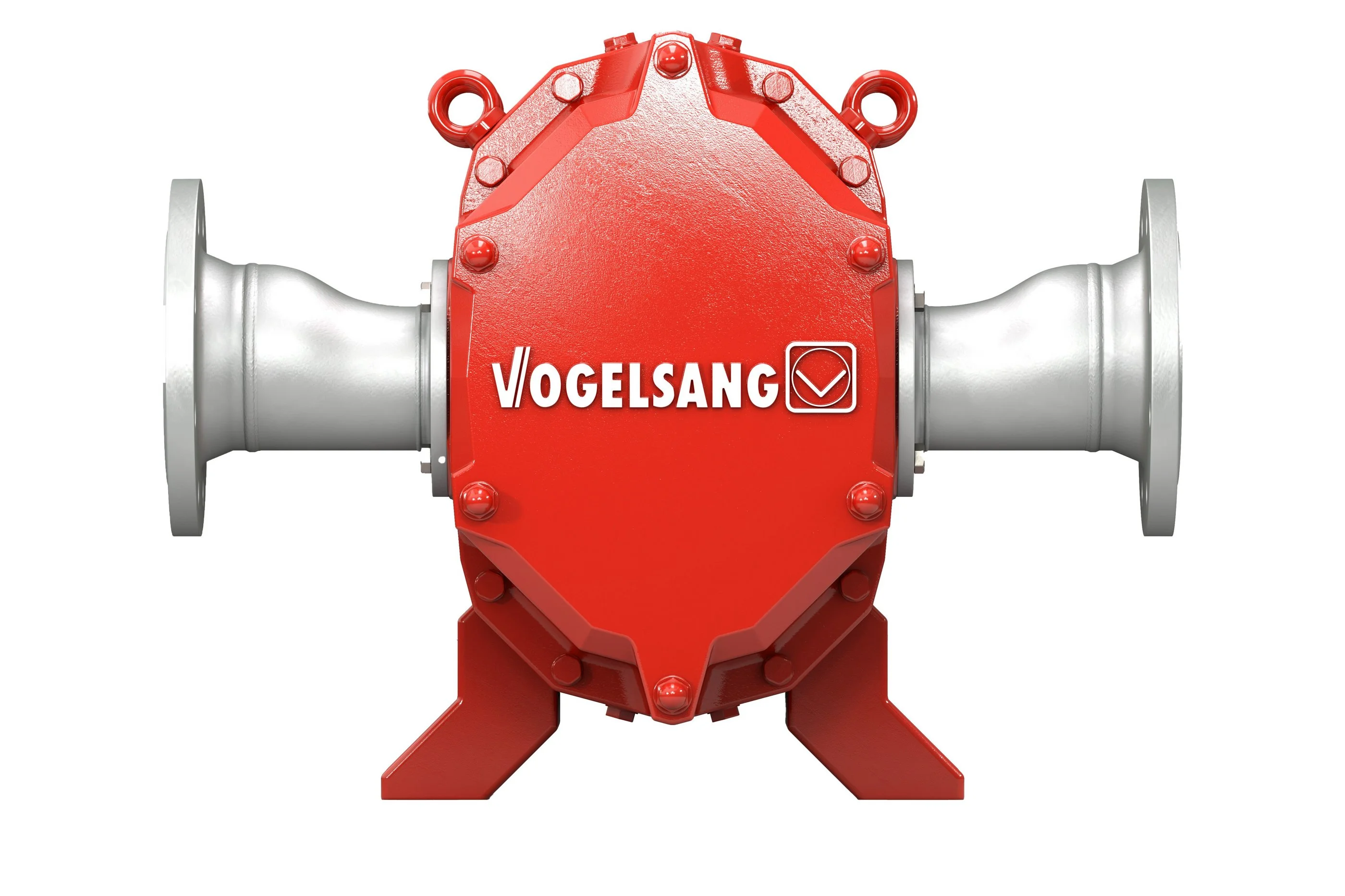
Vogelsang EP series rotary lobe pump: continuous differential pressures to 18 bar, media to 200°C, with API 682 and ATEX-compliant options.
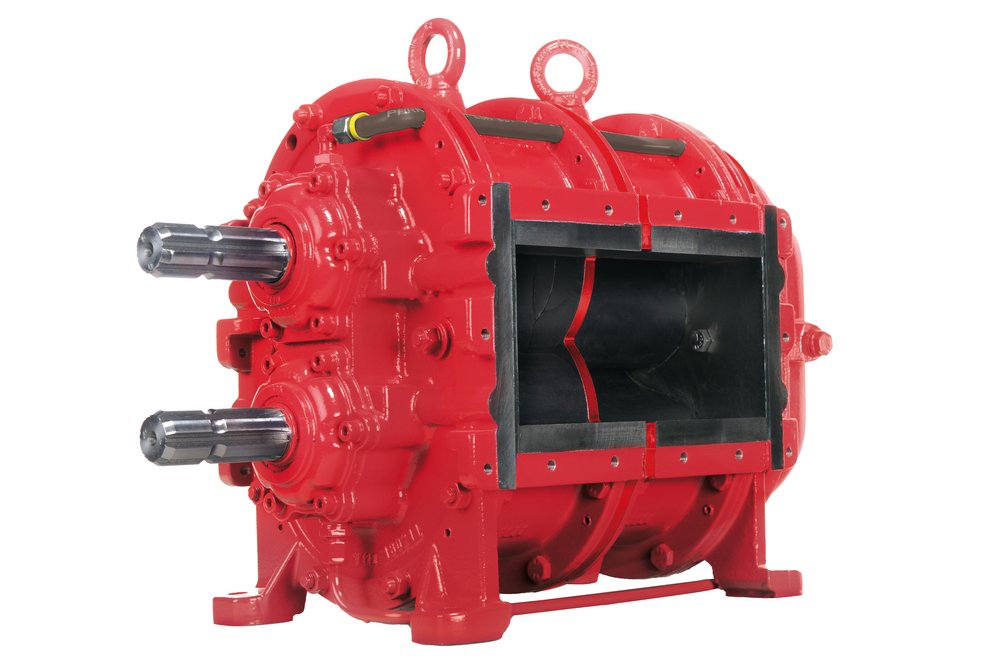
The Vogelsang FX series FarmerPump in six sizes, FX116-60 to FX116-360, up to 270 m³/h and 8 bar, and how to size one for a liquid manure duty.
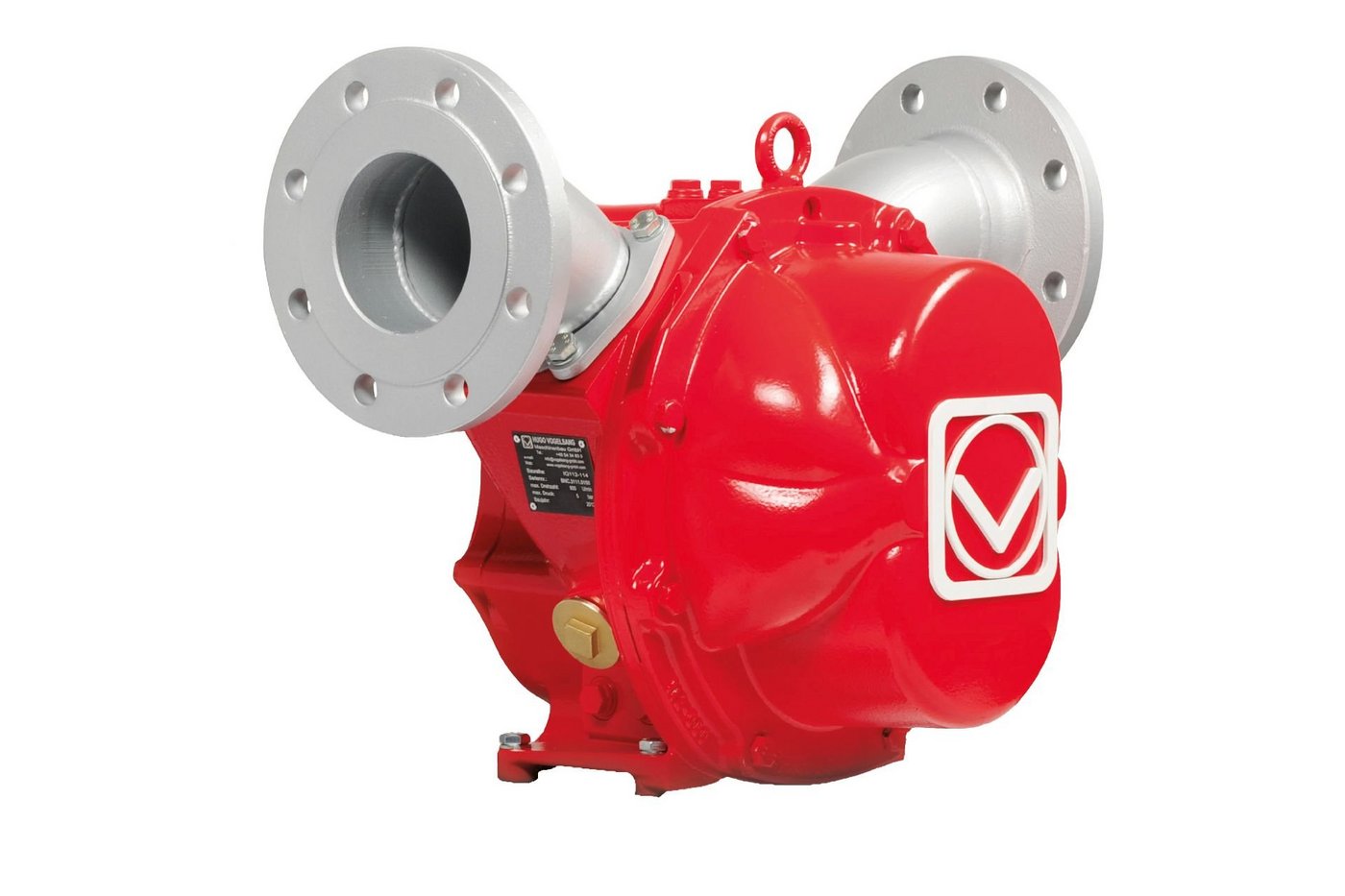
The Vogelsang IQ series rotary lobe pump in two models, IQ112 and IQ152, to 154 m³/h and 7 bar, with a one-piece housing that opens in the pipe.
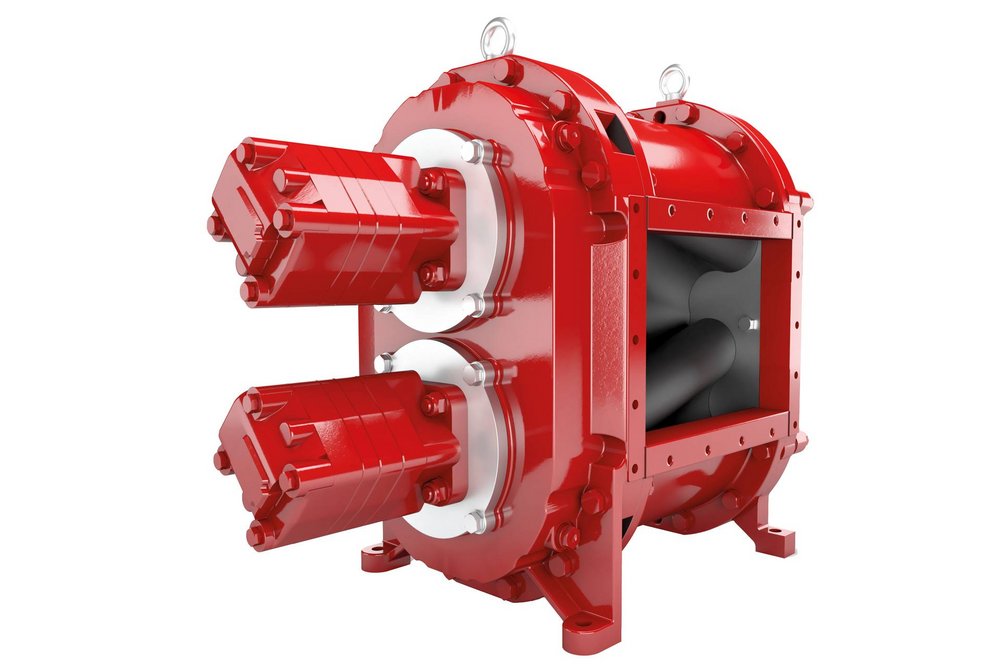
The Vogelsang LoadMaster rotary lobe pump for tank vehicles: up to 45% lighter and 20 cm shorter than a standard VX, to 8 bar and 6,030 l/min.
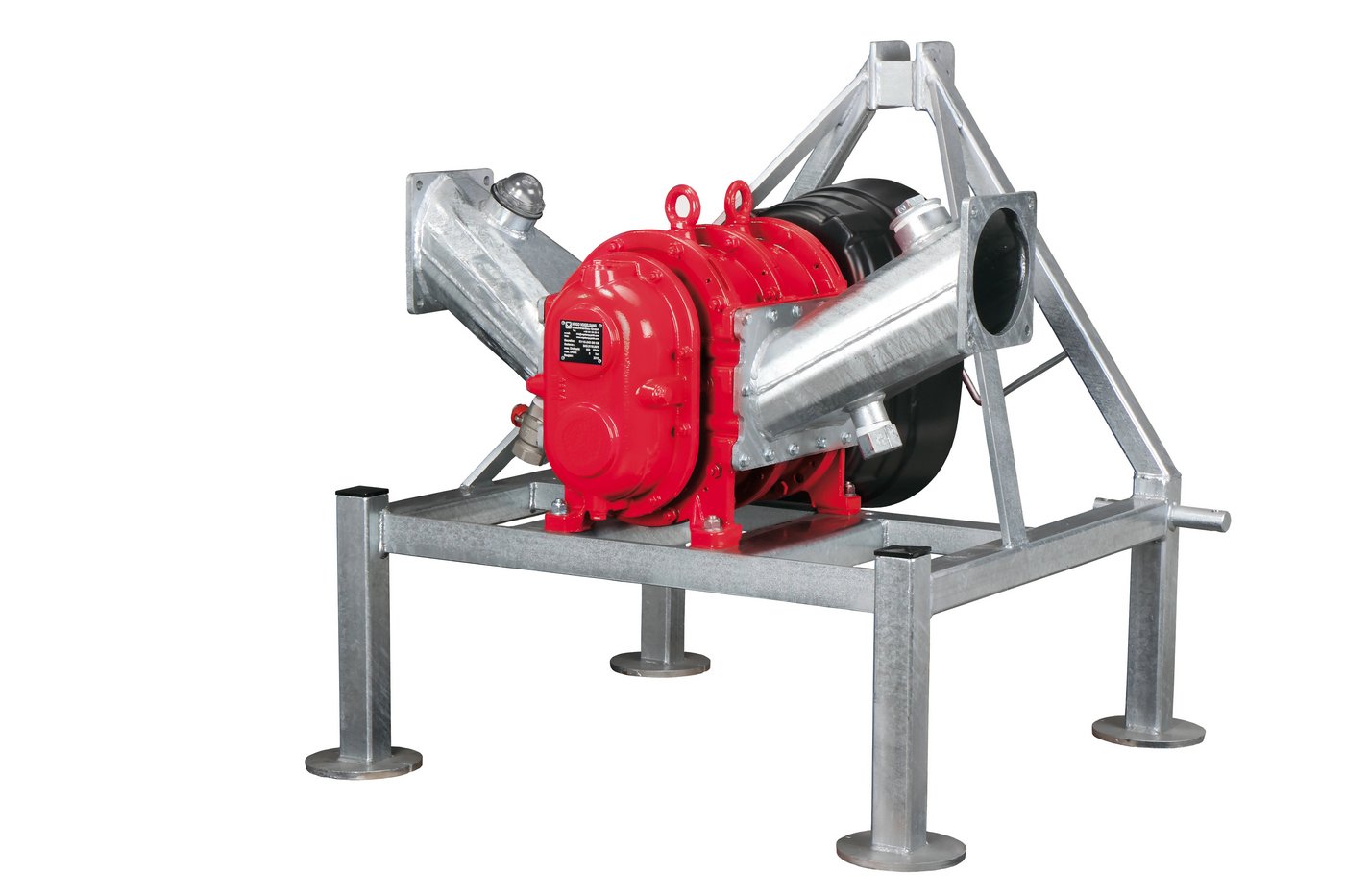
The Vogelsang R series rotary lobe slurry pump in two ranges, R116 and R136, to 5,000 l/min and 5 bar, with the full size list and where each fits.
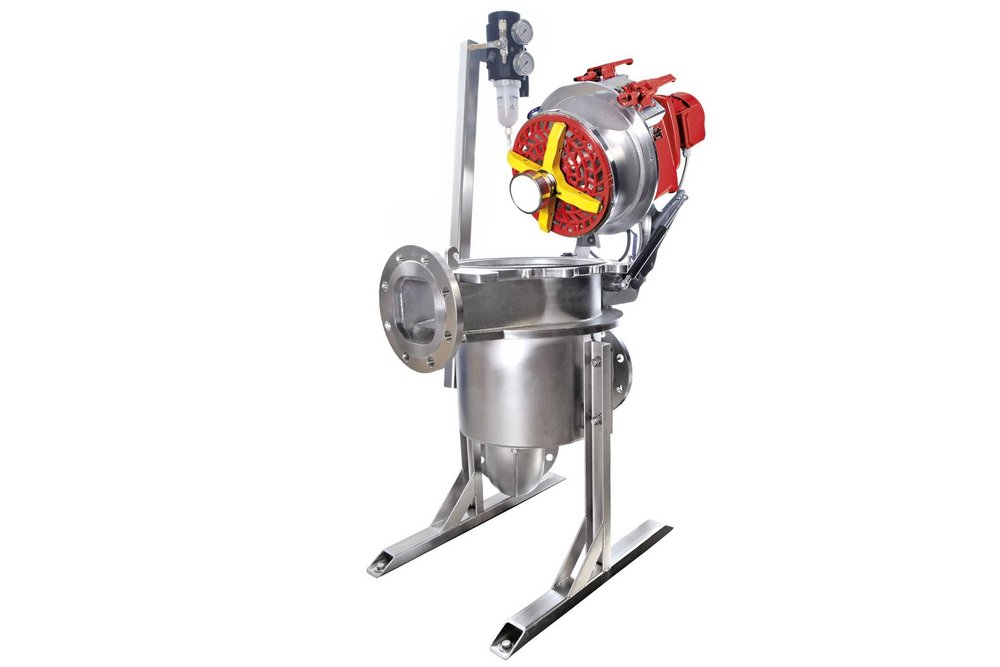
The Vogelsang RotaCut macerates fibre and coarse matter against a cutting screen and traps stones and metal upstream, protecting the pump behind it.
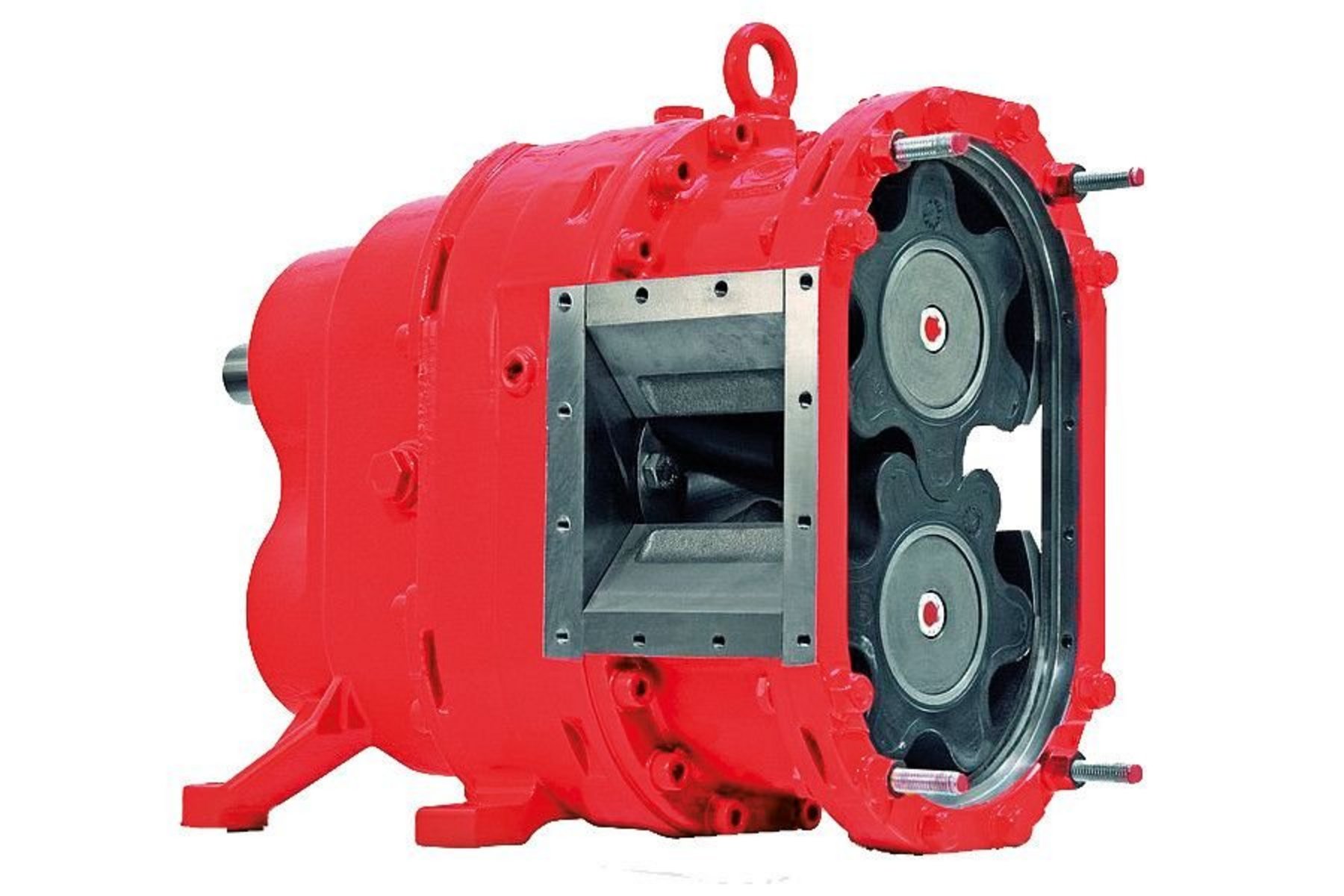
Flow, pressure and build options for every model in the Vogelsang VX series rotary lobe pump range, VX100 to VX230, and how to specify one for your duty.
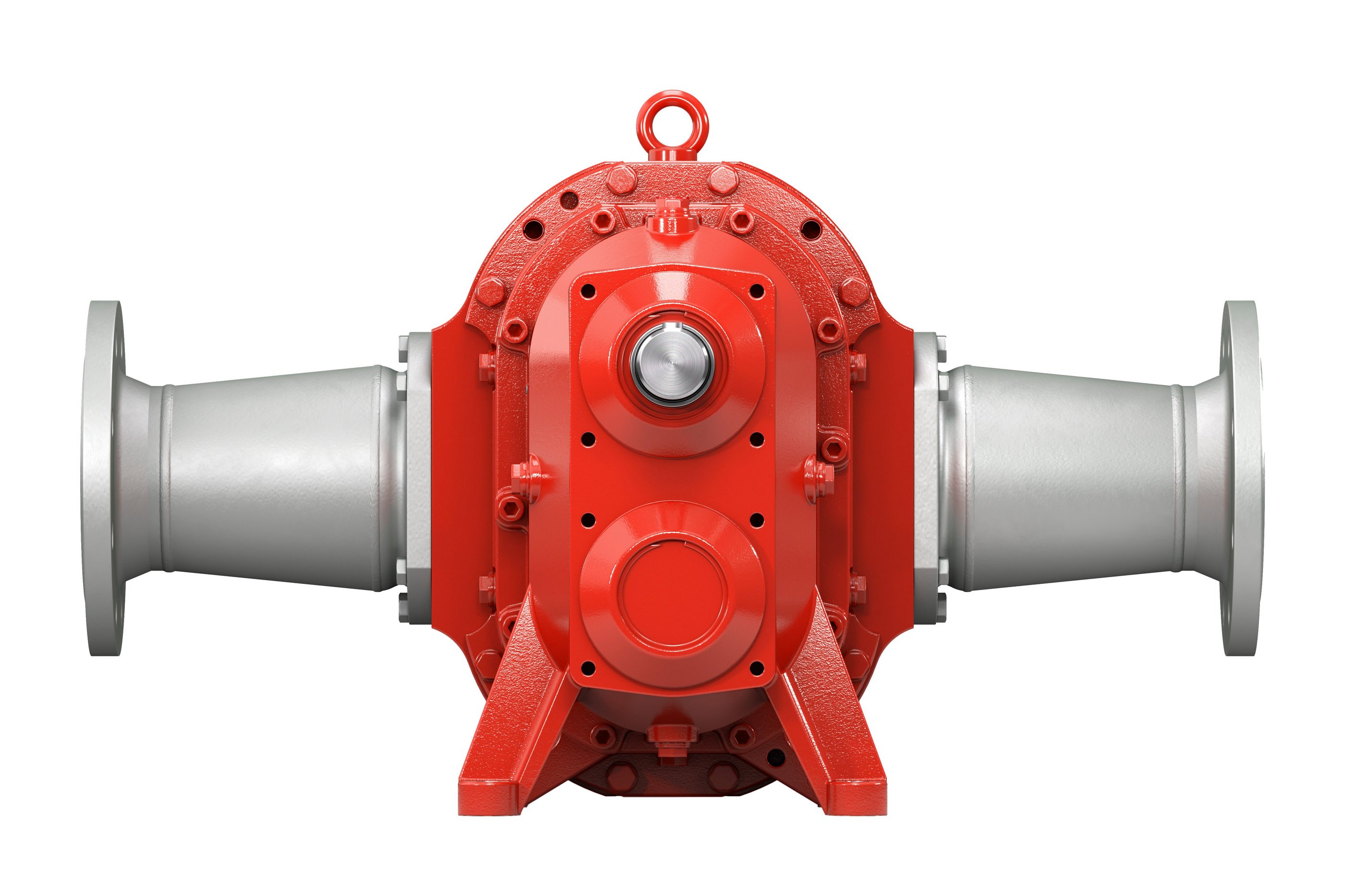
Flow, pressure and build options for the Vogelsang VY series rotary lobe pumps, VY100 and VY136, and how the one-piece CIP/SIP housing differs from the VX.
Vogelsang's twin-shaft wastewater grinder, in four series covering 50 to 7,164 m³/h, inline in a pipe or lowered into an open channel.
Standards & quality
Certification travels with the build, not with the range. An ATEX certificate under Directive 2014/34/EU covers one specific pump build, in a stated equipment category, for use in a stated zone. Areas are classified into zones. Equipment is certified to a category. The certificate is what marries the two, and it is Vogelsang's to issue.
So send us the zone classification and the medium with the enquiry. We get the certificate for the exact build from Vogelsang and it comes with the quote. A hygienic duty works the same way: tell us the cleaning regime, whether the line is cleaned or sterilised in place, and what the medium does at temperature, and the wetted materials, elastomers and sealing arrangement get specified against that rather than against the family a pump belongs to.
Frequently asked
What does Vogelsang make?
Vogelsang is a German manufacturer of rotary lobe pumps and inline solids-reduction equipment, founded in 1929 and based at Essen (Oldenburg). The rotary lobe ranges are the VX, VY, IQ, EP, R, FX and LoadMaster. The RotaCut macerator and the XRipper twin-shaft grinder cut solids in the pipeline ahead of a pump.
Do the RotaCut and XRipper pump?
No. Both are inline cutters. They sit in the pipework in front of a pump and reduce what passes through them, and they generate no flow of their own. A machine that cuts and pumps in one unit is a grinder pump, which is a different selection.
Which Vogelsang rotary lobe range should I be looking at?
The VX series covers most duties, so treat it as the default and move off it only for a stated reason. Go to the VY where the line has to be cleaned or sterilised in place, the IQ where maintenance access and foreign matter are the problem, and the EP where the duty needs up to 18 bar or media up to 200°C. The R, FX and LoadMaster are the agricultural and tanker builds. Send us the flow, the total dynamic head and what the medium actually carries, and we will tell you which one fits.
How do I identify which Vogelsang pump I have and order a service kit?
Photograph the nameplate and send us the model and the serial number together. The serial number is what the manufacturer looks the build up against, and a service kit is quoted from the build rather than from the family. Wetted materials and the sealing arrangement vary by range and by medium, so confirm both against the specific unit, not against the series name.
Are Vogelsang pumps certified for a hazardous area?
Certification is issued by Vogelsang, and an ATEX certificate covers a specific build for use in a specific zone rather than a whole range. Send us the zone classification and the medium and we will get the certificate for the exact build and put it with the quote.
My pump keeps blocking on rag. Do I need a Vogelsang?
Possibly not. The enquiry we decline most often is a like-for-like swap where the pump already installed is a good solids-handling pump. A second one the same size blocks the same way. The fix is usually rag removal upstream, either a macerator or a chopper pump, which is a change to the system rather than a new pump.