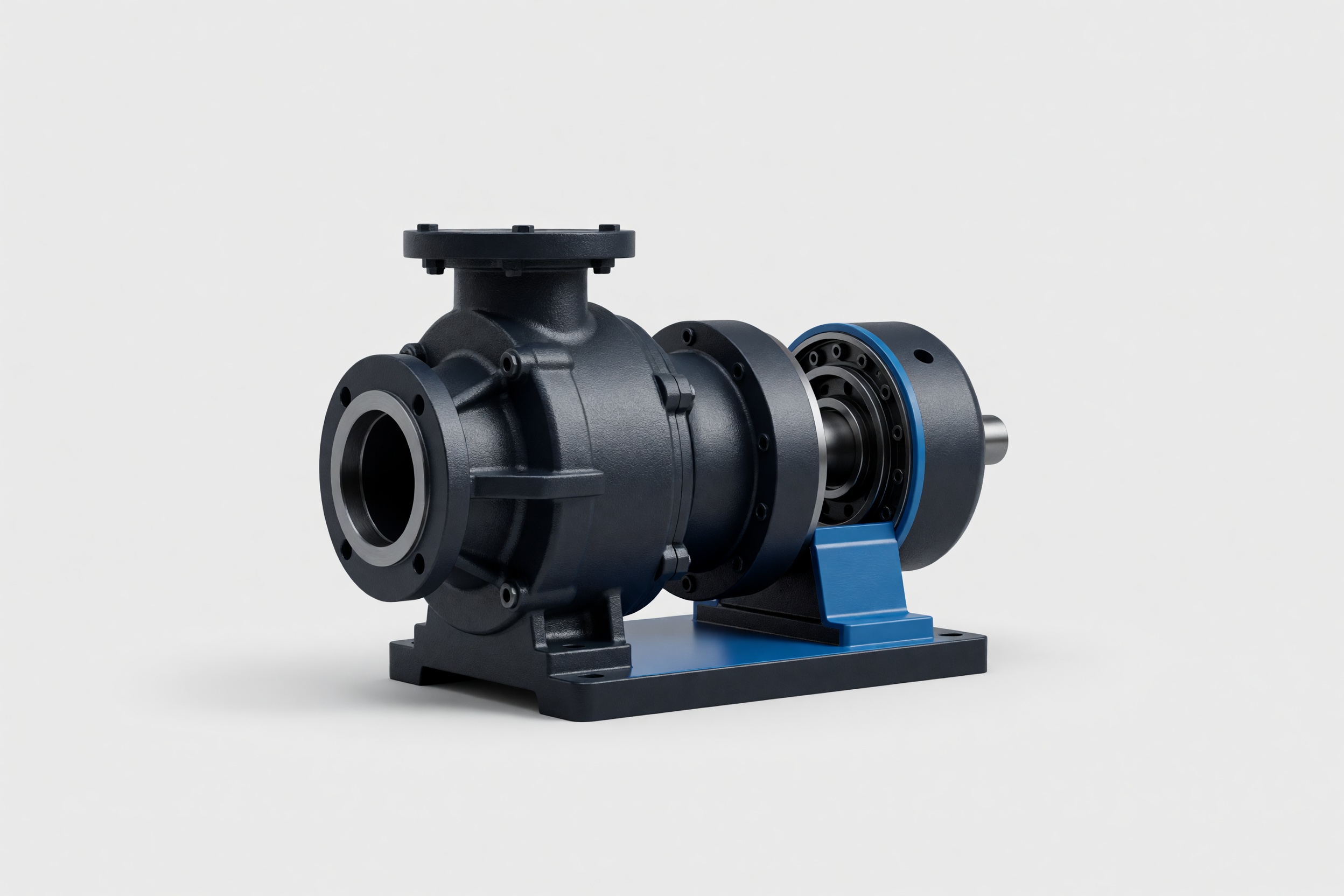
How a slurry pump works
A slurry pump works in one of two ways, and the solids content decides which.
A heavy-duty centrifugal pump throws the medium out with an impeller, and survives by sacrificing parts you can replace: a thick casing, hardened metal or rubber liners, and wide clearances so grit passes rather than grinds. A positive displacement pump, progressive cavity or rotary lobe, carries a fixed volume per revolution instead. Its flow stays near-constant as pressure changes, and it will draw thick sludge a centrifugal cannot.
When to choose a slurry pump
Choose a slurry pump when the medium carries solids or grit and a clean-water pump would block or wear out.
Which type is a separate question. The trade rule of thumb puts the crossover from centrifugal to positive displacement at roughly 3–4% solids, and viscosity pushes it either way. That is where the conversation starts. It is not a specification.
- Primary, secondary and digested sludge on a wastewater works
- Mineral and aggregate slurries
- Grit-laden process and dewatering duties
- Thick sludge a centrifugal will not draw (progressive cavity or rotary lobe)
- Clean water, or a medium that behaves as water. A standard centrifugal is cheaper to buy and cheaper to run
- Rag-bound duties, where wipes and fibre bind the wet end. The answer is usually removal upstream, a macerator or a chopper pump, not a bigger pump
- Metering, and hygienic product transfer
Key features & trade-offs
Hardened or rubber-lined components take the abrasion and get renewed. The pump body stays.
Wide clearances let grit and solids through, instead of grinding them against the impeller.
A progressive cavity or lobe pump holds its rate as pressure changes. A centrifugal's flow moves with it.
Abrasive media want pumping slowly. Run a positive displacement pump too fast in grit and you shorten its life. No performance curve shows you that.
On a progressive cavity pump it burns the stator and damages the rotor. Lobe and centrifugal types lose the mechanical seal: it needs liquid to lubricate it.
A slurry build is less efficient than a clean-water pump, and wear parts are a running cost. Budget for them at specification.
Pumps we supply
View all →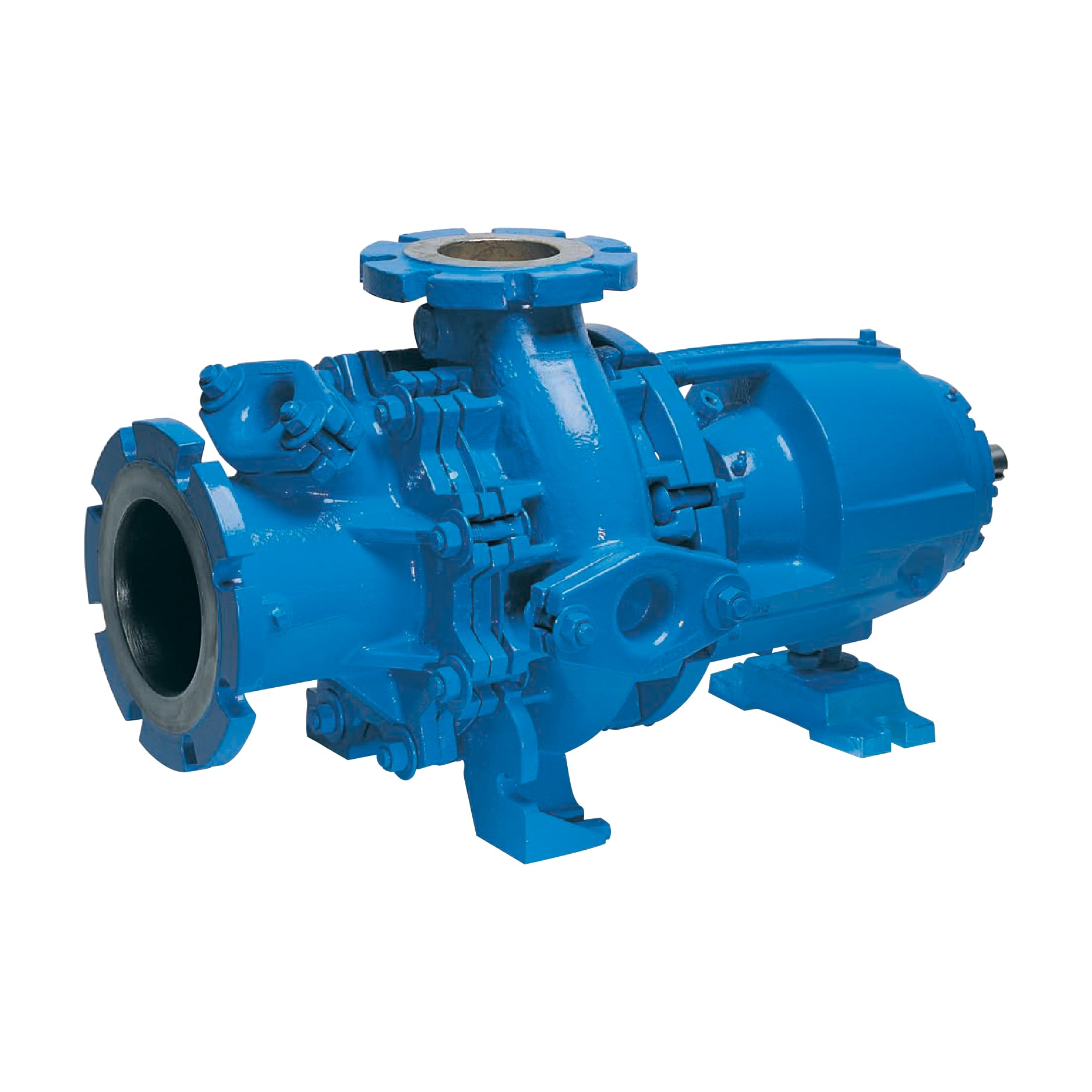
The Ebara ChopX cuts and pumps in one unit. Two cutting stages, a hard metal wet end, and a flushless seal option, for scum, FOG, sludge and manure.
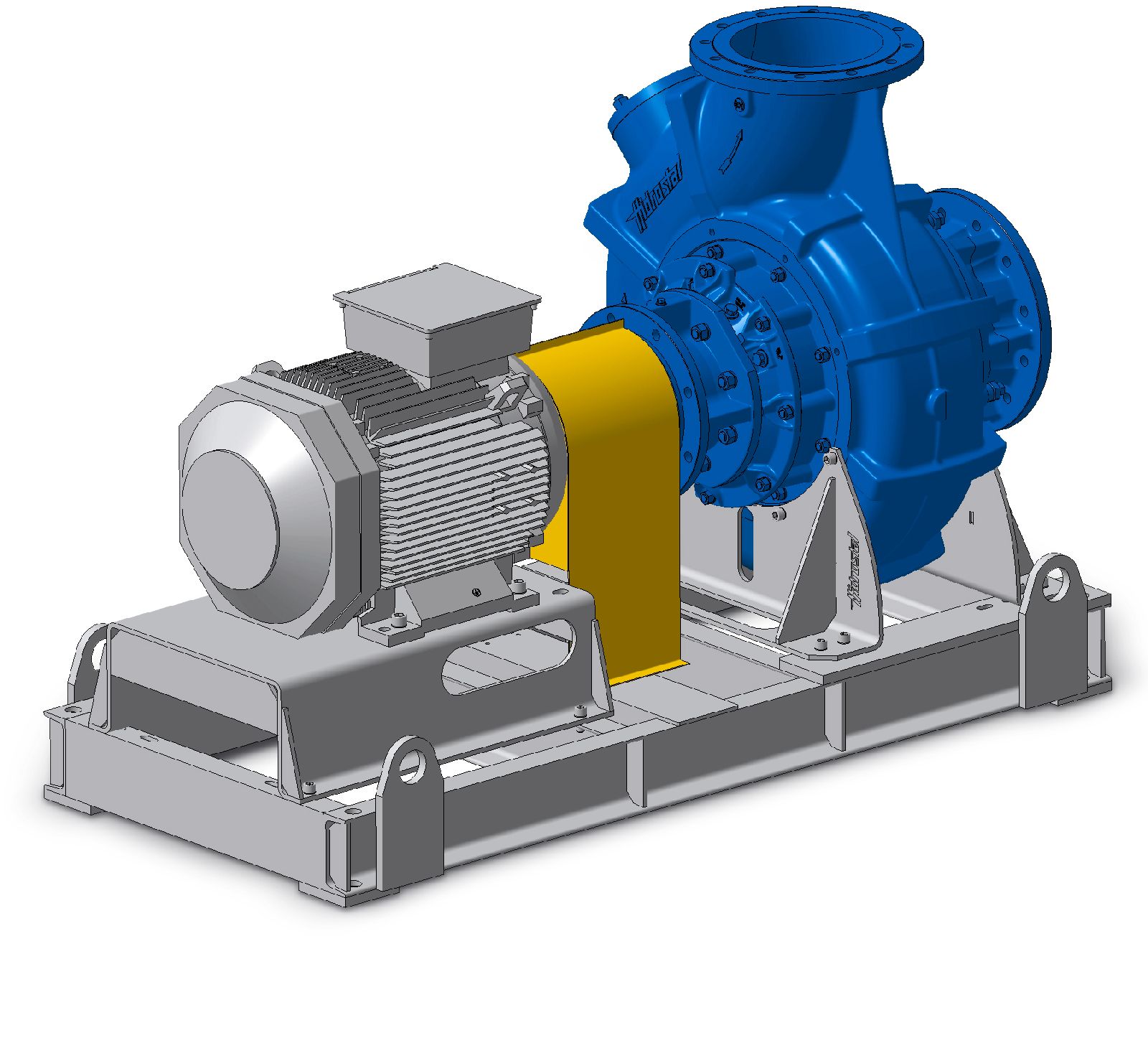
Hidrostal bearing frame pumps: dry-installed screw centrifugal end suction, 0.5–3000 l/s to 90 m, 32–700 mm, horizontal or vertical. Specs and selection.
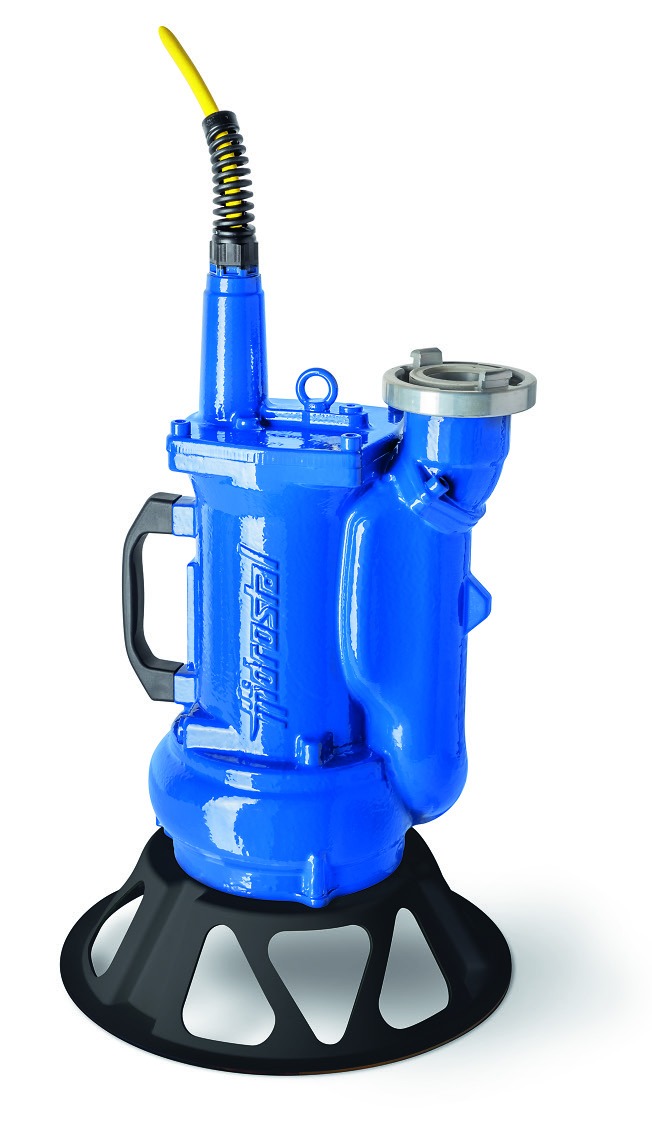
Hidrostal compact pumps: portable screw centrifugal field units, 0.8–24.6 l/s to 17.7 m, 50–75 mm free ball passage, from 23 kg. Specs and selection.
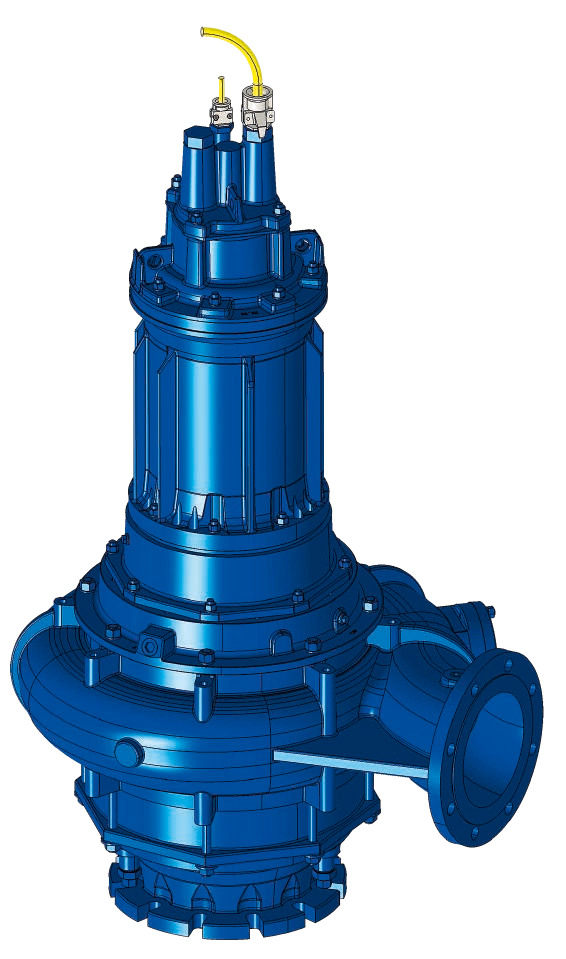
Hidrostal submersible pumps: up to 2500 l/s and 100 m head, screw centrifugal hydraulics, motor cooled by the liquid it sits in. Specs and selection.
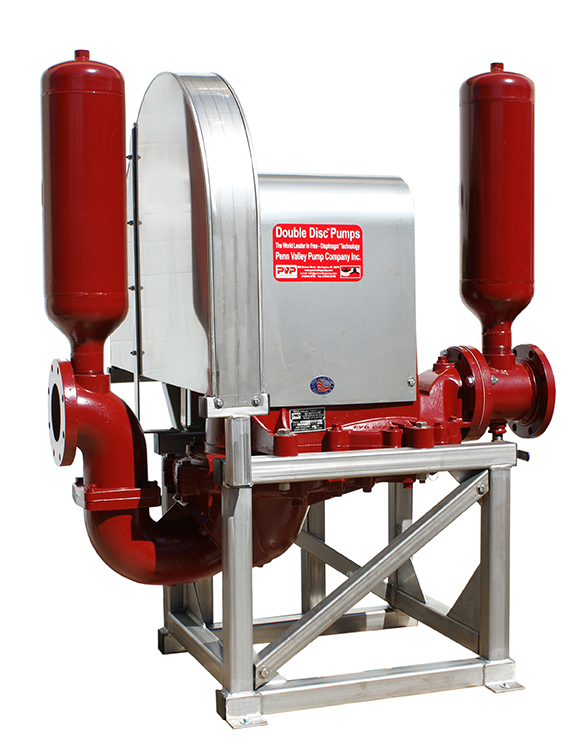
A seal-less reciprocating pump for sludge, slurry and rag-laden media, in seven sizes from 9 to 250 m³/h.
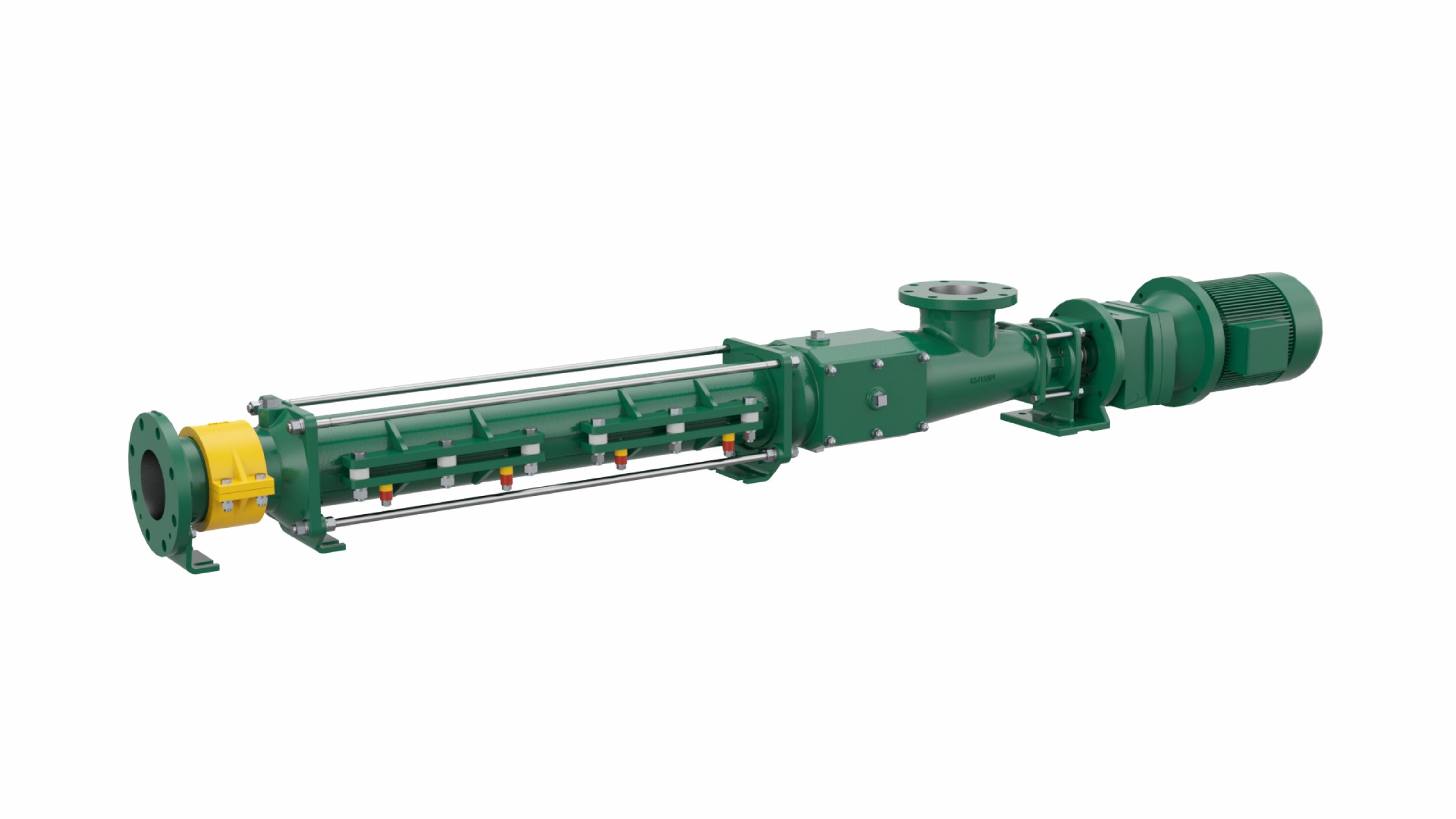
Roto's extra-large-capacity progressive cavity range, on extended geometry, built for volume at low pressure.
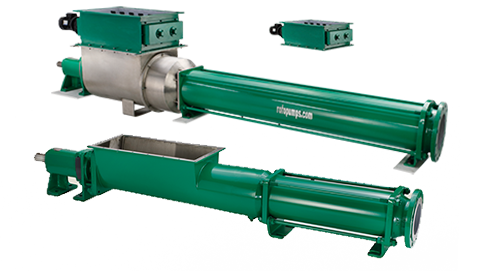
Roto's wide throat progressive cavity pump, with an auger on the coupling rod for media that will not feed themselves into a standard suction.
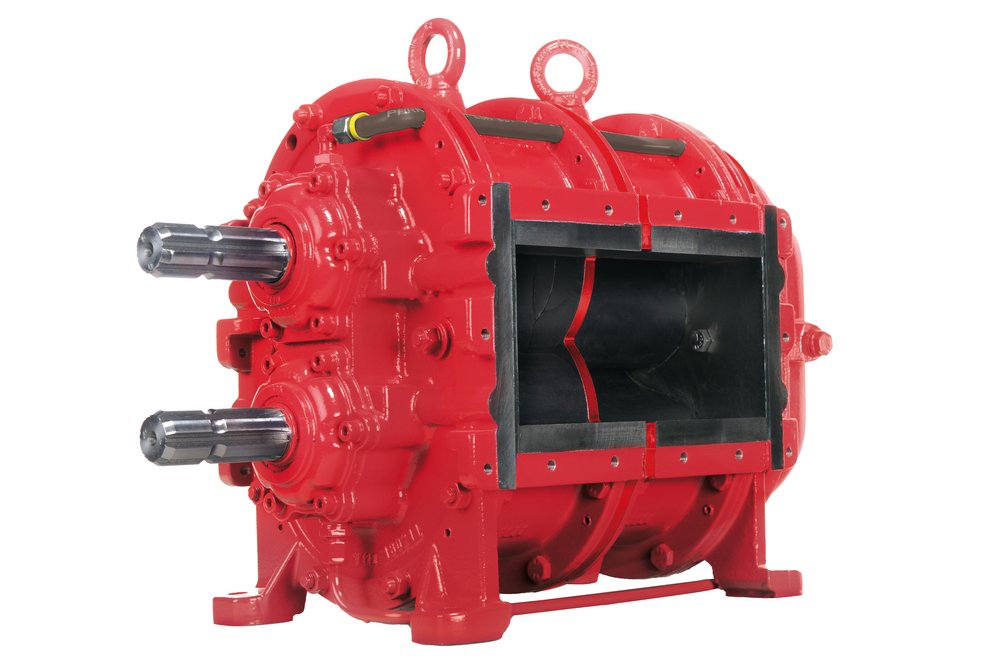
The Vogelsang FX series FarmerPump in six sizes, FX116-60 to FX116-360, up to 270 m³/h and 8 bar, and how to size one for a liquid manure duty.
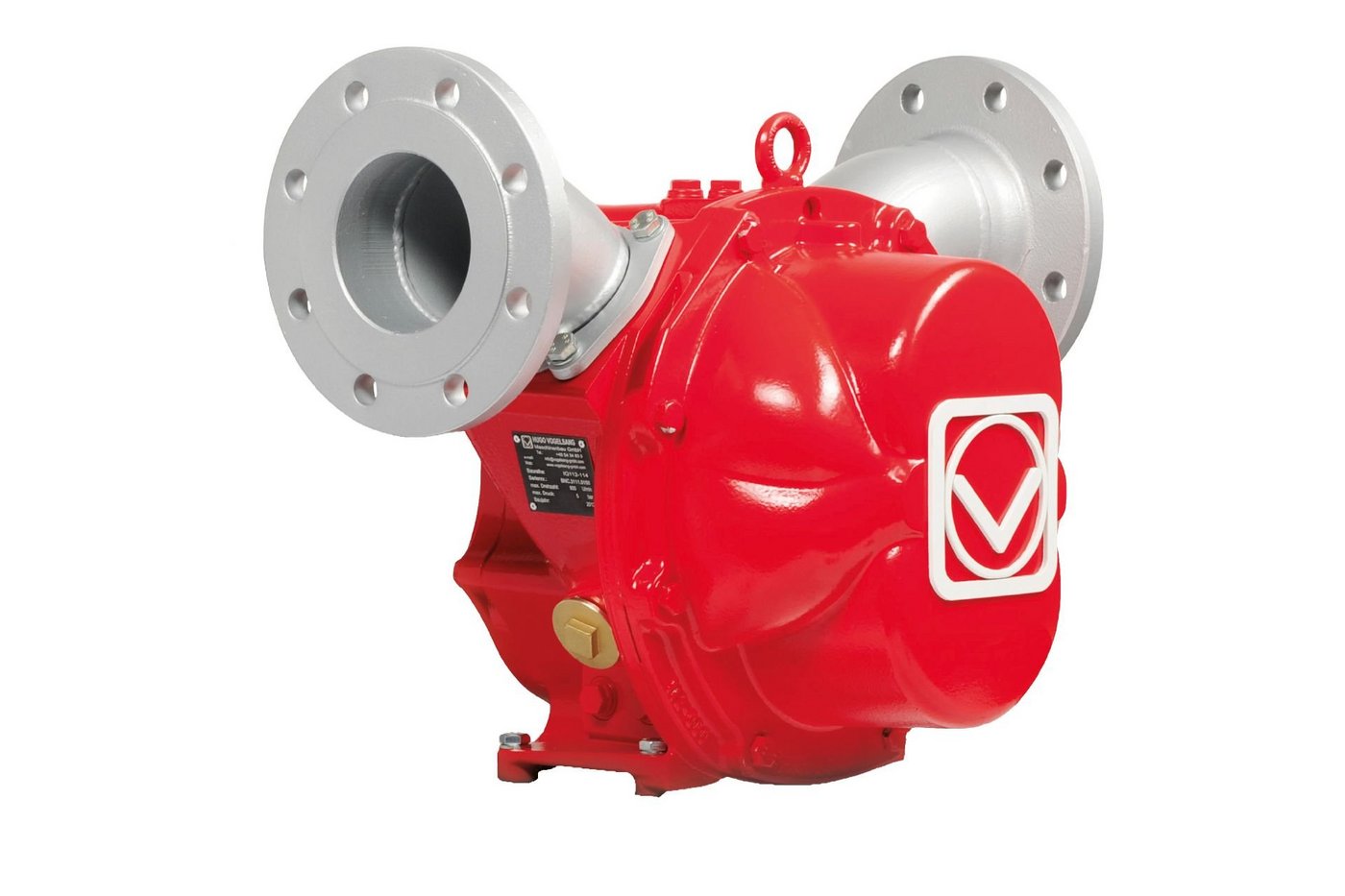
The Vogelsang IQ series rotary lobe pump in two models, IQ112 and IQ152, to 154 m³/h and 7 bar, with a one-piece housing that opens in the pipe.
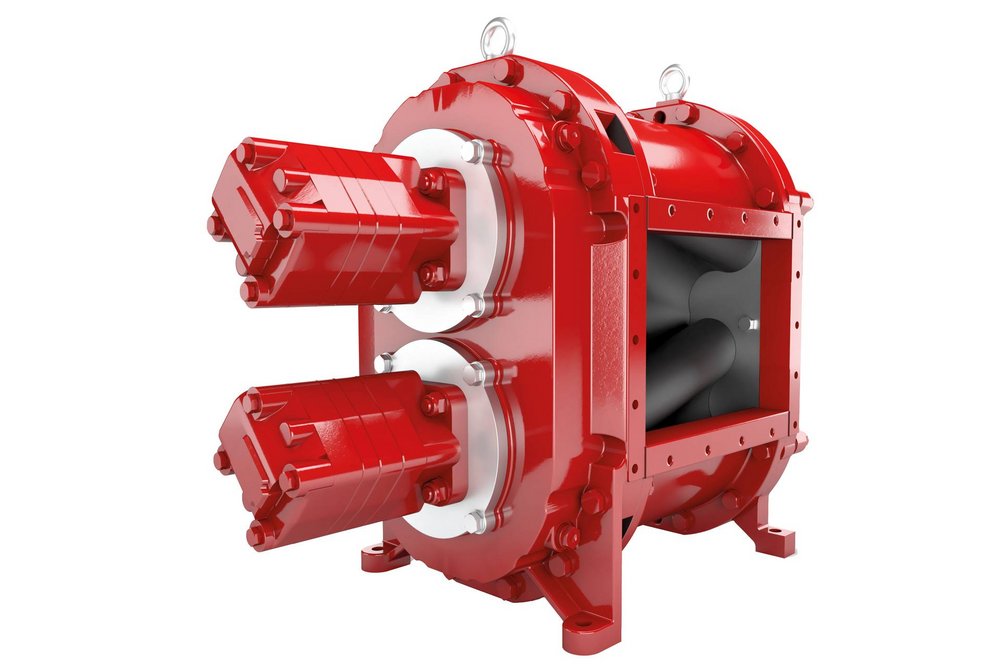
The Vogelsang LoadMaster rotary lobe pump for tank vehicles: up to 45% lighter and 20 cm shorter than a standard VX, to 8 bar and 6,030 l/min.
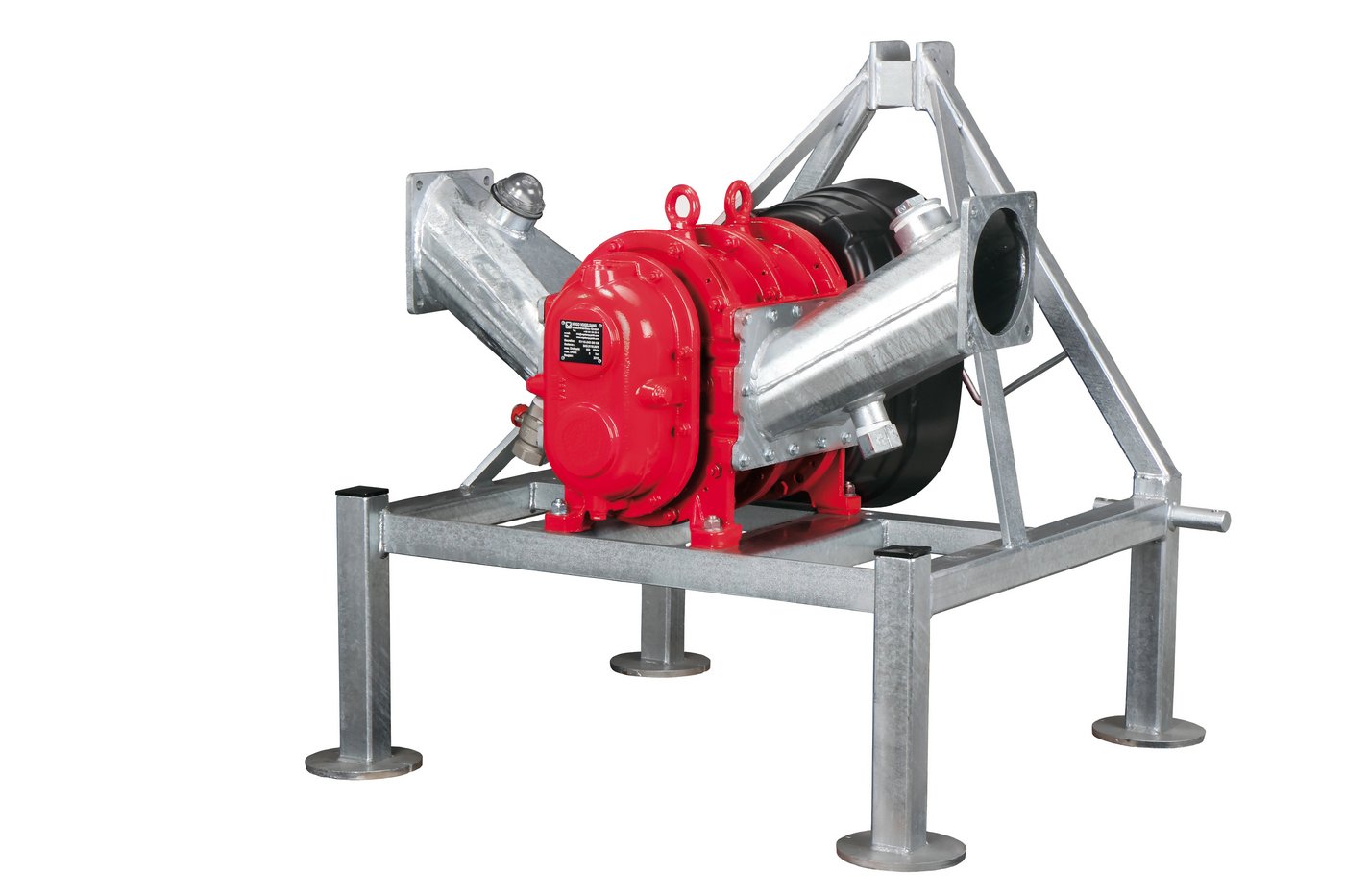
The Vogelsang R series rotary lobe slurry pump in two ranges, R116 and R136, to 5,000 l/min and 5 bar, with the full size list and where each fits.
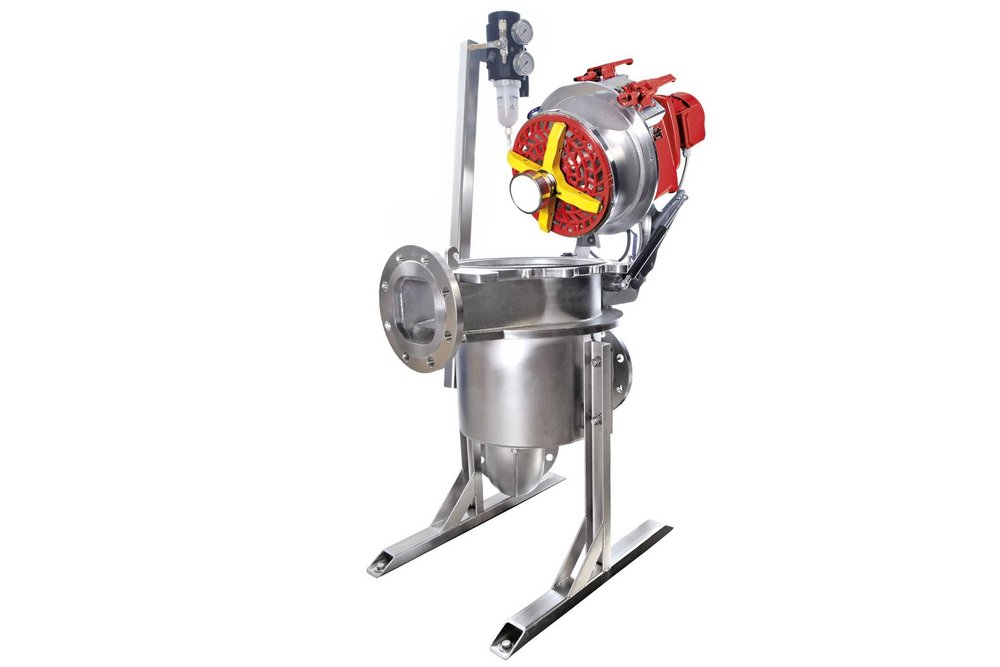
The Vogelsang RotaCut macerates fibre and coarse matter against a cutting screen and traps stones and metal upstream, protecting the pump behind it.
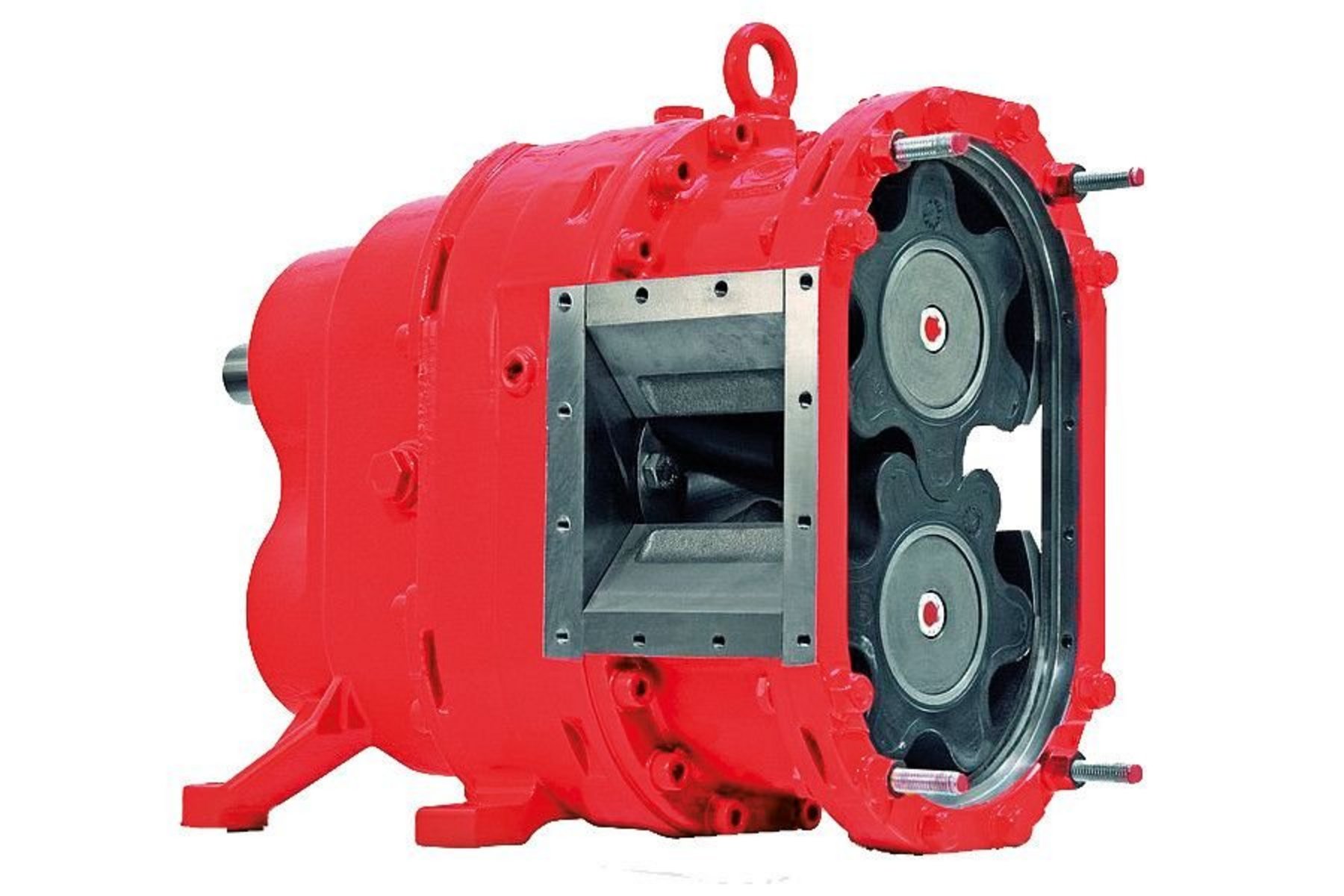
Flow, pressure and build options for every model in the Vogelsang VX series rotary lobe pump range, VX100 to VX230, and how to specify one for your duty.
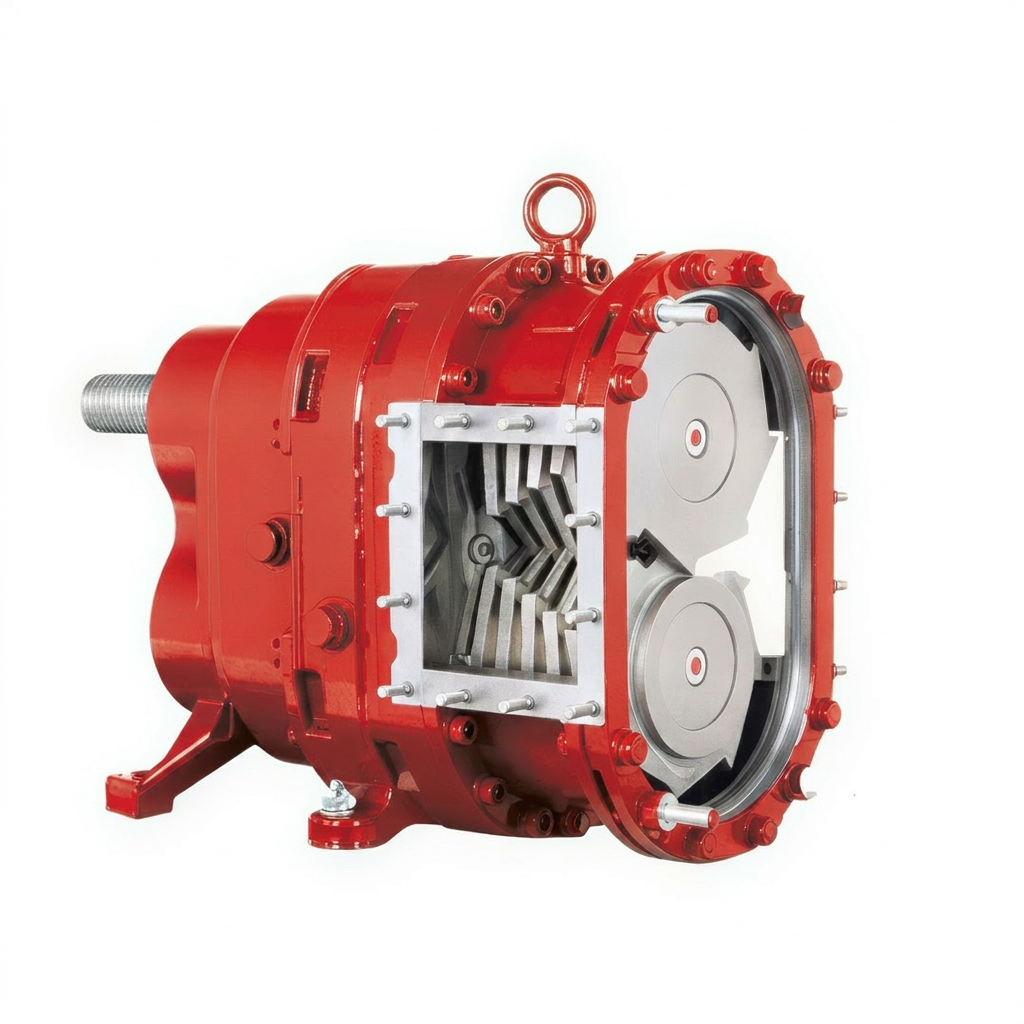
Vogelsang's twin-shaft wastewater grinder, in four series covering 50 to 7,164 m³/h, inline in a pipe or lowered into an open channel.
How to size & spec a slurry pump
Flow and head are the easy part, and the part everyone sends. What decides the build is the medium: the percentage of solids, the particle size, how abrasive it is, and how far the viscosity moves. Design for the worst case, not the typical day.
Then the system around it. Oversizing is the default mistake here, and it arrives by margin stacking: everyone in the chain adds a little for safety and nobody takes any out. Send us the duty and the medium, and we will select the type, size the unit and specify the materials and seal.
Frequently asked
What is a slurry pump?
A slurry pump moves abrasive, solids-laden media such as sludge and mineral slurry. It is not one pump type: heavy-duty centrifugal, progressive cavity and rotary lobe pumps all do slurry duties. What they share is a build that expects wear and puts it on parts you can replace.
What is the difference between a slurry pump and a water pump?
A slurry pump is built around abrasion. Thick castings, hardened or rubber-lined wetted parts, generous clearances and wear components you renew. A clean-water pump has none of that, so the solids go to work on the impeller and casing and the duty falls away.
Should I use a centrifugal or a positive displacement pump for slurry?
The trade rule of thumb is roughly 3–4% solids: below it a heavy-duty centrifugal usually wins on cost and flow, above it move to positive displacement. Viscosity shifts the line. Thick sludge and shear-sensitive media point to a progressive cavity or rotary lobe pump either way.
Why do slurry pumps wear out so fast?
Usually grit, and usually it is a symptom rather than the fault. On a wastewater works, grit reaching the pump means the grit removal upstream is not doing its job. The other common cause is running the pump too fast. Abrasive media want pumping slowly.
Can a slurry pump run dry?
No, and the damage differs by type. On a progressive cavity pump dry running burns through the stator and damages the rotor, which is catastrophic. On a rotary lobe or centrifugal pump you lose the mechanical seal, because a mechanical seal needs liquid to lubricate it. The root cause is nearly always suction conditions, or a valve someone left shut.
How do I size a slurry pump?
Start with flow and total dynamic head, then describe the medium: the percentage of solids, the particle size, how abrasive it is and how far the viscosity moves. Design for the worst case. Send us that and we will select the type, size the unit and specify the materials and seal.