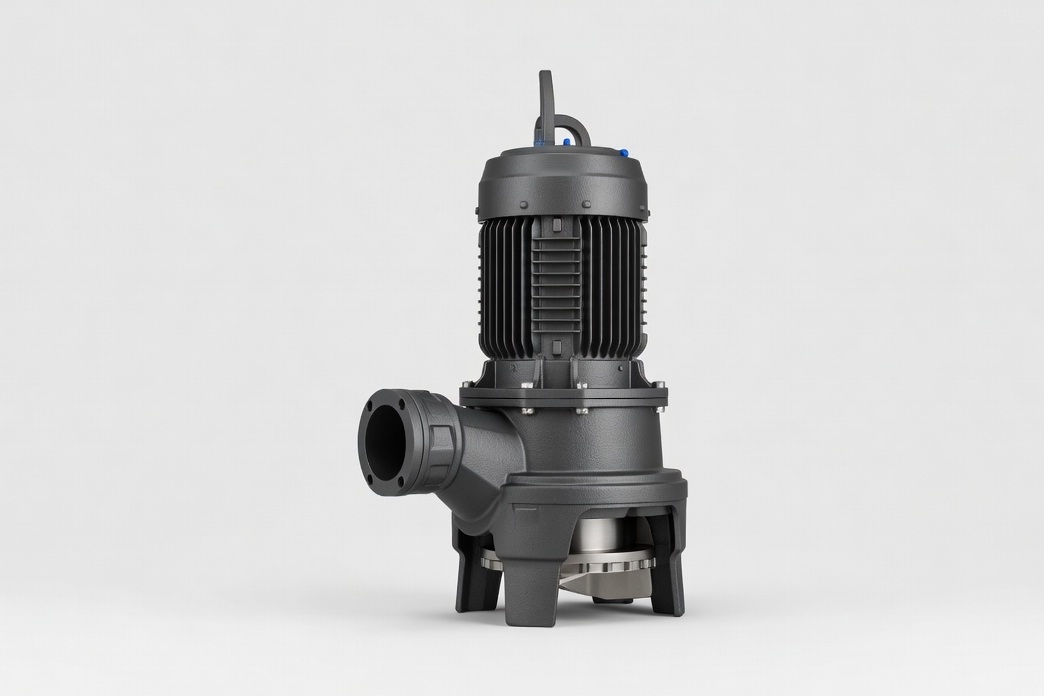
How a sewage grinder pump works
A rotating cutter works against a stationary cutter ring at the pump inlet.
Solids are drawn onto the cutters and reduced before they reach the impeller, so the wet end only ever handles macerated material. That is what lets a grinder pump discharge through a smaller bore than a solids-handling pump on the same duty, which is why they suit pressurised sewer systems.
The cutters are wear parts. When throughput falls off and nothing else has changed, they are the first thing to check.
When to choose a grinder pump
Choose a grinder pump when unscreened sewage has to travel through a small-bore line.
It suits pressurised sewer systems and lifting foul drainage from a site below the gravity main. The enquiry we see most often is a pump clogging on rag when the pump already suits the duty. That one is fixed upstream, not with another pump.
- Pressurised sewer systems, where the rising main is deliberately small
- Lifting foul drainage from a site below the gravity main
- Small wet wells where a solids-handling set will not physically fit
- Unscreened sewage and foul effluent on commercial and industrial sites
- Higher flows, where a solids-handling or channel-impeller pump moves more for less power
- Grit-laden media, which wears the cutting faces quickly
- Sites where the rag can be taken out upstream instead, which an inline macerator often does better
What a grinder pump is good and bad at
Wipes and fibre are cut before they reach the wet end, which is the failure mode that stops most wastewater pumps.
Reducing the solids first is what makes a small-diameter discharge line viable.
A compact submersible package suits wet wells that will not take a solids-handling set.
They dull gradually, and throughput falls before anything sounds wrong. Budget for the service kit.
Cutting costs energy. On higher flows a solids-handling pump is cheaper to run for the same duty.
Abrasion wears the cutting faces. Check the grit removal upstream before blaming the pump.
Pumps we supply
View all →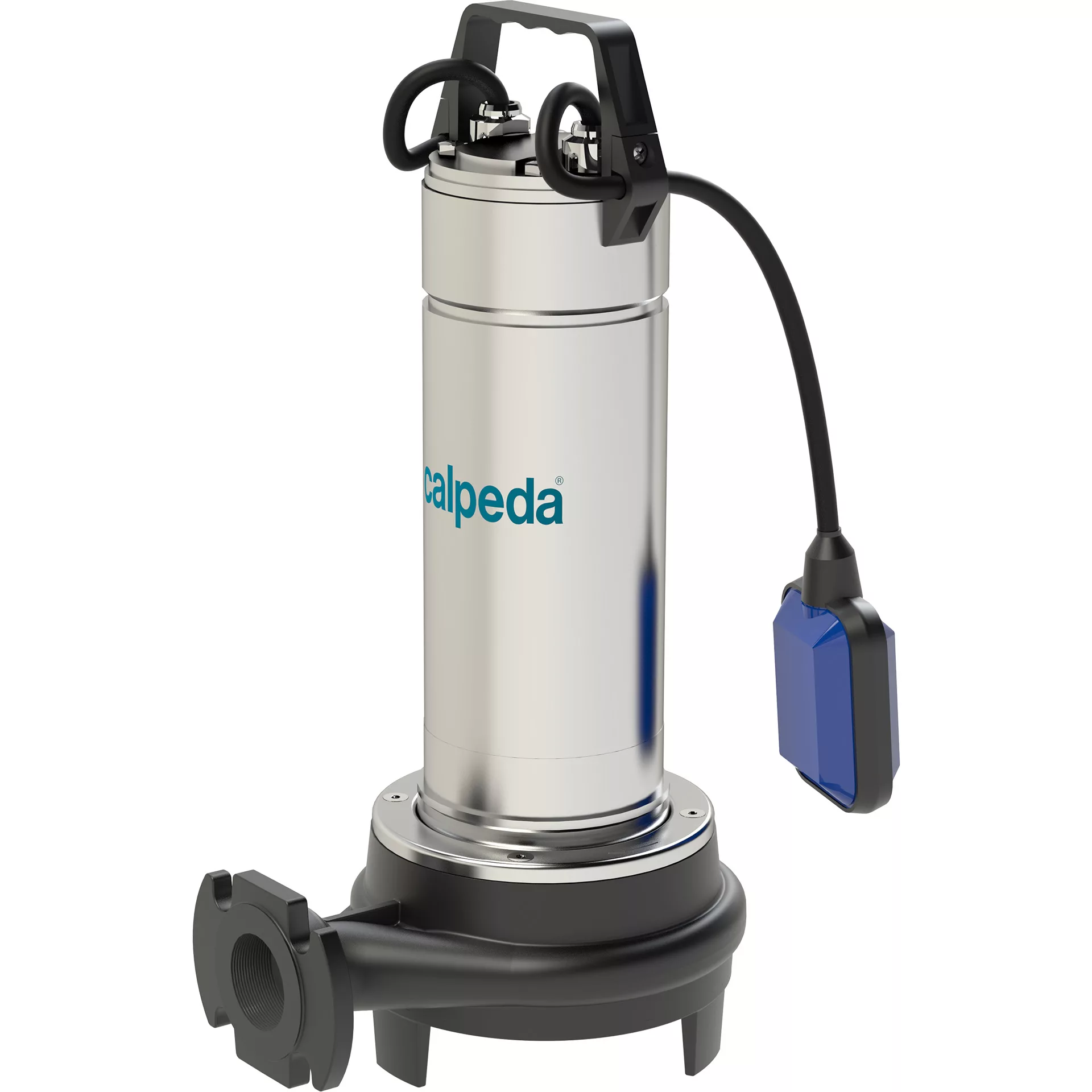
The Calpeda GQG cuts rag, paper and textile at the inlet and pumps it, giving 25 m of head on a DN32 line from 0.9 to 1.5 kW.
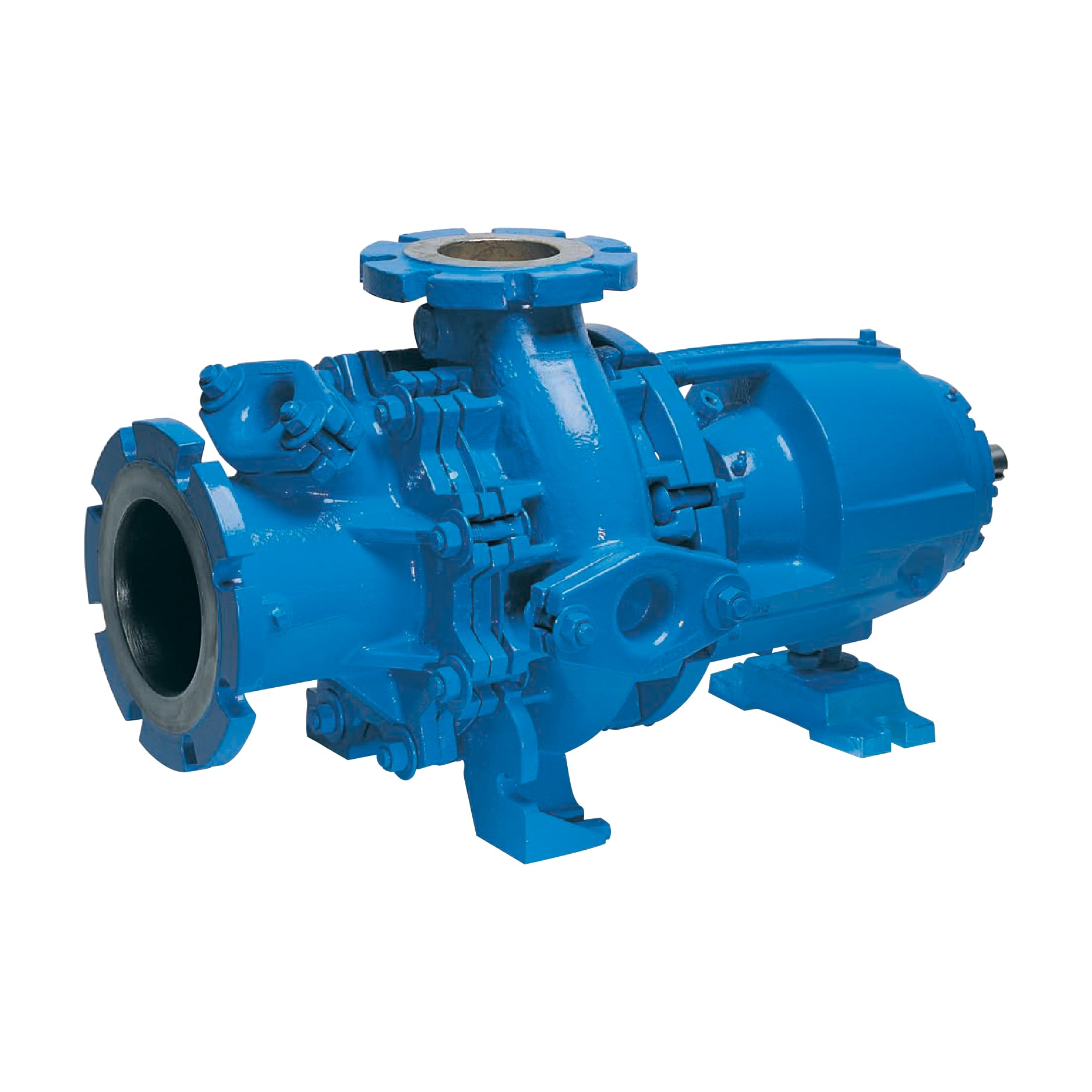
The Ebara ChopX cuts and pumps in one unit. Two cutting stages, a hard metal wet end, and a flushless seal option, for scum, FOG, sludge and manure.
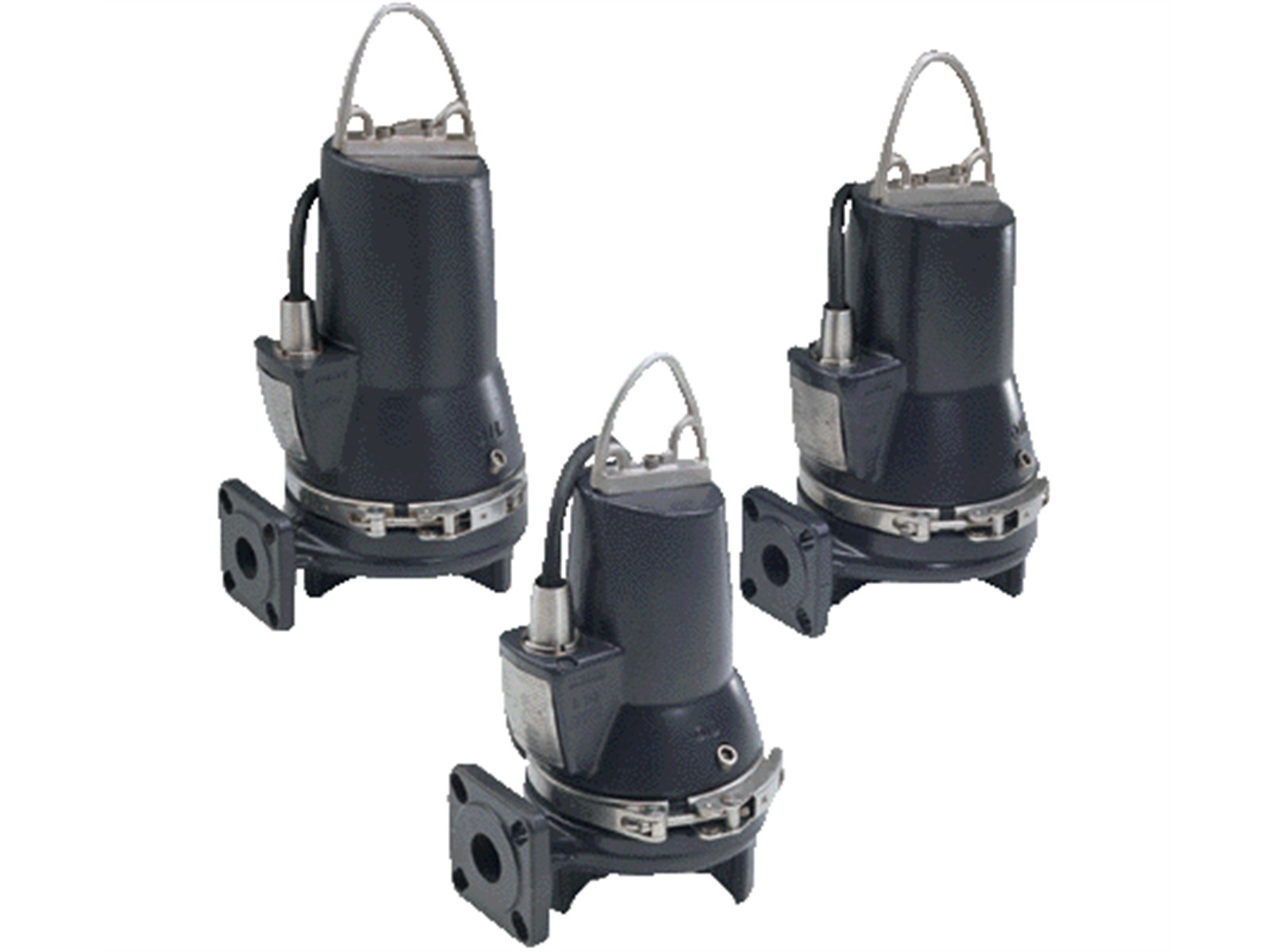
A submersible grinder pump that cuts sewage at the inlet, so a pressurised system can run on a small-bore rising main.
How to size and specify a grinder pump
Send us the flow, the total dynamic head, and what is actually in the medium.
Total dynamic head is the static difference plus the losses in the pipework, so we need pipe length and bore, and the bends and valves. Tell us whether the incoming sewage is screened and whether the site has a grit problem. We will come back with a specified pump.
Frequently asked
How does a sewage grinder pump work?
A rotating cutter works against a stationary cutter ring at the pump inlet. Solids are drawn onto the cutters and reduced before they reach the impeller, so the pump only ever handles macerated material and can discharge through a smaller bore than a solids-handling pump on the same duty.
What is a grinder pump?
A grinder pump is a submersible pump with a cutting head fitted at its inlet. The cutter shreds rag and solids on the way in, which lets the pump move unscreened sewage through a small rising main without blocking.
What is the difference between a grinder pump and a macerator?
A grinder pump cuts and pumps in one unit. An inline macerator only cuts: it sits in the pipeline ahead of a separate pump, which is the better arrangement when several pumps share one incoming flow or when the pump itself is otherwise correctly specified. See our inline macerators.
Why does my grinder pump keep blocking?
Usually the cutters have worn. They dull gradually, so throughput drops before the pump sounds any different. If the cutters are sound, look upstream: an unusually heavy rag load or a grit problem will defeat a correctly sized pump, and fitting the same pump again will fail the same way.