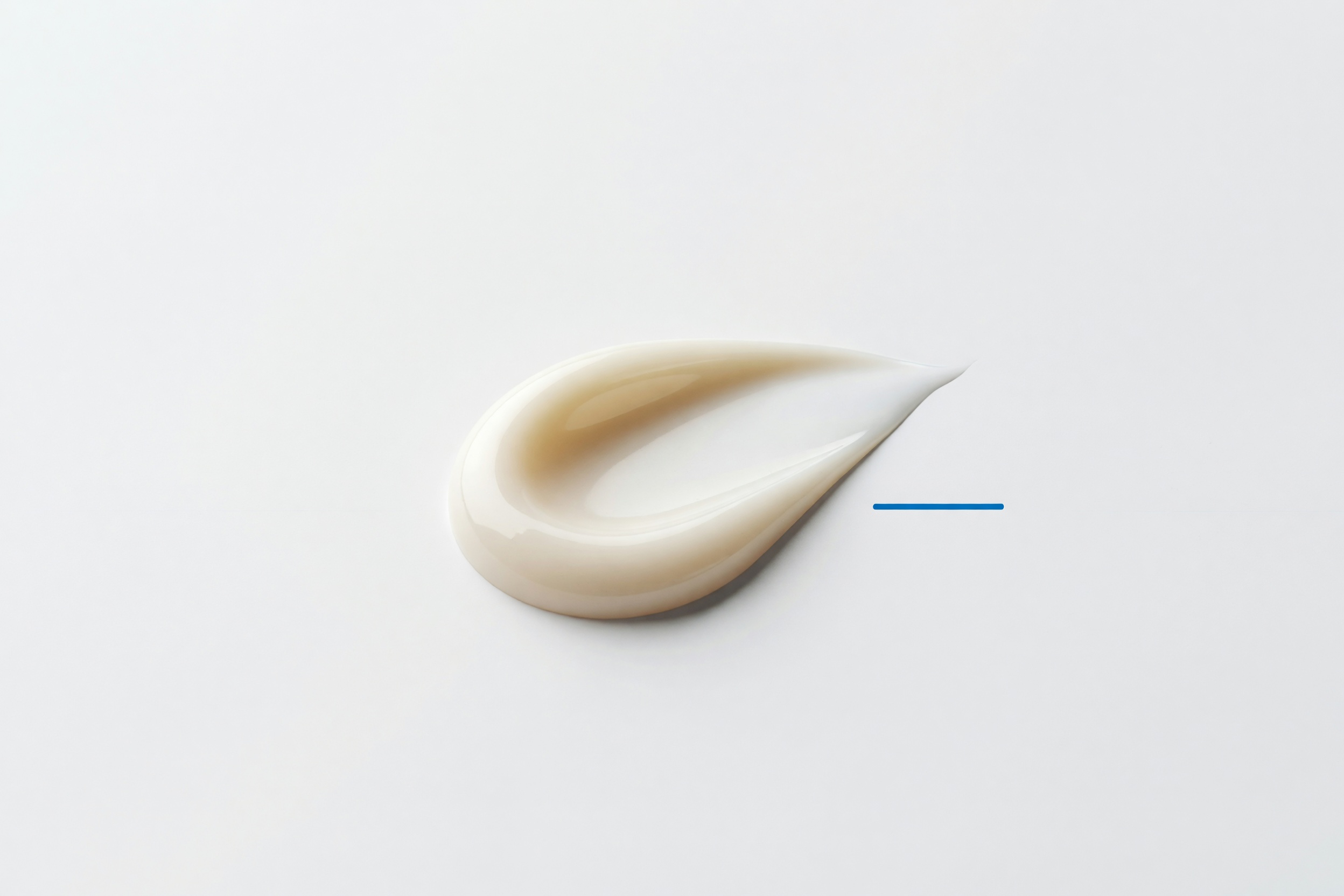
What shear does to a product
The duty is moving a product that damages easily and getting it to the other end intact. Plenty of process media are shear-sensitive. Emulsions and creams separate. Structured foods lose the texture they were made for. Crystal suspensions fracture. In water treatment, the flocs have to survive the journey to the next stage, and a pump that breaks them up has undone the dosing upstream of it.
Shear rises with speed and with tight clearances. The faster you force a medium through a small gap, the more stress it takes. That is why a high-speed centrifugal pump is the usual way to wreck a fragile product. It accelerates the medium hard, then passes it through fine clearances, and it does both on every revolution.
Abrasive media want the same treatment for the opposite reason. There the damage runs the other way, from the medium into the pump. Run a positive displacement pump too fast in an abrasive medium and you shorten its life quickly. Slow is the answer in both cases, which helps, because plenty of media are both.
The consequence of getting this wrong is quiet. Nothing trips, nothing alarms. The product arrives out of specification, the process gets questioned first, and the pump is blamed last.
What to look for
Look for a pump that moves the medium gently, not quickly.
- Positive displacement action at low running speed. Flow without high tip speed is the whole mechanism, and everything else on this list supports it.
- Large, open flow passages. Tight clearances are where shear is generated.
- Gentle filling. A pump that fills slowly and completely does less damage than one that snatches at the medium.
- Low-pulsation delivery, because repeated pressure spikes work on a structured product much as speed does.
- Wetted materials and elastomers matched to the medium, and to the cleaning regime if the duty is hygienic. On food duties the things that shorten a pump's life are temperature and weak cleaning, not rag.
- A drive you can turn down. Variable speed lets you trim to the slowest setting that still meets the duty, which is what a shear-sensitive product wants.
A high-speed centrifugal pump is the wrong tool for a fragile product, and nothing you specify elsewhere on the pump set rescues it.
Low-shear pumps
View all →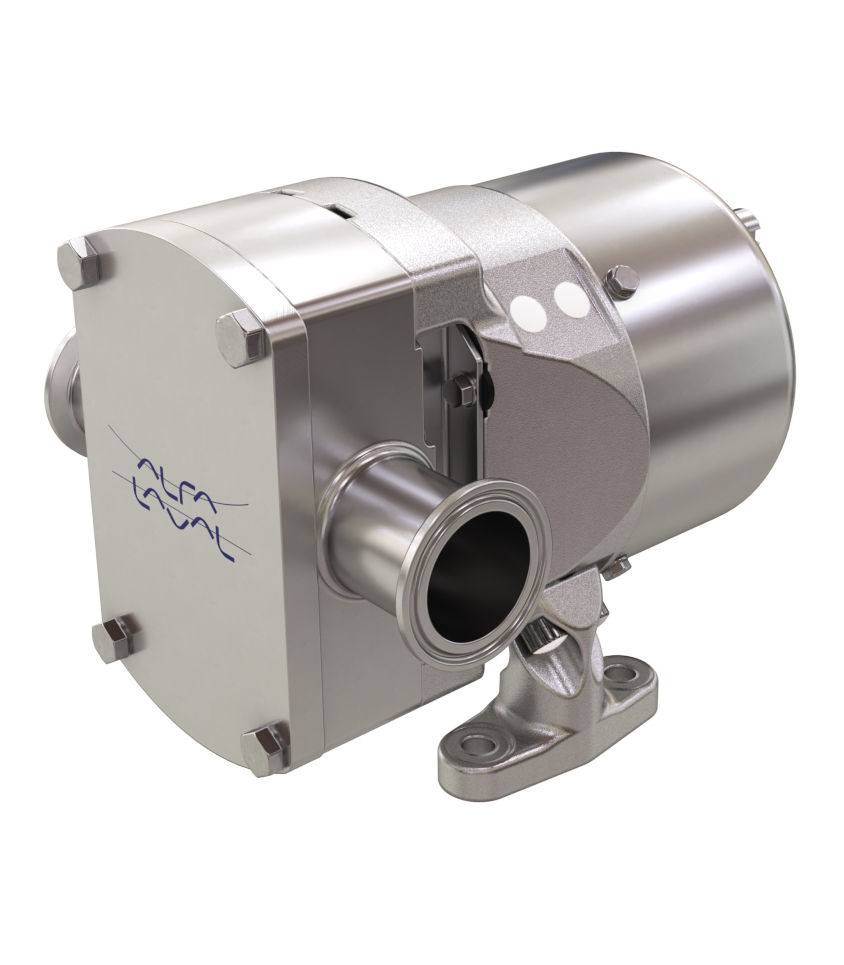
Alfa Laval's cost-effective hygienic rotary lobe pump, in 10 displacements to 77 m³/h and 8 bar, with an all-stainless exterior.
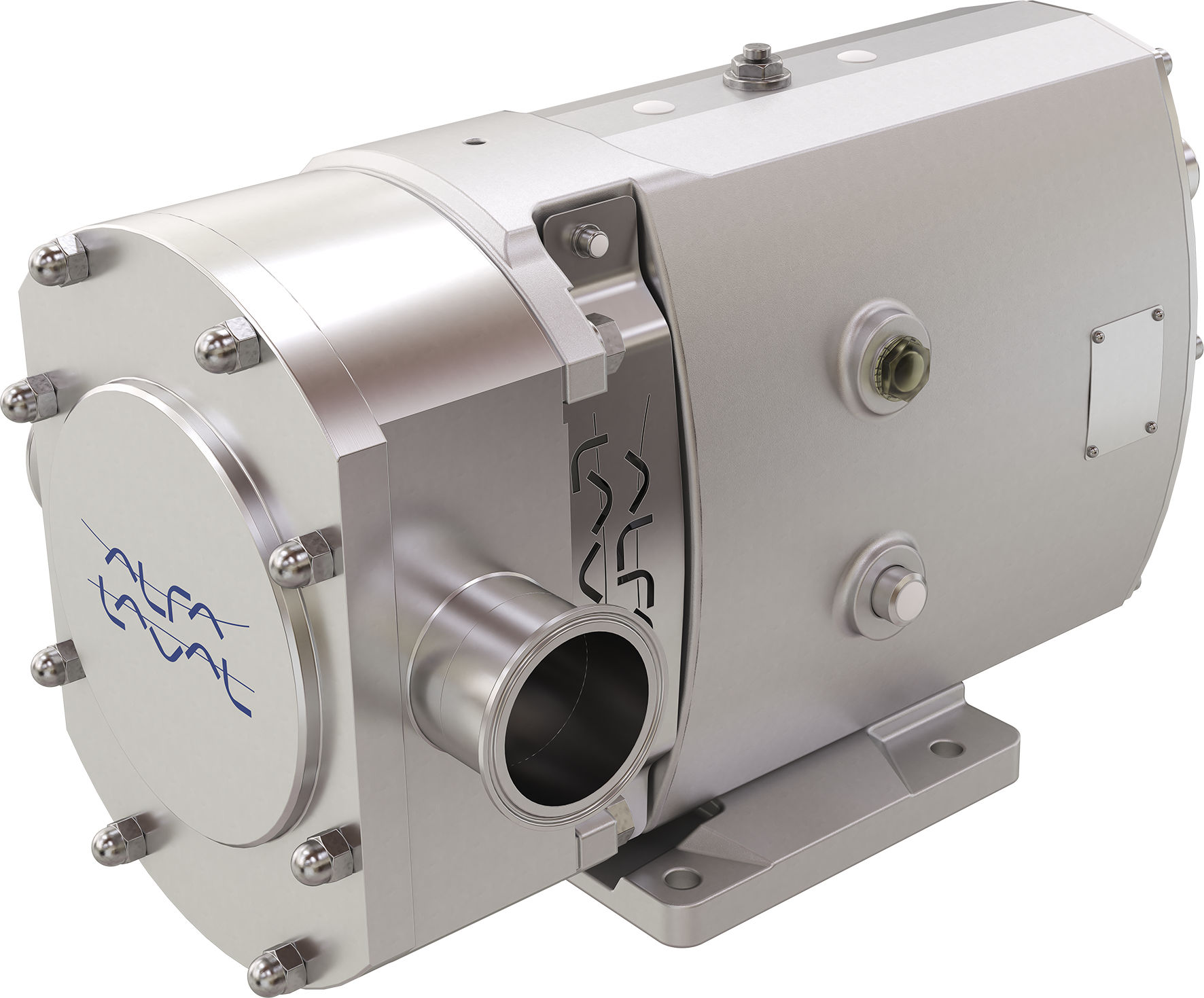
Alfa Laval's hygienic rotary lobe pump for shear-sensitive and viscous product, in 12 displacements to 106 m³/h and 20 bar.
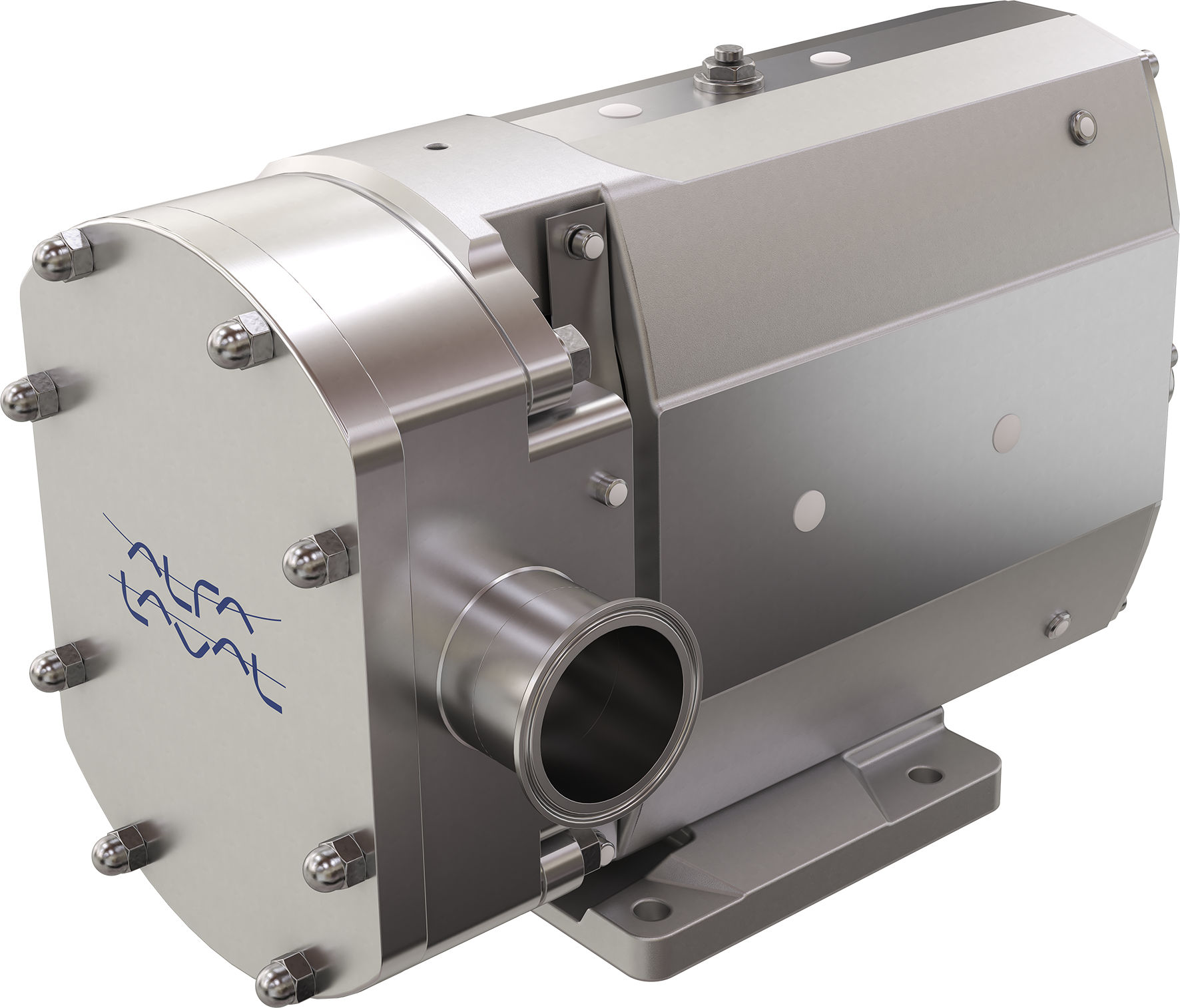
Alfa Laval's premium hygienic rotary lobe pump, in 14 displacements to 115 m³/h and 15 bar, with a fully drainable pump head for CIP and SIP.
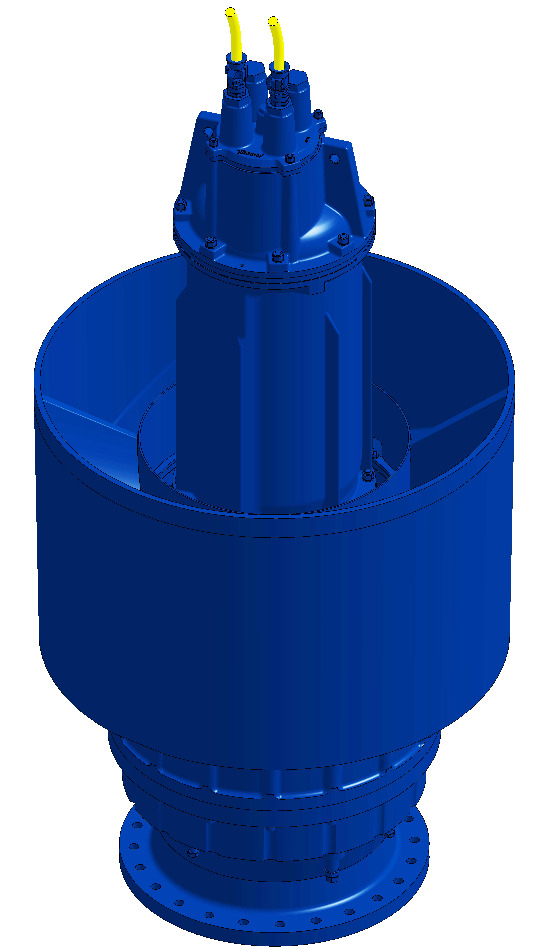
Hidrostal Axial Column Pump: 6–1500 l/s at discharge heads up to 20 m, screw centrifugal impeller, for land drainage and flood pumping stations.
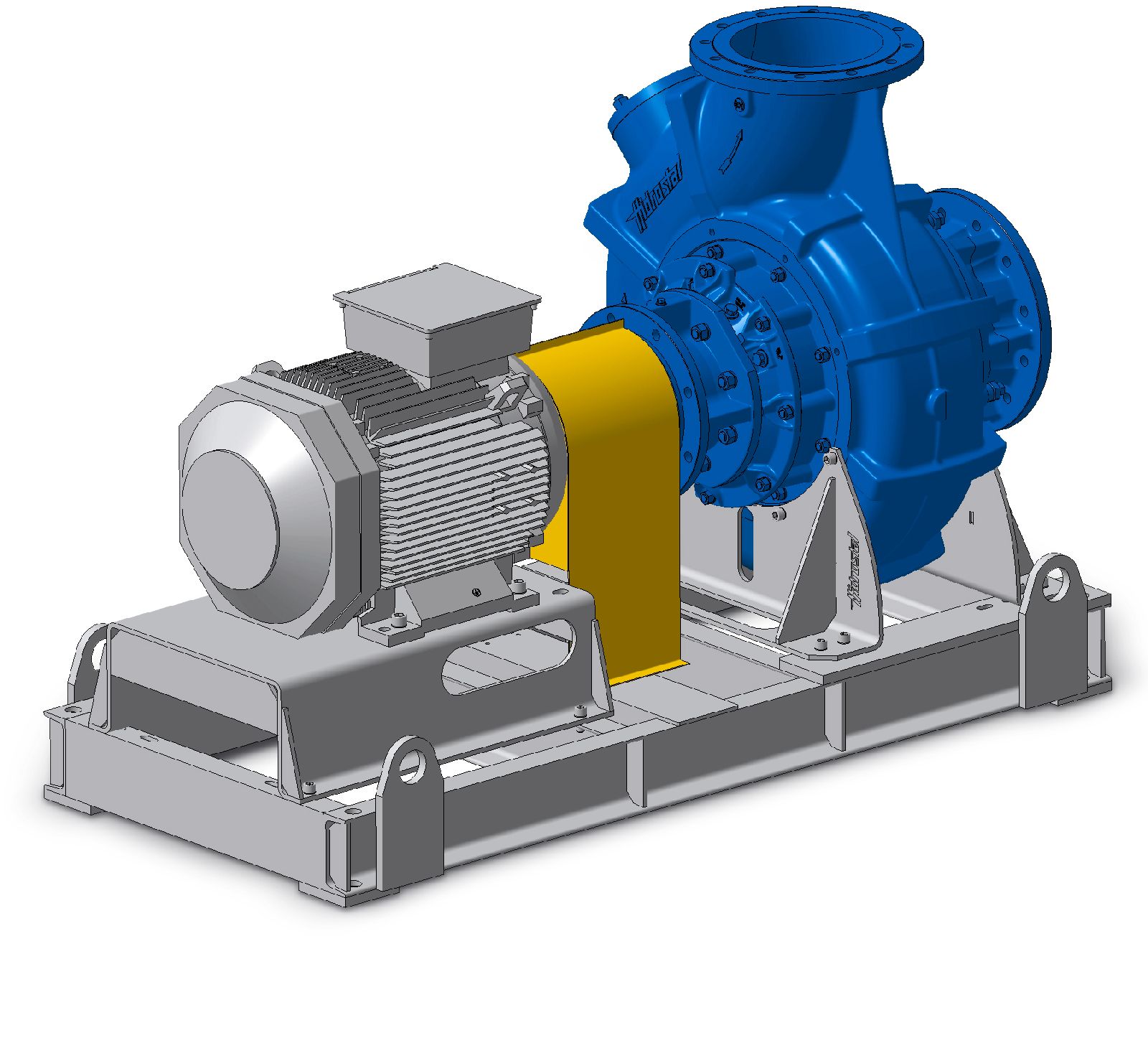
Hidrostal bearing frame pumps: dry-installed screw centrifugal end suction, 0.5–3000 l/s to 90 m, 32–700 mm, horizontal or vertical. Specs and selection.
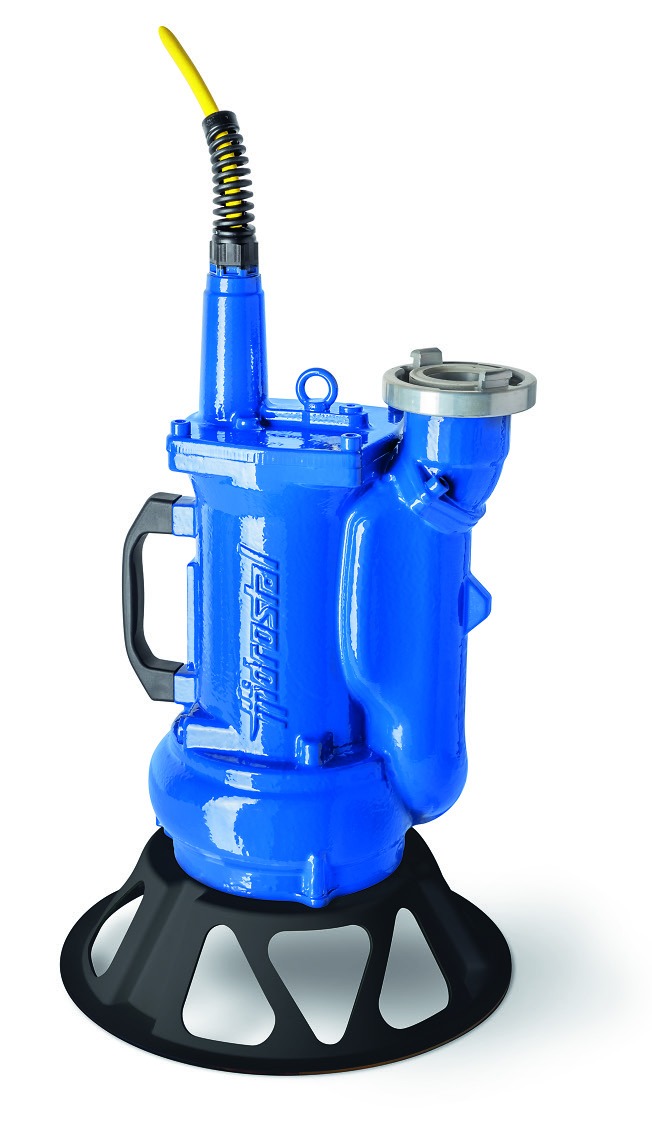
Hidrostal compact pumps: portable screw centrifugal field units, 0.8–24.6 l/s to 17.7 m, 50–75 mm free ball passage, from 23 kg. Specs and selection.
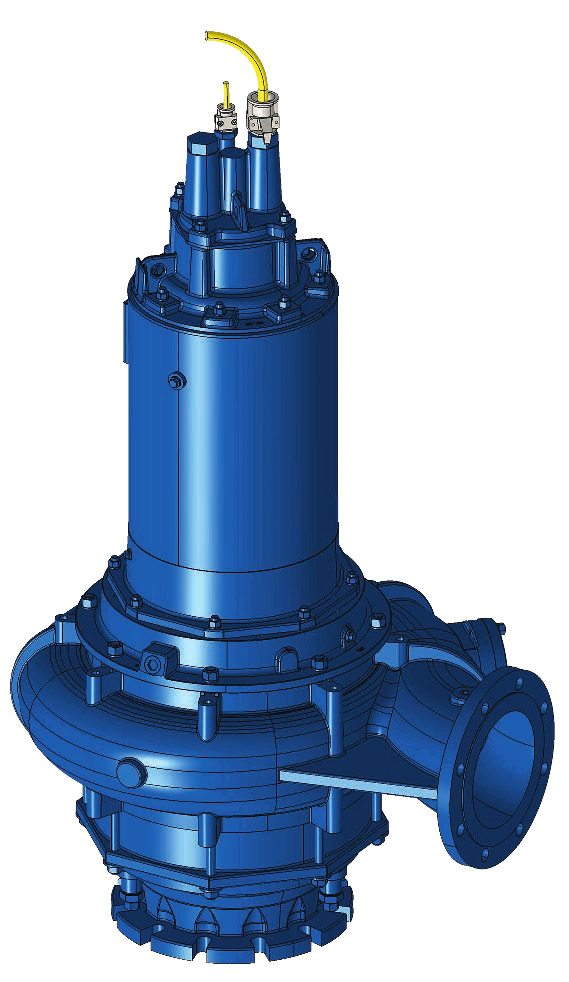
Hidrostal immersible pumps: 0.5–3000 l/s to 90 m head, closed-loop motor cooling so they run dry, part or fully submerged. Dry pit specs and selection.
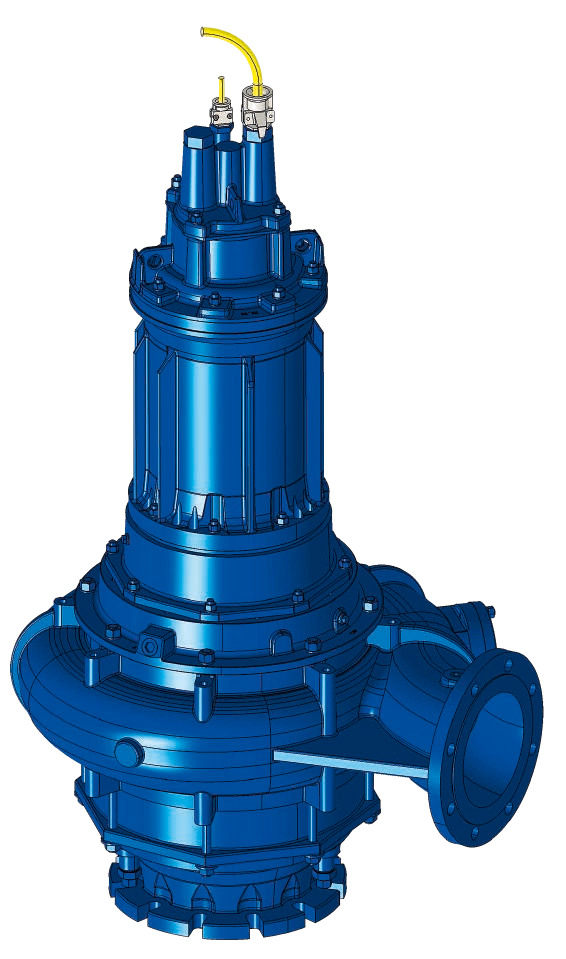
Hidrostal submersible pumps: up to 2500 l/s and 100 m head, screw centrifugal hydraulics, motor cooled by the liquid it sits in. Specs and selection.
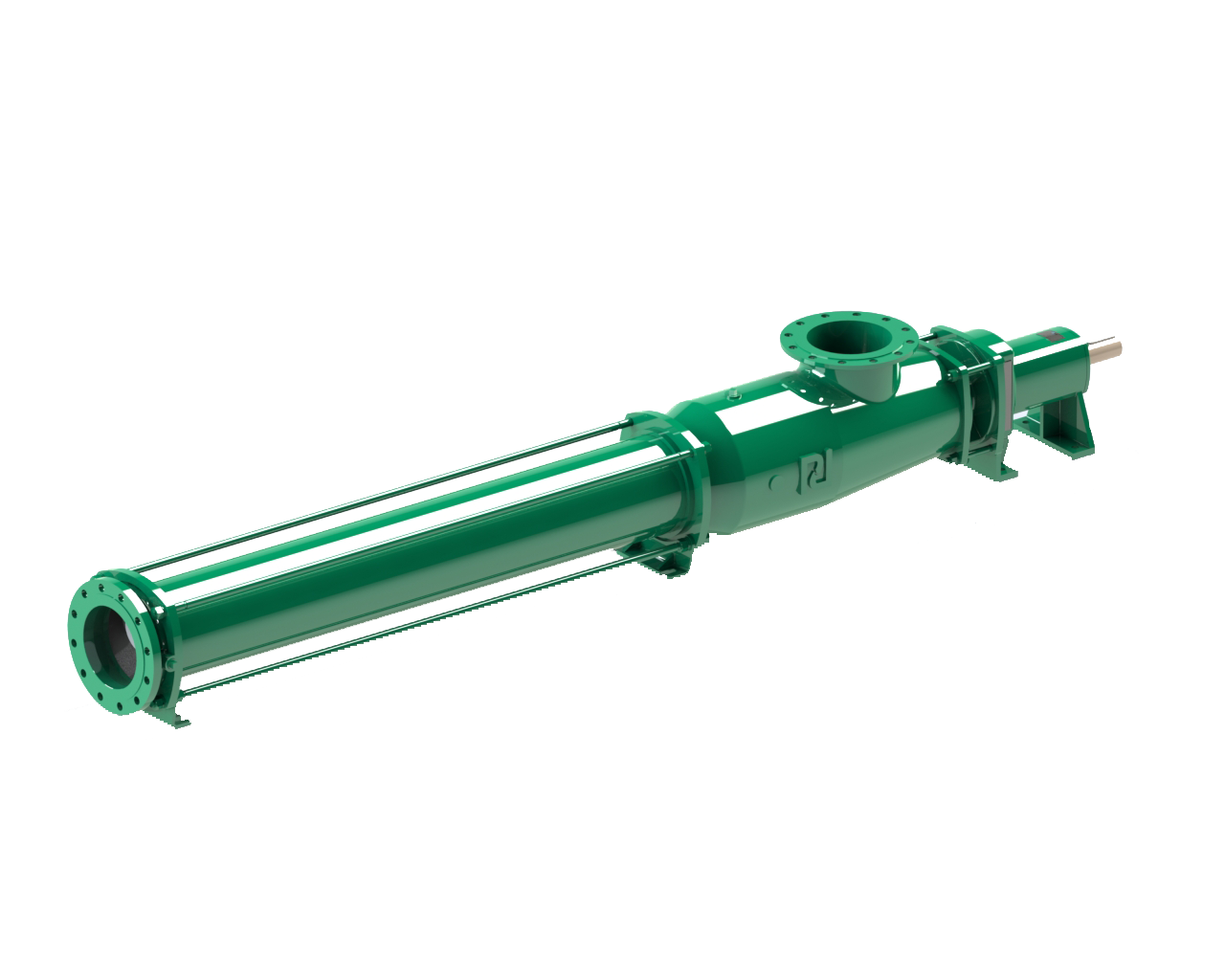
Roto's small-capacity progressive cavity range, for metered dosing and transfer of thick, solids-laden media.
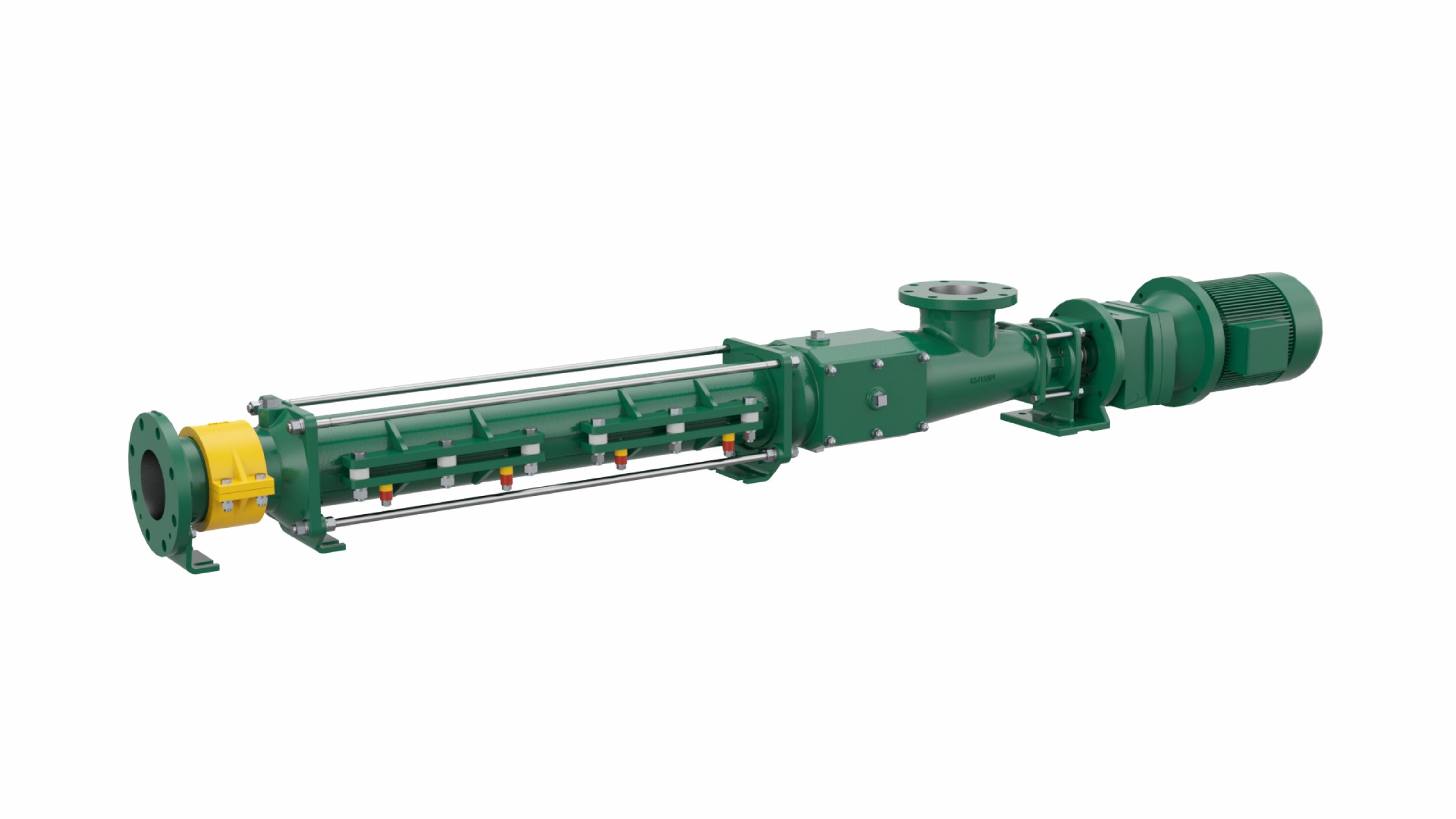
Roto's extra-large-capacity progressive cavity range, on extended geometry, built for volume at low pressure.
How to select a low-shear pump
Select a positive displacement pump and run it slowly. A positive displacement pump moves a fixed volume per revolution, so you get the flow you need at low rotational speed, and low speed is what keeps shear down. A centrifugal pump takes its flow from tip speed, which is the thing you are trying to avoid.
The types worth looking at:
- Rotary lobe suits emulsions, creams and hygienic food duties. Smooth, low-pulsation action through large open passages.
- Progressing cavity is a helical rotor turning in an elastomer stator. It carries flocculated slurry and fragile solids very gently, and it is the type to reach for when the solids have to stay whole.
- Peristaltic keeps the medium inside the hose, so there are no clearances to shear it and nothing to seal.
- Air-operated diaphragm has no fast-moving clearances either. The trade-off is running cost. Compressed air is expensive to produce, so where electricity is available we would specify electric and use one of the three above.
Solids content pushes you the same way. The trade rule of thumb puts the boundary between centrifugal and positive displacement at roughly 3–4% solids. It is a rule of thumb, not a specification, so treat it as the point where the question changes rather than a figure to quote back at anyone.
Positive displacement is forgiving in ways that matter on a delicate duty. It will pump broadly whatever you can get into it. With the right seal selection it tolerates a degree of cavitation, where you get vibration rather than the destruction the same conditions cause in a centrifugal. And its flow is near constant, holding rate to within a few per cent as the pressure moves, where a centrifugal's flow moves a good deal more. On a product that has to be dosed or blended, that steadiness is worth as much as the gentleness.
Then the cost side, because there is one. A positive displacement pump is dearer than a centrifugal for the same duty. It is physically larger, because it runs slower. And it will keep pushing against a closed discharge, so pressure relief has to be designed in rather than assumed. Where a centrifugal genuinely is unavoidable, a large slow impeller shears less than a small fast one, and that is the best you can do with the wrong type.
The rest of the sequence still applies: work through how a duty gets selected for the duty point, the viscosity in cP or cSt, the materials, the temperature and the seal. Shear sensitivity comes at the end of the questions we ask, and being last is why it gets missed. Ask it anyway. Is the medium shear-sensitive? Does it need to keep its solids intact? Is it abrasive?
Frequently asked
What is a low shear pump?
A low shear pump moves a medium gently, so the medium survives the journey. It runs at low speed, through large open passages, and avoids the fast, tight clearances that split emulsions, fracture crystals and break up flocs. In practice that means a positive displacement type.
What does shear do to a product?
Shear is the stress a medium feels when its layers slide past each other at speed. Too much of it separates emulsions, fractures crystals, breaks up flocs and damages the structure of a made product. The damage is usually permanent, so you design it out rather than manage it.
Why avoid a centrifugal pump for shear-sensitive media?
A centrifugal pump gets its flow from a fast impeller and passes the medium through fine clearances. Both generate shear, and it does both on every revolution. Where a centrifugal cannot be avoided, a large slow impeller shears less than a small fast one.
Which pumps are low shear?
Positive displacement types run slowly and handle delicate media well: rotary lobe, progressing cavity, peristaltic and air-operated diaphragm. Rotary lobe suits creams and emulsions. Progressing cavity suits flocculated slurry and fragile solids that have to stay whole.
Does a low-shear pump cost more to run?
Usually it costs more to buy, since a positive displacement pump is dearer and physically larger than a centrifugal for the same duty. Running cost depends on the type. An air-operated diaphragm is the expensive one, because compressed air costs more to produce than electricity.
Can Channel Pumps specify a low-shear pump for my product?
Yes. Tell us what you are moving and why it is delicate, plus the flow and the total dynamic head, and we will select a type and specify the build around it. If a pump you already have is degrading the product, we will look at the system before quoting a replacement.