Why the pump is too big, and what that costs you
Oversizing arrives by margin stacking, and nobody in the chain is careless. The customer states a flow rate. The consultant adds margin for future duty, reasonably. The contractor adds margin. The subcontractor installing it adds a bit more flow or pressure. Four sensible decisions later, the pump is far too big.
Two things follow.
It stays uneconomical for the life of the building
Power rises with flow and pressure, so a 3 kW application ends up with an 11 kW motor on it. Treat that as an illustration of how margins compound rather than a measurement of your installation. The shape of it is right: you pay the difference in capital, in cabling, in starter and in running cost for as long as the plant is there.
The hydraulics are the worse half
A centrifugal pump run off the end of its performance curve needs back pressure it is not getting, and the suction cannot feed it. Size for 10 m³/h when the tank will only give you five and you are pumping air. That is cavitation. It pits the impeller, fails the mechanical seal, and puts vibration and noise into the pipework.
That last consequence is the one that decides building services jobs. A sewage works can live with a pump that rumbles. An office floor above the plant room, a hotel bedroom on the same riser or a ward on a quiet night cannot, and the complaint reaches the facilities manager long before the seal fails.
The number to check is the margin between NPSHa and NPSHr at the duty point. NPSHa has to exceed NPSHr, and when it does not, you cavitate. The cause is almost always suction conditions: a suction tank that is too small, or a suction head that is too small. Theory is rarely where this goes wrong.
The system the pump sits in
Pumps in buildings get specified as though the pipework, the suction tank and the rest of the installation were somebody else's problem. Often they genuinely were, because they were installed by others or inherited with the building. Most of what then goes wrong is a system fault presenting as a pump fault, which is why replacing like for like fixes nothing.
Two more that recur, both unglamorous. Somebody shuts an isolating valve and forgets it is shut, then the pump runs; a mechanical seal needs liquid to lubricate it, so take the liquid away and the seal goes. And on drainage duties, rag. Wipes and fibre bind up the wet end, and a building full of public washrooms produces plenty of both. If a pump is clogging on rag, fitting the same pump again will clog it again. The answer is usually removal upstream, a macerator or a chopper, not a bigger motor.
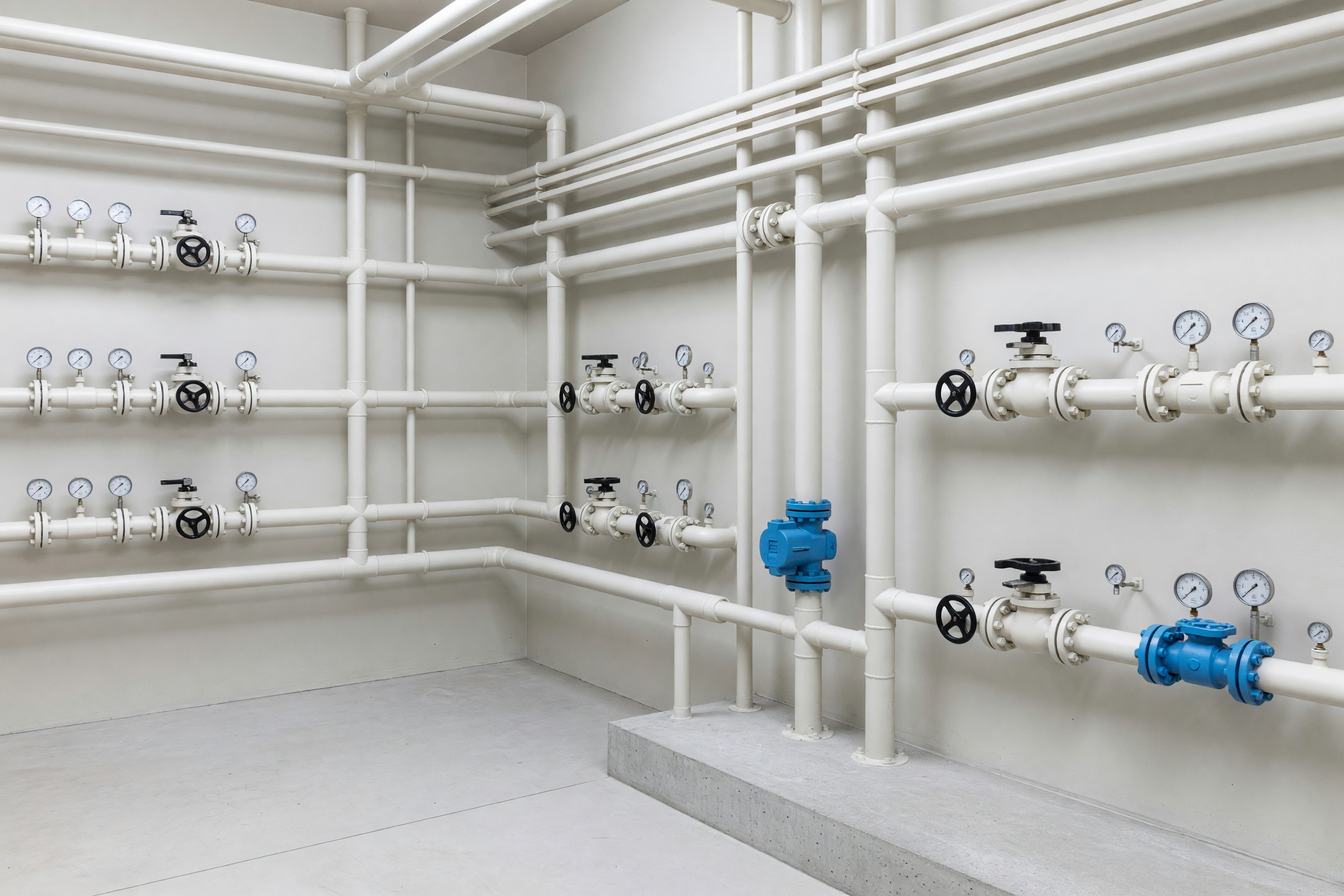
Inside a commercial plant room
What suits each of the three duties
Heating and chilled water circulation
Closed circuits carry clean water, or media that behave as water, at moderate head. That is centrifugal territory and there is rarely a good reason to look elsewhere. Select against the real duty point rather than the stacked one, then read the power off the curve once that point is fixed.
A variable speed drive will pull an oversized pump back into a usable part of its curve, and on an existing system it is usually the cheapest honest fix. It is not a reason to specify the bigger pump in the first place. You still bought the motor, the starter and the cable, and you still run a pump away from its best efficiency point.
Cold water boosting
A booster set is pump, motor, baseplate and controls, sized against the flow the building actually draws and the head to the highest outlet. Our booster set range covers the common configurations, and duty and standby is normal wherever a building cannot lose water for the afternoon. The trade-off is capital and plant room footprint, so it is a decision to make deliberately rather than by default.
Boosting is also where the suction side bites hardest. A break tank that is undersized, or a suction head that leaves no margin, produces exactly the cavitation described above, and it does it in a building where somebody will hear it.
Drainage and effluent lifting
Basement drainage, car park sumps and pumping stations serving a site all move a medium with solids in it. That means a solids-handling wet end, usually a submersible unit in a wet well, and a macerator where the incoming rag load justifies one. Match the pump to what will actually arrive, not to what the drainage drawing assumes.
Where a medium stops behaving as water, the trade rule of thumb is roughly 3–4% solids: above that, move to positive displacement. Most building drainage sits below the line, so this matters mainly on sludge and on the industrial end of a mixed site. Straight water transfer between tanks is a different duty, and it has its own transfer page.
Pumps we supply for building services duties
View all →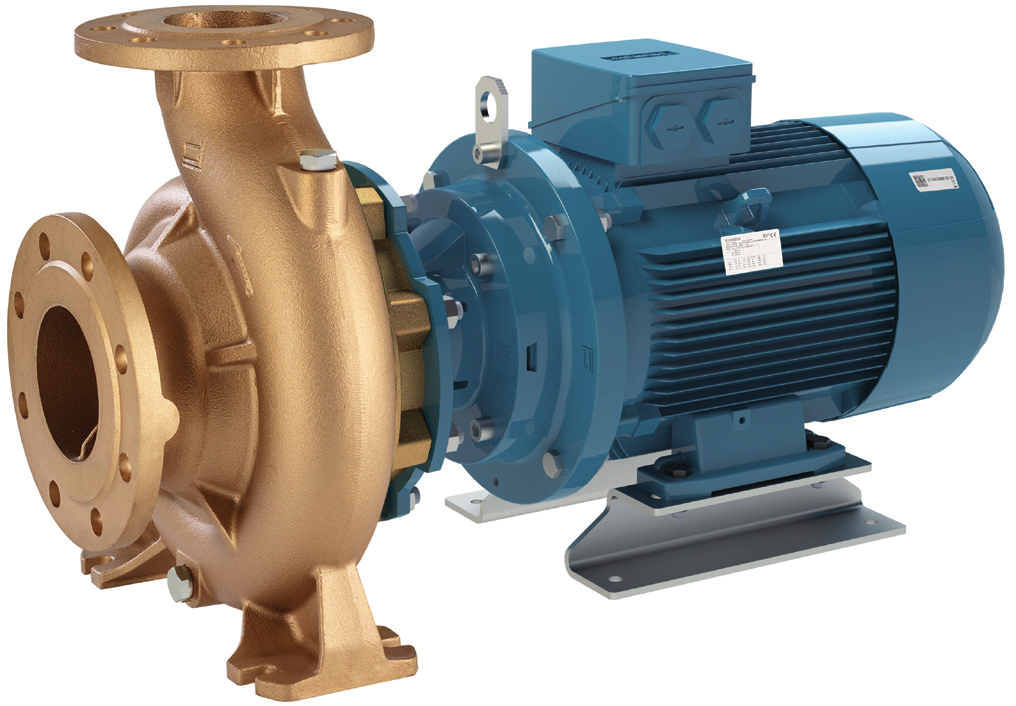
Calpeda BNM, BNMS, BNM4 and BNMS4 are the bronze versions of the NM, NMS end suction range, on EN 733 dimensions and rated to 10 bar.
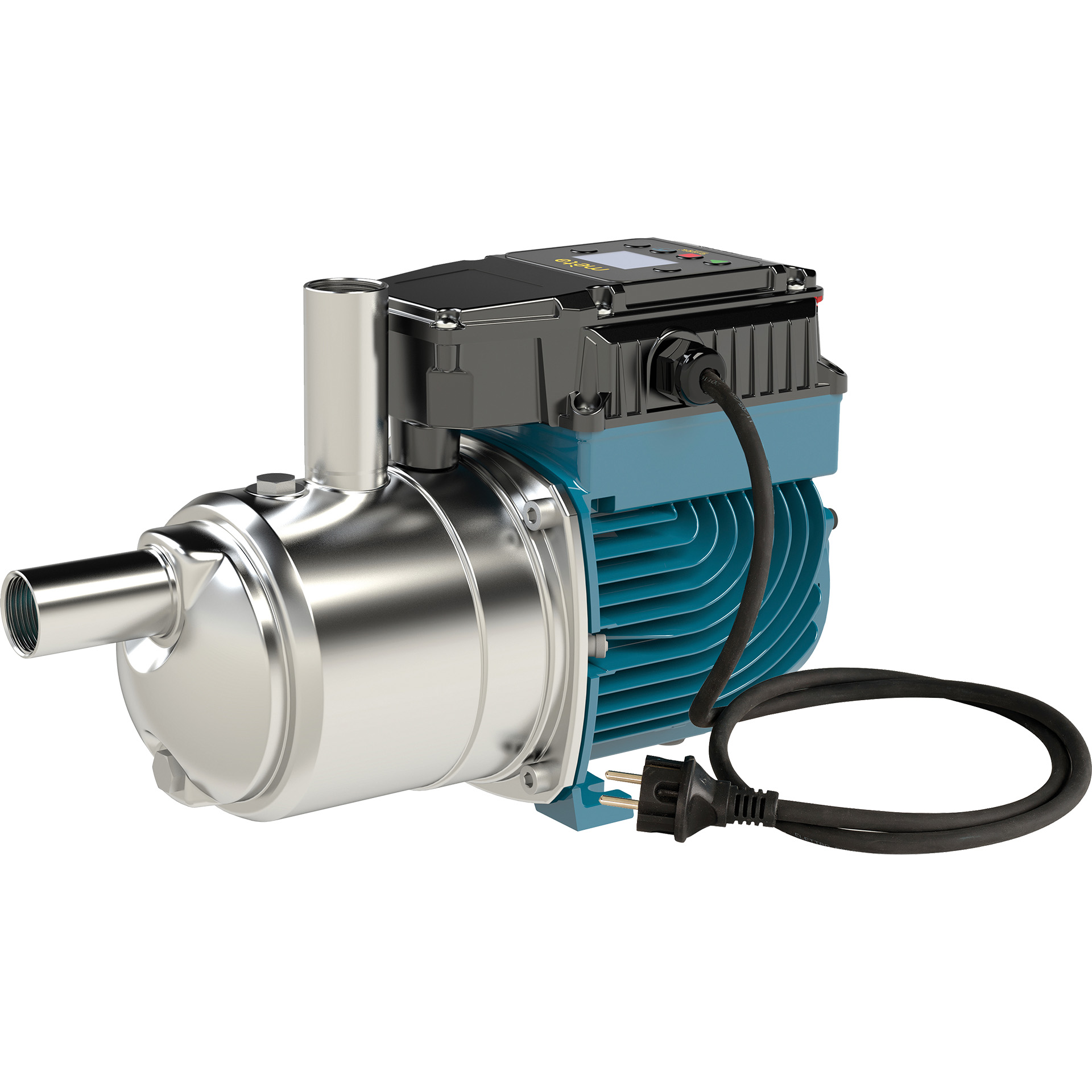
Calpeda e-idos pumps carry the pressure transducer and control on board. MÈTA, E-MXP, E-NGX and E-MPS, to 8 m³/h and 66.5 m per pump.
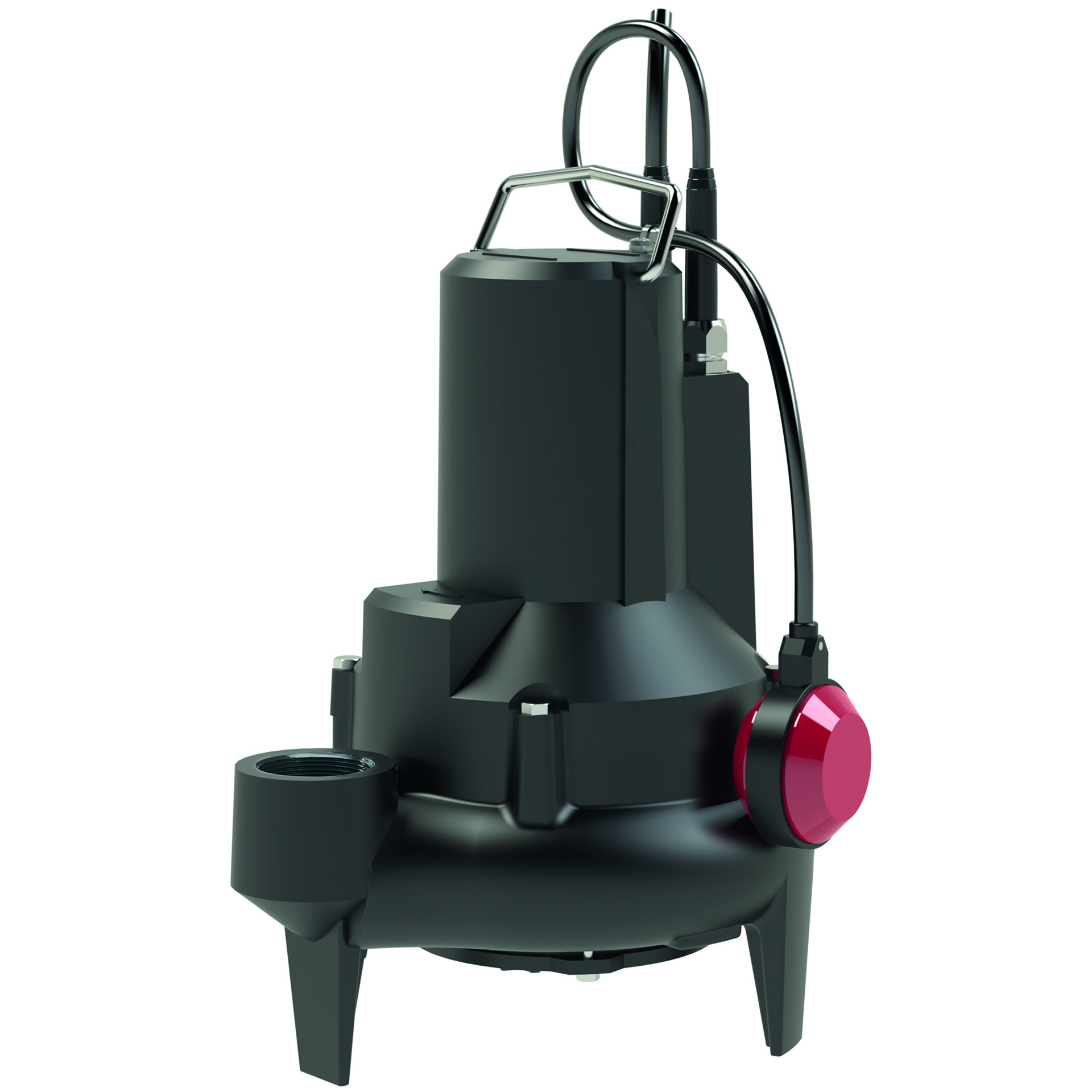
The Calpeda GM 50 is a cast iron submersible sewage pump. The GMC single-channel impeller passes 45 mm solids, the GMV free-flow vortex 50 mm.
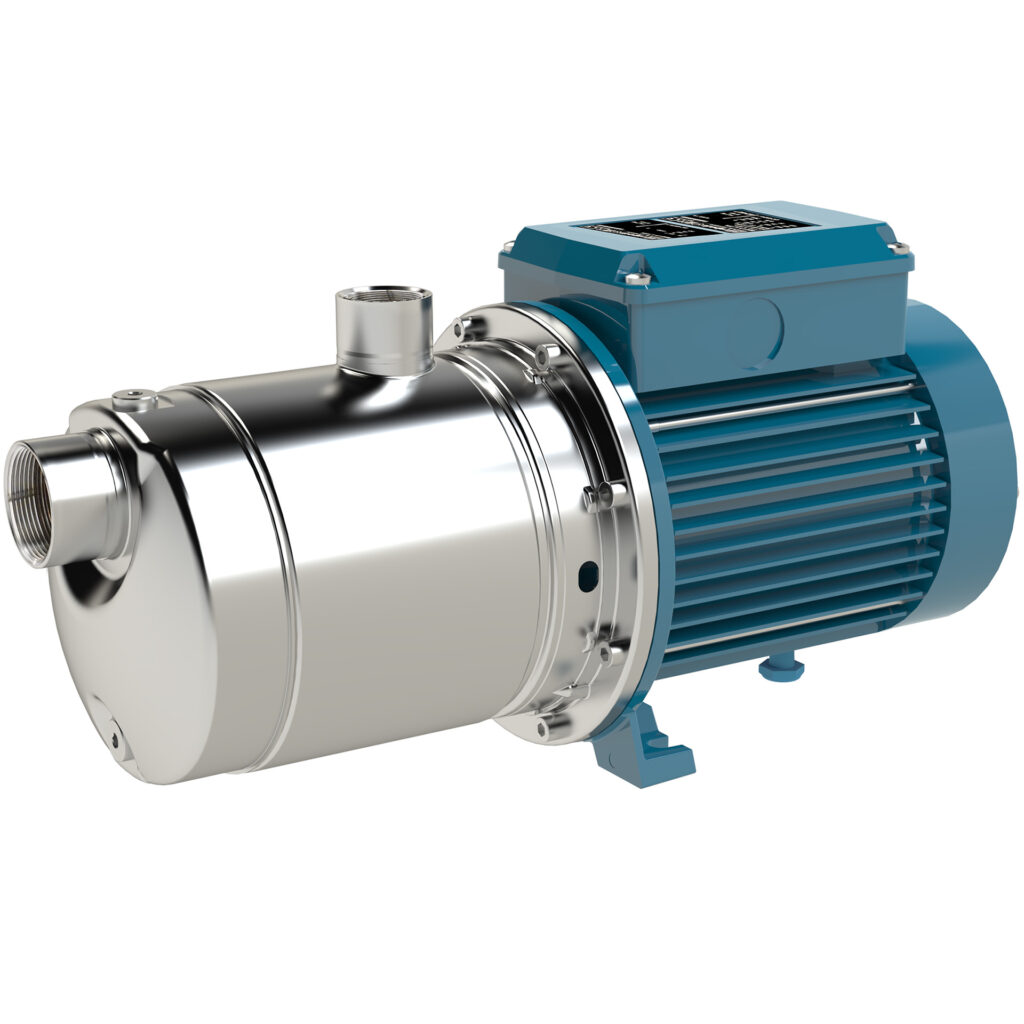
The Calpeda MXH is a WRAS approved horizontal multistage stainless steel pump for clean water to 66 m³/h and 97 m. Specs, sizes and UK supply.
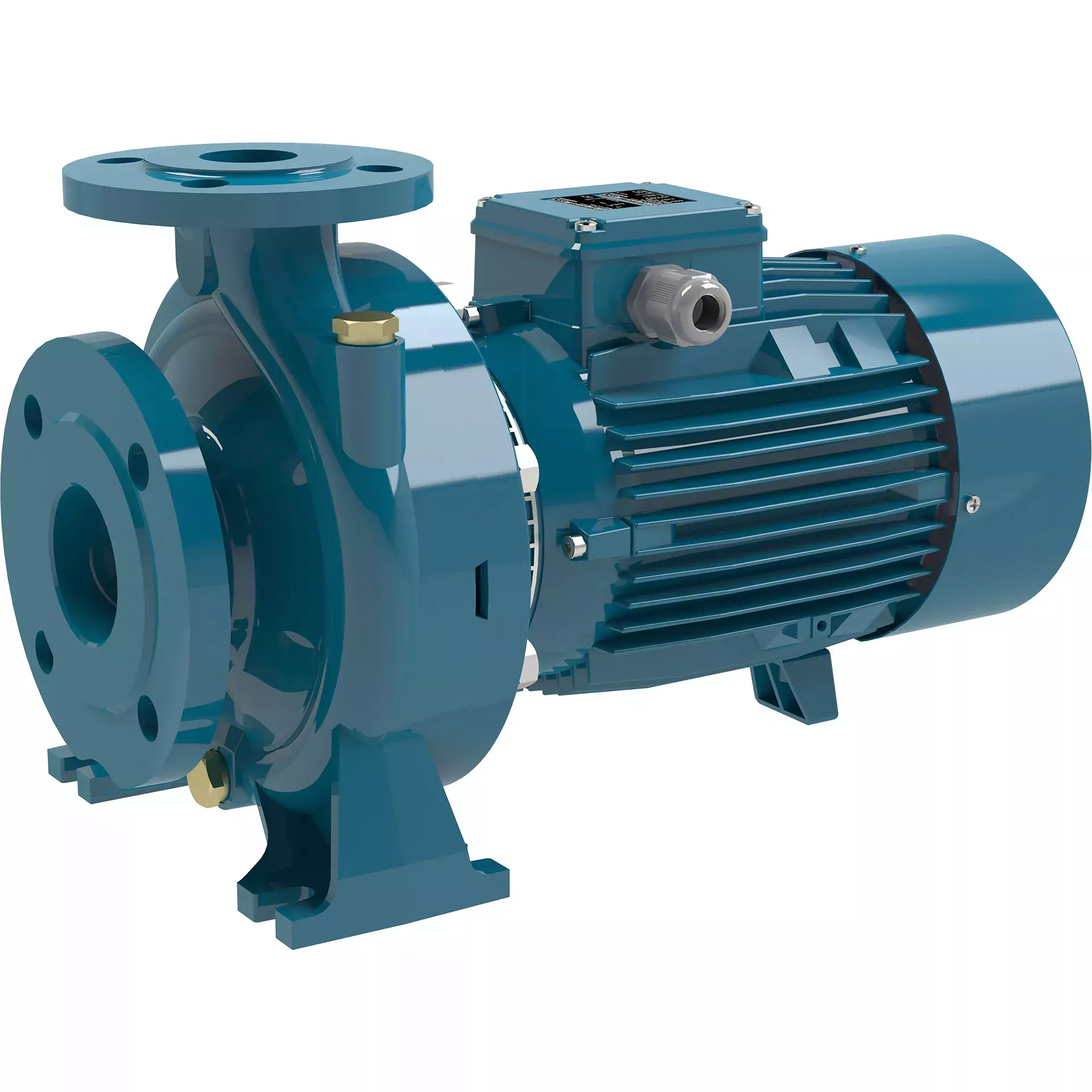
The Calpeda NM is a close-coupled EN 733 end suction pump for clean water to 240 m³/h and 93.8 m on 0.55–22 kW motors. Specifications, materials and UK supply.
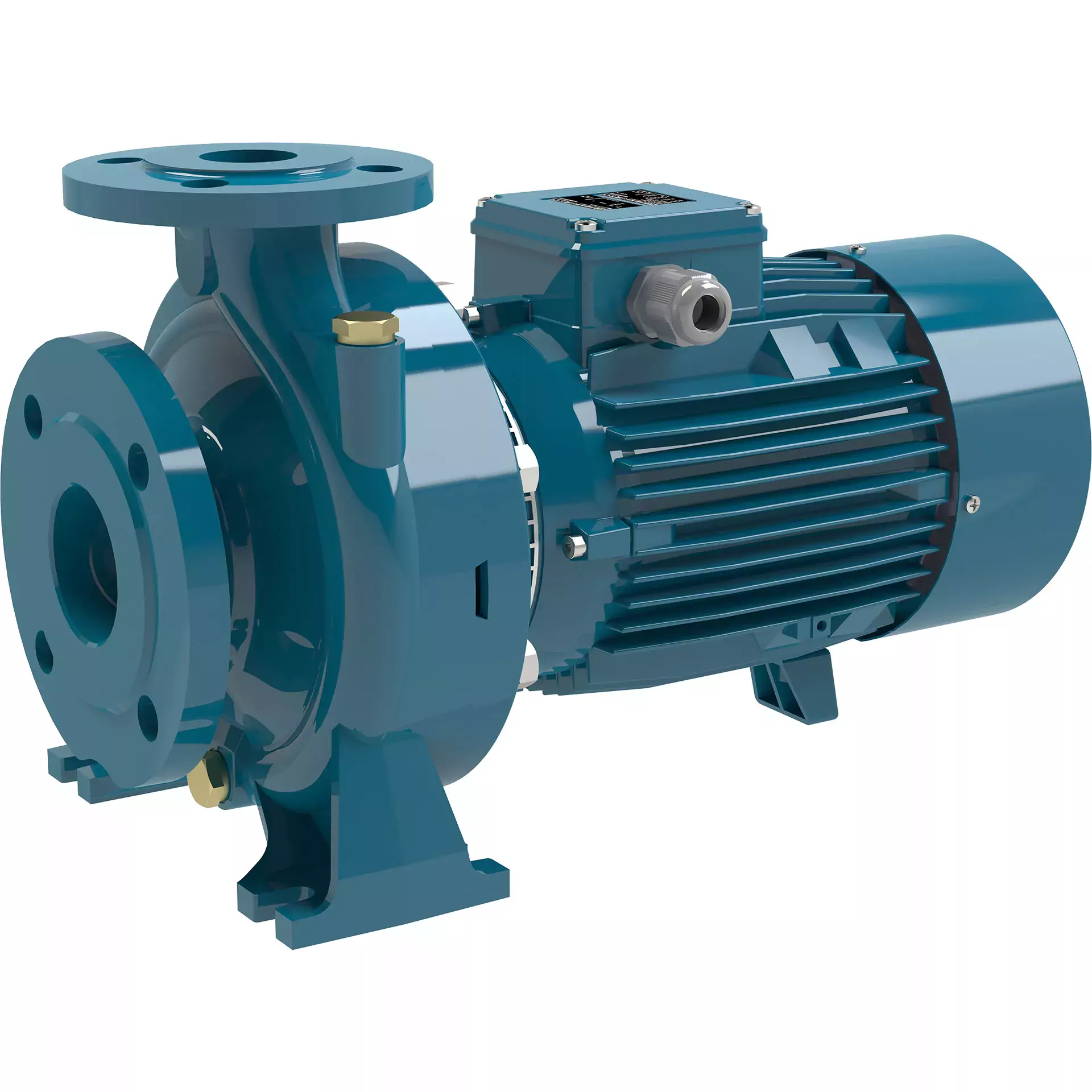
The Calpeda NM4 is the four-pole close-coupled EN 733 end suction pump for clean water, to 330 m³/h and 36.6 m on 0.37–15 kW motors at 1450 rpm.
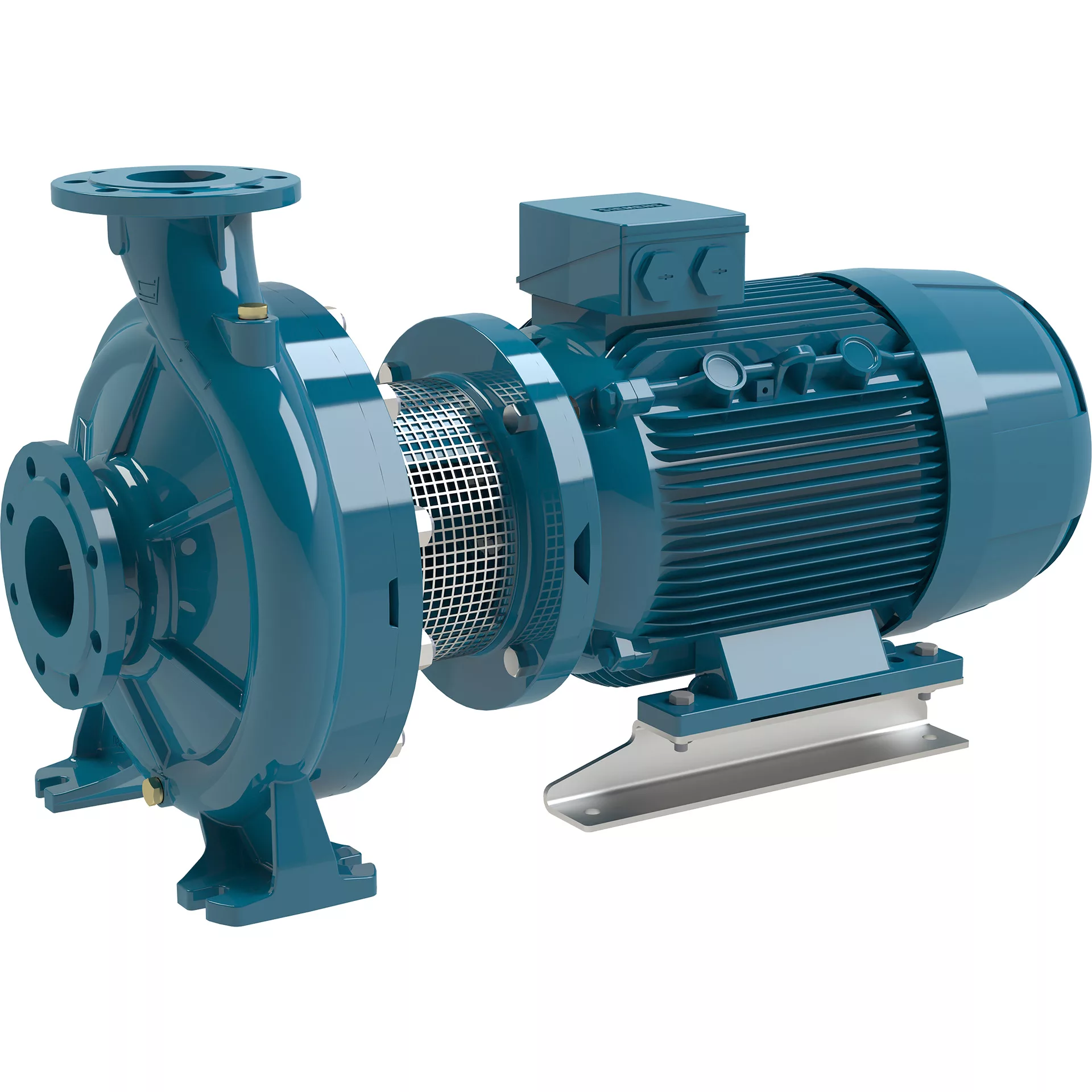
The Calpeda NMS is an EN 733 end suction pump on a stub-shaft bracket that takes a standard motor, to 300 m³/h and 95 m on 0.75–75 kW. Specs and UK supply.
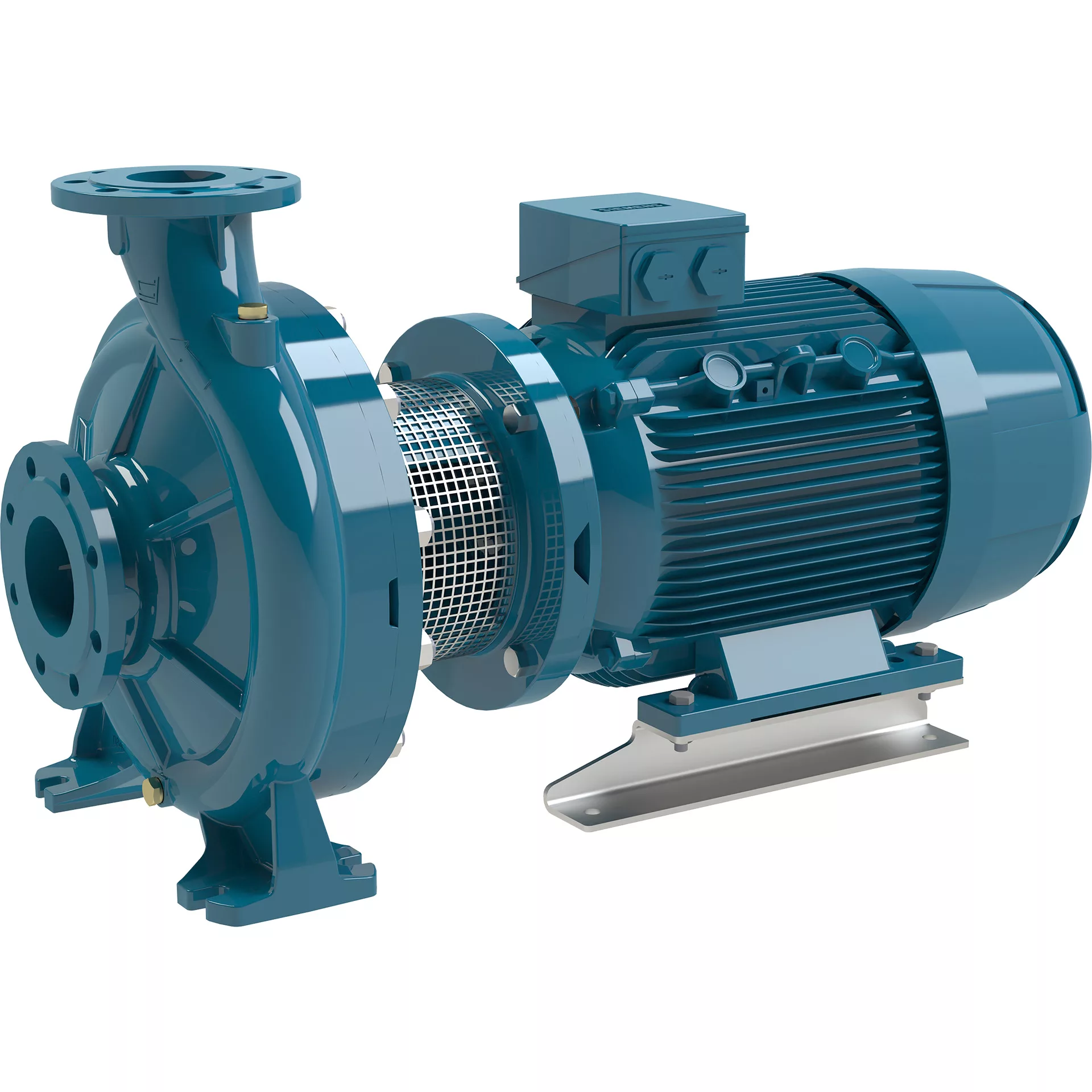
The Calpeda NMS4 is the four-pole stub-shaft EN 733 end suction pump for clean water, to 660 m³/h and 61.6 m on 0.75–90 kW standard motors at 1450 rpm.
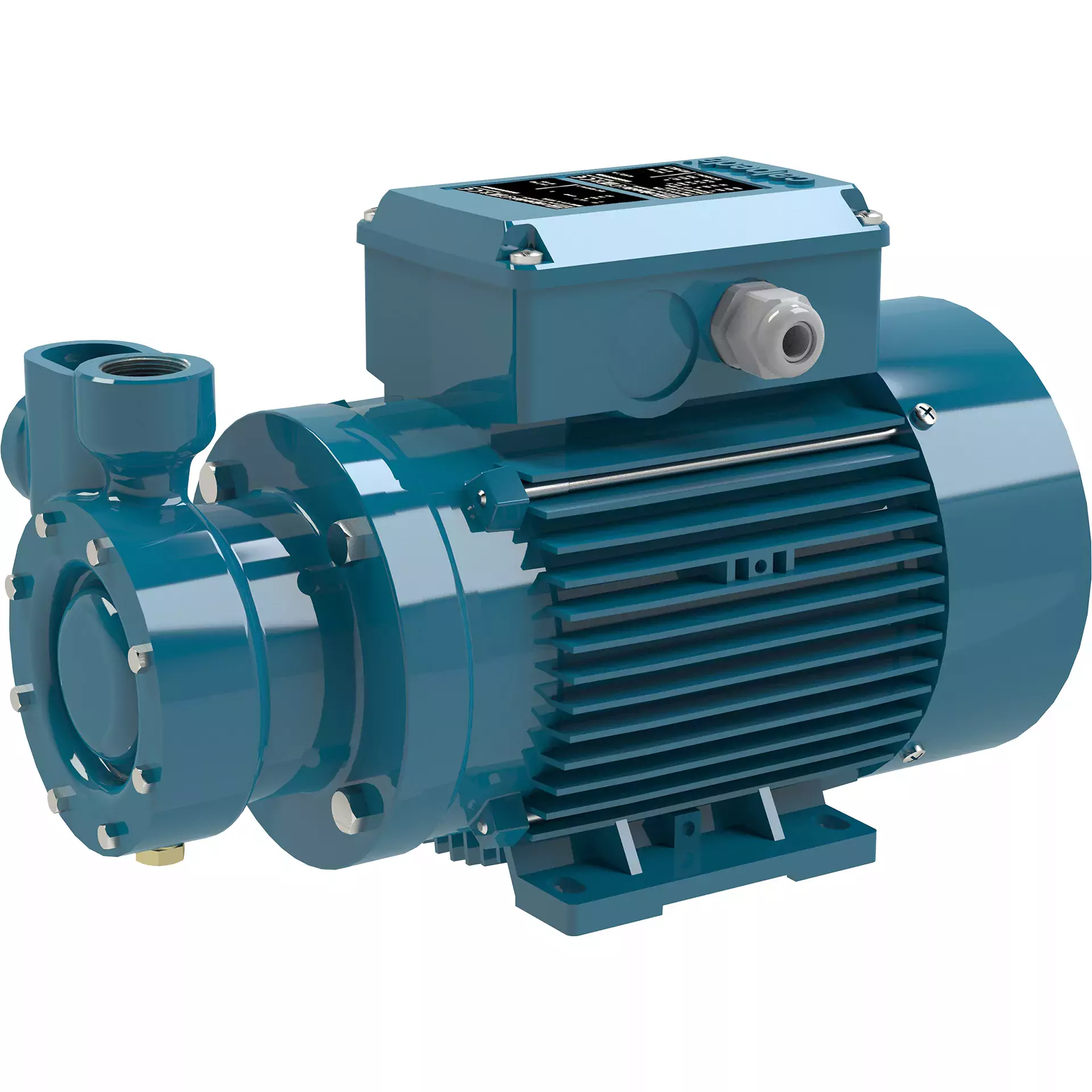
The Calpeda CT, T and TP are peripheral pumps: 3–165 m of head at 0.06–6 m³/h from one turbine impeller. Clean liquids only. Specs, sizes and UK supply.
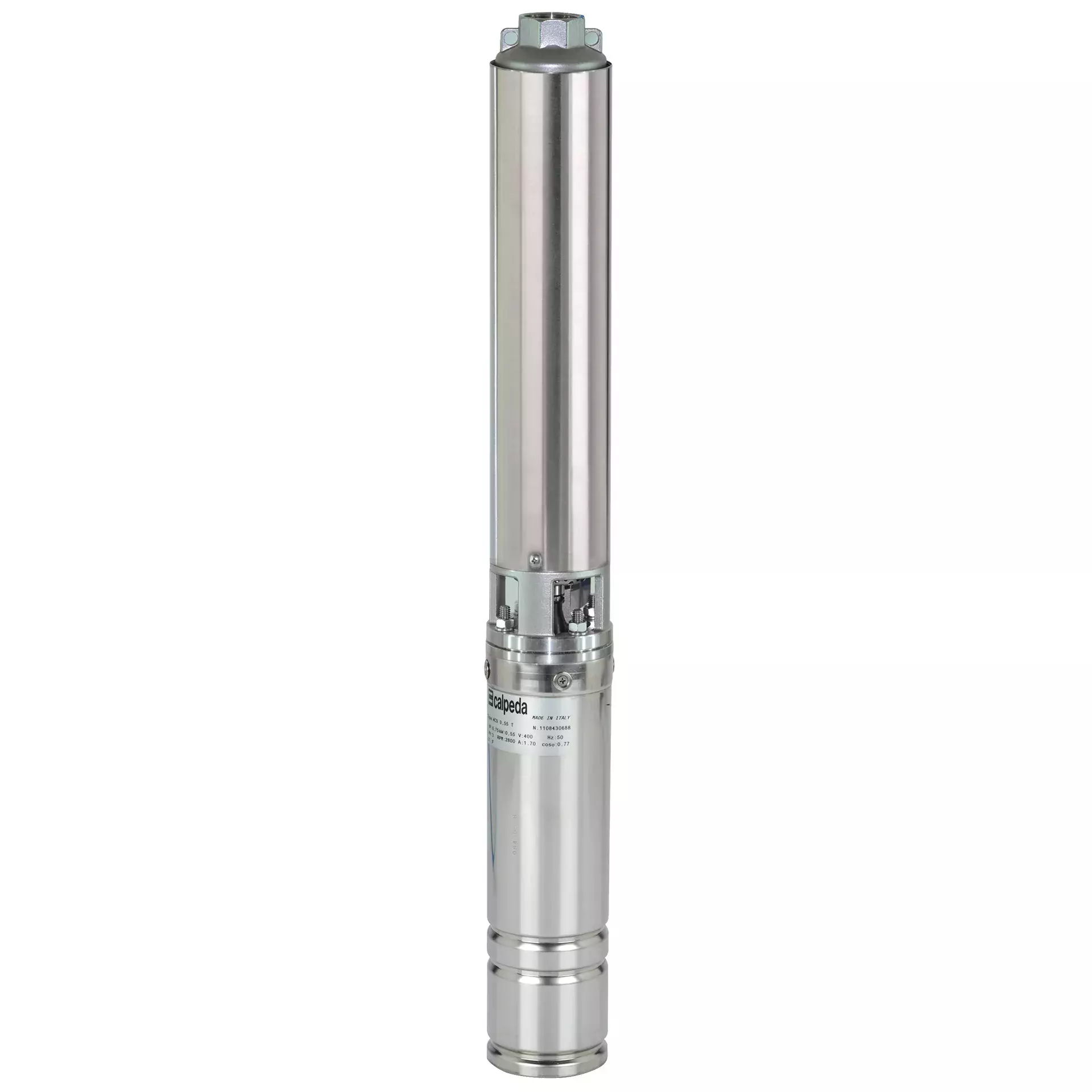
The Calpeda SD is a multistage submersible borehole pump for 4 and 6 inch wells, reaching 691 m and 40.2 m³/h on 0.37 to 37 kW.
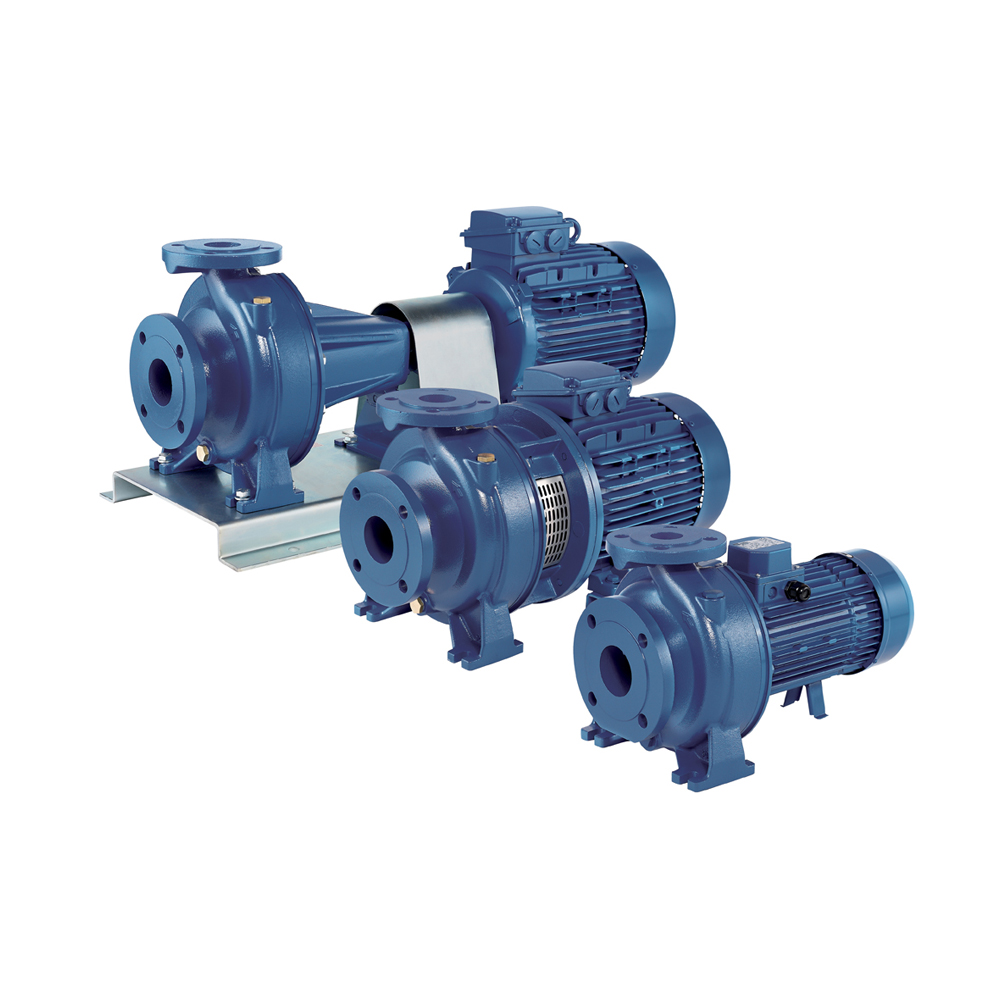
The Ebara 3D series is an EN 733 standardised cast iron end suction pump for clean water to 138 m³/h and 70 m. Specs, seal options and UK supply.
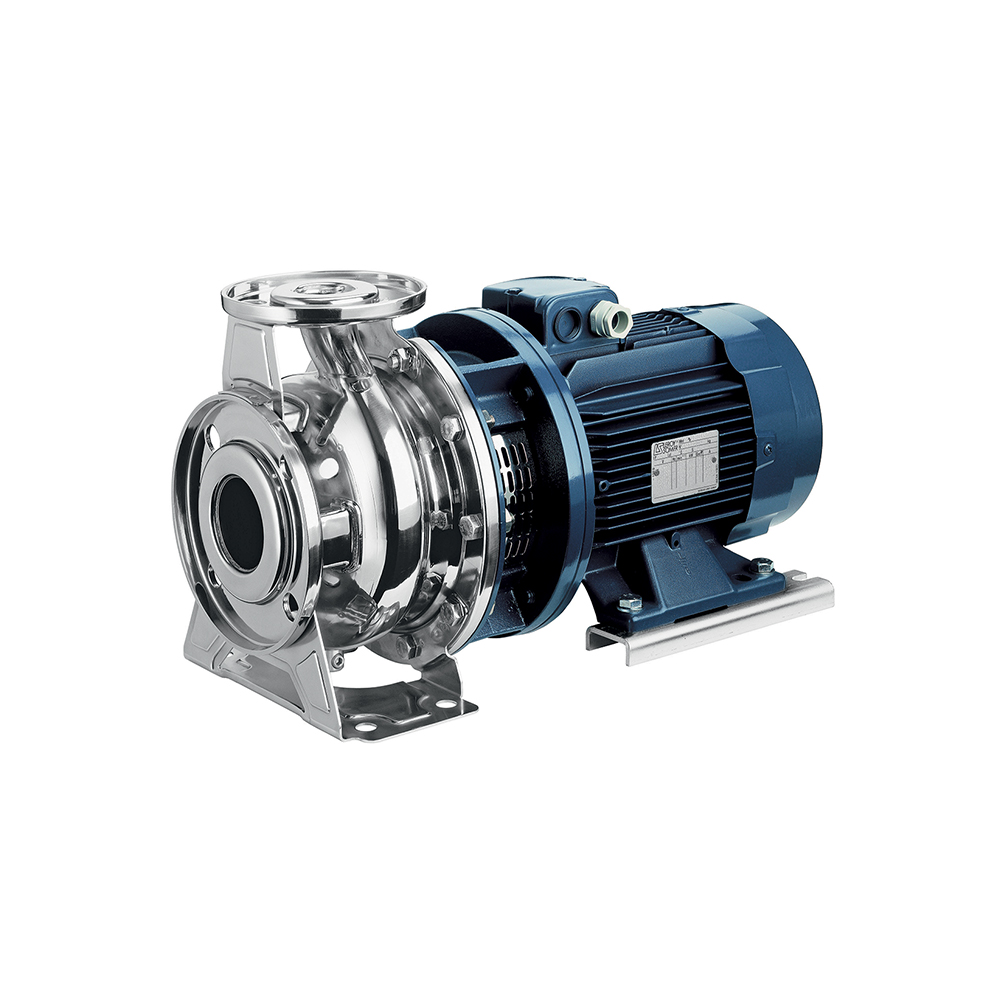
The Ebara 3M series is the monobloc build of Ebara's AISI 304 stainless EN 733 end suction pump. Sizes, seals, single-phase options and UK supply.
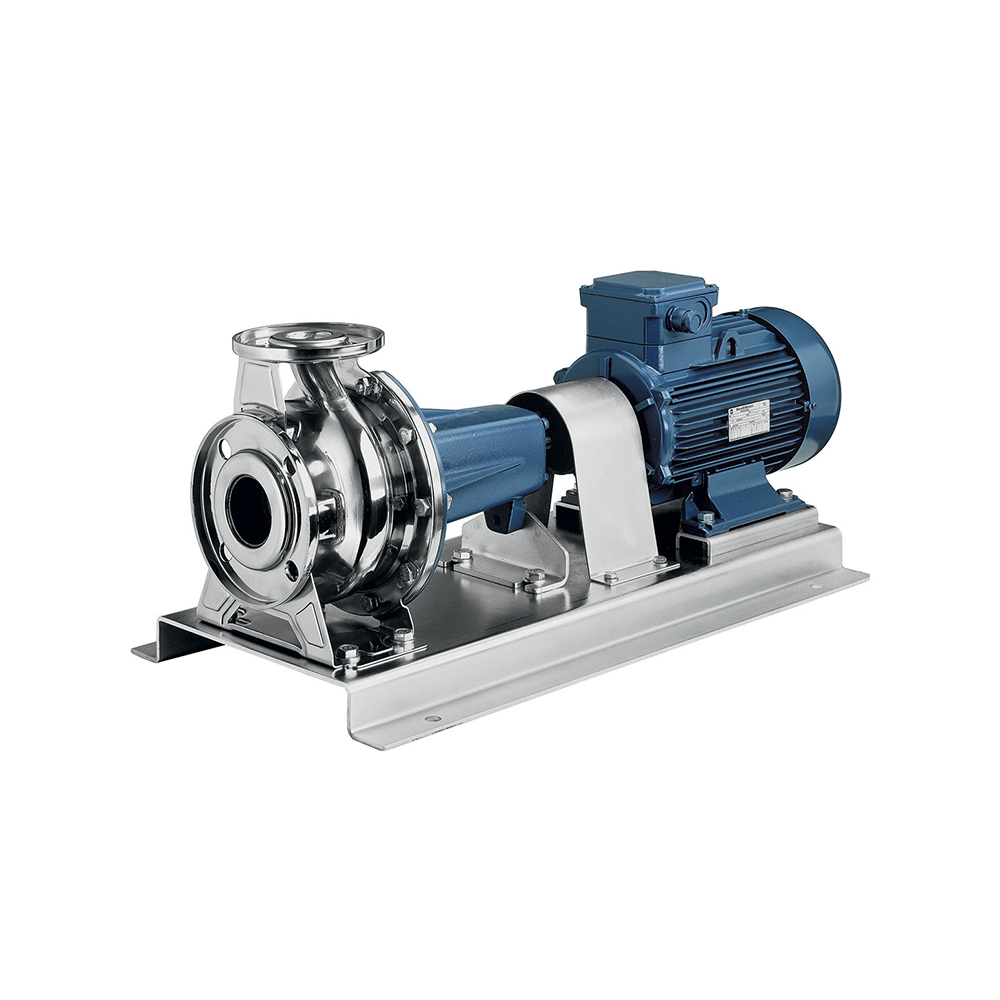
The Ebara 3S series is the rigid-coupling build of Ebara's AISI 304 stainless EN 733 pump, driven by a standard IEC motor, with an ATEX 3SF version.
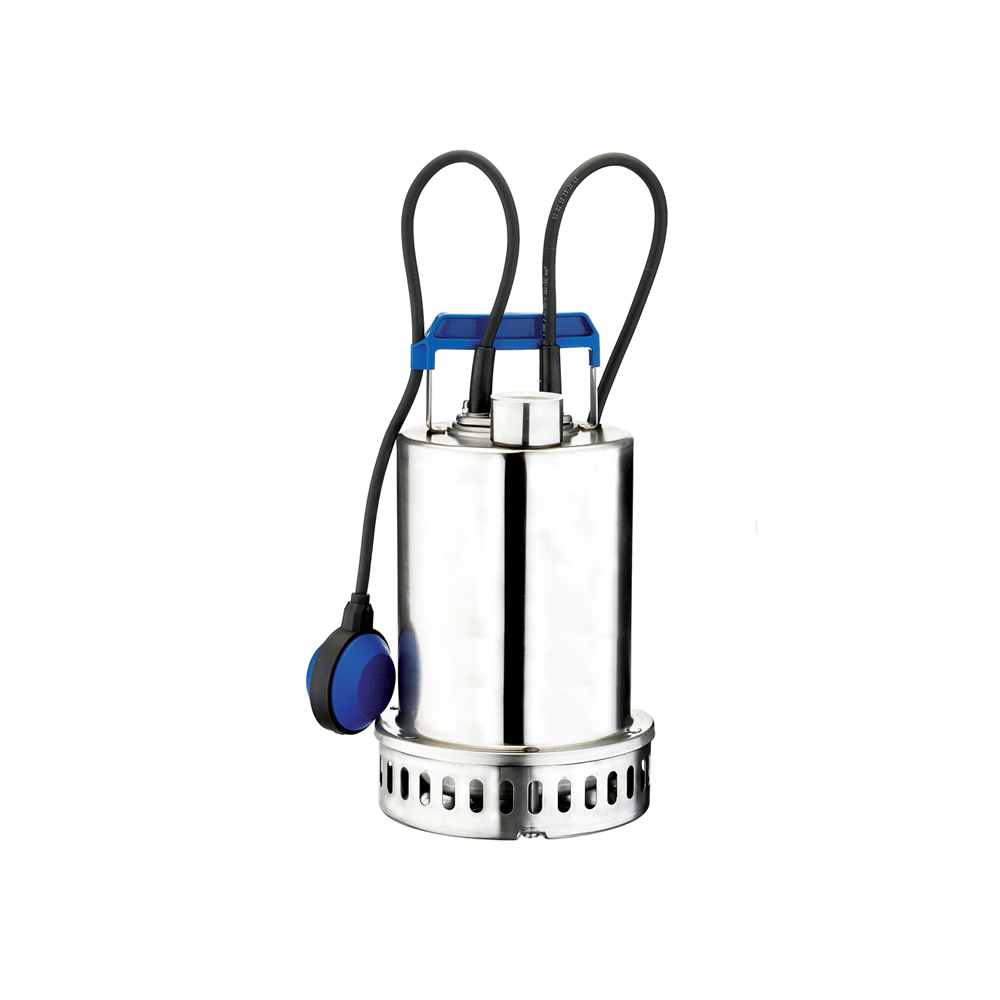
The Ebara BEST 2 is the 0.55 kW frame of the stainless BEST 2-5 range, running to 15.6 m³/h and 13.1 m of head with a 10 mm solids passage.
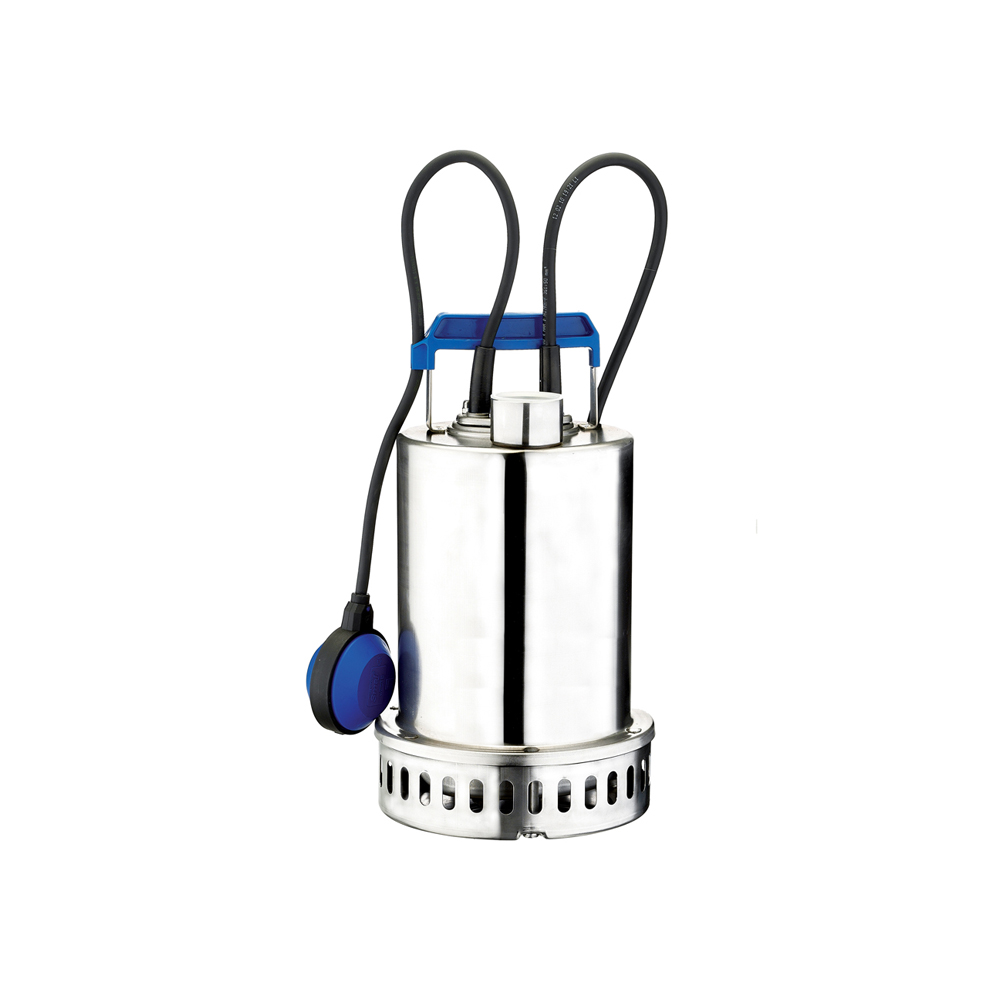
The Ebara BEST 3 is the 0.75 kW frame of the stainless BEST 2-5 sump range, running to 16.8 m³/h and 14.6 m of head with a 10 mm solids passage.
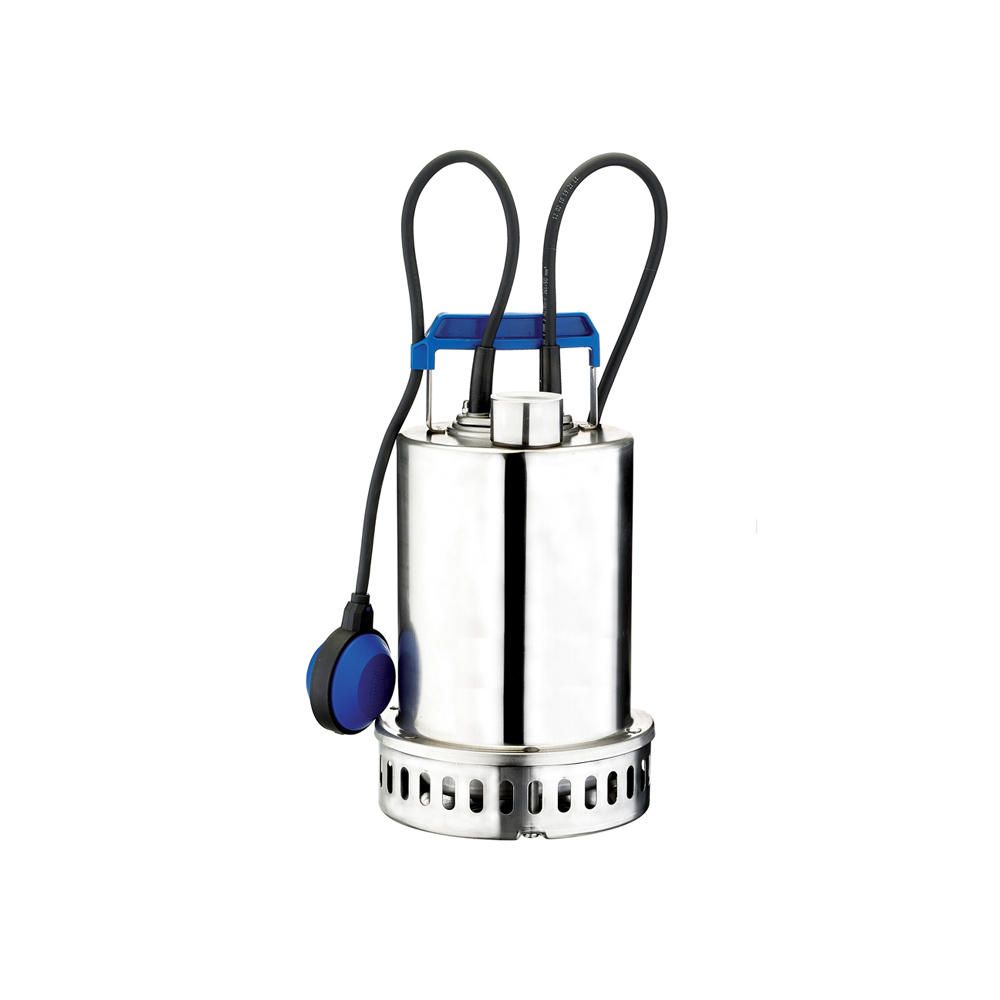
The Ebara BEST 4 is the 1.1 kW frame of the stainless BEST 2-5 sump range, running to 19.8 m³/h and 18 m of head, and the largest one built single-phase.
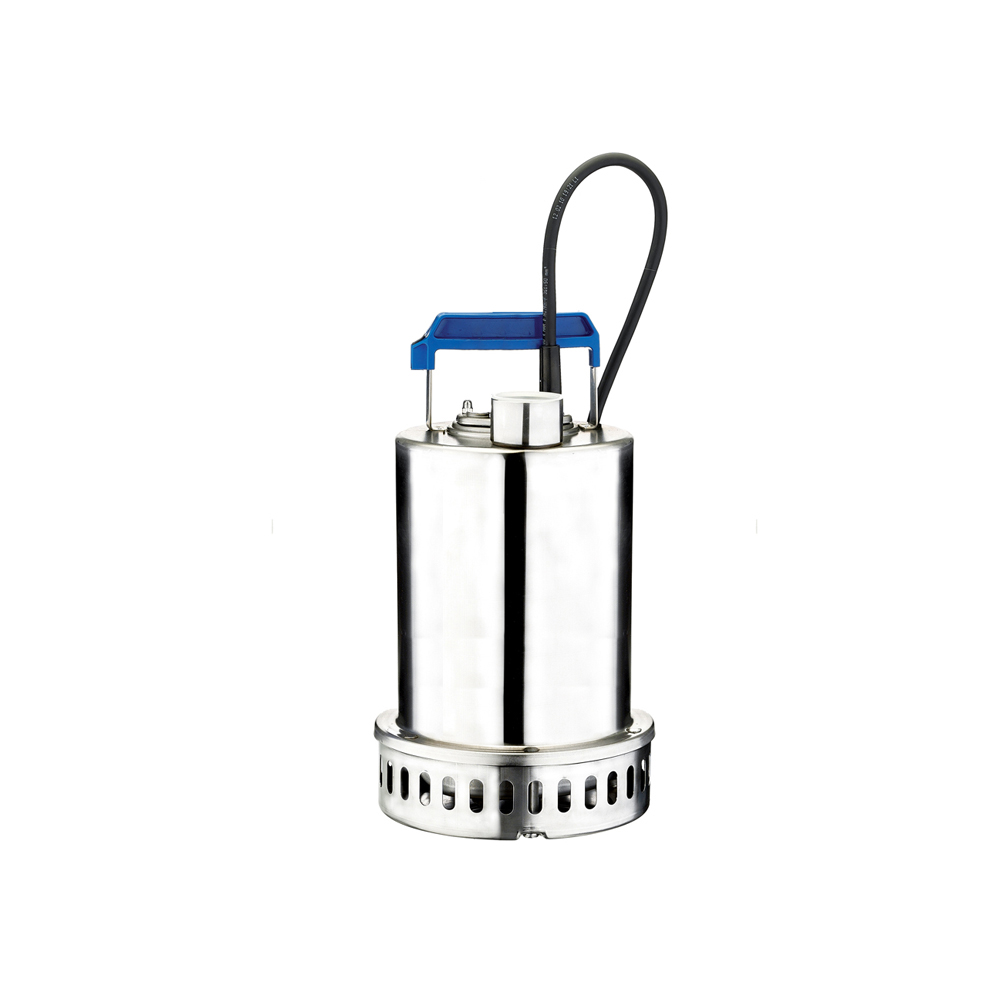
The Ebara BEST 5 is the 1.5 kW three-phase top frame of the stainless BEST 2-5 sump pump range, running to 21.6 m³/h and 19 m of head.
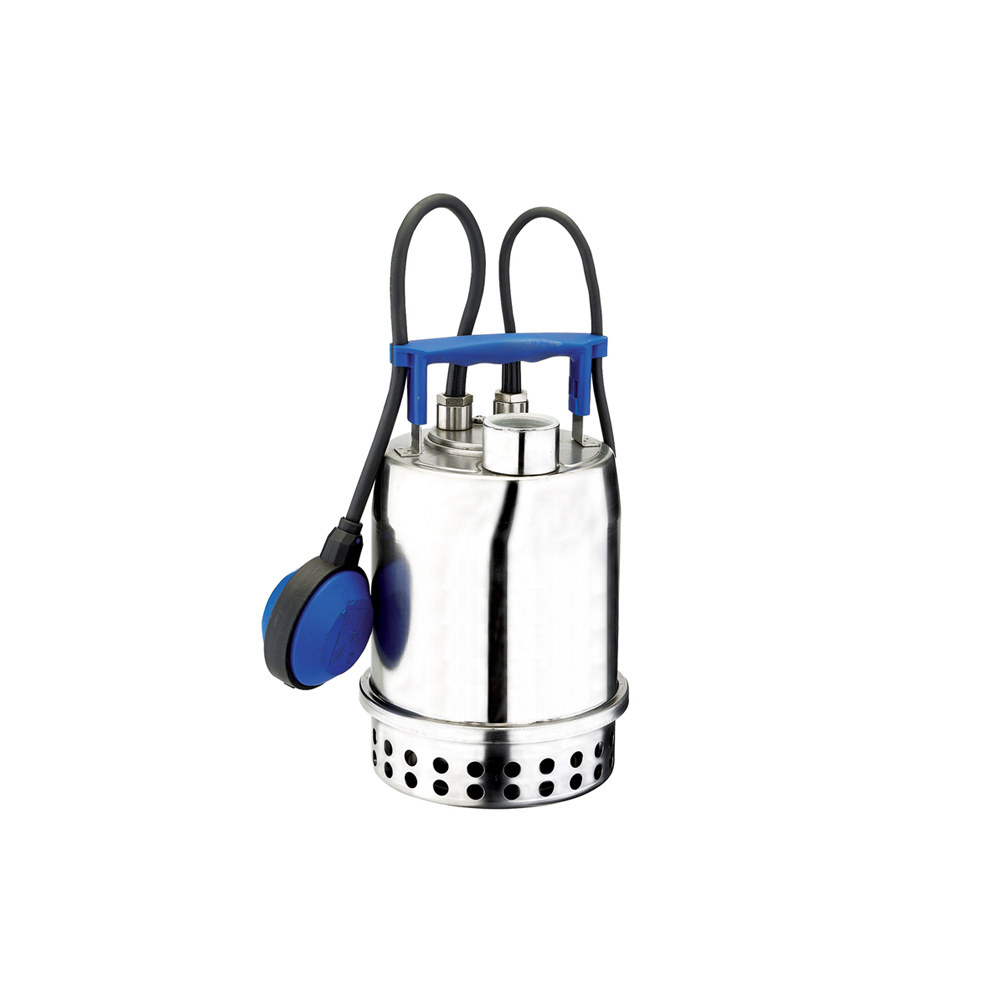
The Ebara BEST ONE is an AISI 304 submersible drainage pump for clear water, 1.2–10.2 m³/h to 8.3 m, passing 10 mm solids or 20 mm on the VOX build.
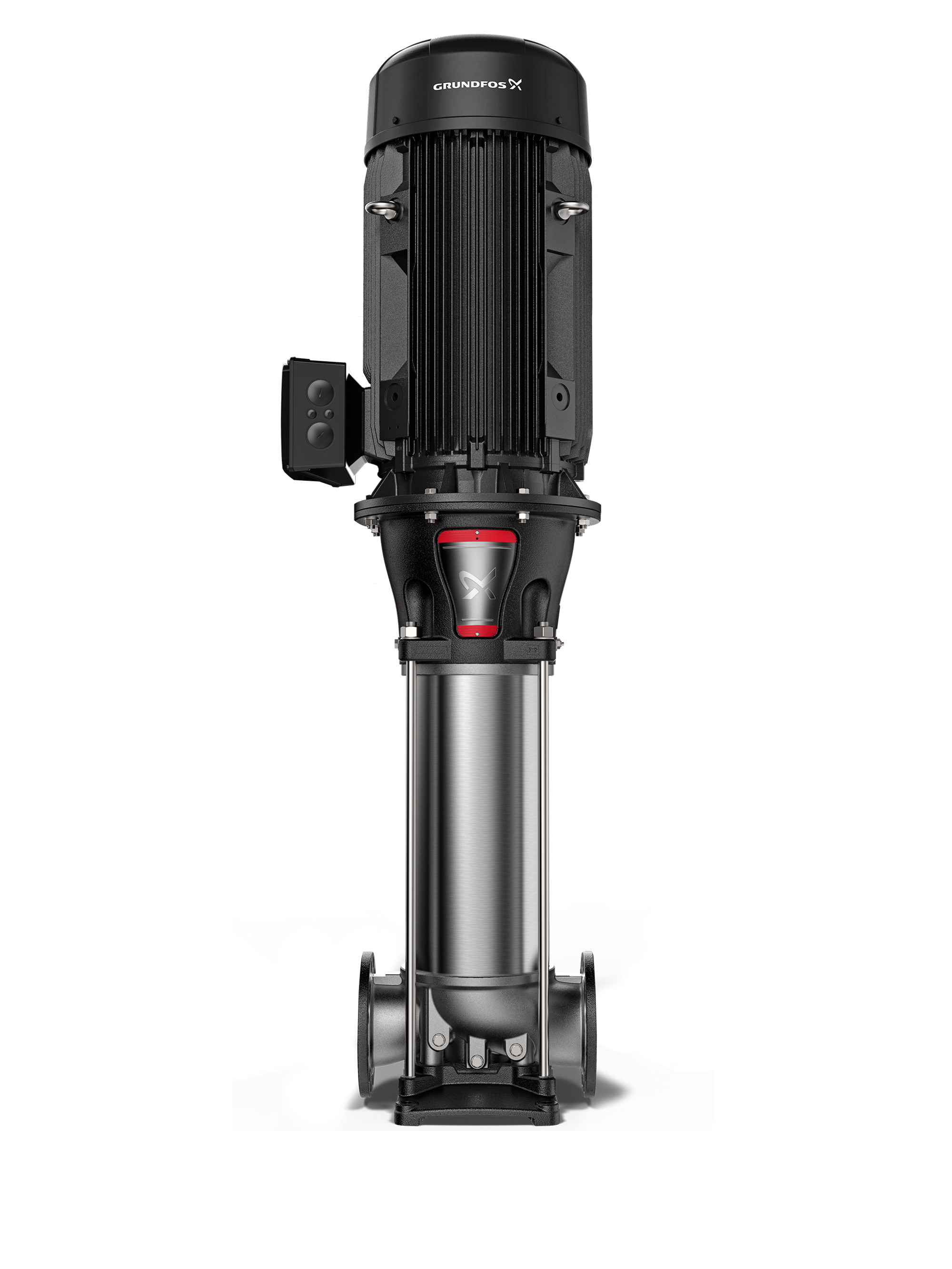
Inline vertical multistage centrifugal pump, cast iron and AISI 304 stainless, for non-corrosive liquids at high head.
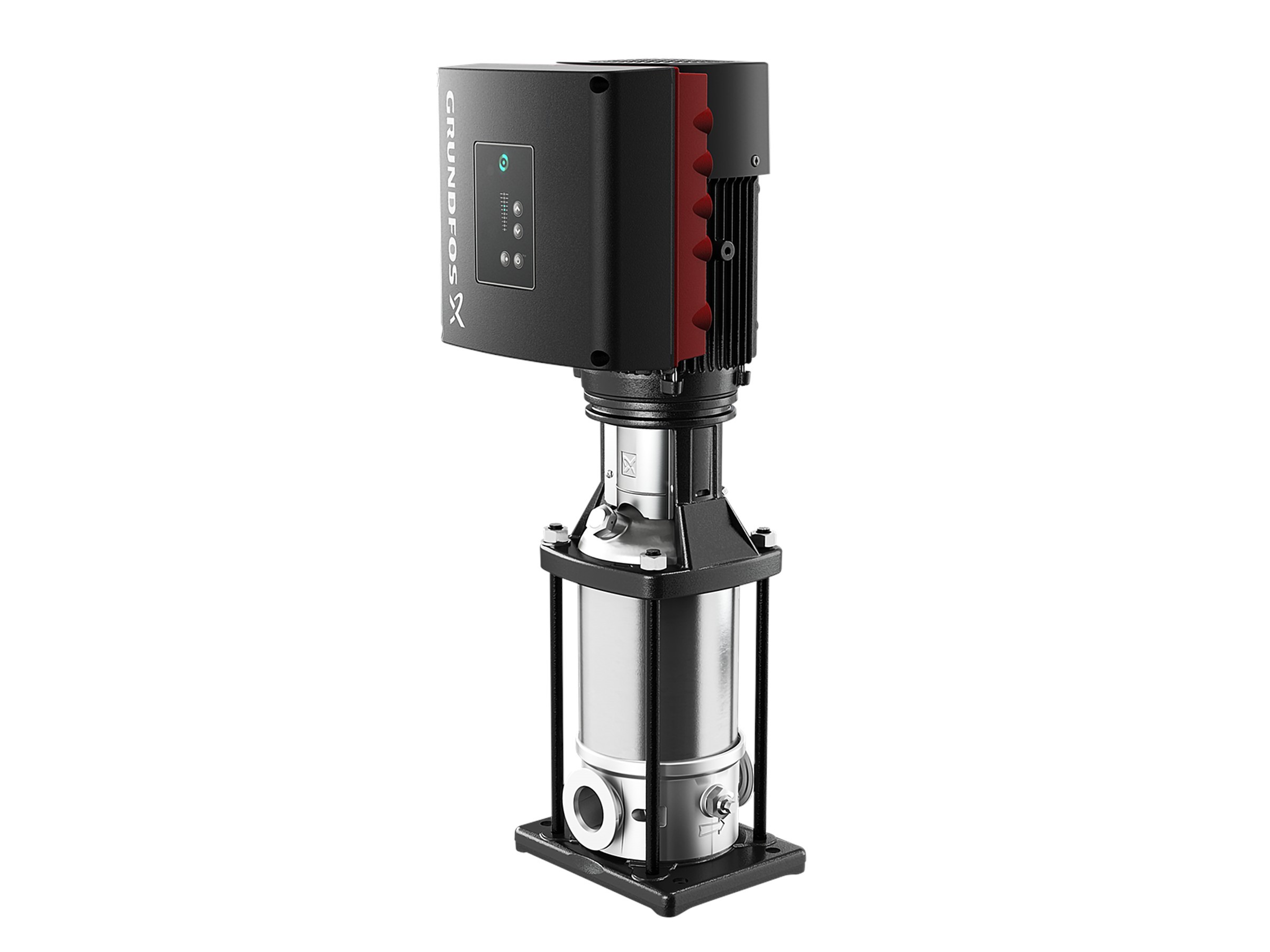
Vertical multistage pump with an MGE E-motor, so the speed control and the motor protection are inside the terminal box rather than in the panel.
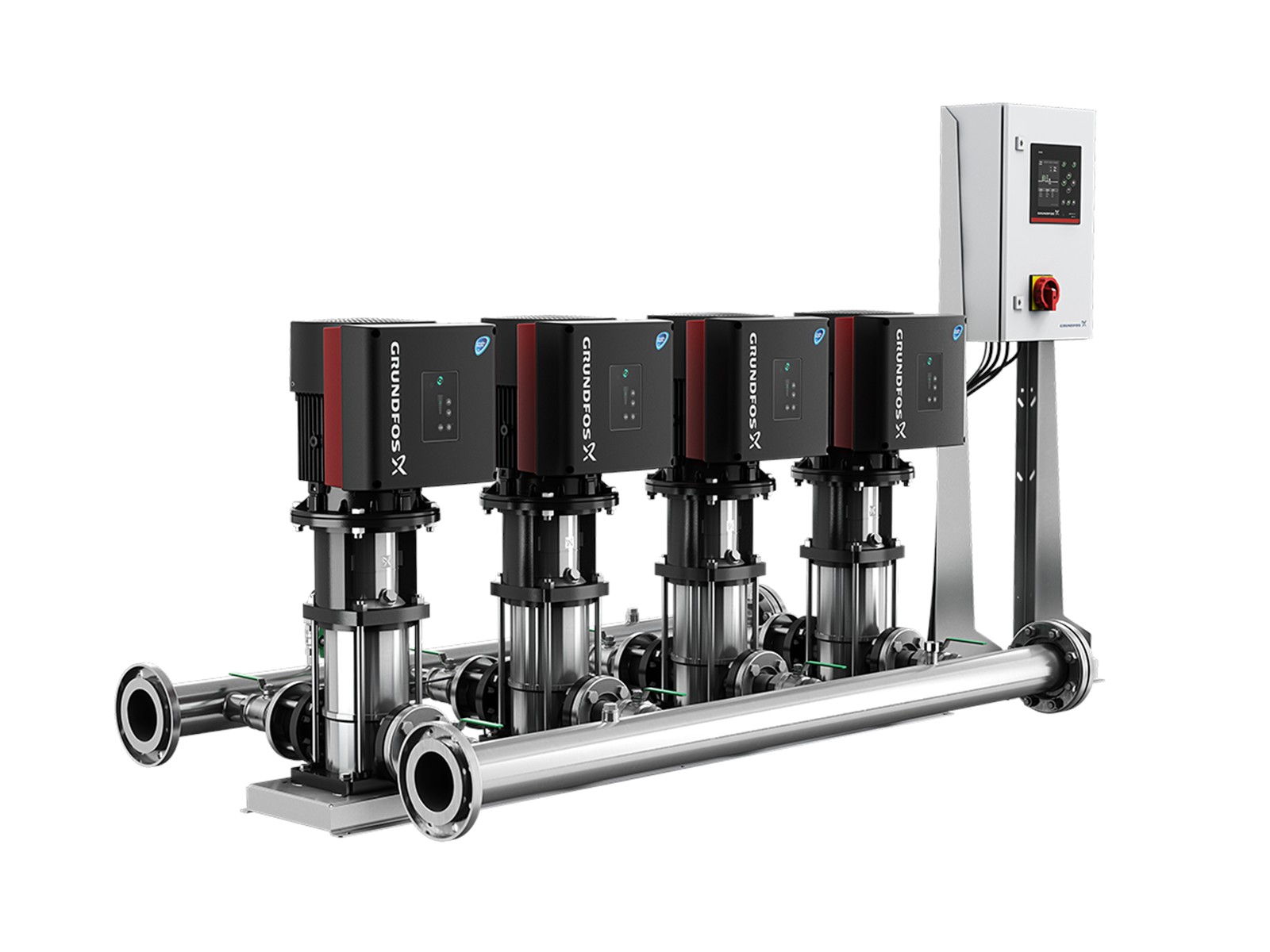
The Grundfos Hydro MPC is a packaged clean-water booster set: 2–6 stainless CR/CRE pumps and a CU 352 controller, flow to 725 m³/h, head to 145 m.
Certification, motor efficiency and noise
Certification belongs to the manufacturer, not to us. On a potable cold water duty a specifier will ask for Water Regulations Approval Scheme (WRAS) approval covering the wetted parts. Ask for the manufacturer's certificate against the specific model you are buying rather than accepting that the range is approved, because approvals sit at model and material level and a variant can fall outside them.
Motor efficiency is set by class, IE3 and IE4 being the ones that appear on building services specifications. The classes are measured at the motor's own rating, which is why an oversized IE4 motor can still waste more energy than a right-sized IE3 one. Fix the sizing first, then argue about the class.
Noise and vibration limits come from the building's acoustic specification, not from the pump standard. Anti-vibration mounts and flexible connectors are worth fitting. They treat transmission, not cause. If the pump is cavitating, no mount will quieten it, and the only fix is the duty point.
Send us the flow rate, the pipework (static head each side, pipe length, bore, and how many bends and valves), the medium and the temperature. We will tell you whether the pump you have been quoted is the right size. If it is, and you already know the model, buy it wherever it is cheapest. A merchant buying fifty of a standard circulator will beat our price on two or three, and we add nothing to that transaction.
Frequently asked
What type of pump is used in HVAC systems?
Centrifugal pumps do almost all of it. Heating and chilled water circuits carry clean water at moderate head, which is what a centrifugal pump is built for. Selection turns on the duty point, flow and total dynamic head, and on getting the pump onto a sensible part of its performance curve rather than off the end of it.
Why is my booster pump noisy?
Usually because it is cavitating. A pump sized for more flow than the suction can deliver runs off the end of its curve, gets no back pressure and pumps air. That transmits vibration and noise straight into the pipework. Check the margin between NPSHa and NPSHr at the duty point before you look at the pump itself.
What does duty and standby mean?
Two pumps installed where one is needed, alternating so that either can carry the duty. One runs, one waits, and the controls swap them so both see service. It is the normal arrangement wherever a building cannot tolerate losing water or heating while a pump is repaired. You pay for it in capital and plant room space.
My water pressure is low. Do I need a bigger pump?
Usually not. Low pressure at the outlet is more often a system problem: a blocked strainer, a partly shut valve, undersized pipework or a break tank that cannot feed the pump. Check those before you resize. Fitting a larger pump onto the same system commonly makes the noise and the running cost worse without lifting the pressure.