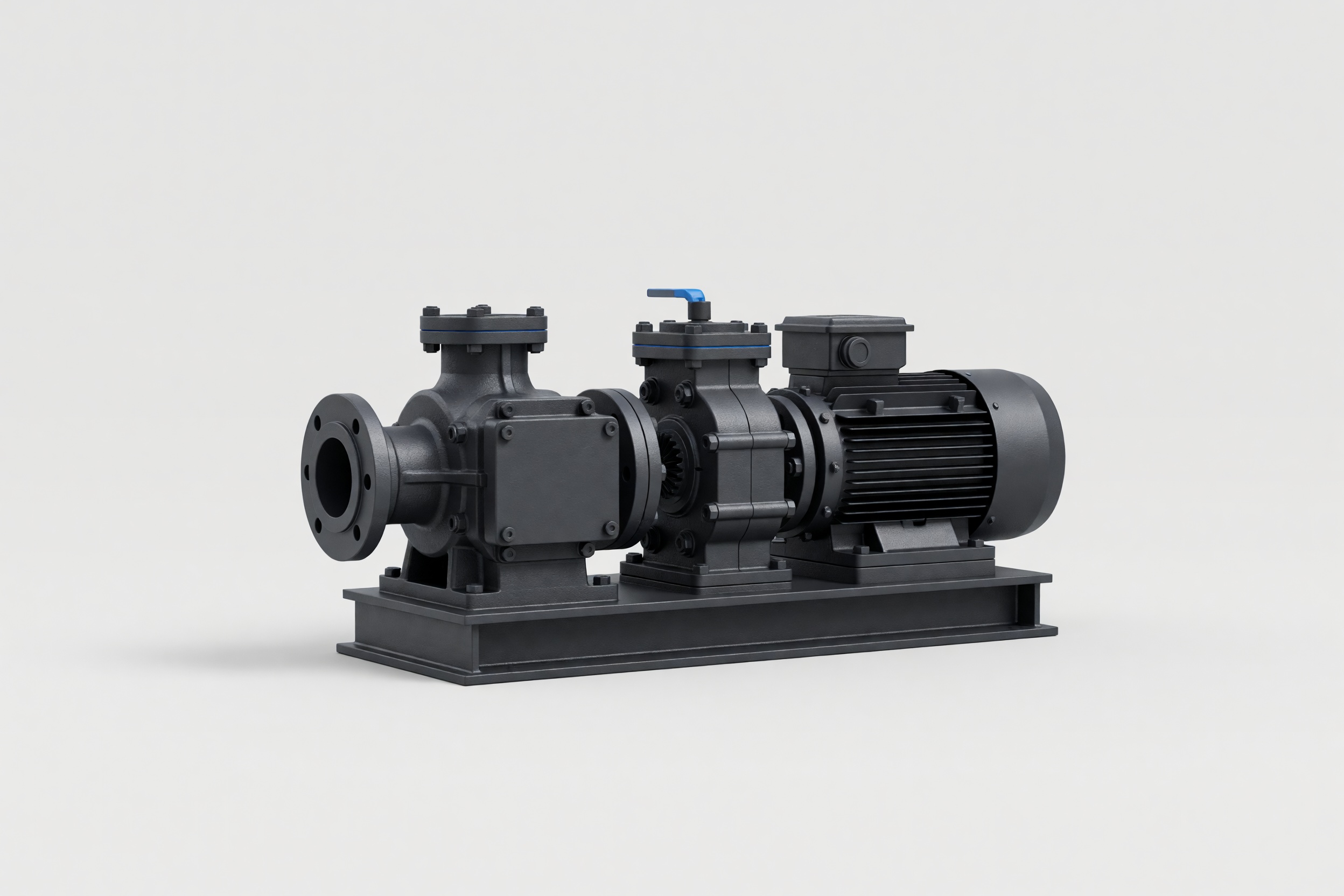
How a reciprocating pump works
A crank or an eccentric drive turns rotation into a back-and-forth stroke. On the suction stroke the chamber volume grows, the inlet check valve opens and the medium is drawn in. On the discharge stroke the inlet valve shuts, the outlet valve opens, and that same volume is pushed out.
Nothing in that action balances itself against pressure. The pump keeps delivering its stroke volume until something in the drive train gives up. That is why a reciprocating pump wants a relief valve on the discharge side. Shut a valve downstream of one that is running and something breaks.
When to choose a reciprocating pump
Choose a reciprocating pump when the duty needs a fixed volume per stroke rather than a flow that sags as pressure rises. On wastewater the double disc version earns its place differently. It passes solids, tolerates grit and survives dry running, which are the three things that actually kill pumps on a sewage works.
- Sludge and solids-laden wastewater, where rag and grit defeat other pumps
- Metering and dosing duties that need a repeatable volume per stroke
- Duties running against a high or variable discharge pressure
- Installations where the pump will be run dry sooner or later
- High-flow, low-head clean water (a centrifugal pump is cheaper to buy and to run)
- Shear-sensitive product wanting smooth flow (a rotary lobe pump)
- Very high viscosity or low-pulsation metering (a progressive cavity pump)
- Pipework or a process that pulsation would upset
Key features & trade-offs
Displacement per stroke is fixed, so the rate moves only a few per cent as discharge pressure varies.
The double disc form clears the rag and abrasive grit that wear out conventional wet ends.
A double disc pump has no mechanical seal, so losing the medium does not cost you one.
Flow follows speed closely, so the drive speed sets the dose.
Every stroke sends a pressure pulse down the line. Allow for a dampener where the pipework or process is sensitive.
Valves and seats wear, and a fouled valve shows up as lost flow rather than a bang.
Pumps we supply
View all →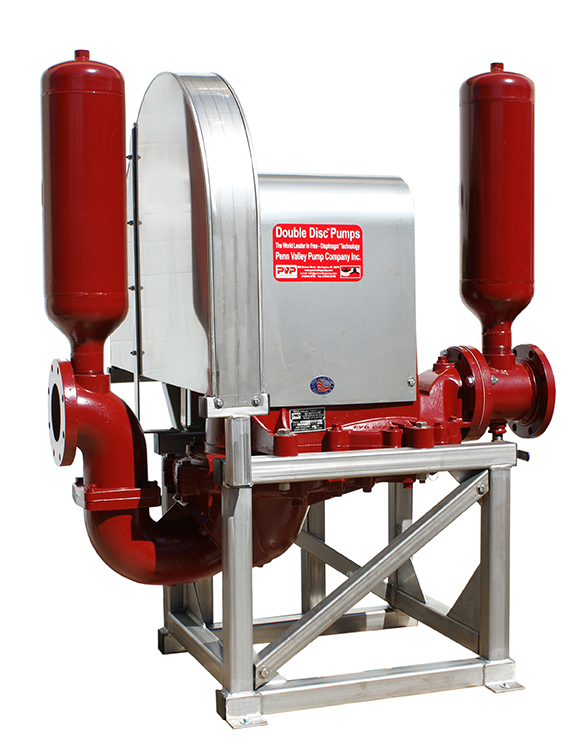
How to size & spec it
Give us four things and our engineers return a specified pump: the duty point (flow and discharge pressure), the medium (viscosity, temperature, percentage of solids and how abrasive it is), the materials for the wetted parts, and the connections and drive.
Get the suction side right first. NPSHa has to exceed NPSHr at the duty point, and the failure that lands on the desk most often is a suction tank or a suction head that was never big enough.
Frequently asked
What is a reciprocating pump?
A reciprocating pump is a positive displacement pump that moves medium with a piston, plunger, diaphragm or disc travelling back and forth in a chamber. Check valves at the inlet and outlet make the flow one-way, so each stroke delivers a fixed volume.
How does a reciprocating pump work?
A crank or eccentric drive converts rotation into a stroke. The suction stroke opens the inlet check valve and draws medium into the chamber. The discharge stroke shuts the inlet valve, opens the outlet valve and pushes the same volume out.
What is the difference between a reciprocating pump and a centrifugal pump?
A reciprocating pump displaces a fixed volume per stroke, so its flow barely moves as pressure changes. A centrifugal pump throws medium off an impeller, and its flow falls away as head rises. The trade rule of thumb is roughly 3–4% solids: above that, move to positive displacement.
Where are reciprocating pumps used?
Sludge and screened sewage transfer, chemical dosing and metering, and general industrial duties that run against a high or variable discharge pressure. On wastewater that means the double disc form, which we supply from Penn Valley.
Can a reciprocating pump run dry?
A double disc pump can, because it has no mechanical seal to lose. Other reciprocating designs depend on the medium to lubricate the packing or the plunger seal, so treat dry running as a failure mode and check the build before you rely on it.
What replaced the Alfa Laval SSP double disc pump?
Alfa Laval stopped manufacturing the SSP double disc in 2017. The Penn Valley double disc pump replaces it directly, and in our experience outlasts the pump it succeeds. We still supply SSP spares other than the major housings.