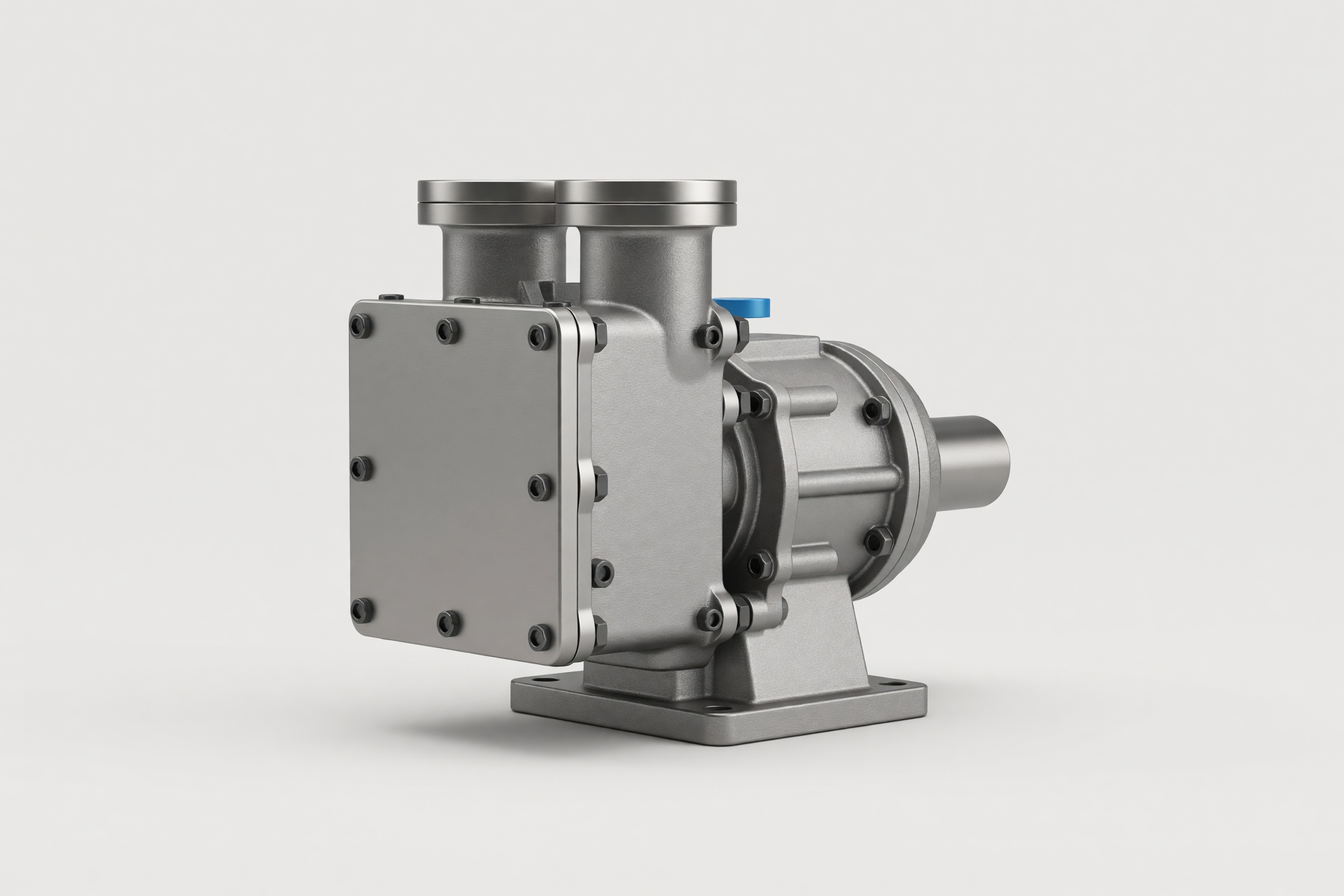
How a rotary lobe pump works
Two lobed rotors turn in opposite directions inside the pump head. Gears in the gearbox hold them in time, so they mesh without touching. Each pair of lobes traps a volume of medium against the casing wall and carries it round to the outlet. The mechanism in detail.
Nothing is forced through a tight clearance at speed, so shear stays low and pulsation is mild. It self-primes, and it reverses when you reverse the drive. It will pump broadly whatever you can get into it, from as water up to thick sludge.
When to choose a rotary lobe pump
Choose a lobe pump when the medium is viscous, shear-sensitive, or carries soft solids that a centrifugal pump would block on or shred.
Abrasive and shear-sensitive media both want pumping slowly. That constraint never appears on a performance curve, and it usually means a larger head turning at low speed rather than a small one worked hard.
- Viscous product, from as water up to thick paste
- Shear-sensitive food, dairy and emulsions that have to reach the outlet intact
- Sludge, screened wastewater and the soft solids that rag up a centrifugal
- Hygienic transfer where the head has to strip down and clean in place
- Duties where flow has to hold steady while discharge pressure moves
- Replacing an air-operated diaphragm pump where there is electricity, because compressed air is expensive to produce and the running cost shows it
- Clean, thin water at high flow, where a centrifugal is cheaper to buy and cheaper to run
- Very high viscosity, or grit-laden sludge, where a progressive cavity pump takes it better
- Duties that cannot guarantee liquid at the seal, because dry running takes out the mechanical seal
- A model you have already specified and just need shipped, where a merchant will beat us on price and we add nothing
Key features & trade-offs
Rate stays within a few per cent as discharge pressure changes, where a centrifugal's flow shifts significantly.
Low shear, so emulsions, soft solids and dairy product reach the outlet intact.
Passes soft solids and screened wastewater, past the 3–4% solids rule of thumb where a centrifugal gives up.
With the right seal selection you get vibration rather than the destruction the same conditions do to a centrifugal.
Dry running usually ends in a failed mechanical seal, because a mechanical seal needs liquid to lubricate it.
Higher capital cost, and slip rises on thin media at pressure, so it loses flow where a centrifugal would not.
Pumps we supply
View all →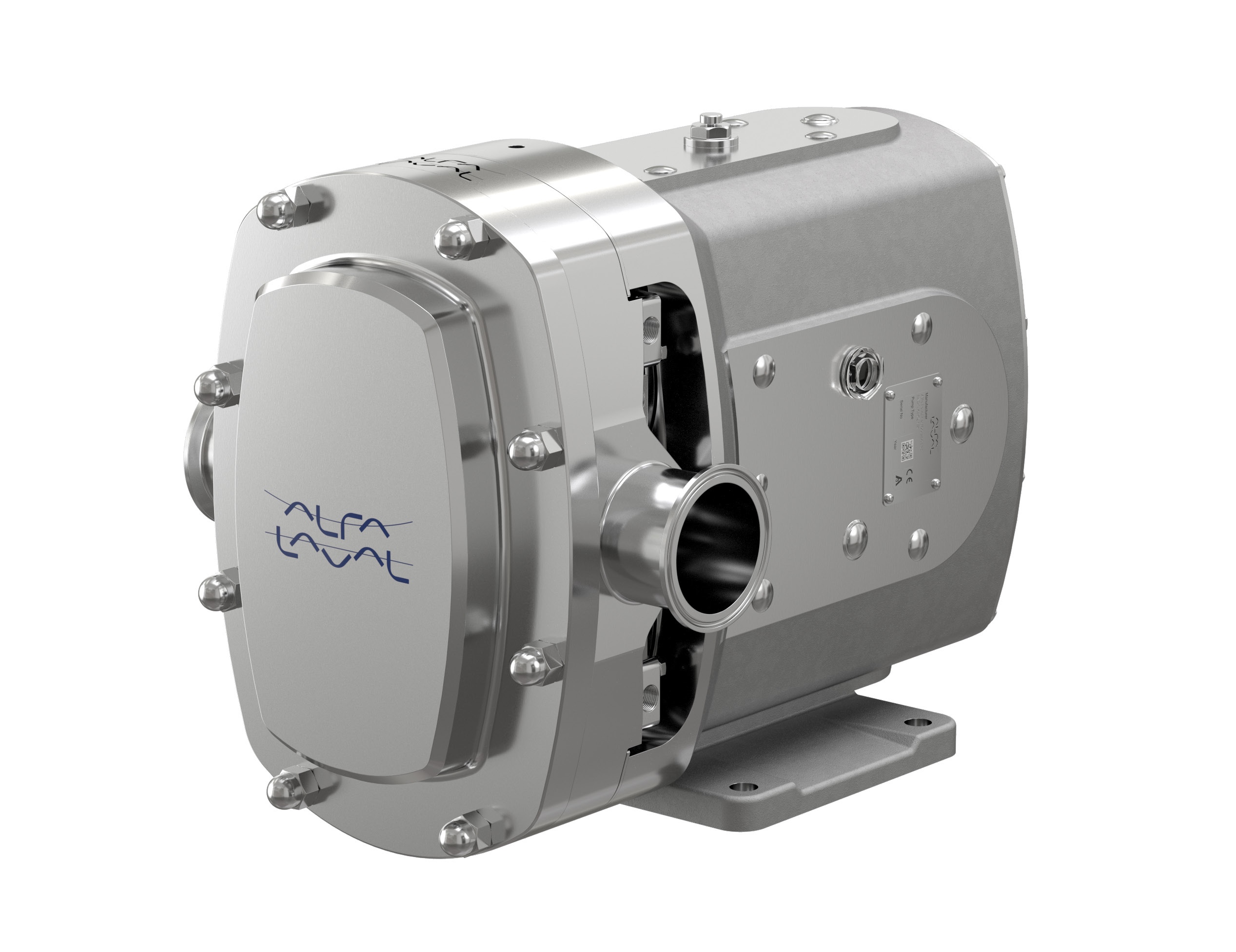
A hygienic circumferential piston pump for low-viscosity duties that need pressure. Certified to EHEDG and 3-A, in 13 displacements.
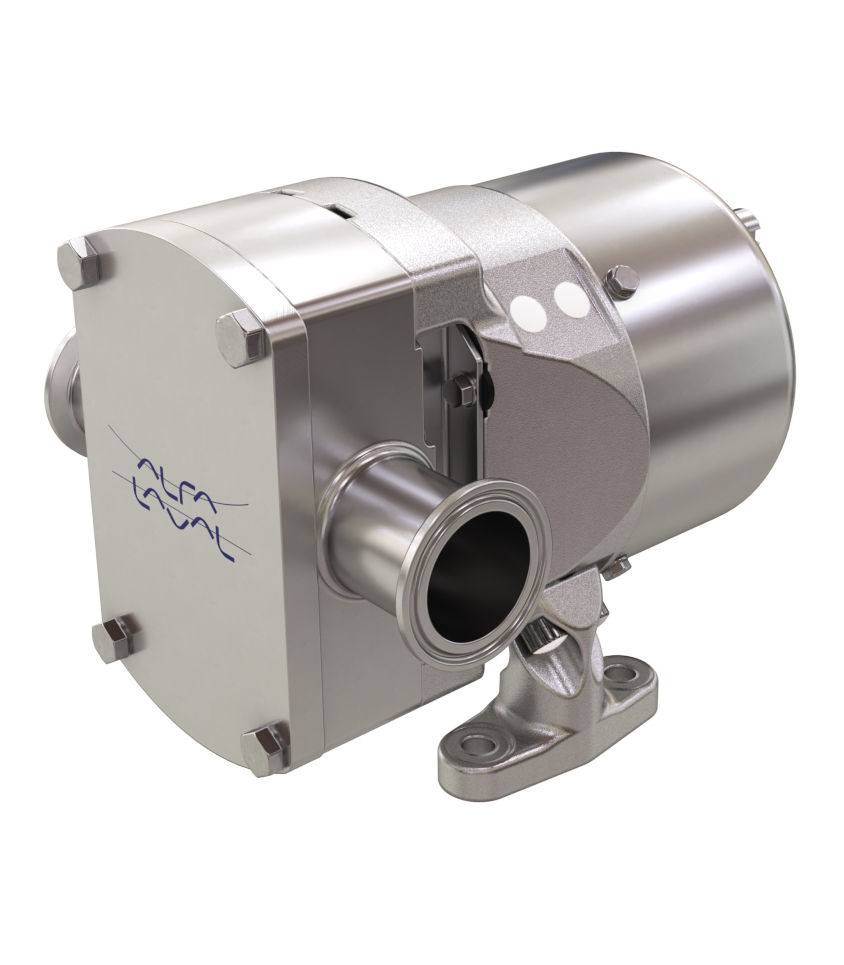
Alfa Laval's cost-effective hygienic rotary lobe pump, in 10 displacements to 77 m³/h and 8 bar, with an all-stainless exterior.
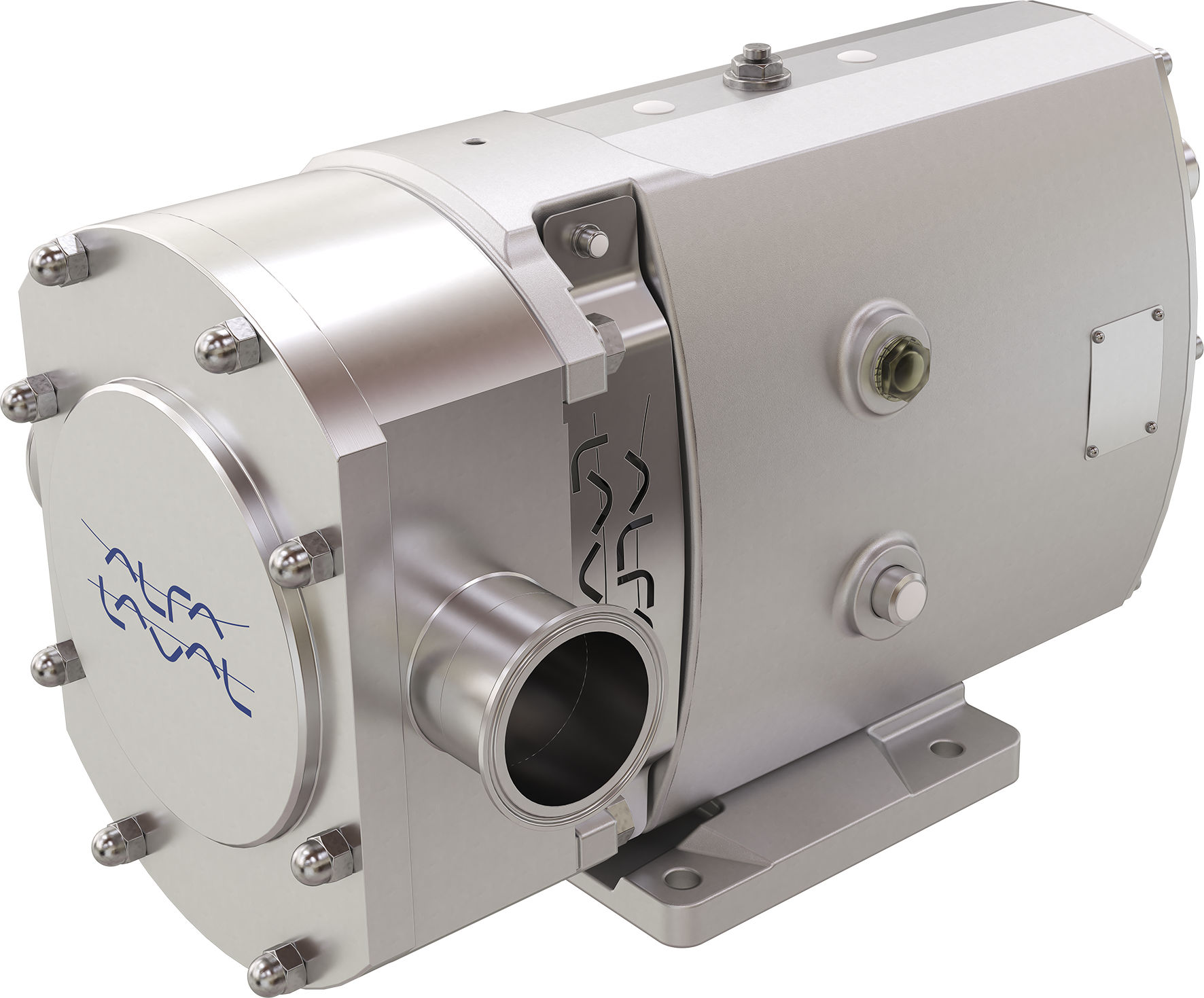
Alfa Laval's hygienic rotary lobe pump for shear-sensitive and viscous product, in 12 displacements to 106 m³/h and 20 bar.
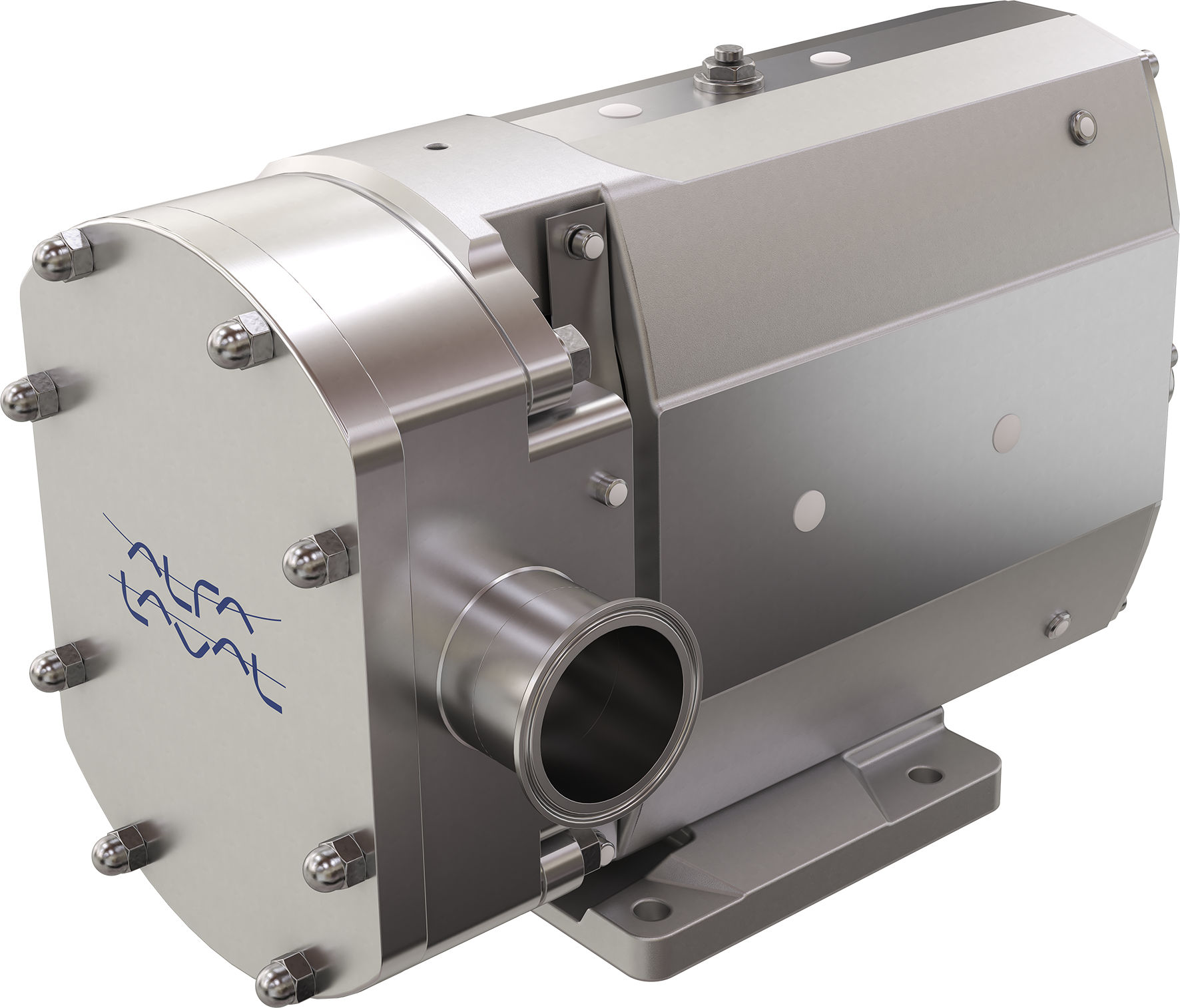
Alfa Laval's premium hygienic rotary lobe pump, in 14 displacements to 115 m³/h and 15 bar, with a fully drainable pump head for CIP and SIP.
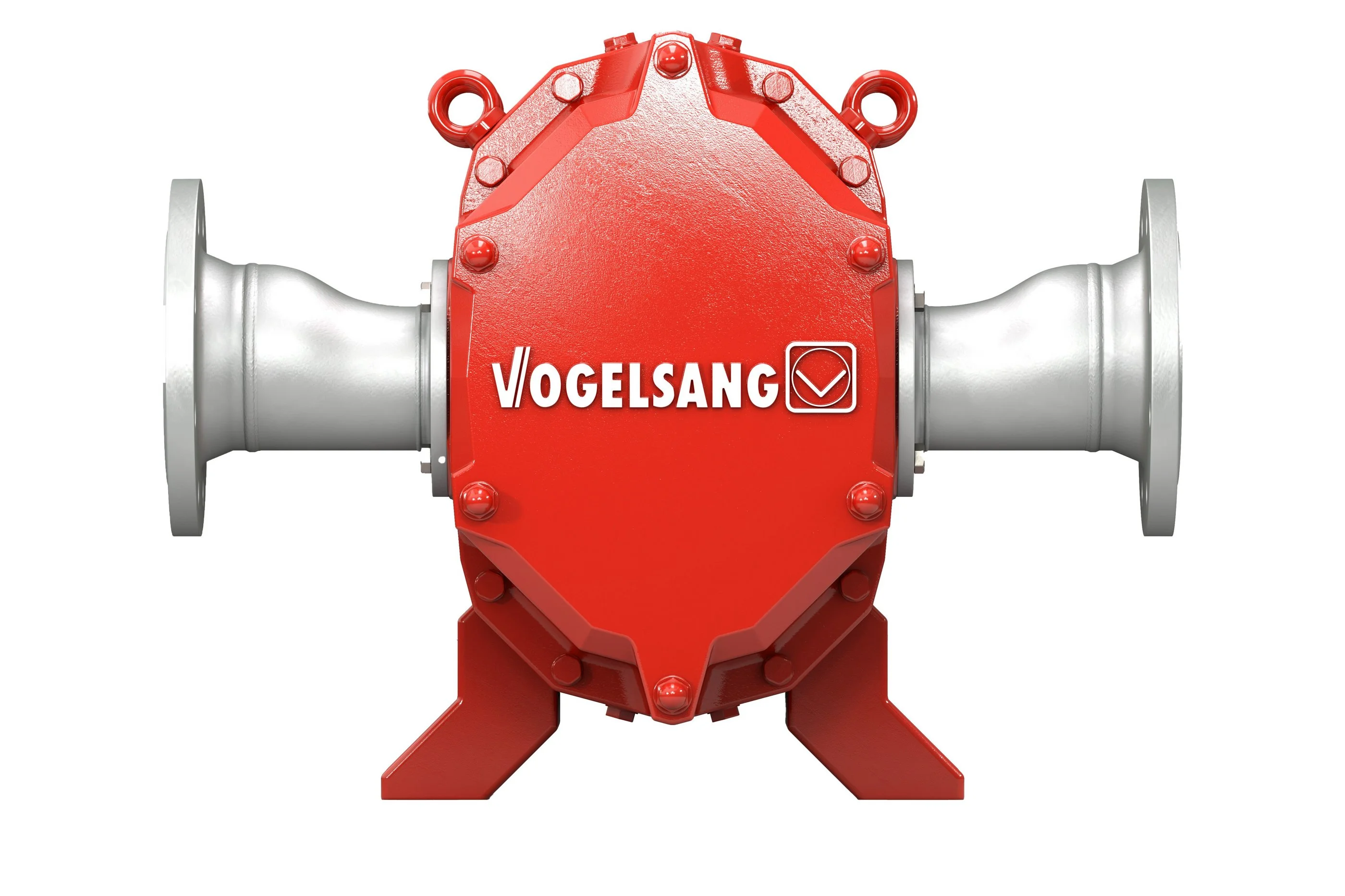
Vogelsang EP series rotary lobe pump: continuous differential pressures to 18 bar, media to 200°C, with API 682 and ATEX-compliant options.
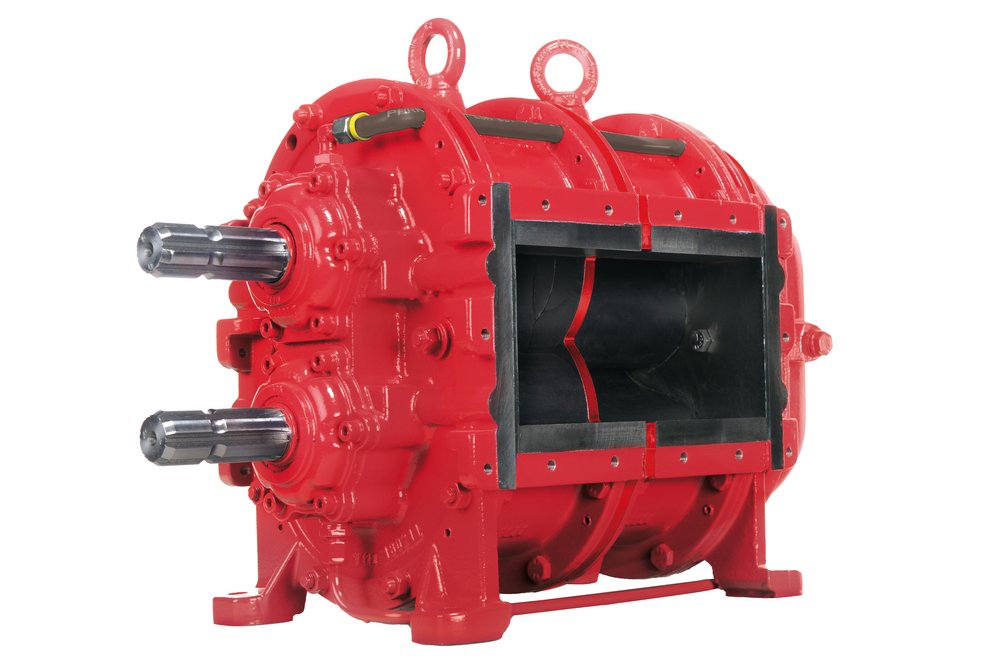
The Vogelsang FX series FarmerPump in six sizes, FX116-60 to FX116-360, up to 270 m³/h and 8 bar, and how to size one for a liquid manure duty.
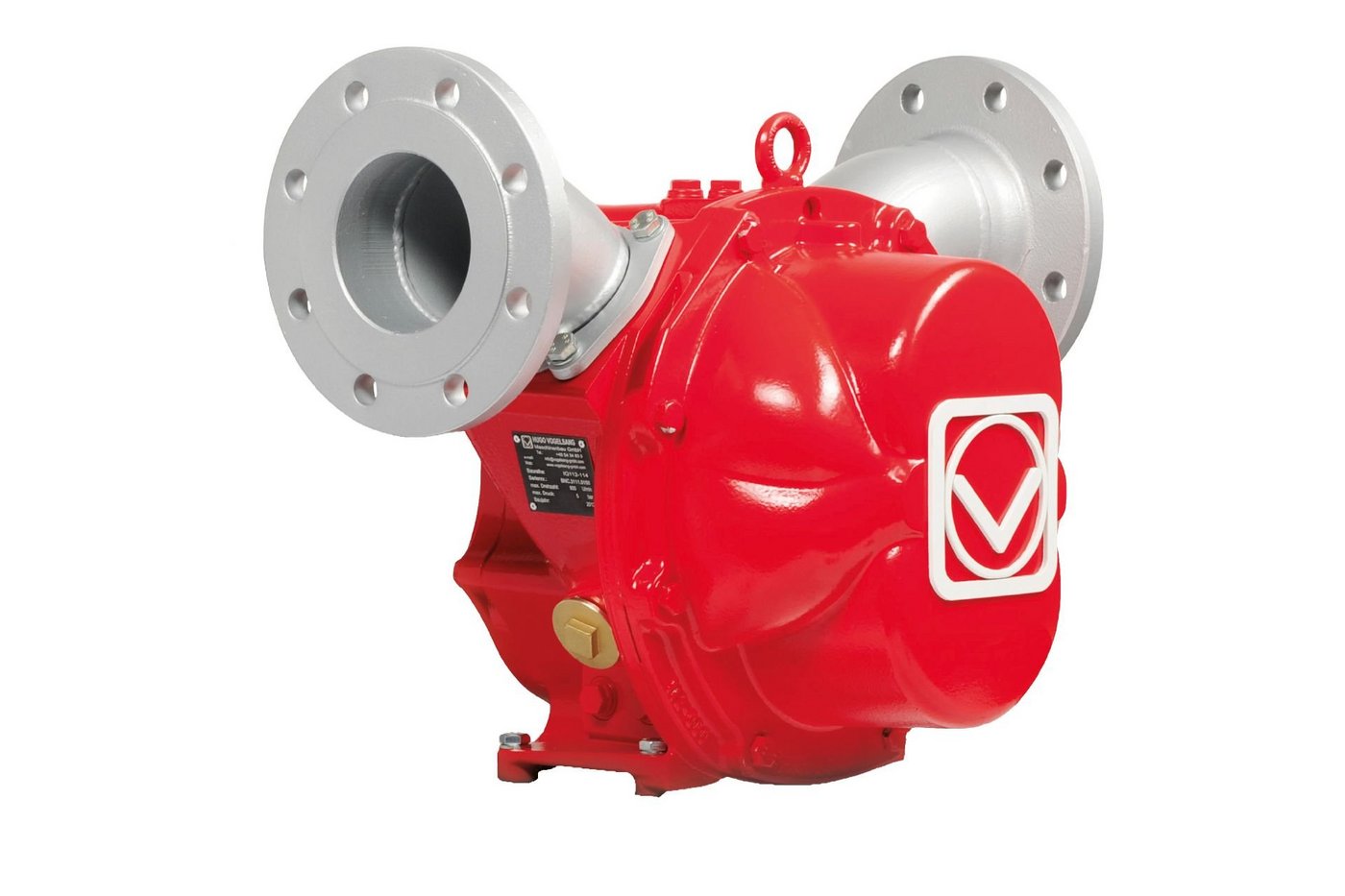
The Vogelsang IQ series rotary lobe pump in two models, IQ112 and IQ152, to 154 m³/h and 7 bar, with a one-piece housing that opens in the pipe.
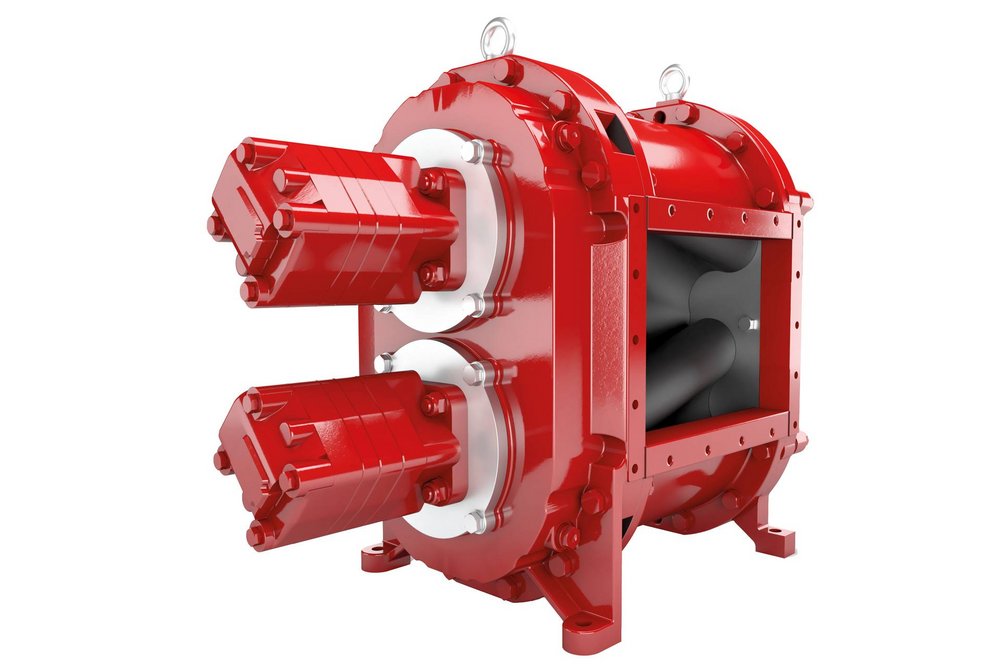
The Vogelsang LoadMaster rotary lobe pump for tank vehicles: up to 45% lighter and 20 cm shorter than a standard VX, to 8 bar and 6,030 l/min.
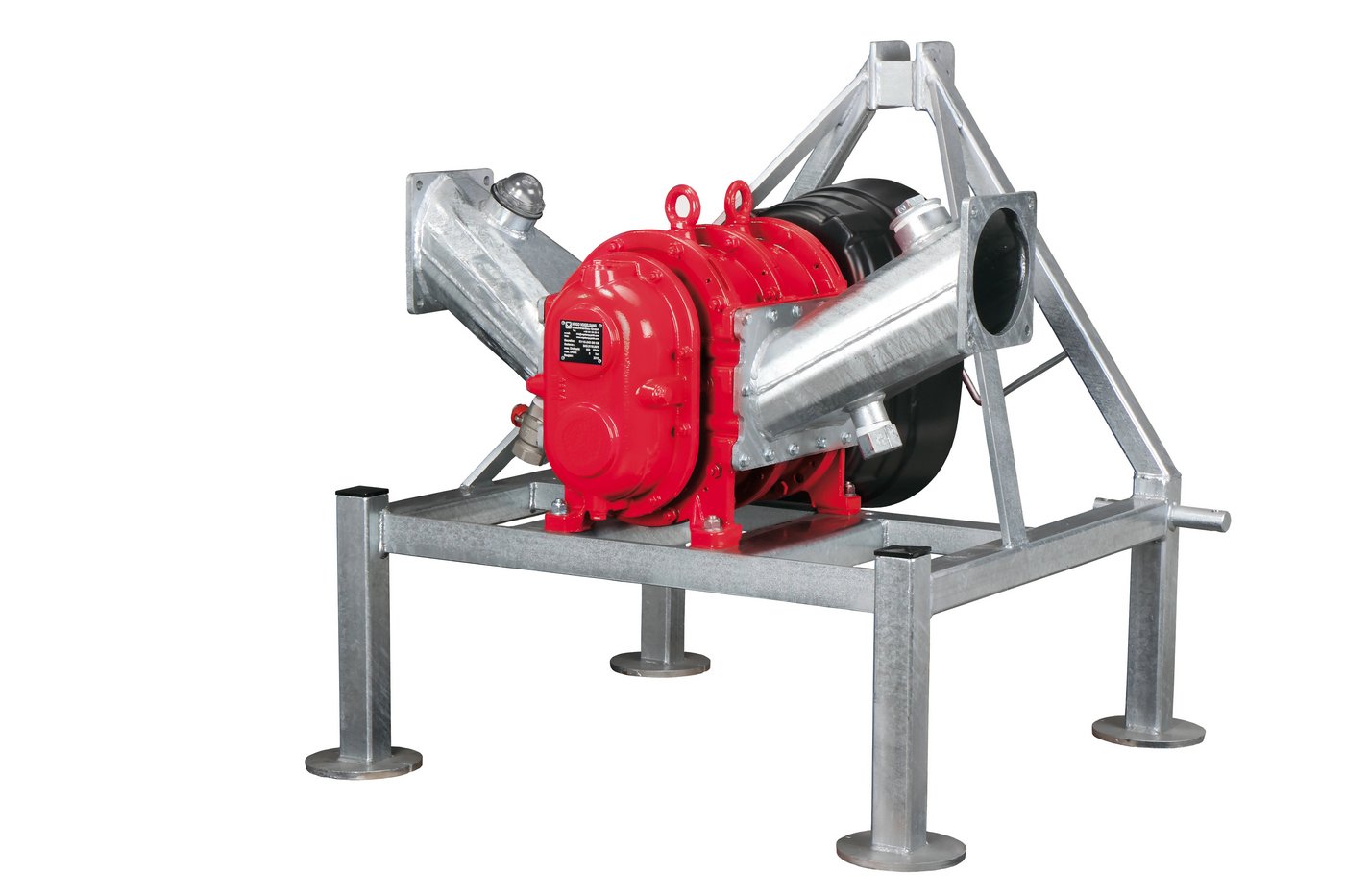
The Vogelsang R series rotary lobe slurry pump in two ranges, R116 and R136, to 5,000 l/min and 5 bar, with the full size list and where each fits.
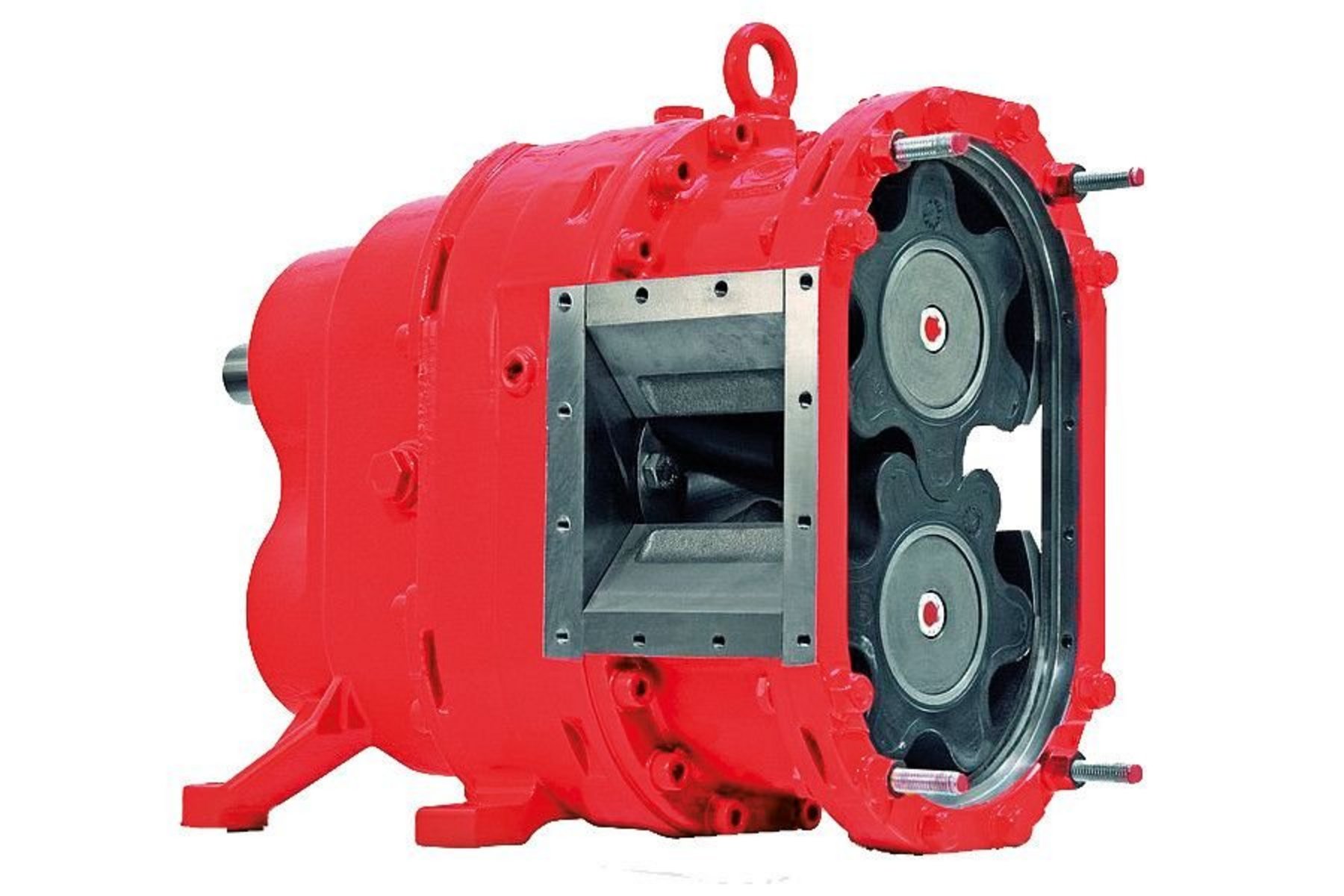
Flow, pressure and build options for every model in the Vogelsang VX series rotary lobe pump range, VX100 to VX230, and how to specify one for your duty.
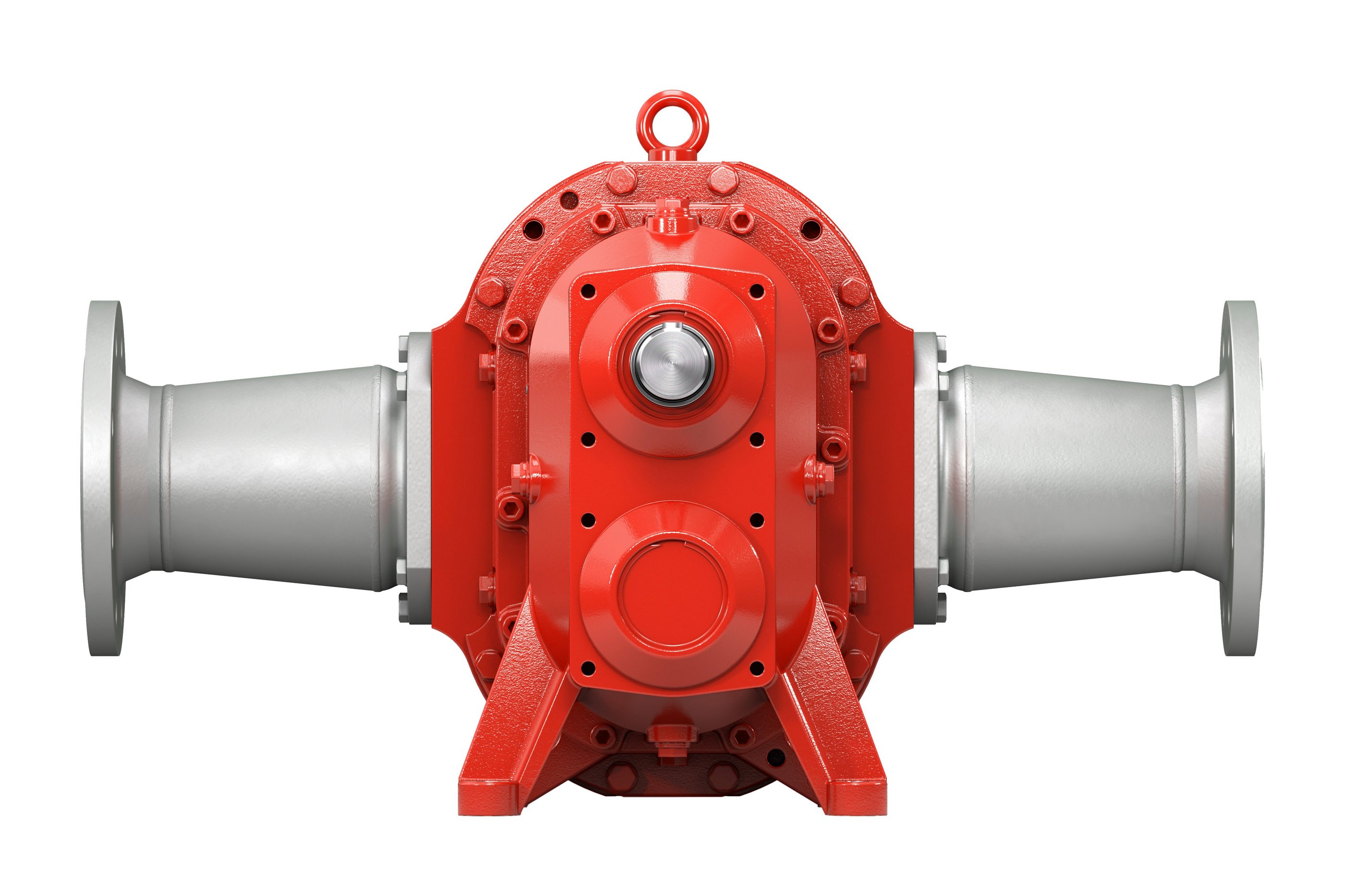
Flow, pressure and build options for the Vogelsang VY series rotary lobe pumps, VY100 and VY136, and how the one-piece CIP/SIP housing differs from the VX.
How to size and spec a lobe pump
Send us four things and we will specify the pump: the duty point, meaning flow and differential pressure; the medium, at worst-case viscosity, temperature and solids; the wetted materials; and the drive and connections.
Give viscosity for the worst case, not the typical day. Thin media slip more, so a pump sized on the easy figure runs short at pressure. Temperature and product sensitivity then set the sealing arrangement, which is where most of these fail.
Frequently asked
What is a rotary lobe pump used for?
A rotary lobe pump moves viscous, shear-sensitive and solids-laden media. It suits gentle hygienic transfer in food, dairy and pharmaceutical processing, and sludge, slurry and screened wastewater on industrial and municipal sites.
How does a rotary lobe pump work?
Two lobed rotors turn in opposite directions inside the pump head, held in time by gears so they never touch. Each pair of lobes traps a volume of medium against the casing and carries it from inlet to outlet, a fixed volume per turn.
What is the difference between a rotary lobe pump and a centrifugal pump?
A lobe pump is positive displacement: it shifts a fixed volume per turn, so flow holds within a few per cent as pressure moves, and it handles viscous or shear-sensitive media gently. A centrifugal uses an impeller, suits thin, clean liquid at high flow, and is cheaper to buy and run. The trade rule of thumb puts the changeover at roughly 3–4% solids.
Can a rotary lobe pump run dry or in reverse?
It reverses when you reverse the drive, which helps with line clearing and CIP return. Running dry is a different matter. On a lobe pump that usually ends in a failed mechanical seal, because a mechanical seal needs liquid to lubricate it, so check the sealing arrangement before you rely on it.
How do I size a rotary lobe pump?
Size it against the duty point, flow and differential pressure, then the medium: worst-case viscosity, temperature and solids. Viscosity matters most, because thin media slip and a pump sized on the typical figure runs short at pressure. Send Channel Pumps the duty and we will specify the head, speed and sealing arrangement.