
About Roto
Roto Pumps has built progressing cavity pumps since 1968, when Ram Ratan Gupta founded the company in India. It has been listed on the Bombay Stock Exchange since 1993 and is chaired by Harish Chandra Gupta. Manufacturing is at Greater Noida, with the head office and an R&D centre at Noida that holds recognition from India's Department of Scientific and Industrial Research. Twin-screw pump manufacture started in 1980. The company exports to more than 50 countries and has had a UK operation since 2004.
Progressing cavity pumps are the core of that business, and it shows up in the part of the pump you will actually spend money on. The wet end is a consumable. The stator is the part that goes, and how long it lasts comes down to how abrasive the medium is and how fast you run the pump. So over the life of the installation the decision that matters is the elastomer specified against your medium, and whether you can still buy one in ten years. Settle that at selection, not after the first failure.
The Roto range we supply
View all →We supply three of Roto's progressing cavity ranges. They divide by flow and pressure first, and by how the medium behaves at the inlet second.
- RD series: the small-capacity pump, standard geometry. Roto quotes 0.11–17 m³/h at 6–48 bar. Small flows, with the pressure to push them a long way.
- RL series: extended geometry for large capacity. Roto quotes 14–420 m³/h at 6 bar. High flow, low pressure. It is not a bigger RD, and the pressure ceiling is the reason.
- WM wide-throat: 5–150 m³/h at 12–48 bar, with a wide inlet and an auger on the coupling rod that drags material down into the pumping element. For media that will not run into a standard suction, such as thickened sludge and heavy food or industrial product.
Select on the medium before the capacity. The RD and RL take a standard inlet, which assumes the medium runs into the suction on its own. Once it stops doing that, a standard inlet starves the pump however well you have sized it, and the wide throat is the answer rather than a bigger pump.
Check the pressure before you settle on a range. An RL will move 420 m³/h, but only against 6 bar. Where a duty needs the flow and the head together, this is the wrong family and we would tell you so.
A progressing cavity pump is also the usual electric alternative when someone is about to fit an air-operated diaphragm pump out of habit. Compressed air is expensive to produce, so where you have electricity we would specify electric. The trade-off you take on is dry running. A diaphragm pump survives it. A progressing cavity pump does not, and that is a rebuild.
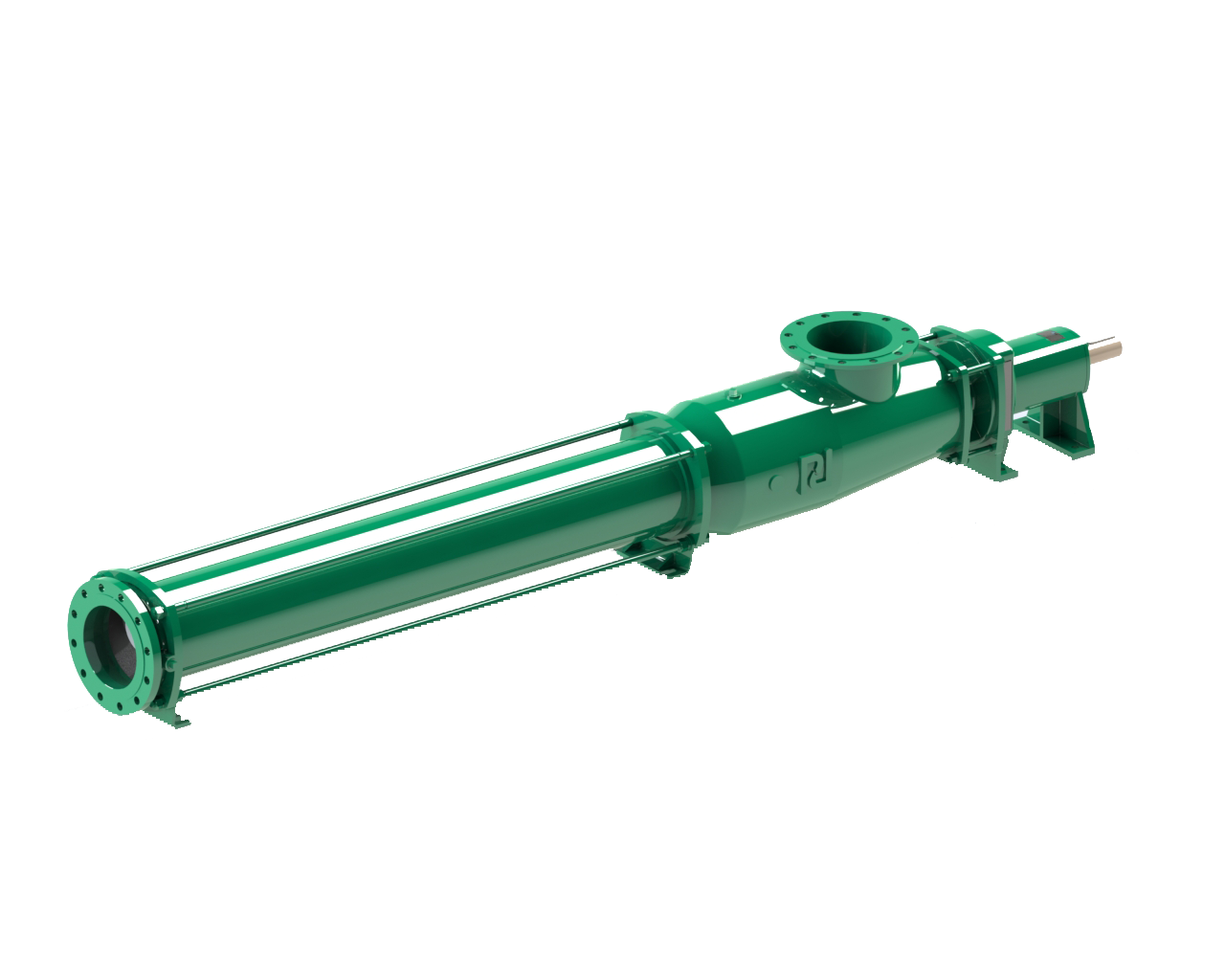
Roto's small-capacity progressive cavity range, for metered dosing and transfer of thick, solids-laden media.
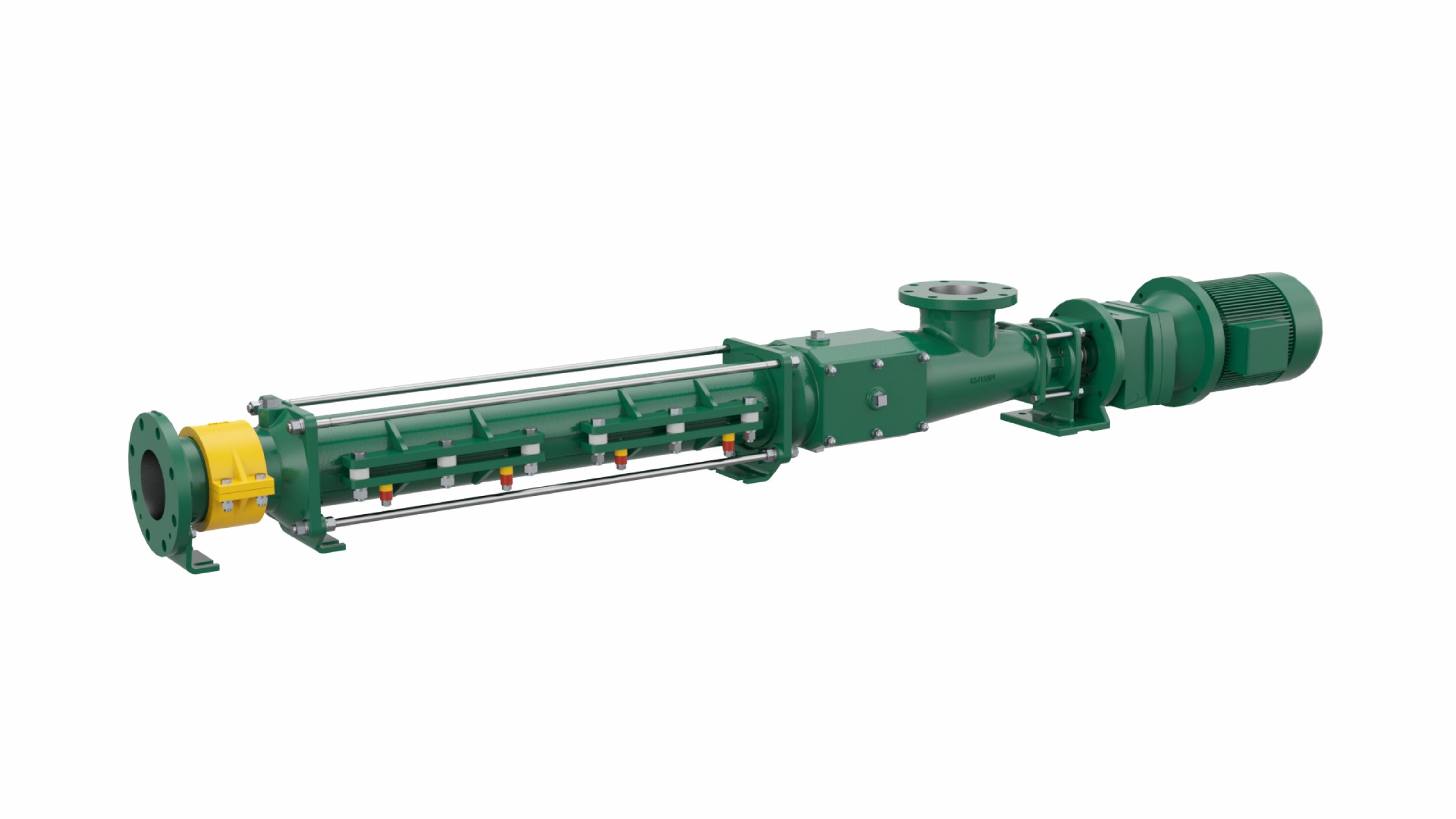
Roto's extra-large-capacity progressive cavity range, on extended geometry, built for volume at low pressure.
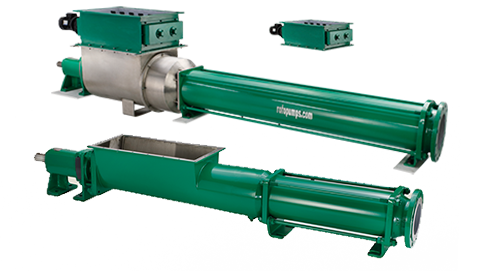
Roto's wide throat progressive cavity pump, with an auger on the coupling rod for media that will not feed themselves into a standard suction.
Standards & quality
Roto lists CE and ATEX certificates among its company certifications. That does not settle a hazardous-area duty on its own, because an ATEX certificate under Directive 2014/34/EU covers a particular build in a particular equipment category. The area carries the zone classification, and the equipment has to be certified for use in it.
So send us the zone classification and the medium with the enquiry. We take both to Roto, and the certification for the exact build comes back with the quote. A hygienic duty works the same way: tell us the standard you are being held to and the wetted materials and elastomers you need, and we specify against it.
Frequently asked
What is a progressing cavity pump used for?
It moves thick, shear-sensitive or solids-laden media at a near-constant flow: sludge, sewage and food product among them. The trade rule of thumb is that above roughly 3–4% solids you move off a centrifugal and onto positive displacement.
What is the difference between the Roto RD and RL series?
Flow and pressure, and the rotor and stator geometry behind them. Roto quotes the RD at 0.11–17 m³/h and up to 48 bar, and the RL, on extended geometry, at 14–420 m³/h but only 6 bar. Pick the RD when the head is high and the flow is modest, the RL when it is the other way round.
When do I need a wide-throat pump like the Roto WM?
When the medium sits still instead of feeding. Thickened sludge and heavy product will not run into a standard suction, so the pump starves. The wide throat and the auger on the coupling rod exist to get that material into the pumping element.
Can a progressing cavity pump run dry?
No. Dry running burns through the stator and damages the rotor, which is a rebuild rather than a service kit. It usually traces back to suction conditions that were never right, or to a valve somebody shut and forgot. Fit dry-run protection where the risk is real.
How long does a progressing cavity stator last?
There is no general figure, because the wet end is a consumable and the stator is the part that goes. Abrasiveness of the medium and pump speed decide it. Run an abrasive medium slowly and you buy stator life; run it fast and you buy stators.
How do I order a stator or a service kit for a Roto pump?
Photograph the nameplate and send us the model and the serial number. The model gives the frame size and geometry, the serial number tells the manufacturer what elastomer and build went into that pump, and the kit is quoted against both. Tell us the medium as well, because the elastomer that came out is not always the one you should put back.