
About Hidrostal
Hidrostal exists because of a fish. In 1955 Martin Stähle, a Swiss engineer from Canton Glarus who had set up an engineering office in Lima, took a development contract for a pumping system that could handle fish without damaging them. What came out of it was the screw-centrifugal impeller, first patented in 1961. He founded Hidrostal AG at Neunkirch in 1967 to take it into the European sewage and sludge market, and the company is still there; it added its own foundry at Neunkirch in 1993 and opened a production site in Qingdao in 2001. Stähle died in 2008.
That brief is the reason the pump behaves the way it does. The design sits between a screw pump and a centrifugal one. A conventional non-clog impeller has two or three vanes and passes solids through the channels between them, so every vane presents a leading edge for rag to wrap on. The Hidrostal impeller has one vane, wound as a screw at the inlet and finishing as a centrifugal vane at the outlet. One vane means one flow passage and one leading edge. Solids travel along it instead of being cut or held, and the medium leaves the pump in much the same state it went in.
Gentle handling normally costs efficiency. This design largely avoids that trade, which is why it gets specified on duties where a chopper pump or a standard non-clog would otherwise be the default.
The Hidrostal range we supply
View all →The screw-centrifugal wet end is the constant. What changes between the Hidrostal ranges is how the pump is installed and how large the duty is.
The submersible sits in the wet well and runs submerged, with the surrounding liquid cooling the motor. Hidrostal rates it to 2500 l/s (9000 m³/h) and 100 m head, on motors from 0.55–400 kW, with discharge sizes from 50–700 mm.
The immersible is the dry-pit answer, and the difference that matters is the cooling. It carries its own closed loop, so the motor runs whether the pit is dry or flooded. That is the reason to specify one rather than a conventional dry-pit pump. Hidrostal rates the range 0.5–3000 l/s to 90 m head on 0.1–650 kW.
The bearing frame unit is for dry installation with a separate drive, direct, close or long coupled, horizontal or vertical. It covers the same duty envelope as the immersible and takes discharge sizes down to 32 mm, and its back pull-out design lets the wet end come out without breaking into the pipework.
The compact is the portable one, 23 kg with a 5 m cable, 0.8–24.6 l/s to 17.7 m on up to 2.4 kW, with a free ball passage of 50–75 mm. It is a site, drainage and flood-response pump rather than an installed one.
The axial column and axial diffuser pumps carry the same impeller in an axial flow path. They shift high volumes against low head, 6–1500 l/s to around 20 m on the column pump, which is the shape of a land drainage, storm water or flood pumping duty rather than a sewage transfer one.
Where the range earns its money is wastewater. Three things kill pumps on a sewage works, in this order: rag and solids binding up the wet end, grit abrading it because the grit removal upstream is not doing its job, and dry running, which takes out the mechanical seal because a seal needs liquid to lubricate it. A screw-centrifugal answers the first of those directly. It does nothing about the other two. Grit still wears a Hidrostal, and running one dry still costs you the seal.
It is also the pump to look at where the medium has to survive the trip. Sludge you do not want sheared, live fish on a transfer duty, food product whose solids need to stay whole. Hidrostal's own application list names bacterial floc, live fish, and fruit and vegetables. Shear-sensitive media want pumping slowly, which is a selection constraint that never shows up on a performance curve.
The trade-off is cost and specificity. A screw-centrifugal pump costs more than a channel-impeller pump of the same duty. If your medium is well screened, or close to clean water, you are paying for a capability you will not use, and we would say so. And if a pump is blocking on rag now, check what is reaching it before you replace it. The pattern we see most often is a perfectly good solids-handling pump defeated by material that should have been taken out upstream. In that case rag removal, either a macerator or a chopper pump, fixes it and a new pump does not.
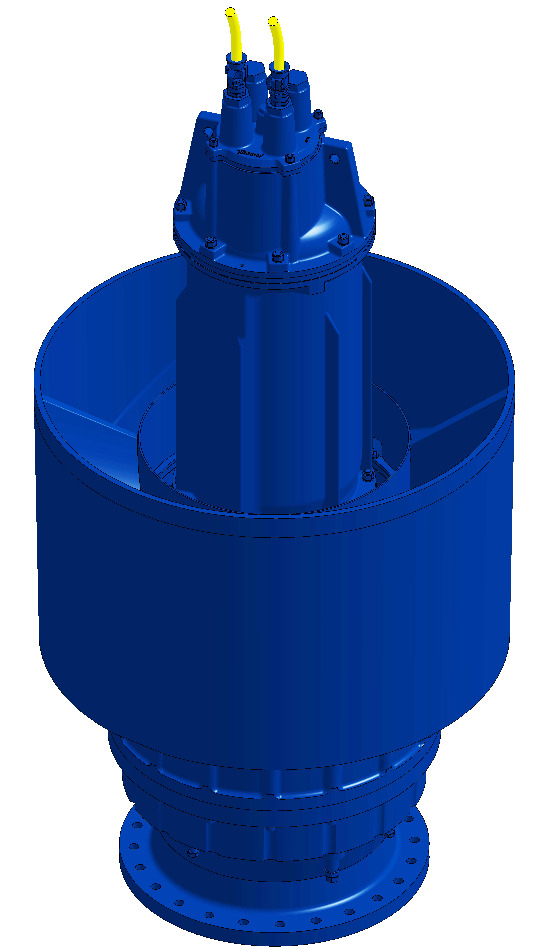
Hidrostal Axial Column Pump: 6–1500 l/s at discharge heads up to 20 m, screw centrifugal impeller, for land drainage and flood pumping stations.
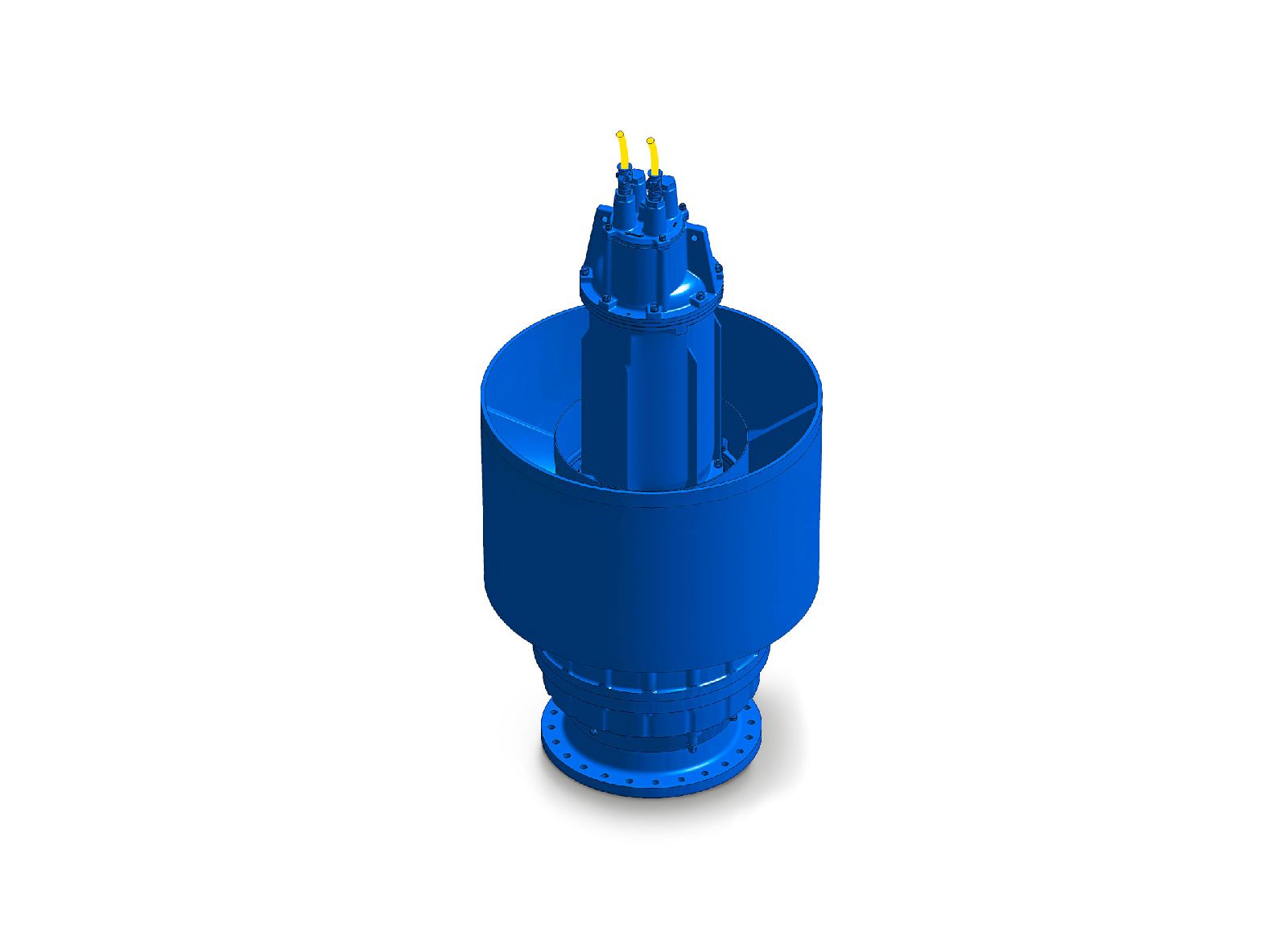
Hidrostal Axial Diffuser Pumps in two versions, the Axial Column Pump at 6–1500 l/s and up to 20 m, and the high-head Vertical Turbine Pump.
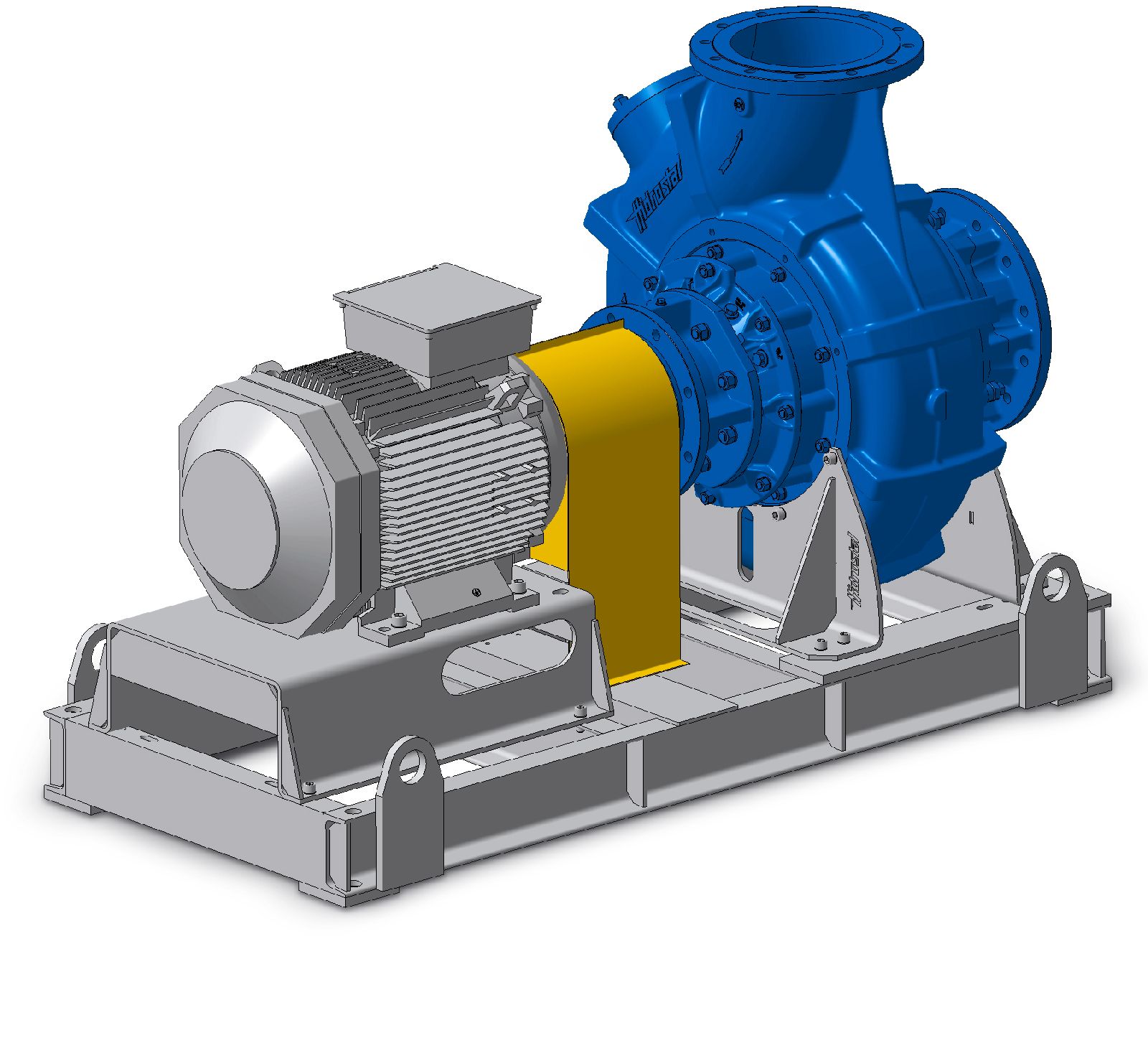
Hidrostal bearing frame pumps: dry-installed screw centrifugal end suction, 0.5–3000 l/s to 90 m, 32–700 mm, horizontal or vertical. Specs and selection.
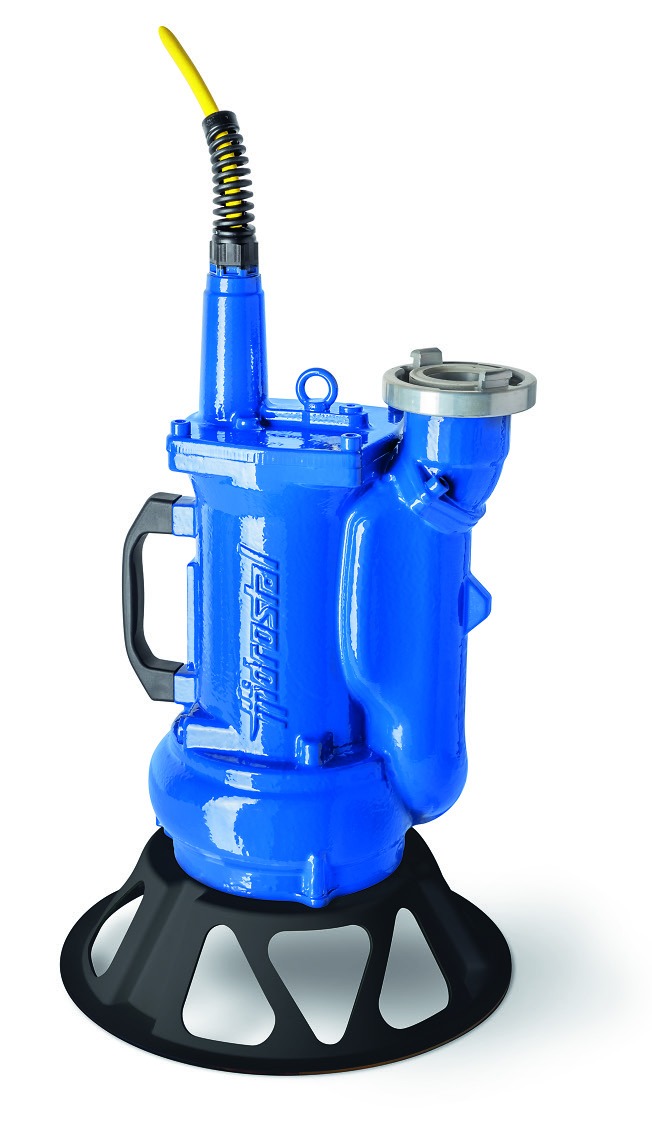
Hidrostal compact pumps: portable screw centrifugal field units, 0.8–24.6 l/s to 17.7 m, 50–75 mm free ball passage, from 23 kg. Specs and selection.
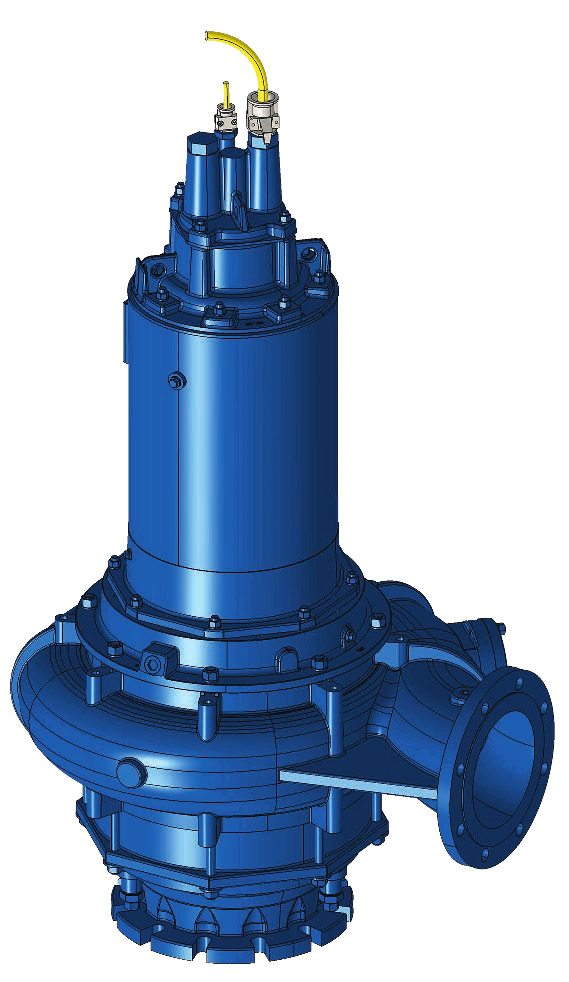
Hidrostal immersible pumps: 0.5–3000 l/s to 90 m head, closed-loop motor cooling so they run dry, part or fully submerged. Dry pit specs and selection.
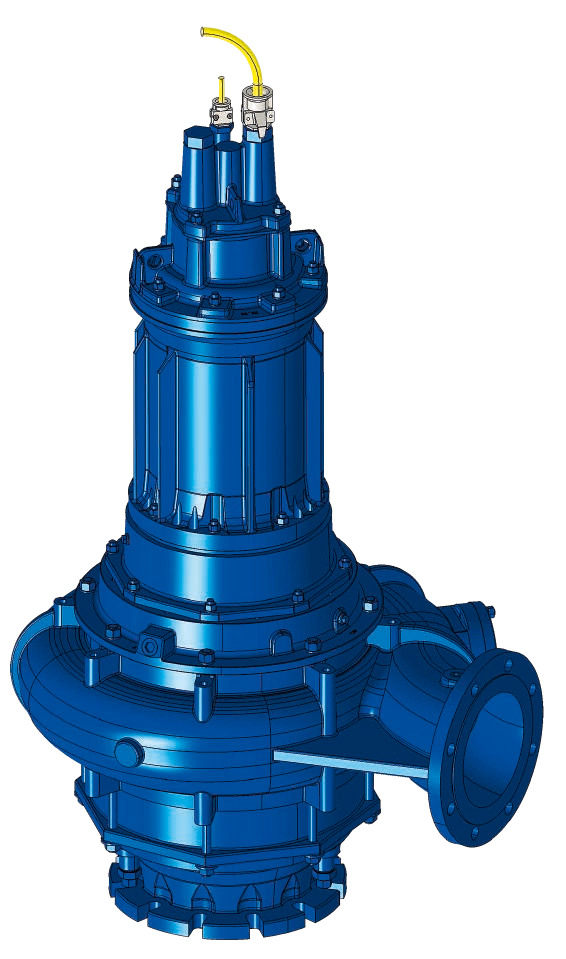
Hidrostal submersible pumps: up to 2500 l/s and 100 m head, screw centrifugal hydraulics, motor cooled by the liquid it sits in. Specs and selection.
Standards & quality
Certification travels with the build, not with the range. An ATEX certificate under Directive 2014/34/EU covers one specific pump build, in a stated equipment category, for use in a stated zone. Areas are classified into zones. Equipment is certified to a category. The certificate is what marries the two, and it is Hidrostal's to issue.
So send us the zone classification and the medium with the enquiry, and the certificate for the exact build comes with the quote. A hygienic or food duty works the same way. Hidrostal builds for media as delicate as live fish and fruit, so the capability is real, but the wetted materials, elastomers and sealing arrangement still get specified against your cleaning regime and your medium rather than against the range a pump belongs to.
Frequently asked
What is a screw-centrifugal pump?
It is a centrifugal pump whose impeller is a single continuous vane, wound as a screw at the inlet and finishing as a centrifugal vane at the outlet. One vane gives one large flow passage, so solids pass through whole instead of catching on vane edges. Martin Stähle developed it in Peru from a 1955 development contract and patented it in 1961, and Hidrostal is the manufacturer the design is associated with.
Will a Hidrostal pump block on rag?
It is much harder to block than a conventional non-clog, because there is only one vane for rag to catch on. It is not immune. If the wet well is taking wipes, sanitary items and the rest in quantity, deal with the rag upstream with a macerator or a chopper pump. No impeller design fixes a screening problem on its own.
What is the difference between the Hidrostal submersible and immersible pumps?
The cooling, not the hydraulics. The submersible sits in the wet well and is cooled by the liquid around it, so it has to stay submerged. The immersible is a dry-pit pump with its own closed-loop cooling, so the motor runs dry or flooded. Choose on the installation you have; the wet end is the same screw-centrifugal on both.
Which Hidrostal range should I be looking at?
Choose on the installation first. A wet well takes the submersible, a dry pit that could flood takes the immersible, and a dry installation with its own drive takes the bearing frame unit. The compact is the portable site and flood-response pump. If the duty is high flow against low head, land drainage or storm water, it is an axial column or axial diffuser pump rather than any of the above.
How do I identify which Hidrostal pump I have and order spares?
Photograph the nameplate and send us the model and the serial number together. The serial number is what the manufacturer looks the build up against, and spares are quoted from the build rather than from the range. Wetted materials and the sealing arrangement vary by installation and by medium, so confirm both against the specific unit.
Is a Hidrostal pump certified for a hazardous area?
Certification is issued by Hidrostal, and an ATEX certificate covers a specific build for use in a specific zone rather than a whole range. Send us the zone classification and the medium and we will get the certificate for the exact build and put it with the quote.
Who supplies Hidrostal pumps in the UK?
We do. Send the flow rate, the total dynamic head, the medium and what the solids actually are, and we will tell you which range fits, or that a different pump suits the duty better.