What bites on a pharmaceutical duty
Cleaning and temperature are what bite on a pharmaceutical duty. There is no rag to block the wet end, so the failure modes that dominate wastewater do not apply here. Two others take their place.
Cleaning is the first. If the pump cannot be cleaned in place, or the cleaning procedure is weak, you get product contamination. That is the mechanism, and it costs you a batch rather than a pump. A pump that has to come apart to be cleaned properly is a pump that will eventually be put back together by someone in a hurry.
Temperature is the second. Hot cleaning cycles are hard on sealing, and the higher the temperature the fewer pump types stay in the running. Temperature, with the medium, is what drives the sealing arrangement. The duty point does not.
Then there is the product itself. Shear-sensitive media want pumping slowly. That is a real selection constraint and it never appears on a performance curve, so it gets lost between the flow rate the customer sends and the pump the curve suggests. Run a positive displacement pump faster to make up the flow and you damage the product you were trying to protect.
The seal is the weak point in almost any pump. On a pharmaceutical line the question is not whether a seal will eventually fail, but what happens to the batch when it does. Answer that before you choose between a single, flush, double or cartridge arrangement. Where the seal choice is genuinely difficult, the seal manufacturer's advice is the one to take.
One more, and it is not specific to pharmaceuticals: oversizing. A flow rate picks up a margin from the consultant, another from the contractor, another from whoever installs it, and the pump that comes out of that chain is far too big. Nobody in it is being careless. You pay for the motor for the life of the installation, and a centrifugal pump run off the end of its performance curve cavitates and takes the seal with it.
What suits it
Match the pump to the product first, then to the cleaning regime, then to the duty point.
Thin, clean media at moderate head
A hygienic centrifugal pump. Buffers, process water, anything that behaves as water. It is the cheapest way to move that medium, and it stays the right answer until viscosity or shear sensitivity says otherwise.
Viscous or shear-sensitive product
A hygienic rotary lobe pump, run slowly. A positive displacement pump moves product by displacing it rather than by accelerating it, and it holds its flow rate to within a few per cent as the pressure changes, where a centrifugal pump's flow falls away as the head rises. Creams, gels and cell culture media are the cases. Size it so you can turn the speed down. A smaller pump run fast is not the same pump.
Solvent transfer with no electricity to hand
An air-operated diaphragm pump has a genuine place here, and it is a narrower place than its popularity suggests. Compressed air is expensive to produce, so the running cost sits well above an electric drive for the life of the installation. The air supply's reliability, cleanliness and filtration all become failure points, and the air valve can freeze and stop the pump. Where electricity is available, we would specify electric, usually a rotary lobe or a progressing cavity pump.
Whatever the type, the cleaning regime is part of the specification rather than an afterthought. Cleaning in place covers what that asks of a pump, and low-shear pumping covers the product-protection side.
A bigger pump does not fix a problem that sits in the pipework. If the inlet is the constraint, changing the inlet is cheaper than changing the pump, and we would rather tell you that than take the order.
Pharmaceutical pumps we supply
View all →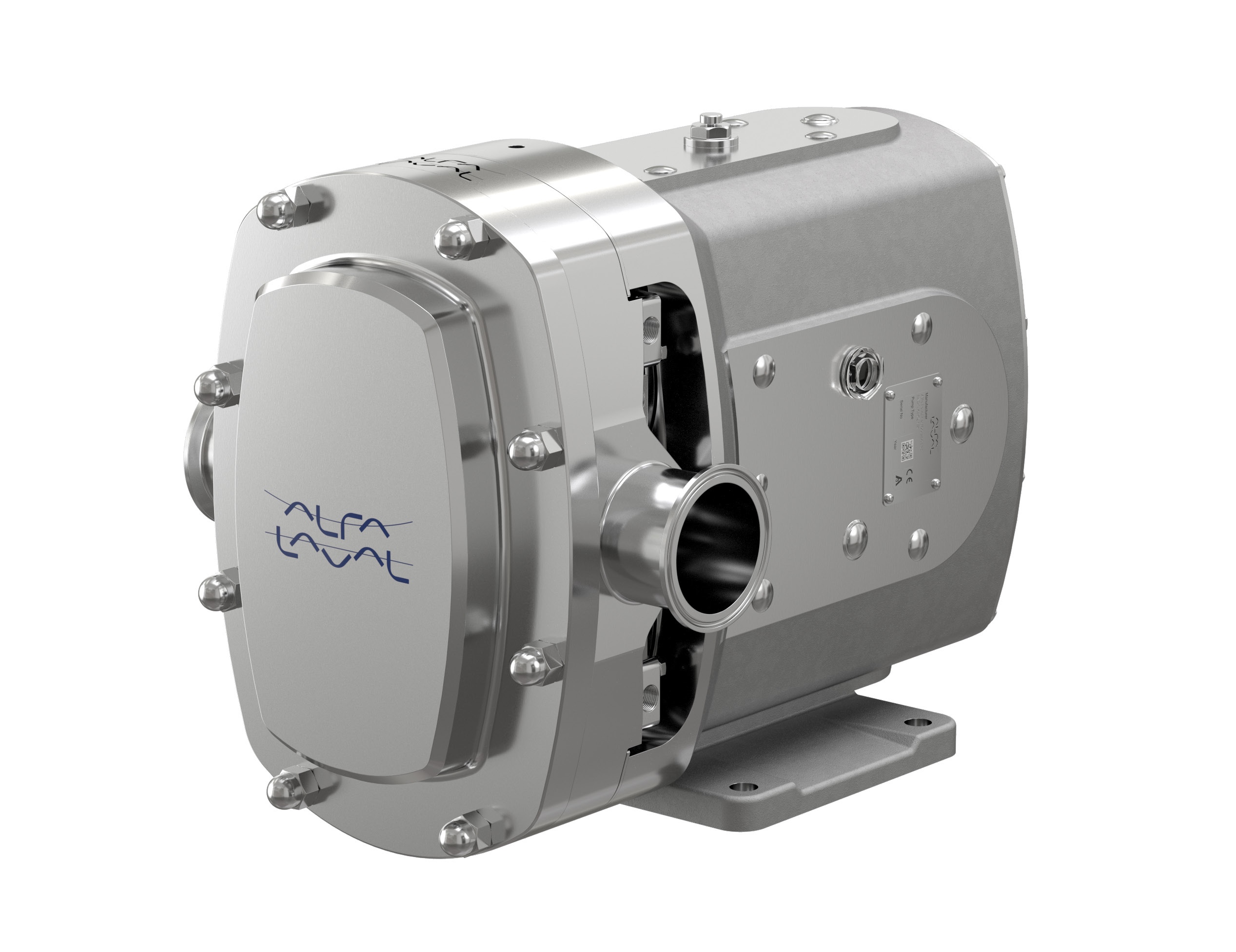
A hygienic circumferential piston pump for low-viscosity duties that need pressure. Certified to EHEDG and 3-A, in 13 displacements.
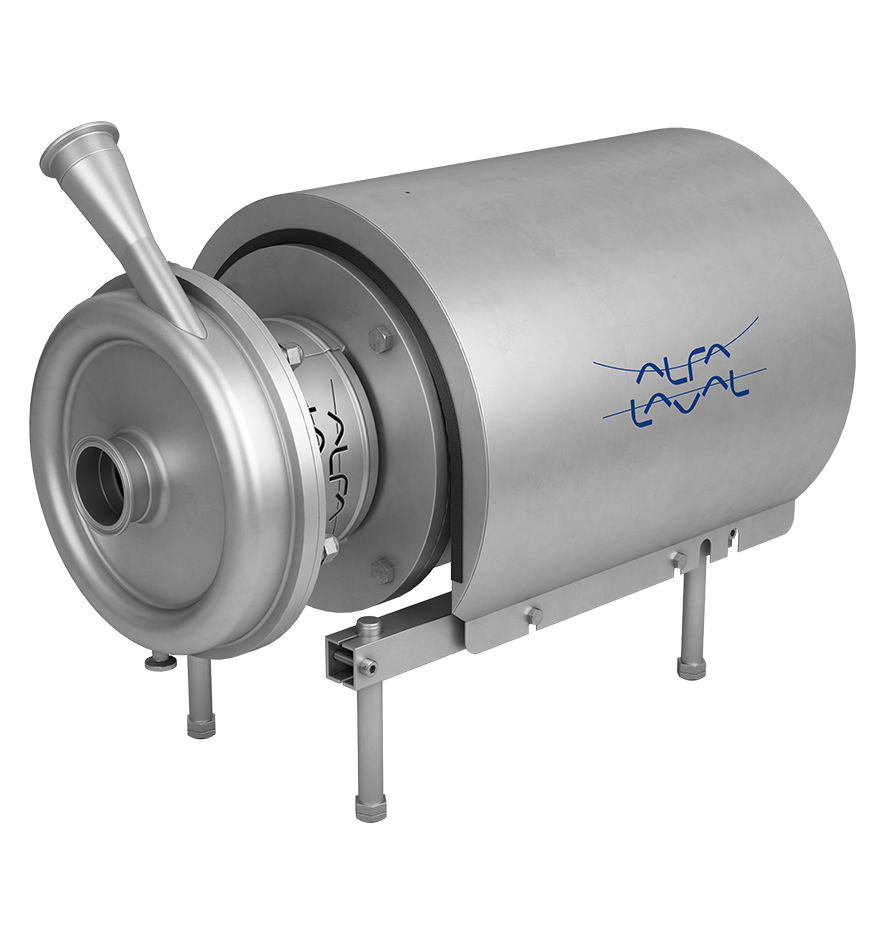
A high-purity hygienic centrifugal pump for biotech and pharmaceutical process duties. EHEDG certificate, full material traceability, eight sizes.
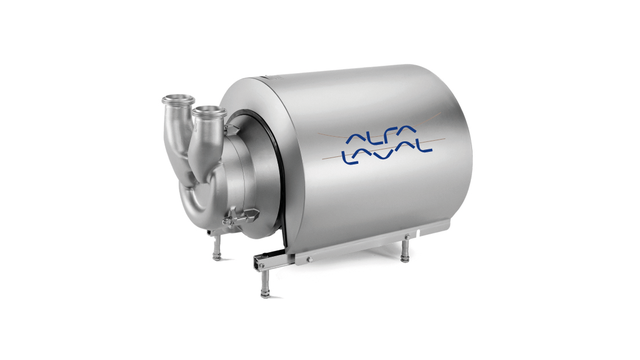
A liquid-ring pump for CIP return and other duties where the liquid arrives with air or gas in it. Three sizes to 80 m³/h.
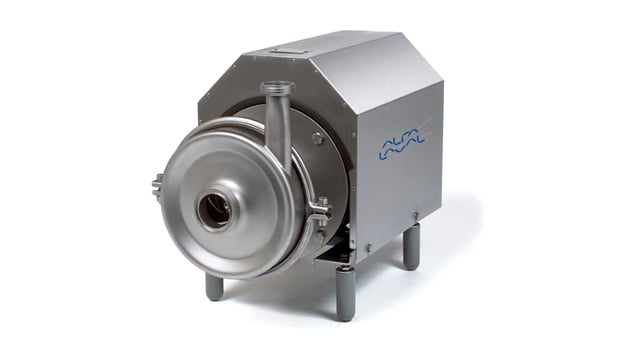
A standardised hygienic centrifugal pump for basic CIP and transfer duties, in four sizes, with an UltraPure execution for pharmaceutical work.
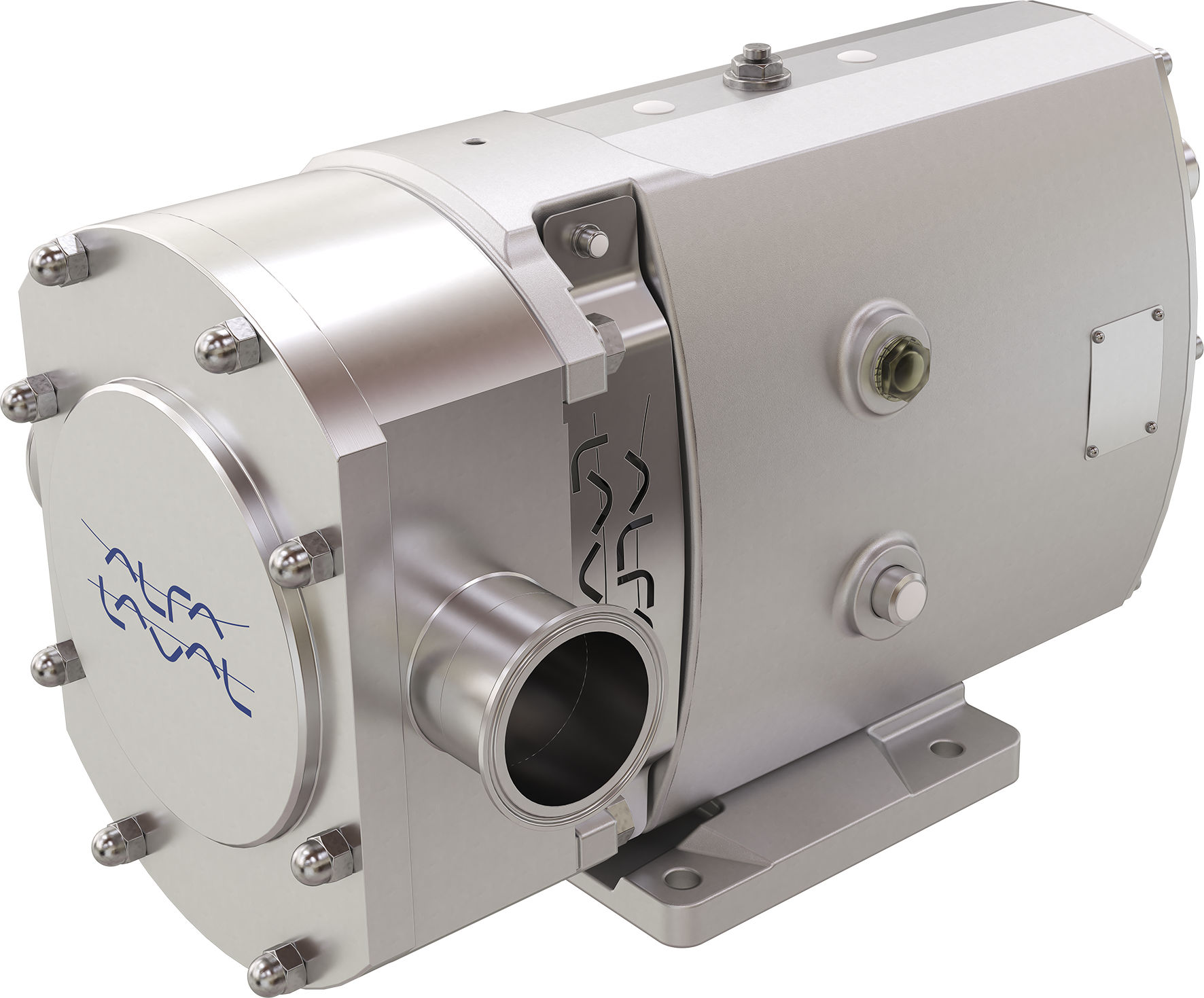
Alfa Laval's hygienic rotary lobe pump for shear-sensitive and viscous product, in 12 displacements to 106 m³/h and 20 bar.
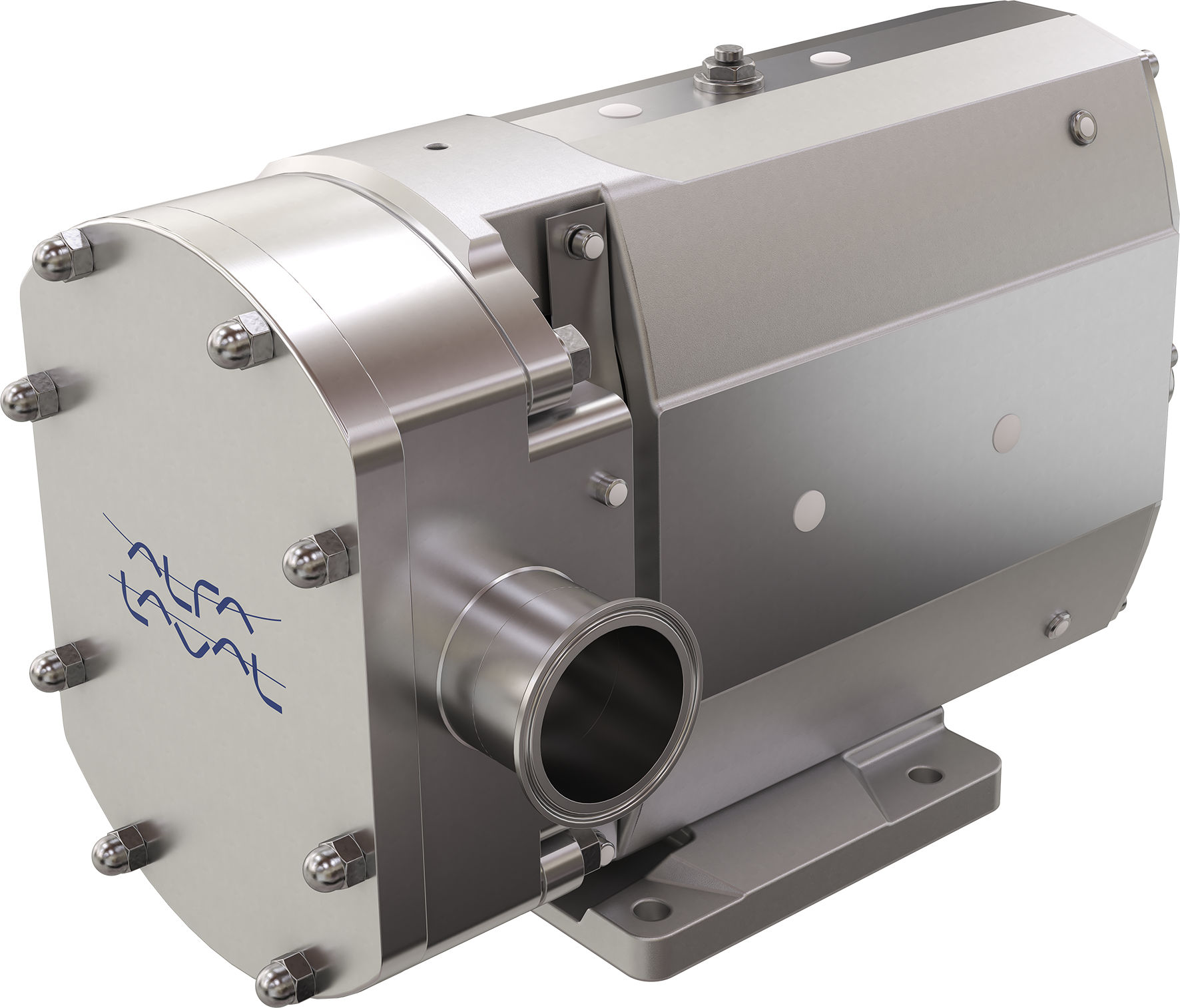
Alfa Laval's premium hygienic rotary lobe pump, in 14 displacements to 115 m³/h and 15 bar, with a fully drainable pump head for CIP and SIP.
Certification, and what it covers
Two schemes decide the paperwork on a pharmaceutical line. EHEDG on the hygienic side, ATEX where solvents and flammable actives are in the room. Both certify a specific design against published criteria, and both are issued to the manufacturer.
What EHEDG certification covers
EHEDG (European Hygienic Engineering & Design Group) publishes the hygienic design guidelines the industry works to, and runs the certification scheme that tests equipment against them. An Authorised Evaluation Officer reviews a sample against the manufacturer's drawings and the relevant guidelines, measuring surface roughness and internal radii. Closed equipment then has to pass cleaning-in-place testing at an authorised laboratory. Only then is a Certificate of Compliance issued and the equipment added to EHEDG's public list.
The certificate names the equipment type, the sizes and the seal materials that were tested. That list is its scope. Certificates also expire: they have to be prolonged every year and renewed in full every five, so one reprinted in an old brochure may have lapsed. Specify a different seal material or elastomer and you are outside the build that was tested.
Hygienic design decides whether a pump can be cleaned in place at all: whether it drains, and whether there are crevices and dead legs where product sits out of reach of the cleaning fluid. That is the part you cannot fix later, which is why it belongs in the specification rather than in commissioning. You still validate the cleaning regime itself, at your temperatures and with your product, on your own line.
Hazardous areas: zones for the room, categories for the pump
Classifying the area is your duty, not your supplier's. Under DSEAR (the Dangerous Substances and Explosive Atmospheres Regulations 2002) an employer identifies where an explosive atmosphere may occur and classifies it into a zone: Zone 0, 1 or 2 for gas and vapour, Zone 20, 21 or 22 for dust.
Equipment is certified separately. The ATEX Directive 2014/34/EU covers equipment and protective systems for potentially explosive atmospheres, and in Great Britain it takes effect through the Equipment and Protective Systems Intended for Use in Potentially Explosive Atmospheres Regulations 2016. Certification usually runs through a third-party conformity assessment body, and certified equipment carries the conformity mark and the Ex symbol. So a pump is certified for use in Zone 1 rather than "Zone 1 rated", and the certificate covers that pump and its motor as they were built. Change the motor, the seal or a wetted material and it is a different build, with different paperwork.
What to send us
Send the zone your area is classified as, and whether the atmosphere is gas or dust. Send the medium, its viscosity and temperature, how the line is cleaned, and the flow and head. If you are replacing a pump, photograph the nameplate and send the model and serial number off it. We come back with the manufacturer's certificate and declaration for the exact build being quoted, alongside the quote, so your own quality people can decide whether it satisfies your site.
Our job on a project of any size is knowing which manufacturer to take to your site, checking there that the duty is what you have been told it is, and bringing their engineer in when the application warrants it. The deepest knowledge of a given pump sits with the manufacturer, and so does its performance guarantee.
Frequently asked
What type of pump is used in pharmaceutical manufacturing?
It depends on the product. Thin, clean media at moderate head go on a hygienic centrifugal pump. Viscous or shear-sensitive product goes on a hygienic rotary lobe pump, run slowly. The medium and the cleaning regime decide the type. The flow and head only size it.
How do you pump shear-sensitive product without damaging it?
Pump it slowly, on a positive displacement type such as a rotary lobe pump, which displaces product rather than accelerating it. Size the pump so it can run at low speed at your duty point. Making up flow with speed is what damages the product.
Why does clean-in-place matter when choosing a pump?
Because a pump that cannot be cleaned in place, or a weak cleaning procedure, is how product contamination happens. The pump has to drain fully and leave no crevices where product can sit. Treat the cleaning regime as part of the specification, alongside the medium and the duty point.
Do I need an ATEX pump for solvent transfer?
If the area is classified as a hazardous zone, the equipment in it has to be certified to a suitable category. The area carries the zone, under DSEAR; the pump and motor carry the category, under the ATEX Directive 2014/34/EU. Tell us how your area is classified and we will get the manufacturer's certificate for that build.
Which seal arrangement should I use on a pharmaceutical duty?
Start from what a seal failure would do to the batch, then choose between a single, flush, double or cartridge arrangement. Temperature and the medium drive the decision. Where the choice is genuinely difficult, take the seal manufacturer's advice.