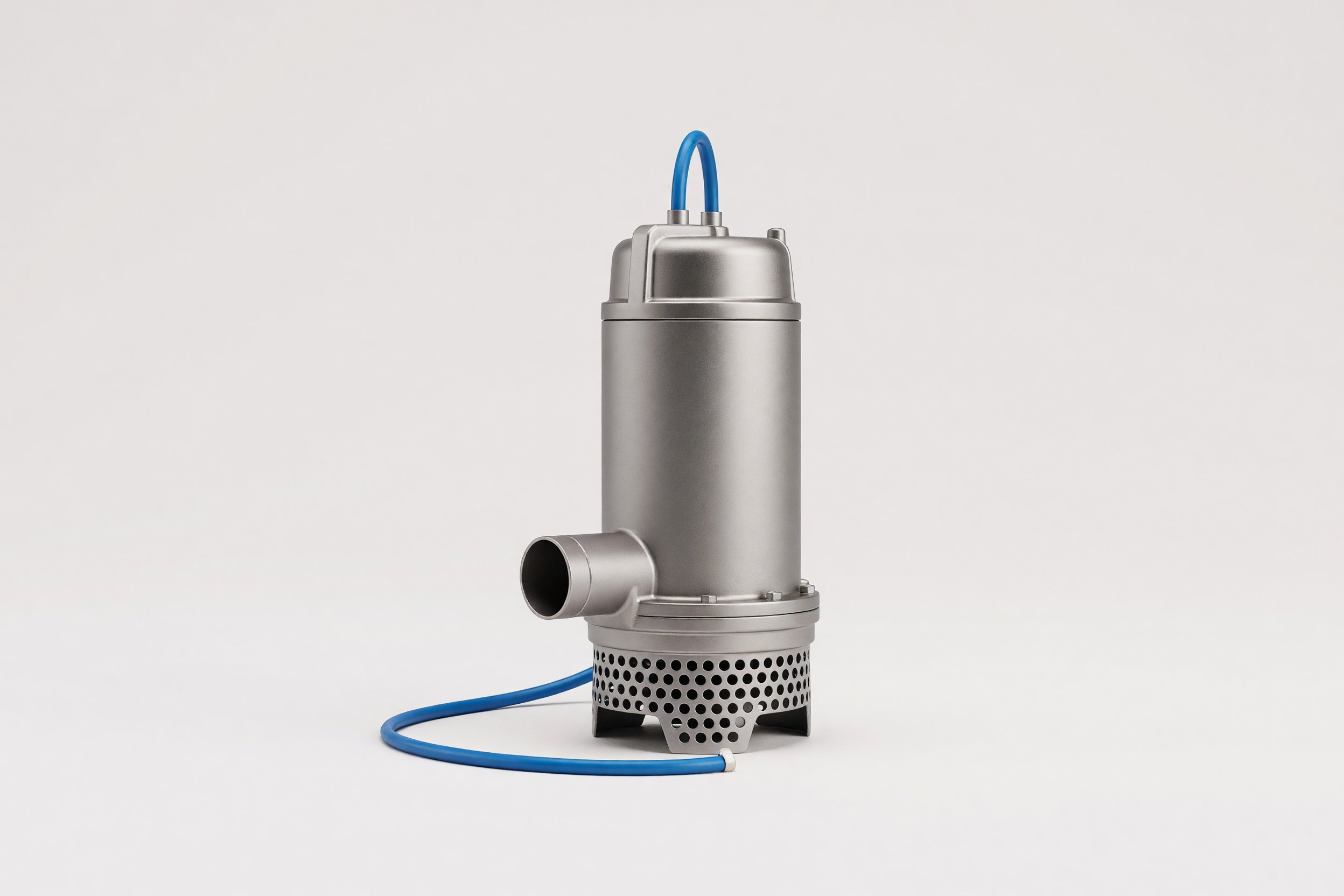
How a submersible pump works
The motor of a submersible pump sits directly above the impeller in one sealed housing, and the medium around it carries the heat away. A mechanical seal, usually running in an oil chamber, keeps the pumped medium out of the motor.
Because the wet end is already flooded, there is no suction lift and no priming. The impeller does the work, and its design decides what the pump will pass: closed impellers for clean water, vortex and single-channel for sewage, cutter or grinder where rag is the problem.
When to choose a submersible pump
Choose a submersible when you can get the pump into the medium and want the suction problem to go away. A wet well, a sump, an excavation or a borehole all suit it. If the pump has to sit dry, or the medium is too thick for an impeller, you are in the wrong technology.
- Wet wells and sewage pumping stations, on duty and standby
- Site dewatering and sump drainage, where a surface pump would lose its prime
- Raw sewage and effluent, with a vortex, single-channel or cutter impeller
- Borehole and deep well water supply
- Installations near housing, where the medium damps the motor noise
- You cannot submerge the unit, in which case a surface-mounted pump is the answer
- Above roughly 3–4% solids, or a genuinely viscous medium, where positive displacement takes over
- Rag is blocking the pump repeatedly, which is an upstream problem a bigger pump will not fix
- You already know the model and just need it shipped; a merchant will beat us on price
Key features & trade-offs
No suction lift to lose. The most common surface-pump failure mode does not exist here.
The surrounding medium takes the motor heat and damps the noise, which matters where a pumping station sits near housing.
Vortex, single-channel and cutter impellers each pass a different worst-case solid. State the largest solid and the impeller follows.
A duckfoot bend and guide rails let you recover the pump without draining the wet well or entering it.
Run it dry and the seal goes. Level control and a correctly set cut-out matter more here than the badge on the pump.
Where grit removal upstream is not doing its job, the wet end abrades and the pump fails early. That is a works problem, not a pump fault.
Pumps we supply
View all →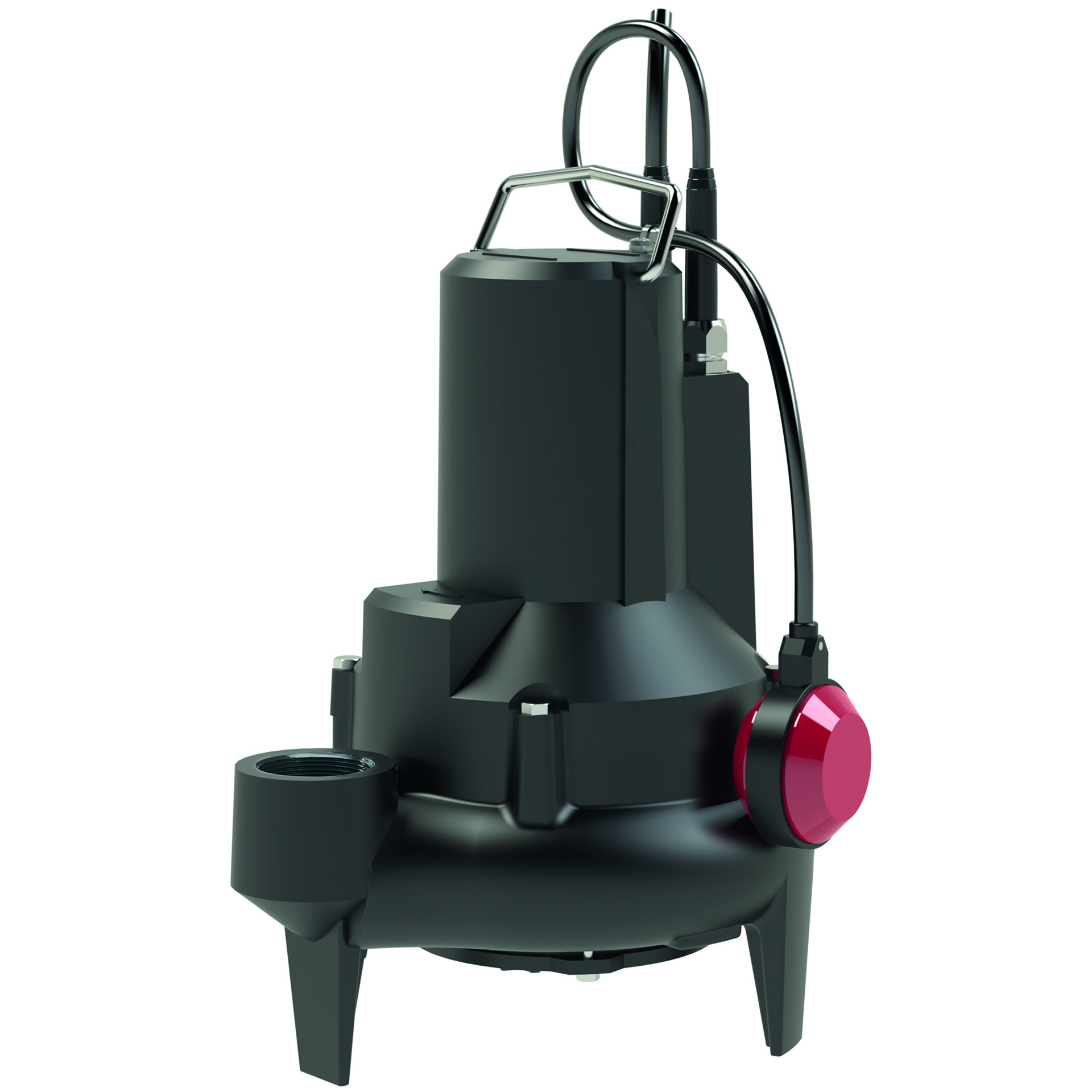
The Calpeda GM 50 is a cast iron submersible sewage pump. The GMC single-channel impeller passes 45 mm solids, the GMV free-flow vortex 50 mm.
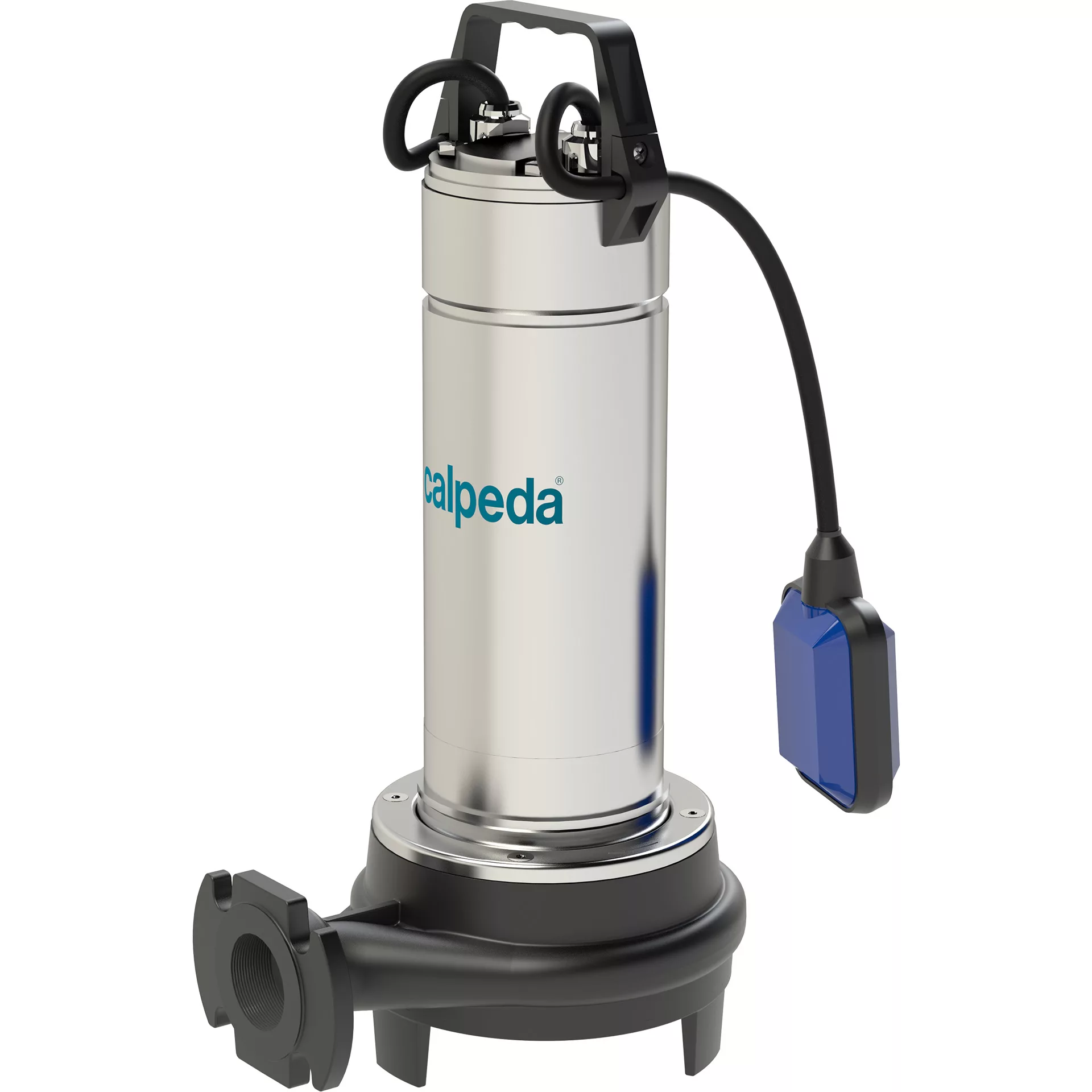
The Calpeda GQG cuts rag, paper and textile at the inlet and pumps it, giving 25 m of head on a DN32 line from 0.9 to 1.5 kW.
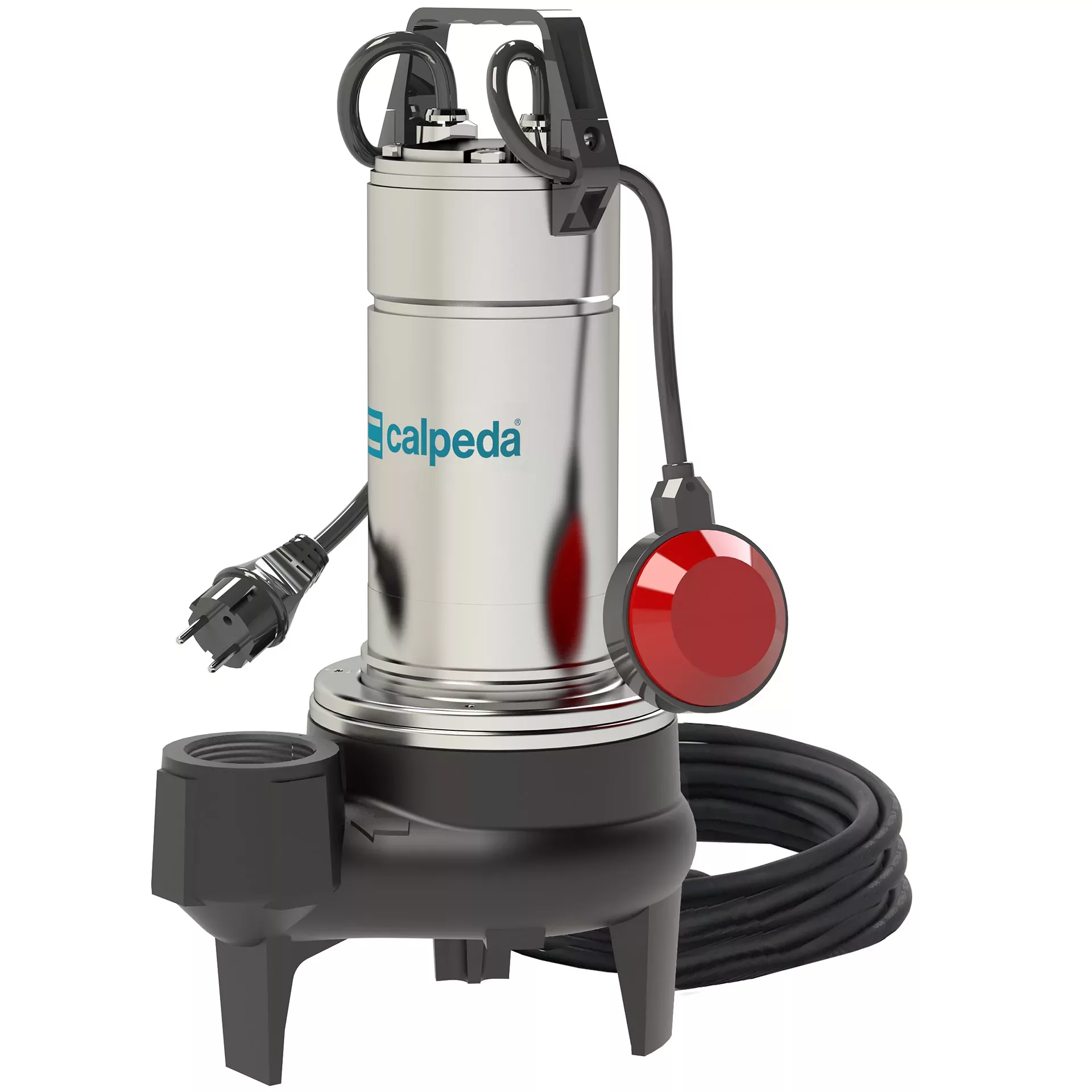
The Calpeda GQN is a cast iron submersible sewage pump with a channel impeller, passing 50 mm solids to 48 m³/h and 16.4 m on a G 2 discharge.
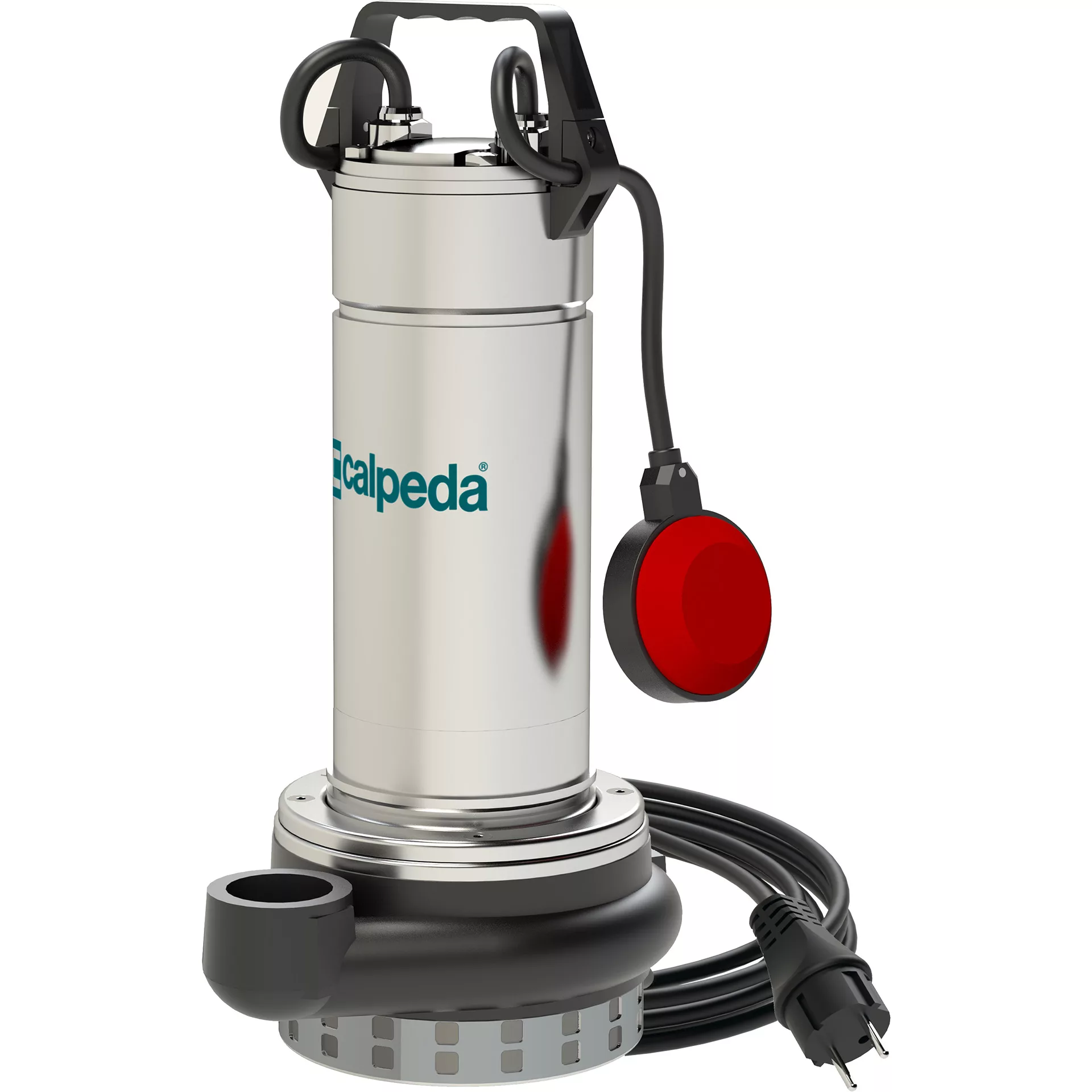
The Calpeda GQR is a submersible drainage pump with an open impeller and a stainless strainer, passing 6 or 10 mm solids to 52 m³/h and 30.2 m.
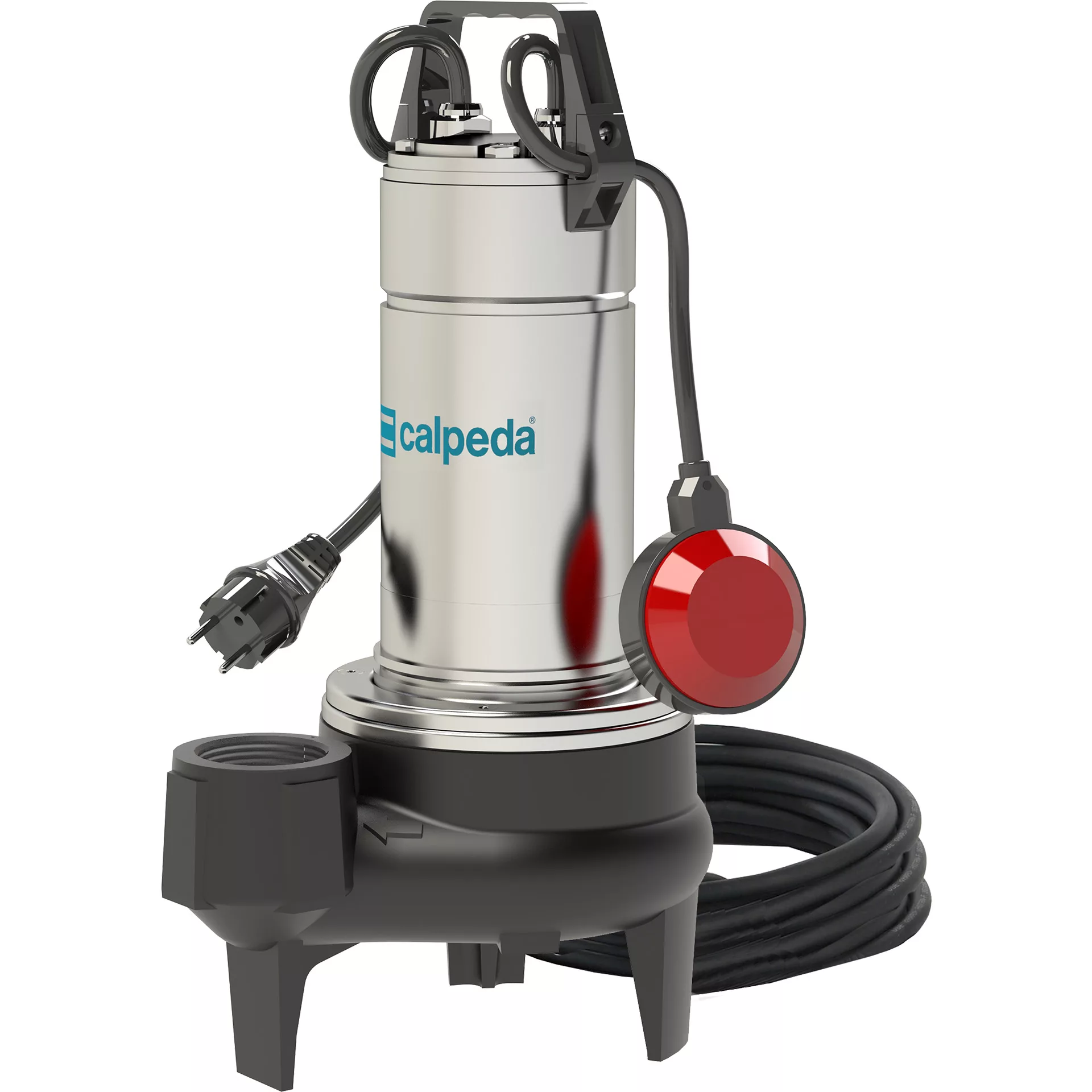
The Calpeda GQS is a submersible sewage pump with a free-flow vortex impeller, passing 40 or 50 mm solids to 36 m³/h and 15 m on a vertical port.
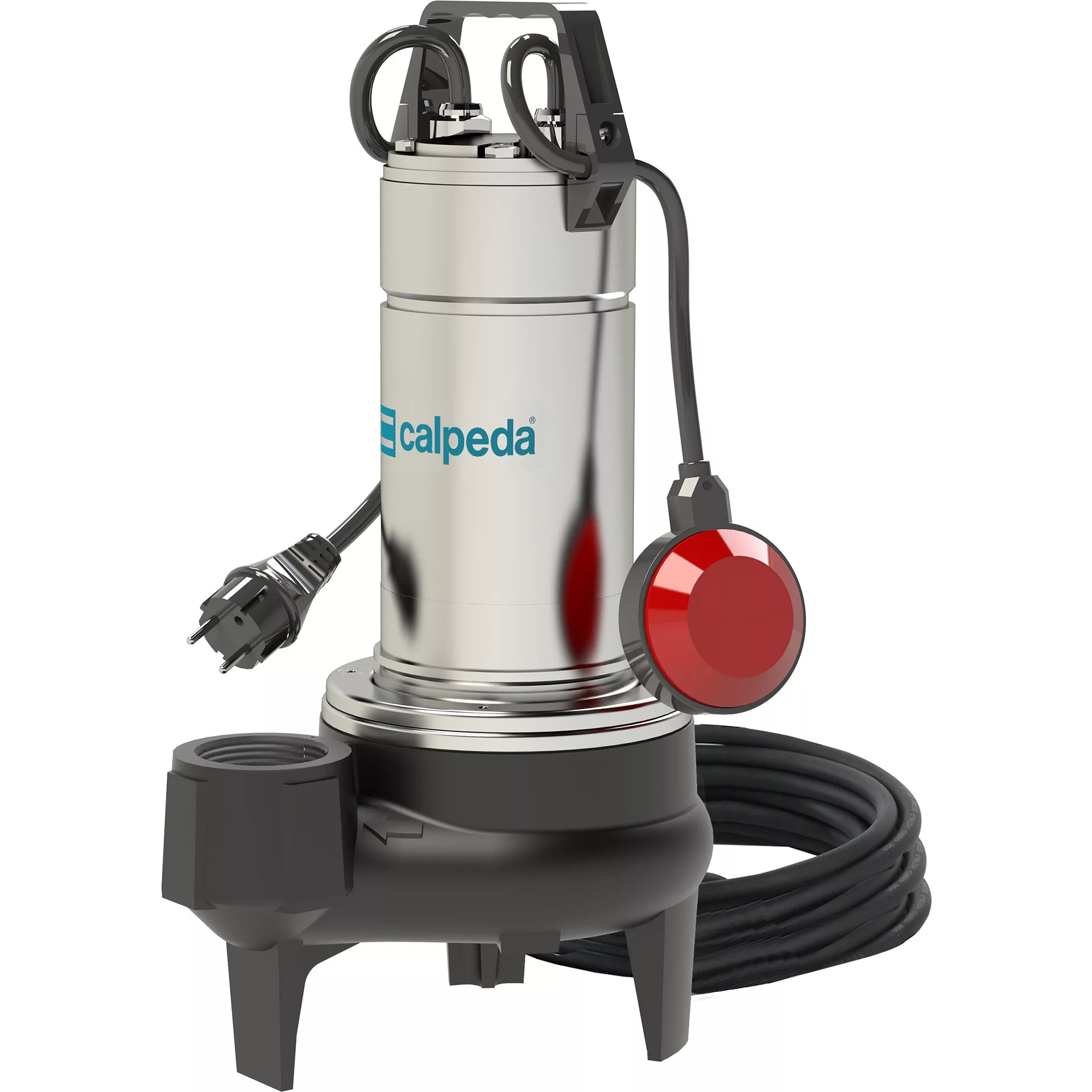
The Calpeda GQV is a free-flow vortex submersible sewage pump for rag and fibre, passing 50 or 65 mm solids to 57 m³/h, from 0.55 to 2.6 kW.
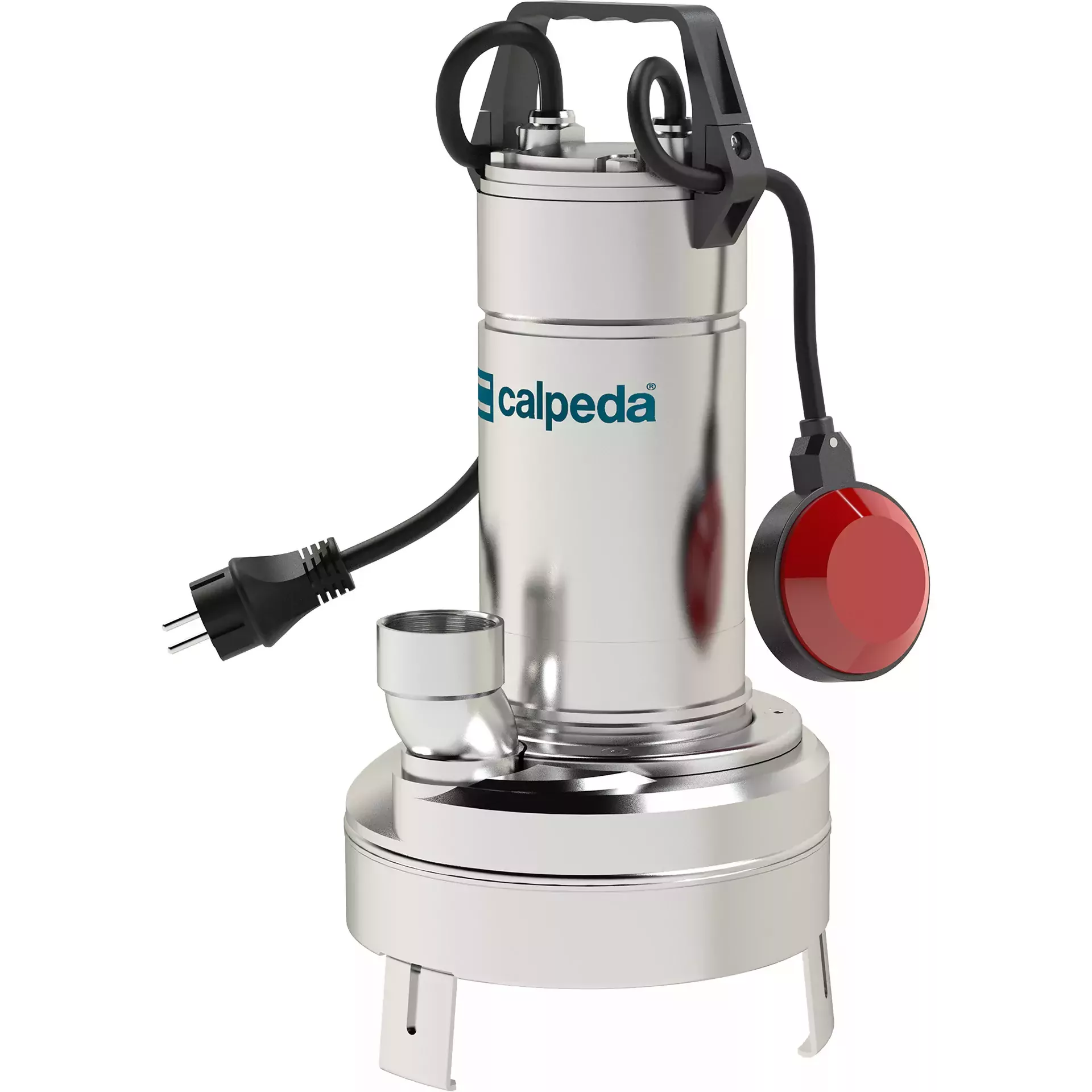
The Calpeda GX 40 is an AISI 304 submersible drainage pump passing 35 mm solids, built with a two-passage GXC impeller or a free-flow vortex GXV impeller.
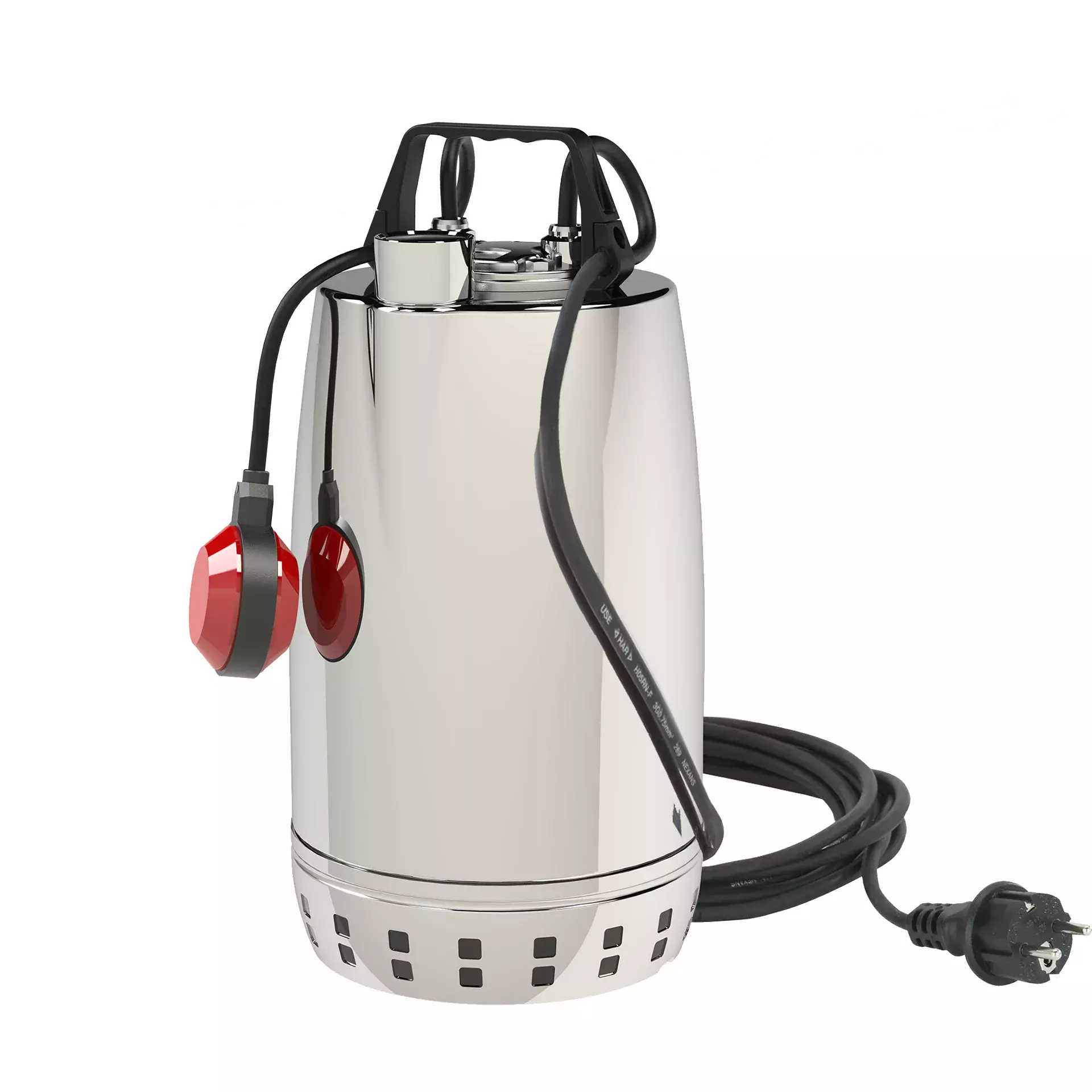
The Calpeda GXR is an AISI 304 submersible drainage pump with an open impeller, in two frames reaching 19.2 m and 30 m³/h on 12 mm solids.
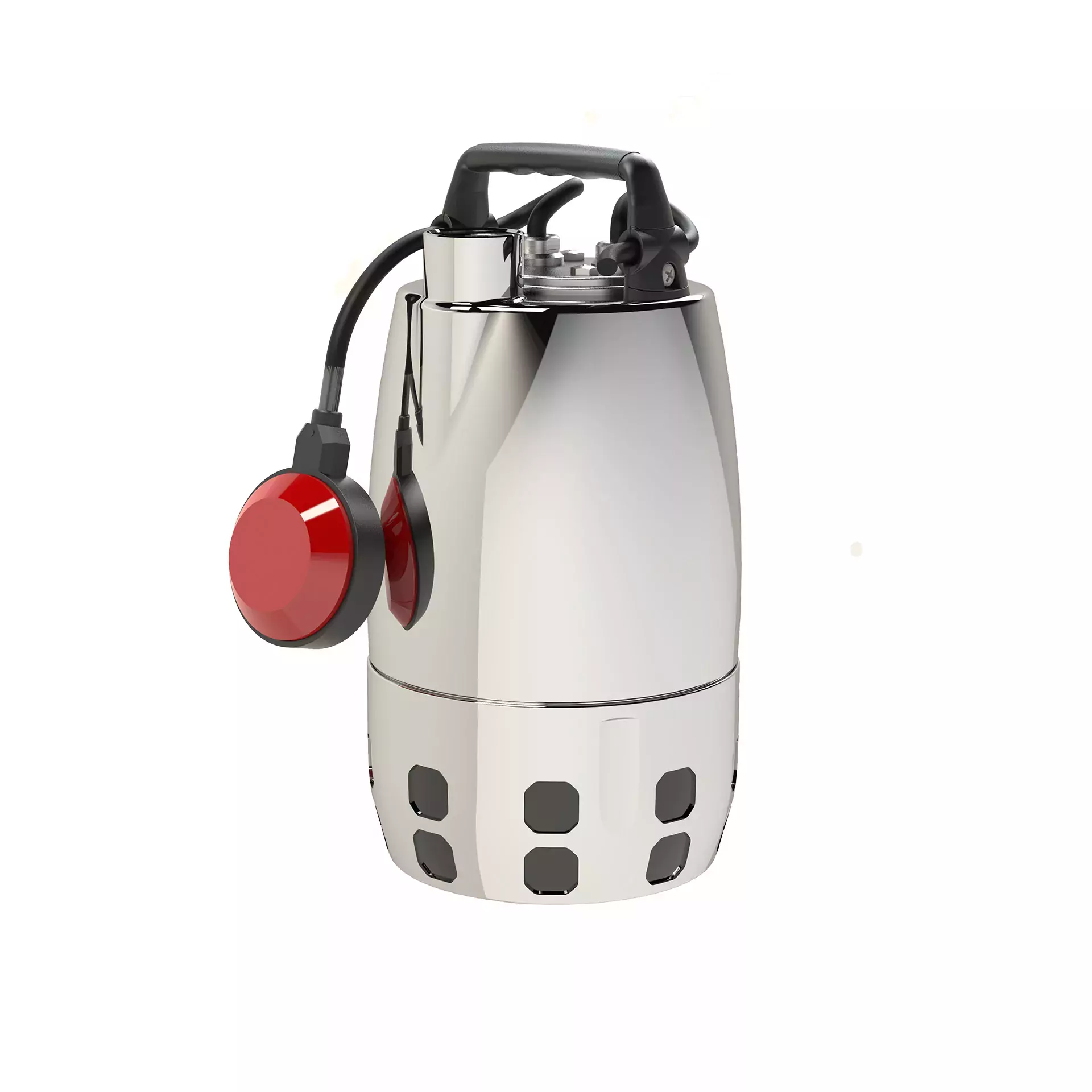
The Calpeda GXV 25 is an AISI 304 submersible pump with a free-flow vortex impeller, passing 25 mm solids to 13.2 m³/h and 10 m of head.
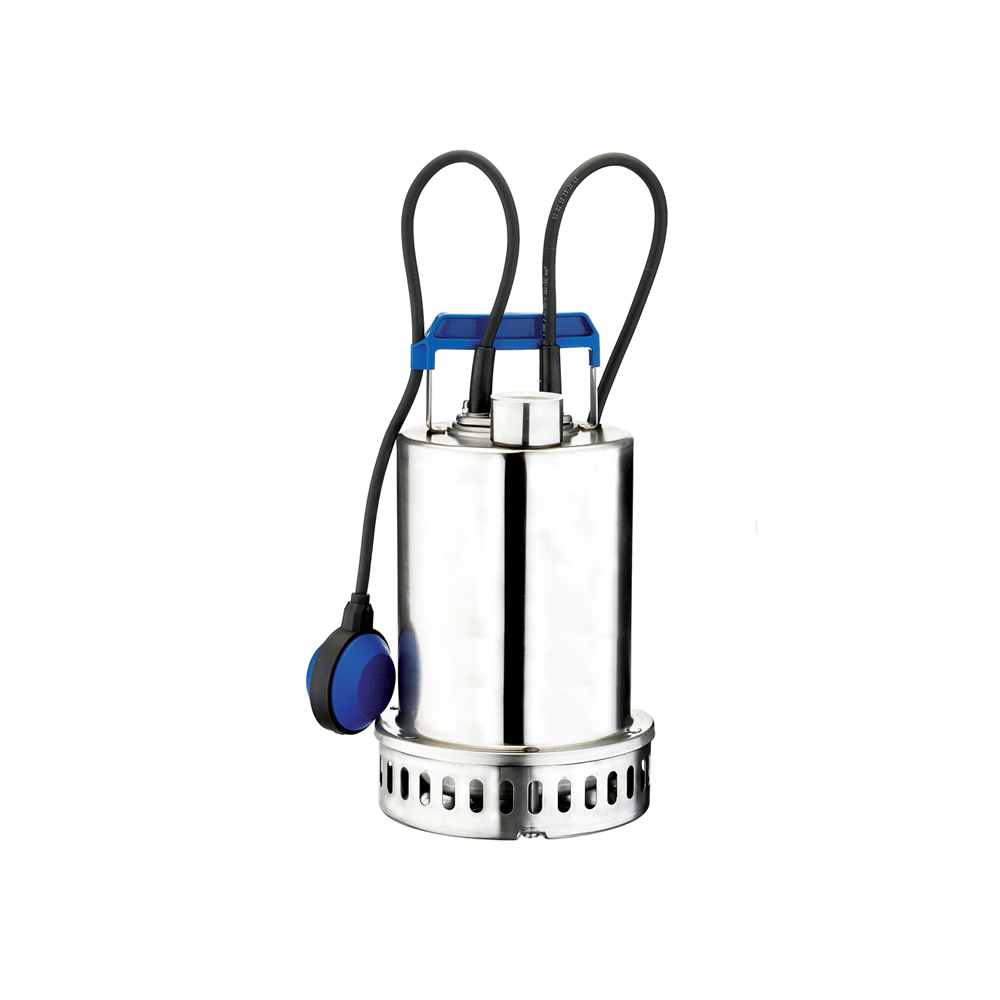
The Ebara BEST 2 is the 0.55 kW frame of the stainless BEST 2-5 range, running to 15.6 m³/h and 13.1 m of head with a 10 mm solids passage.
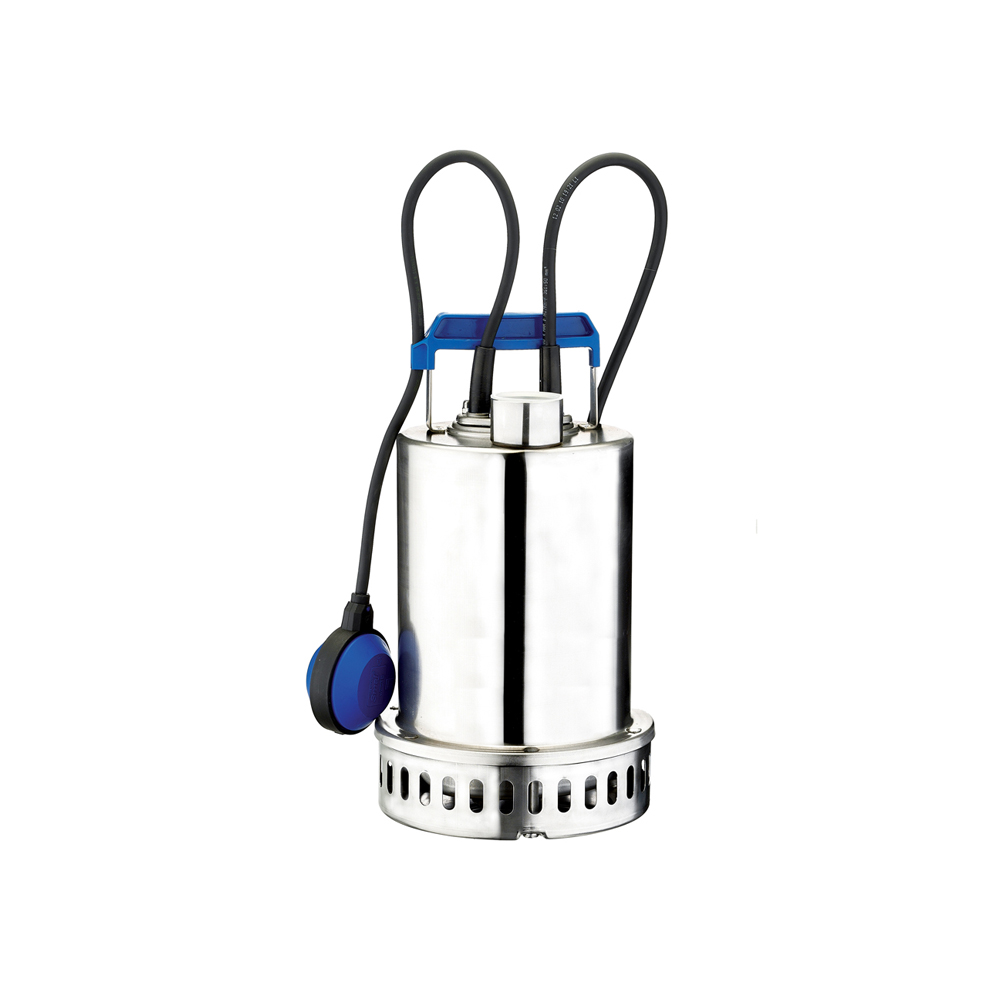
The Ebara BEST 3 is the 0.75 kW frame of the stainless BEST 2-5 sump range, running to 16.8 m³/h and 14.6 m of head with a 10 mm solids passage.
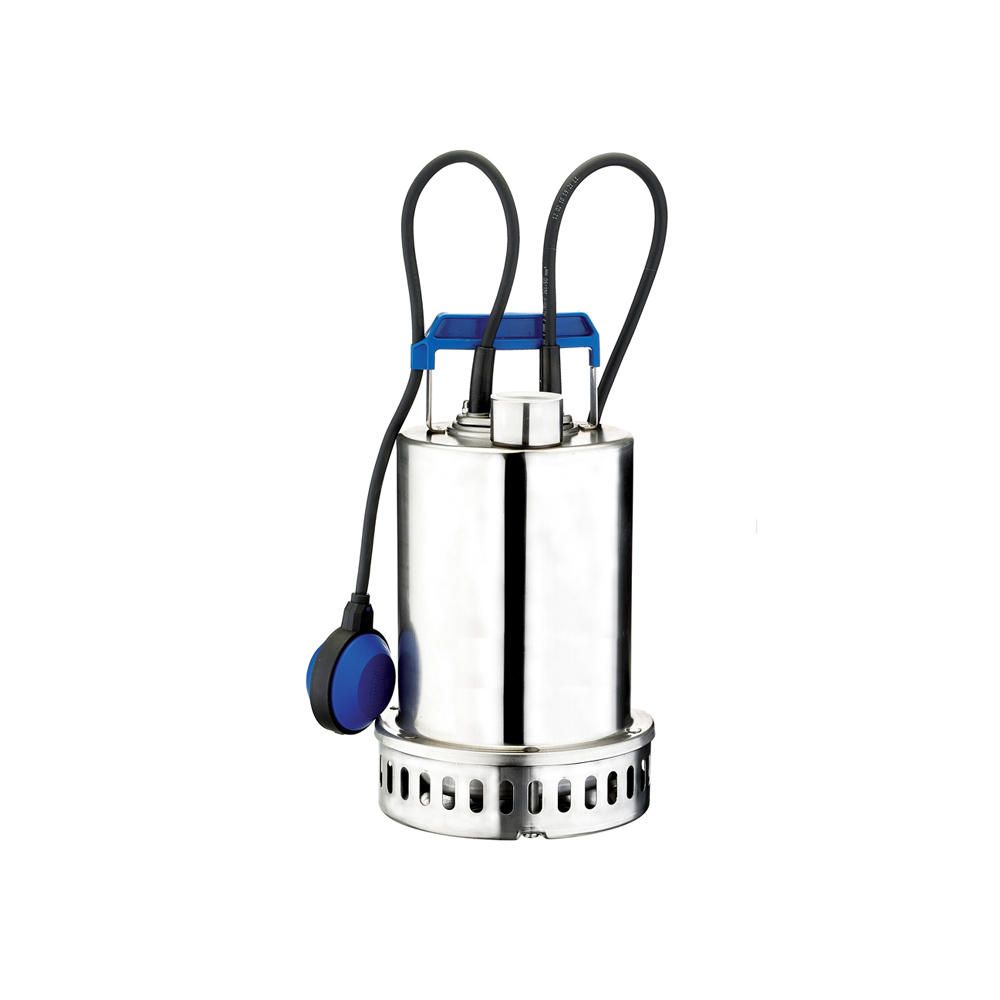
The Ebara BEST 4 is the 1.1 kW frame of the stainless BEST 2-5 sump range, running to 19.8 m³/h and 18 m of head, and the largest one built single-phase.
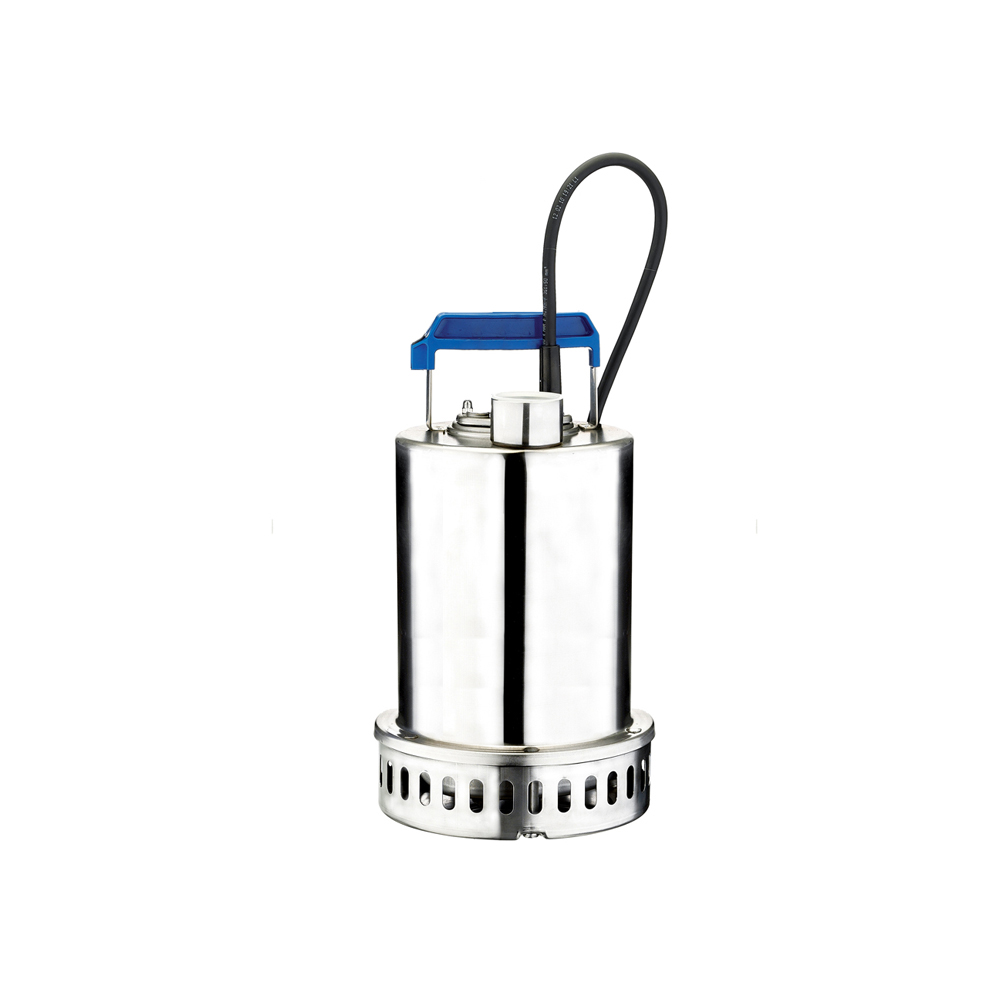
The Ebara BEST 5 is the 1.5 kW three-phase top frame of the stainless BEST 2-5 sump pump range, running to 21.6 m³/h and 19 m of head.
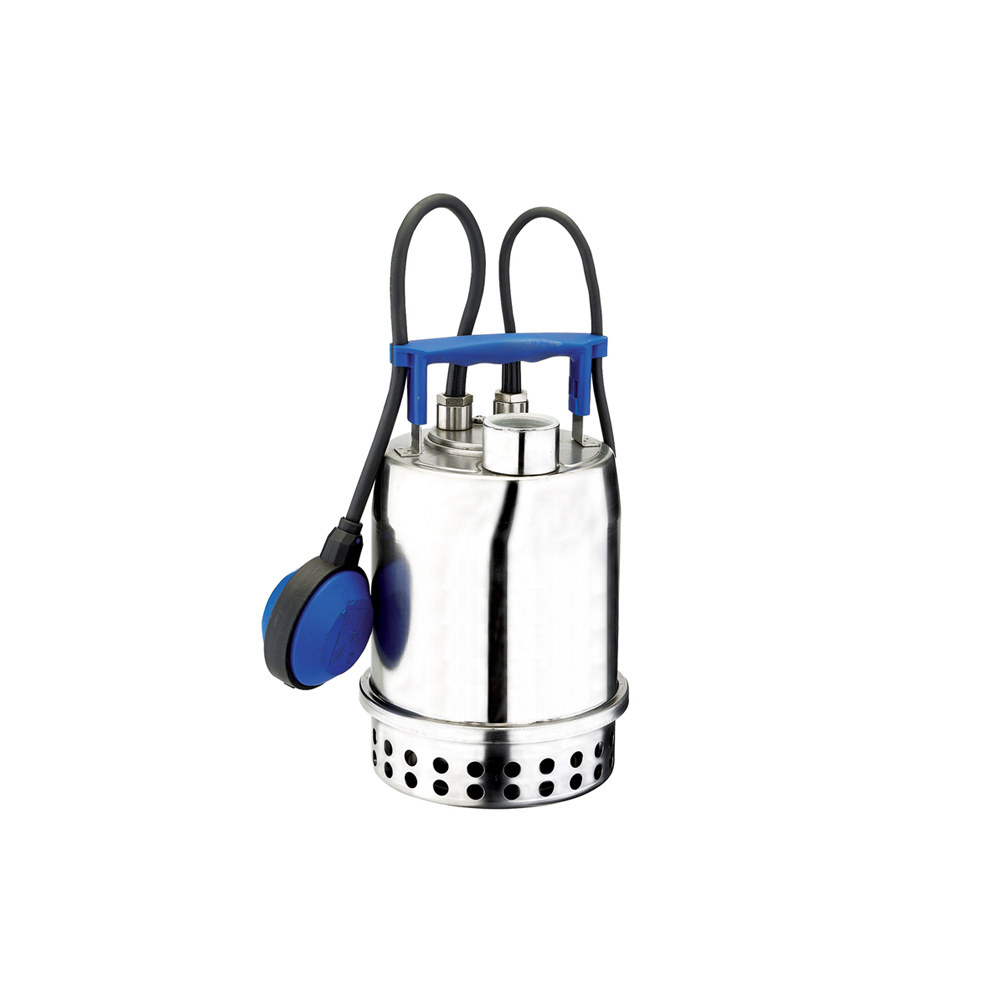
The Ebara BEST ONE is an AISI 304 submersible drainage pump for clear water, 1.2–10.2 m³/h to 8.3 m, passing 10 mm solids or 20 mm on the VOX build.
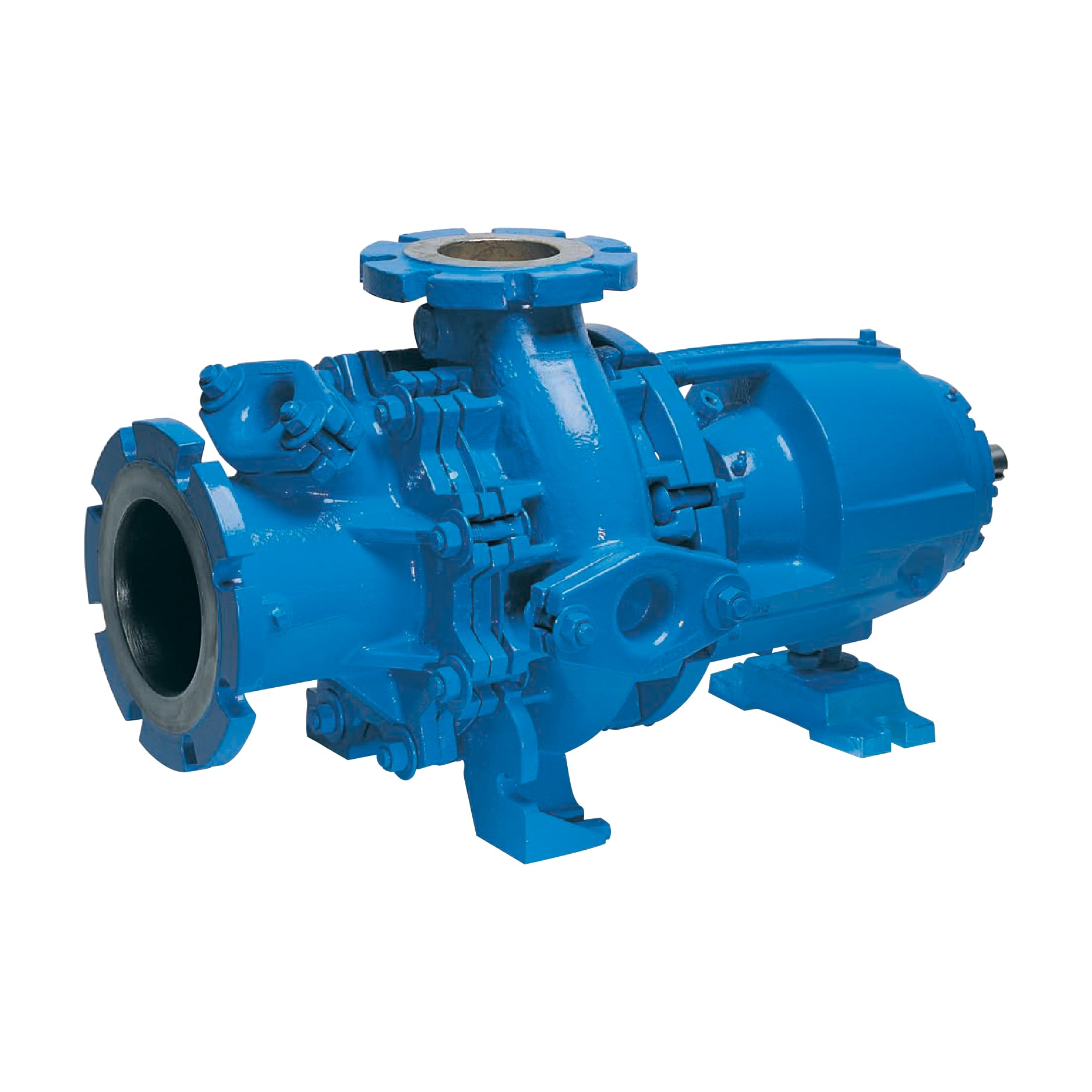
The Ebara ChopX cuts and pumps in one unit. Two cutting stages, a hard metal wet end, and a flushless seal option, for scum, FOG, sludge and manure.
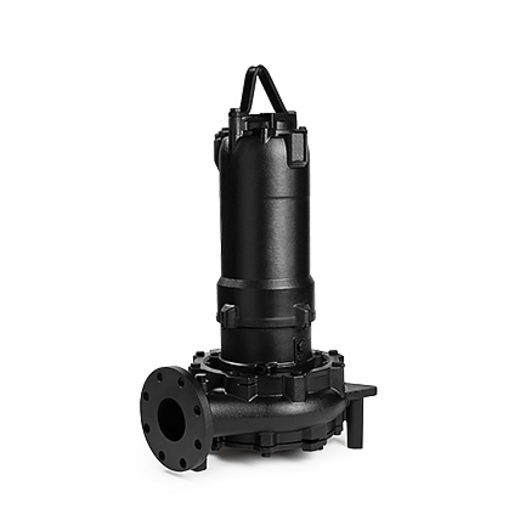
The Ebara DKE is a cast iron submersible wastewater pump with a back-swept anti-clogging impeller. It covers 4.2–780 m³/h and 3–44 m at 50 Hz.
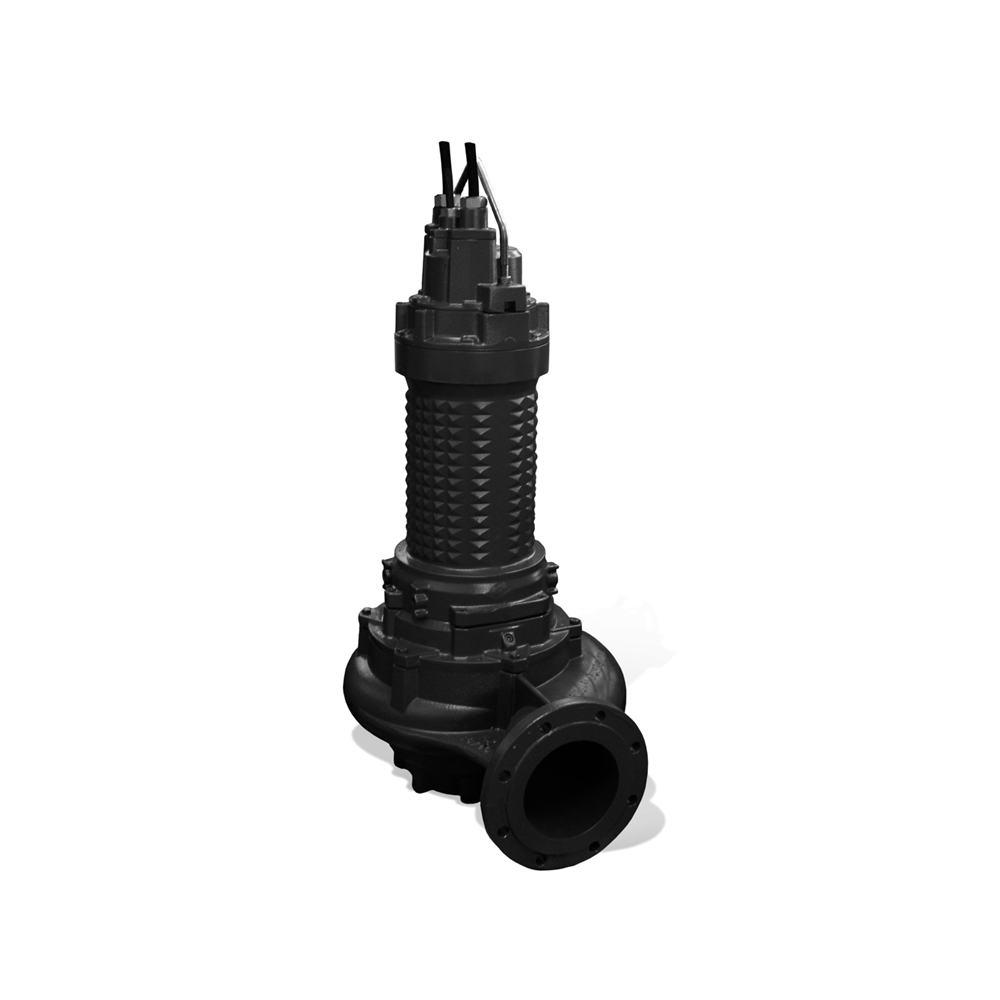
The Ebara DRD is a cast iron submersible wastewater pump with a two- or three-channel impeller, in 2, 4, 6 and 8 poles at 50 Hz. Specs and UK supply.
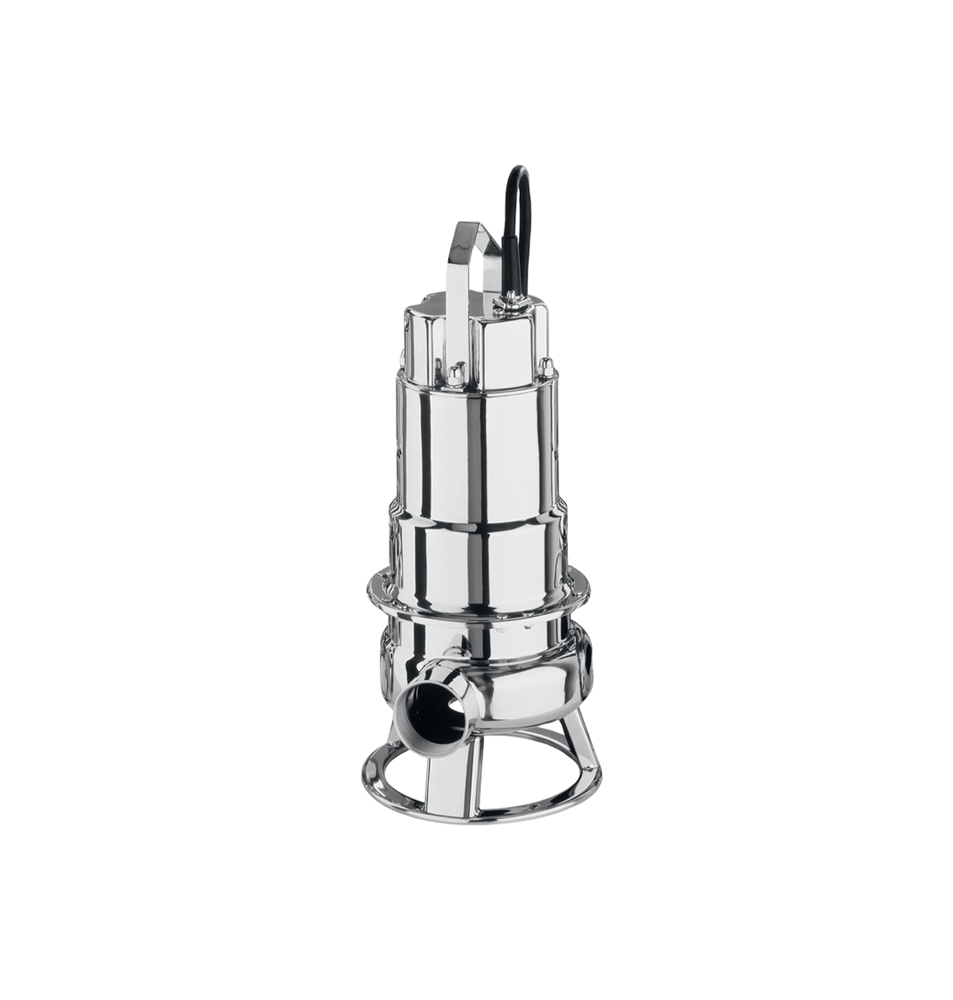
The Ebara DW is an AISI 304 submersible sewage pump passing 50 mm solids, to 54 m³/h and 20 m, with a single-channel or vortex impeller.
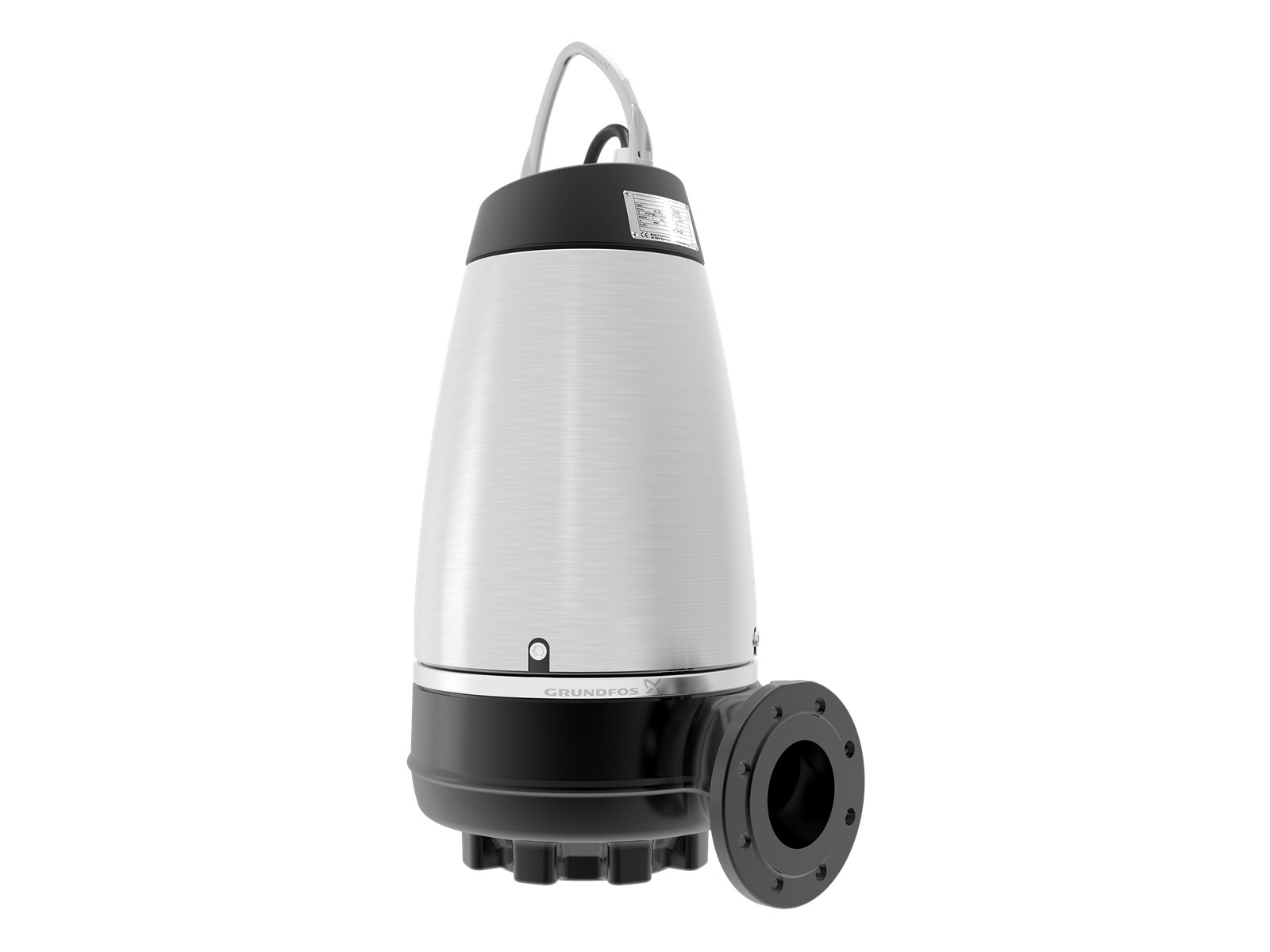
A sewage pump that works submerged or dry-installed, because a cooling jacket cools the motor instead of the surrounding liquid.
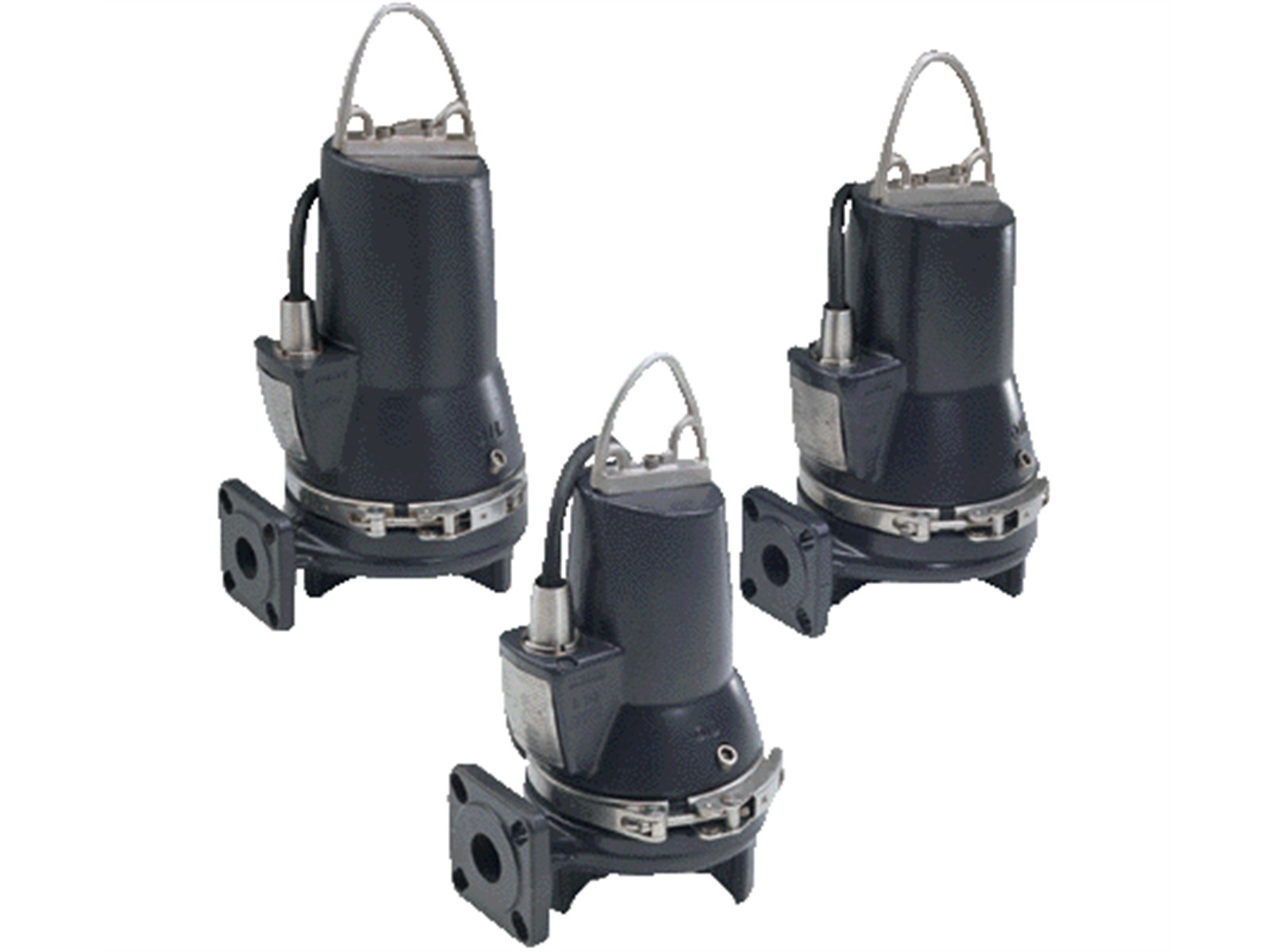
A submersible grinder pump that cuts sewage at the inlet, so a pressurised system can run on a small-bore rising main.
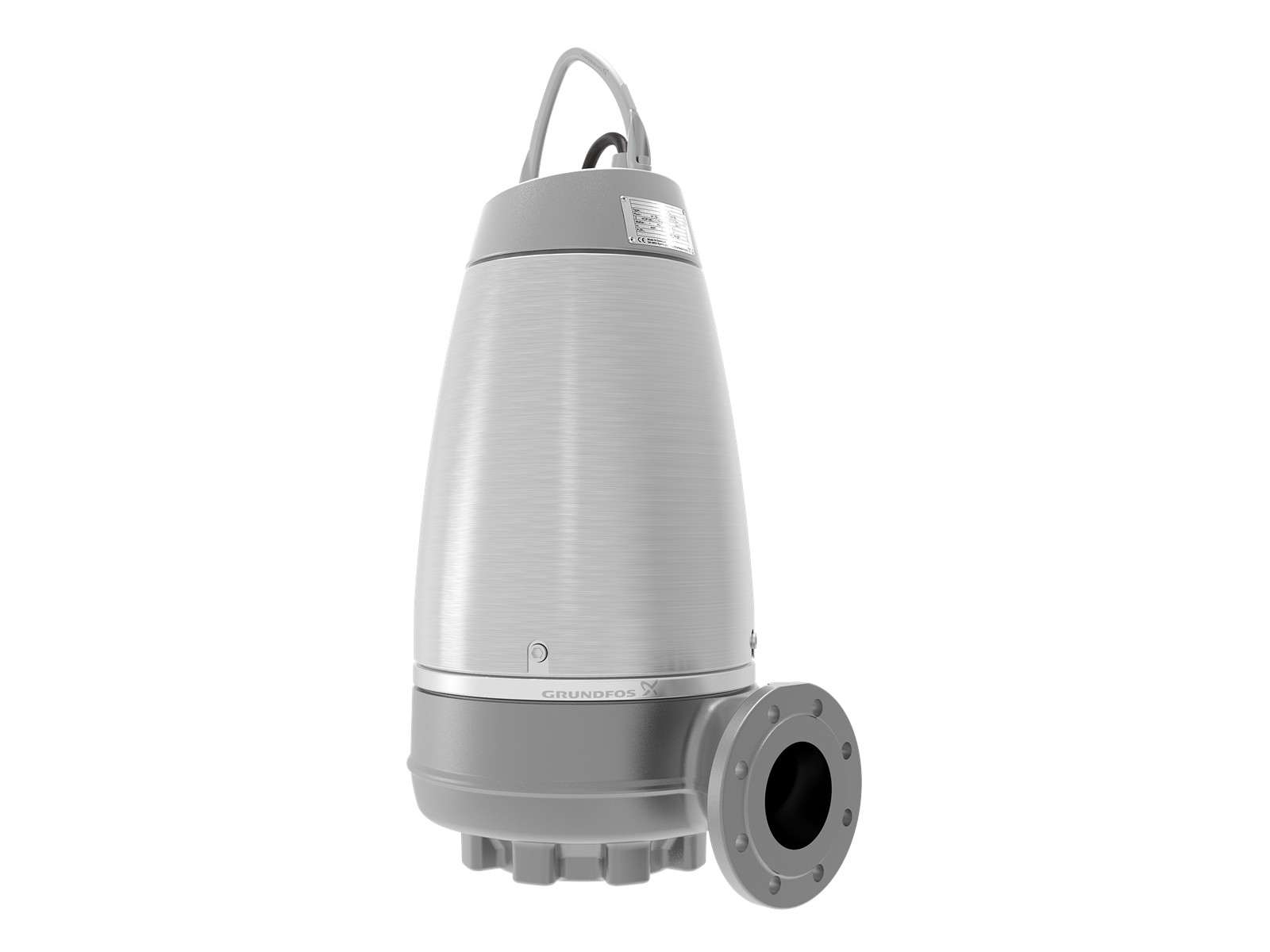
A submersible sewage pump with a free-flow impeller that passes solids up to 100 mm whole, wet- or dry-installed.
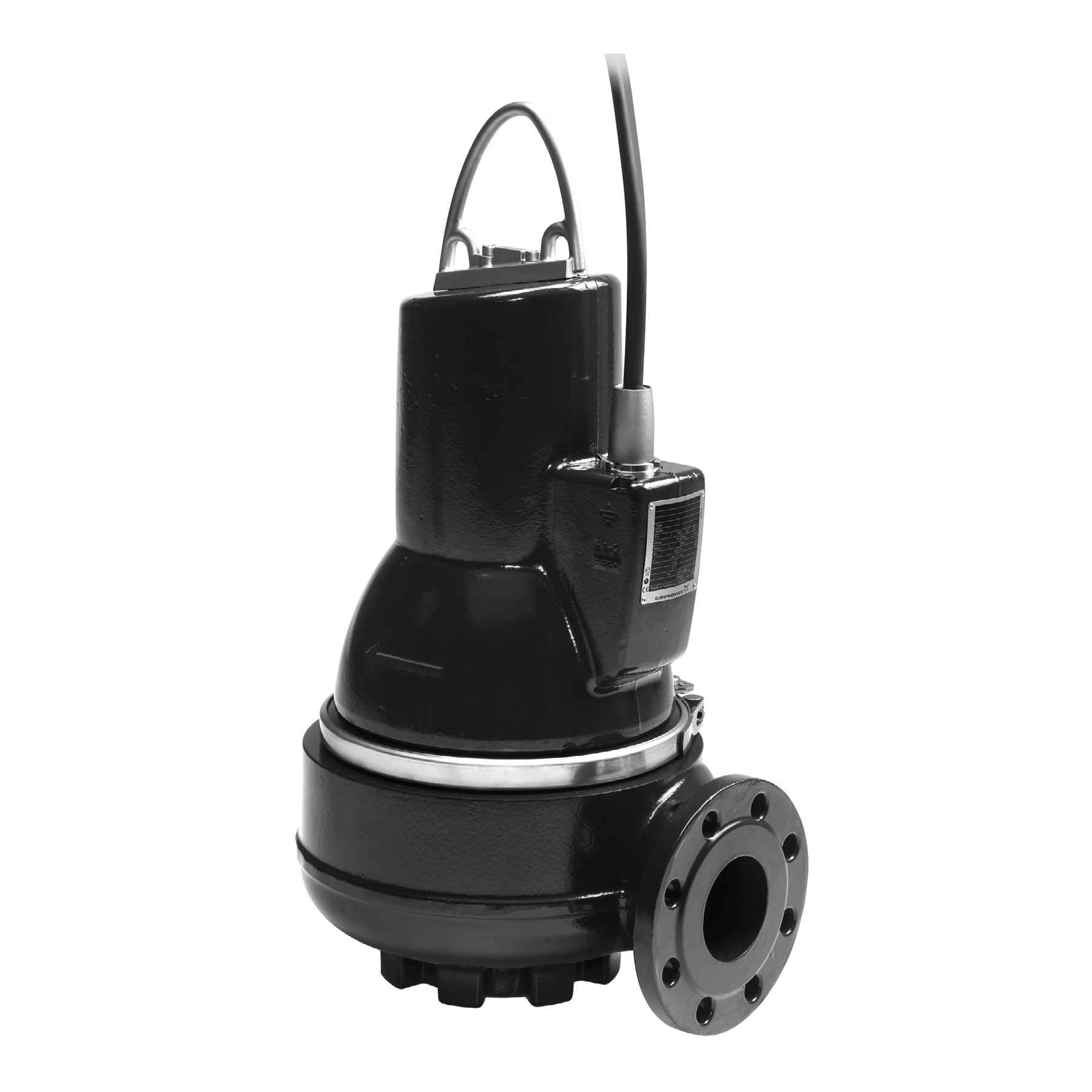
A wet-well sewage pump in two impeller builds, the SL1 with an S-tube impeller and the SLV with a SuperVortex free-flow impeller.
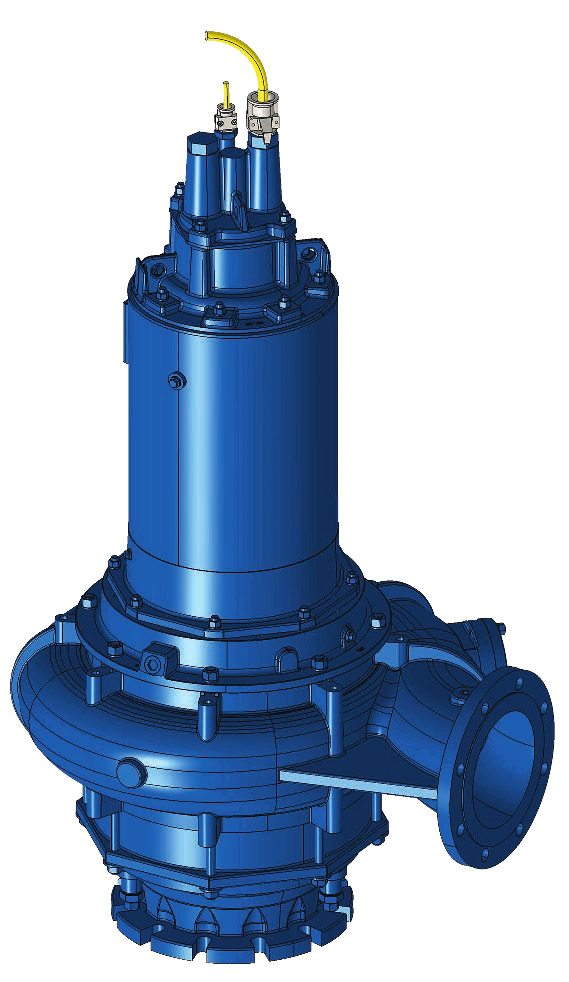
Hidrostal immersible pumps: 0.5–3000 l/s to 90 m head, closed-loop motor cooling so they run dry, part or fully submerged. Dry pit specs and selection.
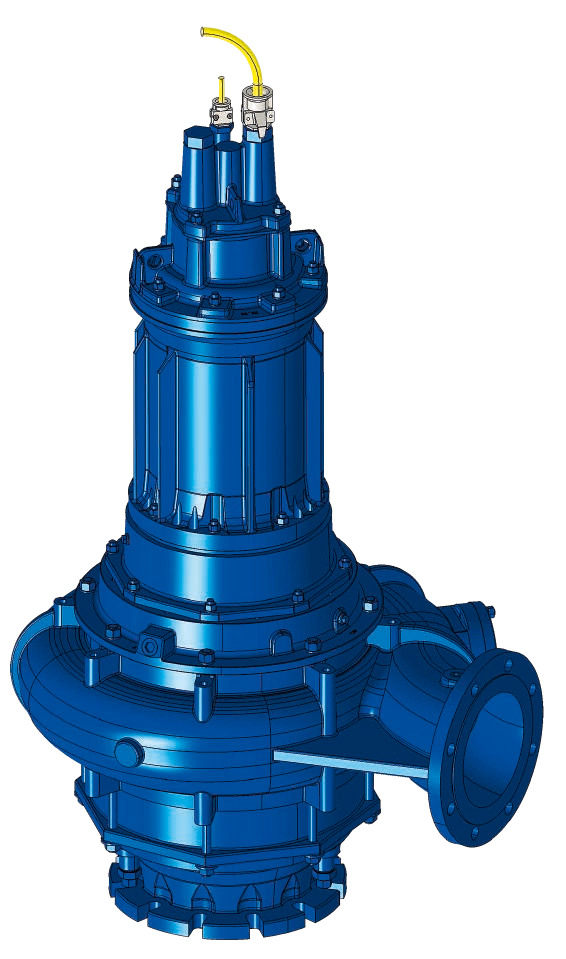
Hidrostal submersible pumps: up to 2500 l/s and 100 m head, screw centrifugal hydraulics, motor cooled by the liquid it sits in. Specs and selection.
How to size and specify a submersible pump
Send us four things and we will come back with a specified pump. Flow rate. Total dynamic head, meaning the static lift plus the friction in the rising main. The medium, including the largest solid it has to pass. And the site: wet well, borehole diameter and depth, or the area classification if it is hazardous.
Send the real duty, not the padded one. Margin gets added at every stage of a project, and the pump that arrives is usually far too big for the job.
Frequently asked
What is a submersible pump used for?
Drainage and site dewatering, wet wells and sewage pumping stations, and borehole water supply. Because it runs immersed it is always primed, so it suits any duty where a surface pump would struggle to lift or hold its suction. Being below ground and out of the way is usually part of the point.
How does a submersible pump work?
A sealed motor sits directly above the impeller and drives it, and the impeller pushes the medium up the discharge into a rising main. A mechanical seal keeps the pumped medium out of the motor, and the surrounding medium carries the motor heat away.
Do submersible pumps need priming?
No. The wet end is already flooded, so there is no suction line to fill and no lift to establish. That is the main reason to choose one. What it does need is liquid at all times, because the mechanical seal is lubricated by the medium around it.
Can a submersible pump handle sewage and solids?
Yes, if the impeller is matched to the worst solid. Vortex and single-channel impellers pass soft solids; cutter and grinder impellers cut rag before it reaches the wet end. Tell us the largest solid the pump has to pass and the impeller follows from it.
Why does my submersible pump keep blocking?
Usually rag rather than the pump. Wipes and fibre bind on the impeller, and fitting a bigger or better solids-handling pump into the same wet well tends to fail the same way. Where a pump that already handles solids blocks repeatedly, the fix is normally taking the rag out upstream with a macerator or chopper pump, not another pump.
How long does a submersible pump last?
Longer than most people expect, if the wet well suits it. Three things shorten it on wastewater: rag binding up the wet end, grit abrading it where the grit removal upstream is not working, and dry running, which takes out the mechanical seal. All three are installation problems more often than pump problems.
How do I choose a submersible pump?
Start with flow rate and total dynamic head, then the medium and the largest solid it has to pass, then the site: wet well, borehole or hazardous area. Materials, seal and motor rating follow from those. Send Channel Pumps the duty and we will specify the pump rather than sell you the nearest model.