About Grundfos
Grundfos started in 1945 in Bjerringbro, in central Jutland. Poul Due Jensen had taken an order for a small automatic waterworks on a local farm, could not buy an electric pump good enough to put in it, and built one himself. The company still has its head office in the same town. Grundfoss began as a product name, took over as the company name during the 1960s, and lost its second s in 1967. The Poul Due Jensen Foundation holds the primary ownership of the group today.
What the trade knows Grundfos for is circulator pumps in heating and cooling, and the CR. The CR was the first inline vertical multistage pump, and the inline layout is still the reason people specify it: suction and discharge sit at the same level, so the pump drops into an existing pipe run without anyone re-piping around it. Water supply, pressure boosting, submersible wastewater and dosing all grew out from there.
One honest limit, because Grundfos is a name most people meet on a domestic circulator. If you already know the model you want and it is a small building-services pump, buy it from a merchant. They will beat our price and we add nothing to that transaction. We are the right call when nobody has yet worked out what the pump should be: a booster set that has to hold pressure across a demand that moves all day, a wet well full of rag, a transfer duty where the medium decides the materials.
The Grundfos range we supply
View all →Three families, and the medium picks one of them before anything else gets decided.
| Family | Ranges we supply | Suits |
|---|---|---|
| Vertical multistage centrifugal | CR, CRE, CRN | Thin, clean liquid at high head |
| Packaged booster set | Hydro MPC | Constant pressure across changing demand |
| Submersible wastewater | SE, SL, SEV, SEG | Sewage and effluent, wet or dry installed |
The CR is a vertical multistage centrifugal pump: high head out of a small footprint, with the suction and discharge ports on the same level. Grundfos rates the range to 320 m³/h and 40 bar working pressure. The pump head and base are cast iron and the other wetted parts are AISI 304 stainless, which is a non-corrosive-duty build. The CRE is the same hydraulic with an integrated variable-speed motor, so it holds a setpoint instead of throttling against a valve. The CRN moves the wetted parts to 316 stainless, for a medium that would see off 304.
All three want thin, clean liquid. Put solids through any of them and you will be replacing the pump rather than repairing it, so if there is grit in the supply the answer is filtration upstream, not a bigger CR.
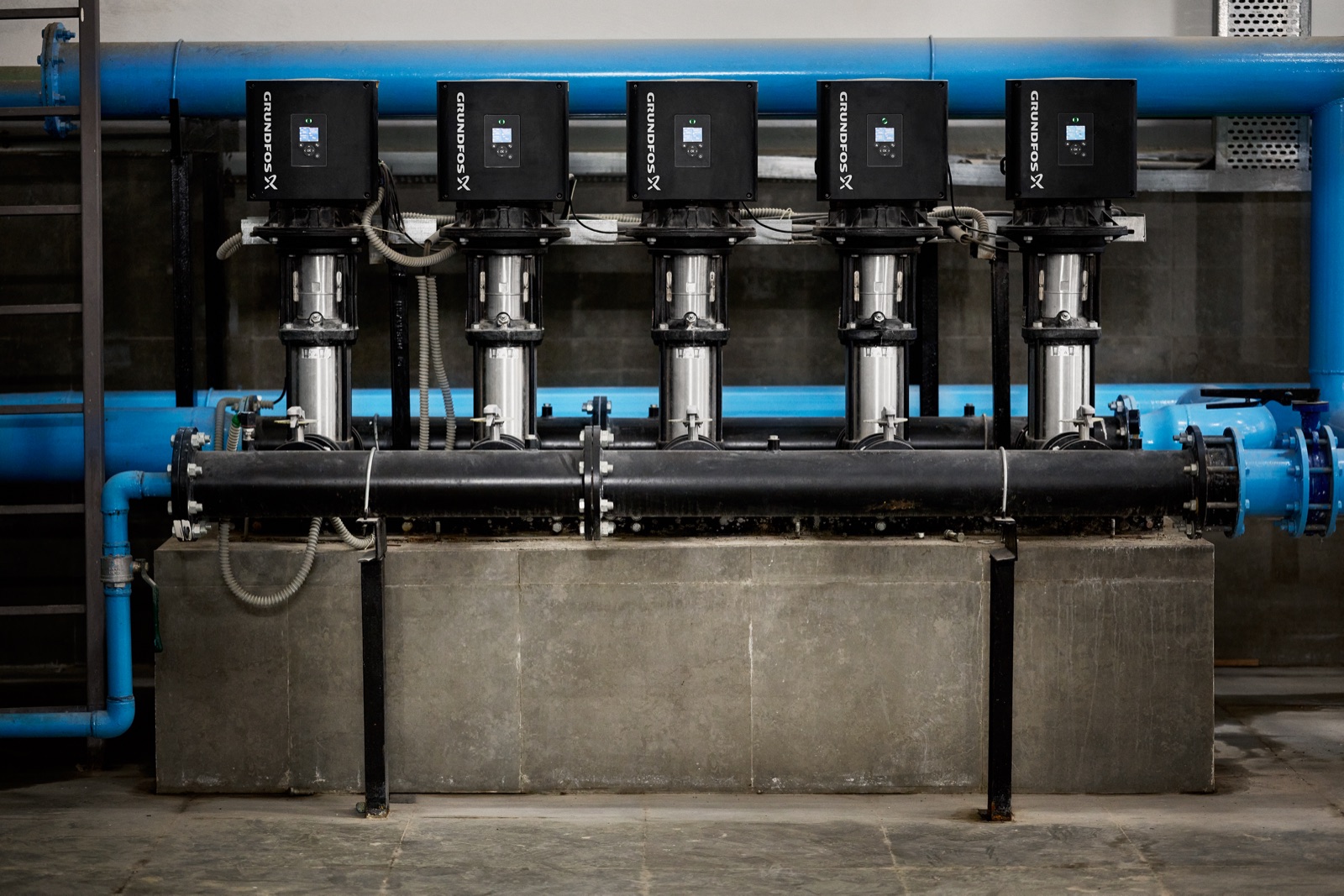
The Hydro MPC is a packaged booster set: two to six pumps in parallel under a CU 352 controller, pre-piped, pre-wired and pre-tested, staged in cascade to hold pressure as inlet pressure and demand move. Specify it where a single fixed-speed pump would spend its life cycling on and off. The trade-off is a controller to commission and maintain, against a duty a simpler set cannot hold. If the demand profile is flat, you do not need one.
On wastewater, SE and SL handle sewage and effluent, and both take vertical or horizontal installation, wet or dry, without external motor cooling. The standard build uses the closed S-tube impeller, which is the part that keeps rag and fibre from binding on the vane, and free passage runs from 35 mm to 125 mm depending on size and hydraulic variant. The SEV swaps that for the SuperVortex free-flow impeller, with free passage up to 100 mm, and it is what to specify where the medium carries abrasives, long fibre or gas. The SEG grinds solids before pumping, for a pressurised system on a small-bore rising main.
Grinder or vortex is a real decision rather than a preference. A grinder lets you run a smaller rising main, and it costs you power and wear parts to do it. Where a wet well keeps filling with rag, the honest answer is often removal upstream, a macerator or a chopper pump, rather than another submersible. We have declined to quote a like-for-like replacement on exactly that basis.
A word on model designations, since that is what a lot of people arrive here looking for. Write the designation the way Grundfos writes it, spacing and all, and give us the whole string off the nameplate together with the serial number. Near-identical builds carry different documents and different service kits, and the string is the only thing that separates them.
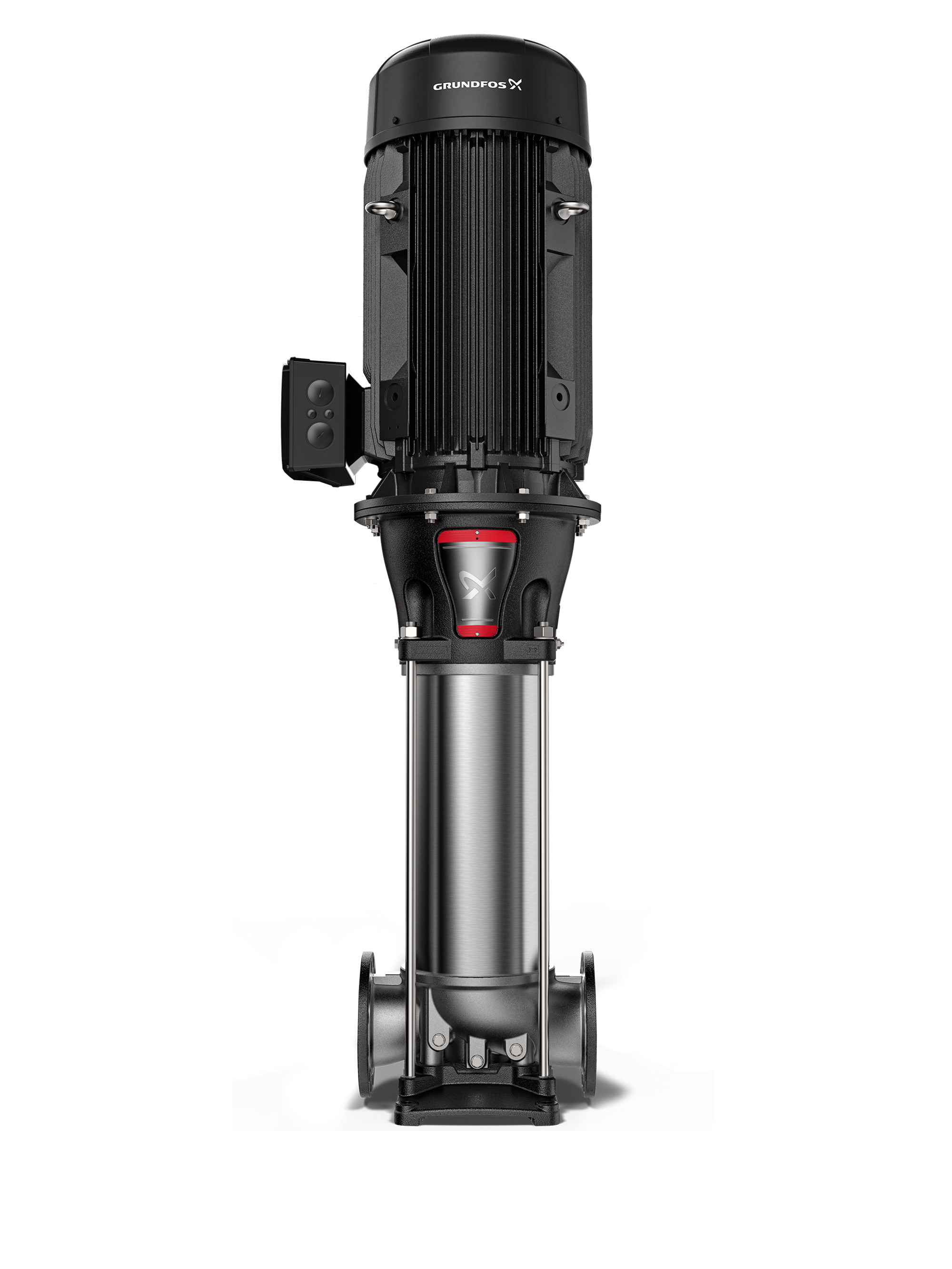
Inline vertical multistage centrifugal pump, cast iron and AISI 304 stainless, for non-corrosive liquids at high head.
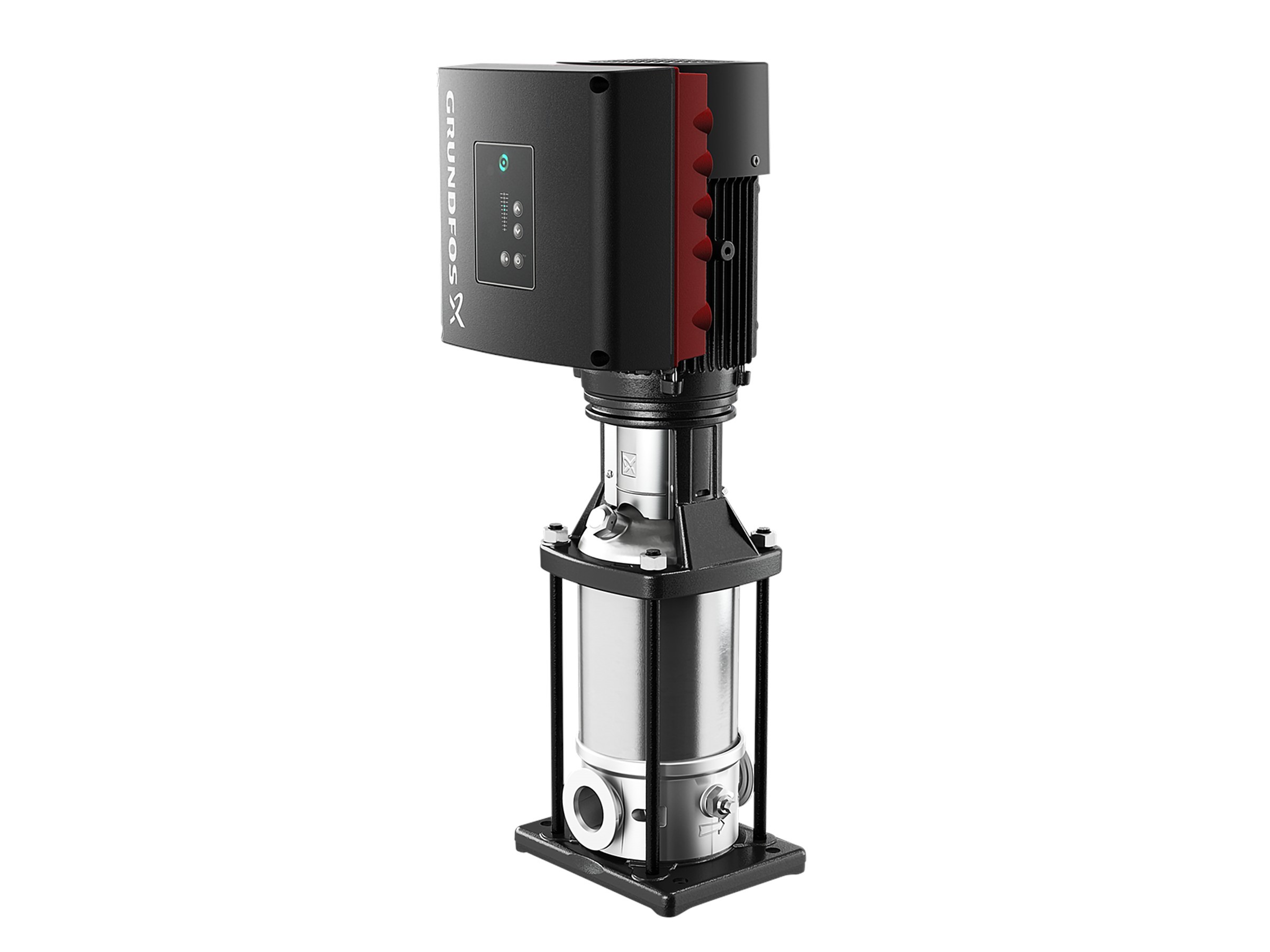
Vertical multistage pump with an MGE E-motor, so the speed control and the motor protection are inside the terminal box rather than in the panel.
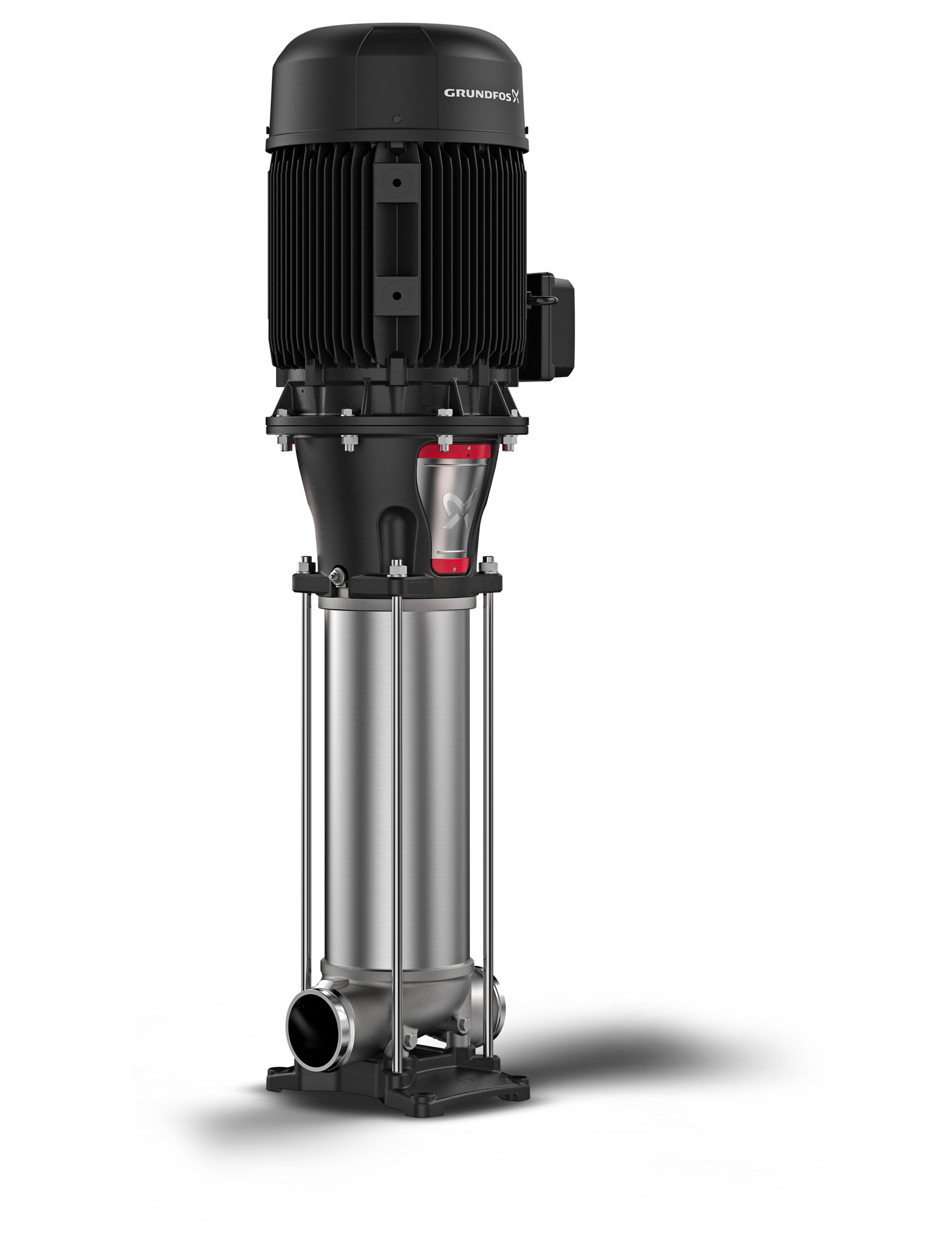
The full stainless build of the CR inline multistage pump, in AISI 316, for industrial liquids and treated water.
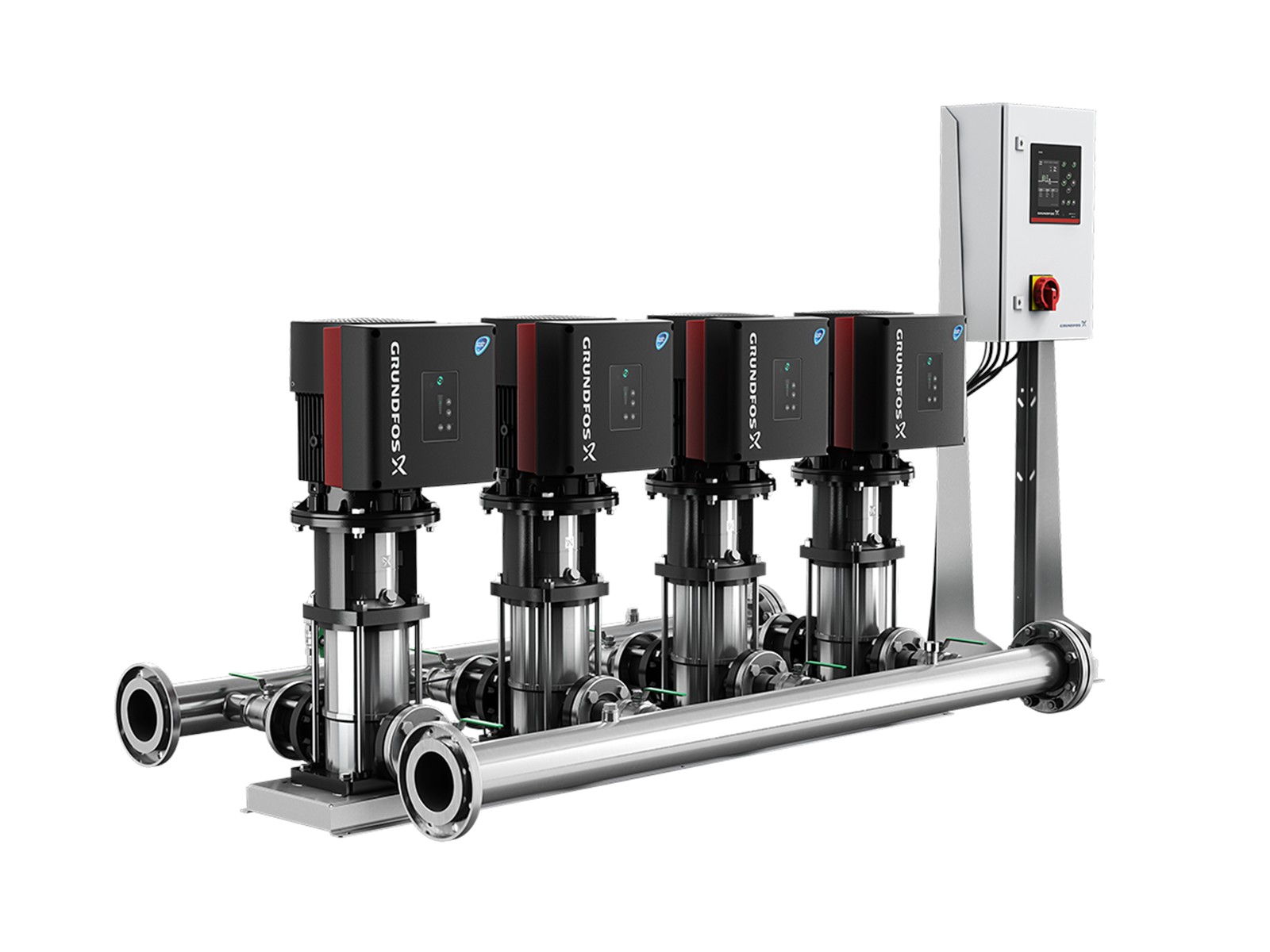
The Grundfos Hydro MPC is a packaged clean-water booster set: 2–6 stainless CR/CRE pumps and a CU 352 controller, flow to 725 m³/h, head to 145 m.
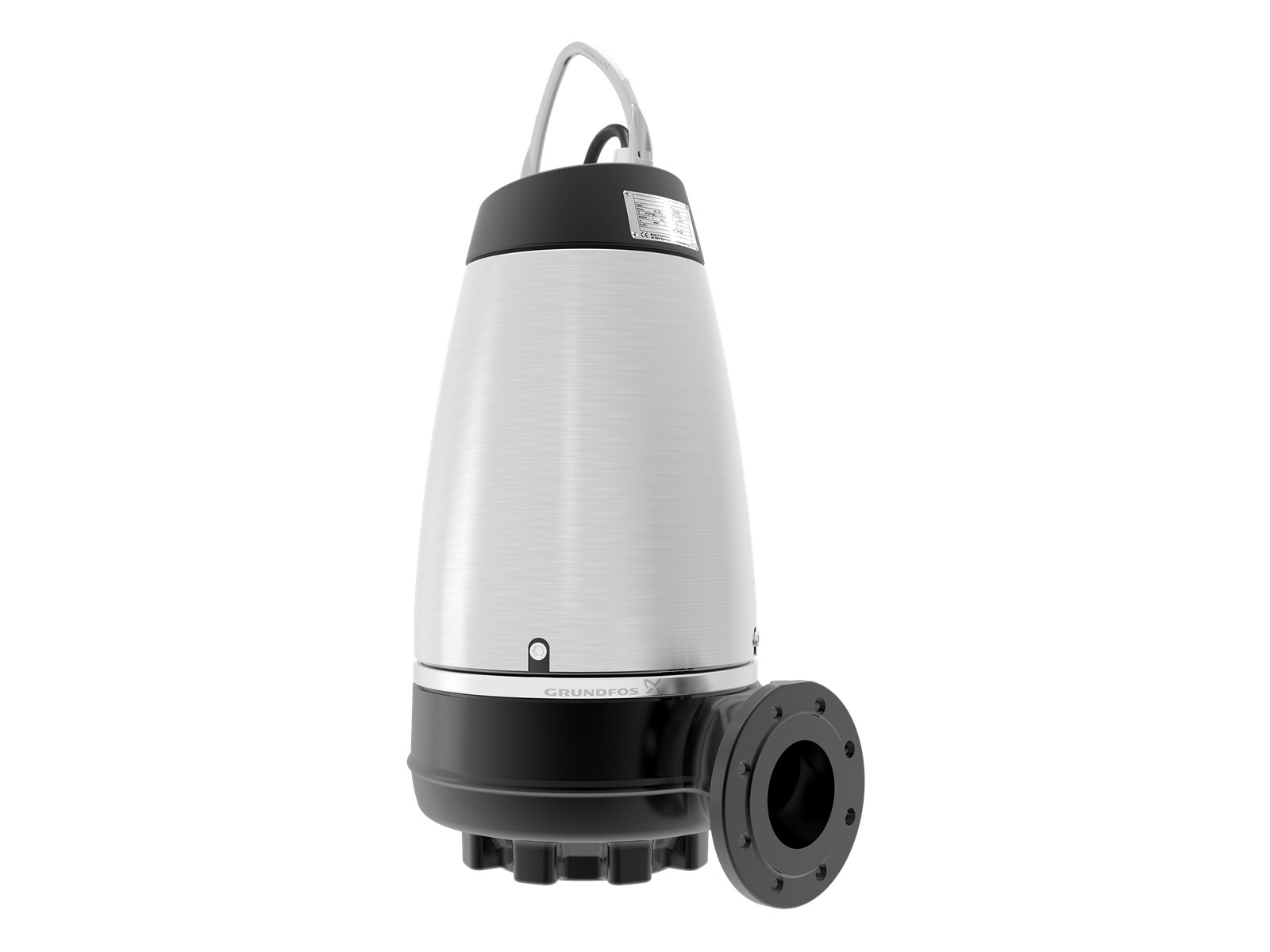
A sewage pump that works submerged or dry-installed, because a cooling jacket cools the motor instead of the surrounding liquid.
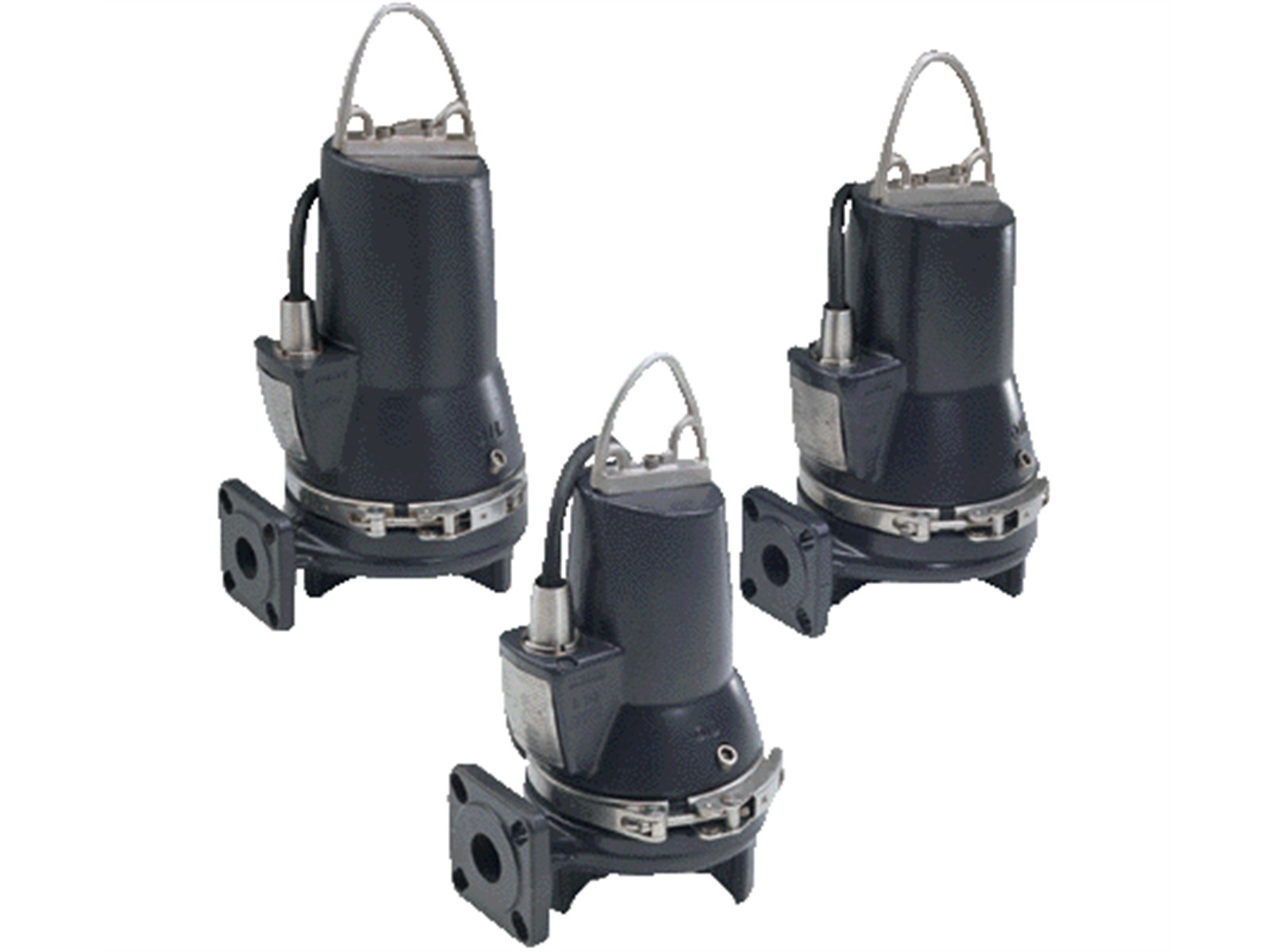
A submersible grinder pump that cuts sewage at the inlet, so a pressurised system can run on a small-bore rising main.
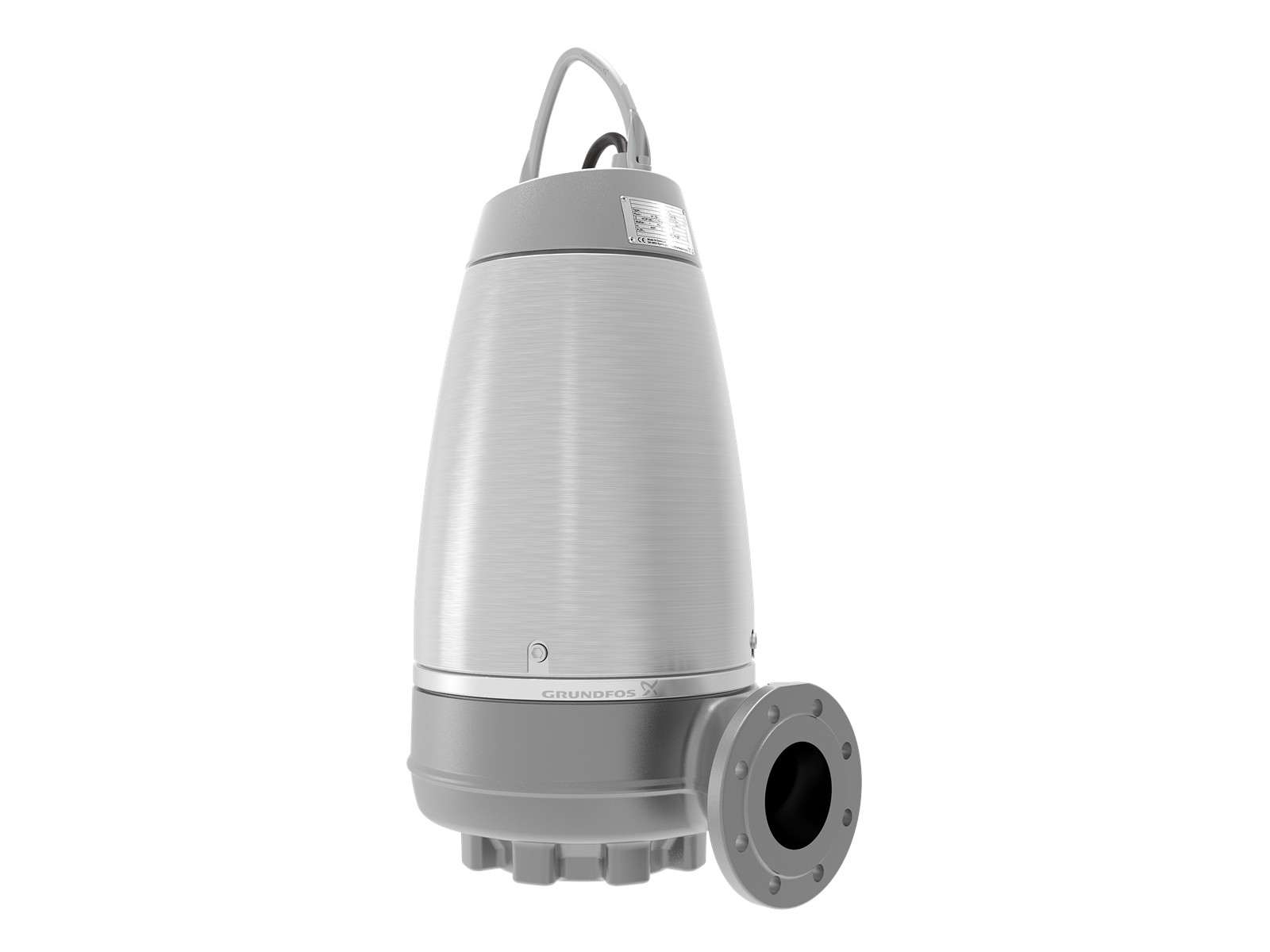
A submersible sewage pump with a free-flow impeller that passes solids up to 100 mm whole, wet- or dry-installed.
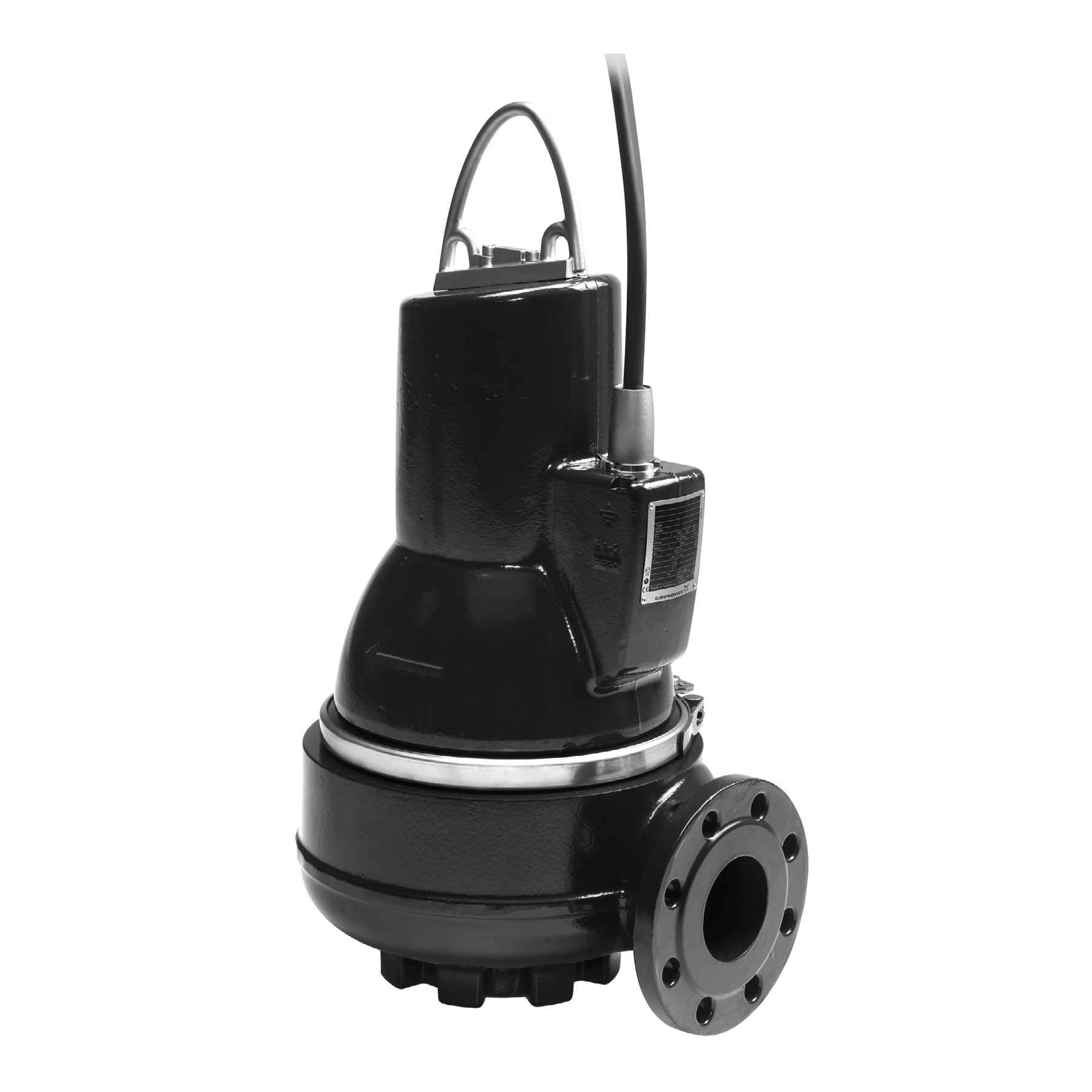
A wet-well sewage pump in two impeller builds, the SL1 with an S-tube impeller and the SLV with a SuperVortex free-flow impeller.
Standards & quality
Ask for a certificate against the model you are ordering, never against the range it belongs to. On Grundfos work the question comes up in three forms.
Motor efficiency comes first on building services work. The IE3 and IE4 efficiency classes are set by the motor, not the pump family, so the class you get depends on the motor fitted to the model you order. Tell us the class the specification calls for and we will confirm it before anything is quoted.
On potable water in the UK, WRAS (the Water Regulations Approval Scheme) approval is what the water undertaker will ask you for, and it applies to a product or a material rather than to a manufacturer. Tell us the duty is potable at the enquiry stage and it shapes the build we specify, which is cheaper than discovering it at commissioning.
Then hazardous areas. Under the ATEX Directive 2014/34/EU the area is classified into a zone, and the equipment is certified for use in that zone. A pump is not Zone 1 rated; it is certified for use in Zone 1, and the certificate covers one build. Grundfos issues it. Send us the zone and the medium and we will have the right certificate in with the quote.
Certification is one question. How long the pump lasts is a different one, and the badge does not decide it. On wastewater, three things end pumps early: rag binding up the wet end, grit that the works' grit removal is not catching, and dry running, which takes the liquid away from a mechanical seal that needs it to survive. Behind all three sits oversizing. The consultant adds margin, the contractor adds margin, the installer adds a little more, and the pump ends up running off the end of its performance curve on a motor far bigger than the duty ever needed. It cavitates, the seal goes, and the vibration ends up in the pipework. Get NPSHa above NPSHr at the duty point, keep rag and grit out of the wet well, and you have taken away most of what ends these pumps early.
Frequently asked
How long do Grundfos pumps last?
The duty decides it, not the badge. On wastewater the three things that end pumps early are rag binding up the wet end, grit the works is not removing, and dry running, which takes the liquid away from a mechanical seal that needs it. Oversizing sits behind all three, because a pump running off the end of its curve cavitates and takes the seal with it.
Where are Grundfos pumps made?
Grundfos is Danish. The company started in Bjerringbro in central Jutland in 1945 and still has its head office there, and it manufactures internationally. The country of build for the pump in front of you is stamped on its nameplate.
Where do I find the manual for a Grundfos pump?
Grundfos publishes curves, datasheets and installation documentation through its own Product Center. Read the model designation and serial number off the nameplate first, because near-identical builds carry different documents. Send us both and we will pull the right one for the pump you actually have.
How do I order a Grundfos service kit or spare part?
Give us the model designation and the serial number together, exactly as they read on the nameplate: the seal, elastomer and impeller build varies within a range, and the serial number is what resolves it. A photograph of the plate is enough. We will identify the kit and quote it.
Which Grundfos ranges does Channel Pumps supply?
The CR vertical multistage centrifugal family, including the CRE and CRN variants; the Hydro MPC packaged booster set; and the SE, SL, SEV and SEG submersible wastewater and grinder pumps. We size and specify them against your duty point.
Are Grundfos pumps suitable for sewage and wastewater?
The SE and SL ranges handle sewage and effluent, wet or dry installed, using a closed S-tube impeller that resists rag binding on the vane. The SEV uses a SuperVortex free-flow impeller for abrasives, long fibre and gassy media, and the SEG grinds solids before pumping. Give us the flow, head and medium.
Do Grundfos pumps offer variable-speed control?
Many do. The CRE carries an integrated variable-speed motor, and the Hydro MPC stages up to six pumps under a CU 352 controller to hold pressure as demand moves. Confirm the option against the specific model before you specify it.