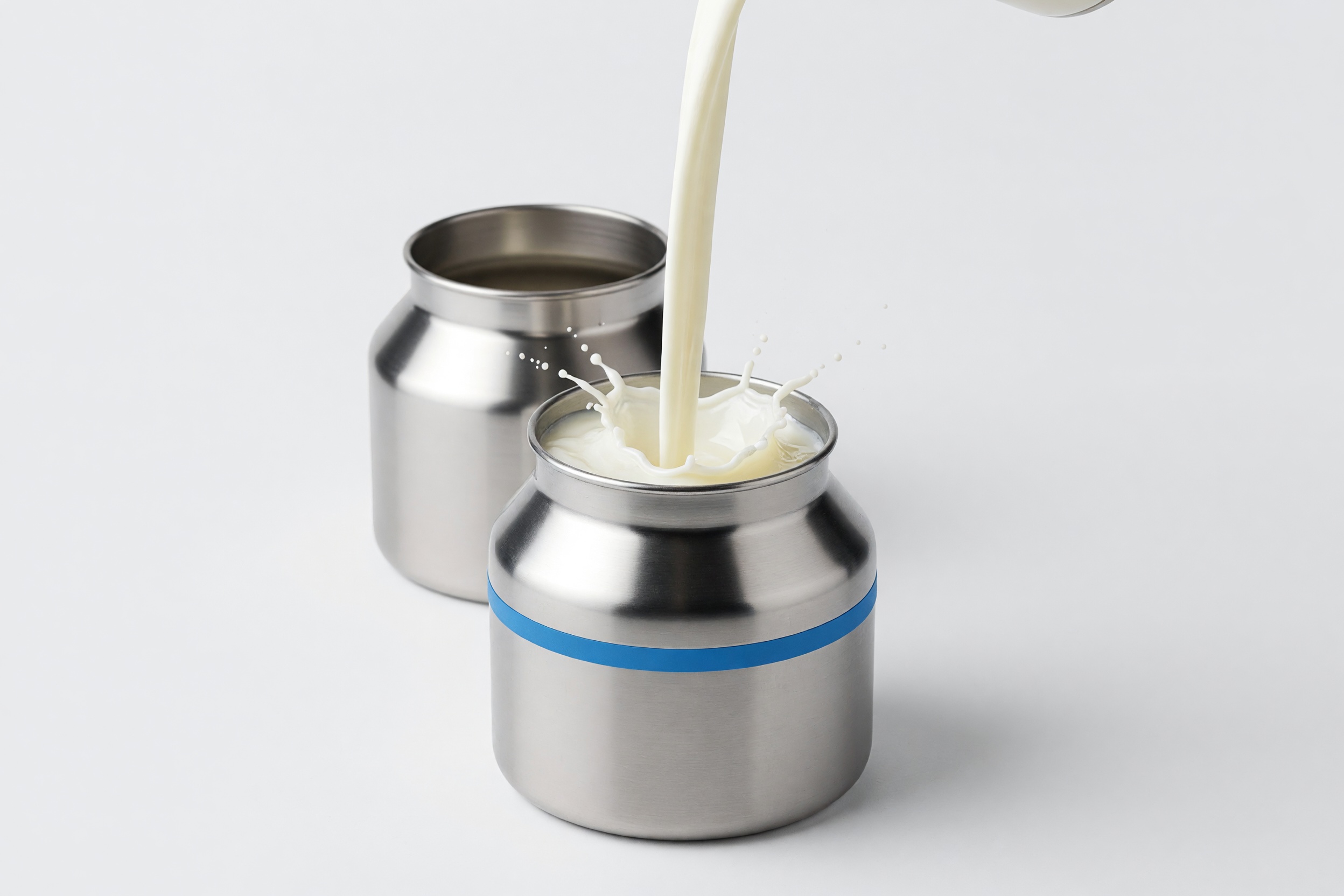
What goes wrong on a dairy line
Dairy has no rag problem. Nothing binds up the wet end the way wipes do on a sewage works, so both the failure set and the mistakes are different from the ones on the water side.
Cleaning is the failure that costs product. No cleaning-in-place, or a weak procedure, gives you product contamination. That is not an abstraction about hygiene, it is a scrapped batch and a line standing while somebody strips it. Cleanability is a design property of the pump and the pipework around it. Wherever product can sit, it will sit.
Temperature narrows the choice before anything else does. Hot duty makes sealing hard, and the hotter the medium the fewer pump types stay on the table. Get the full temperature range in writing, cleaning cycle included, because the hot cleaning pass is often the worst condition the seal ever sees.
Shear-sensitive product wants pumping slowly. Cream, yoghurt and cultured product change texture if you beat them, and speed is the lever that decides whether you do. It is a selection constraint that never appears on a performance curve, so it only gets applied if somebody asks. The same rule runs in reverse for anything abrasive: run a positive displacement pump too fast in an abrasive medium and you have shortened its life for nothing.
High pressure is the other quick killer, and it usually arrives by margin stacking. The customer states a flow rate. The consultant adds margin for future duty, reasonably. The contractor adds margin, and whoever installs it adds a little more. Nobody in that chain is careless and the pump that comes out of it is far too big. On a centrifugal that means running off the end of its performance curve. On a positive displacement pump it means pressure and wear the build was never specified against.
Size for the worst case, not the typical one. The question we ask on the phone is blunt: is it water, or as water? How thick does it get, and how often? A medium that behaves as water for most of a shift and thickens at the end of a batch has to be selected for the thick end.
One more, from a food factory rather than a dairy, because the pattern repeats everywhere. A line had repeated suction inlet blockages across a bank of pumps, and we were asked to replace the lot with something bigger. The pumps were sized correctly. Changing the inlet size fixed it, the pumps stayed where they were, and we did not get the order. Where the tank and the pipework were somebody else's job, that is usually where the fault actually is.
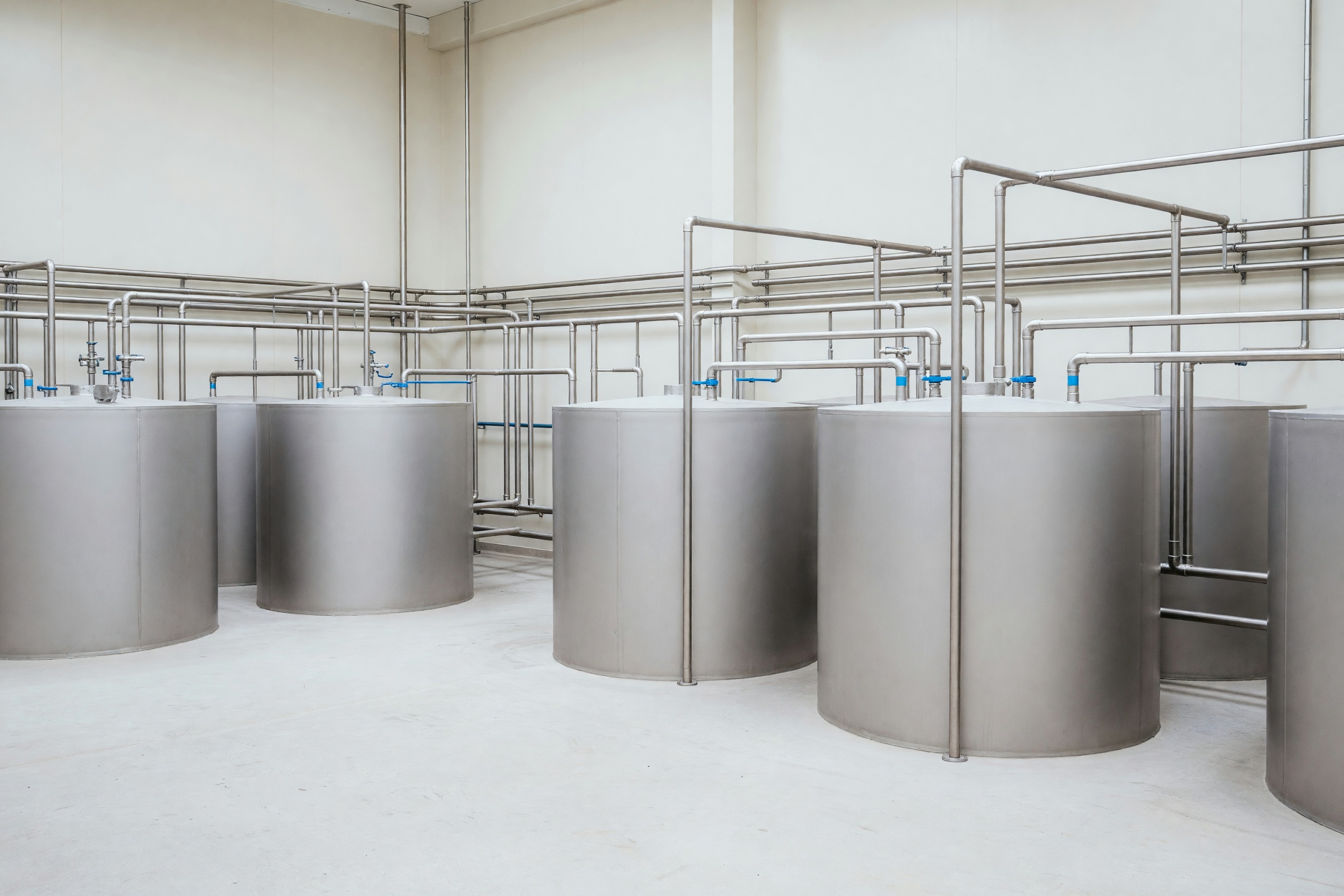
Inside a dairy plant
What suits each dairy duty
Most dairy transfer lands on a rotary lobe pump. It is a hygienic positive displacement type: it moves product by displacement rather than by throwing it, so shear and pulsation stay low, it self-primes, and it holds its flow rate close to constant as the pressure changes. That last property earns its keep on a line where a filter or a plate pack loads up through the run. We supply the Alfa Laval SRU in this type, and the simpler OptiLobe where the duty does not need the SRU's range of build options.
Where the duty runs at higher pressure or the product is more viscous than a lobe pump wants to work against, the Alfa Laval DuraCirc is the circumferential piston alternative we carry. It is the same idea, displacement rather than velocity, in a build aimed at the harder end of that range.
For thin, clean media at higher flow, raw milk transfer and whey among them, a hygienic centrifugal pump is the efficient answer, and there is no reason to pay for displacement you do not need. It is also the type that punishes poor suction conditions hardest, so check NPSHa against NPSHr at the duty point before you commit to one.
Hygienic duty settles the materials before it settles anything else. Stainless wetted parts rather than cast iron, and elastomers chosen for both the product and the cleaning chemistry. Our hygienic pump range covers that side of it in detail: what makes a pump cleanable in the first place, and how the sanitary designs differ from each other.
| Duty | Type that suits it | What you give up |
|---|---|---|
| Raw milk transfer, whey, water and cleaning circuits | Hygienic centrifugal | Flow moves with pressure, and poor suction conditions will cavitate it |
| Milk, cream, yoghurt, cultured product | Hygienic rotary lobe (Alfa Laval SRU, OptiLobe) | Higher capital cost than a centrifugal, and it has to be run slowly |
| Curd, concentrate, higher pressure or more viscous duty | Circumferential piston (Alfa Laval DuraCirc) | More pump than a thin-media duty needs |
If you want the verdict rather than the options: for milk, cream, yoghurt and curd, select the lobe pump and run it slowly. Reach for the hygienic centrifugal only where the medium is genuinely as water and the suction conditions are good.
Send us the medium, its worst-case viscosity, the temperature it runs at and how the line is cleaned, along with the flow and the total dynamic head. We select the type, size the unit against the curve, and specify the seal, materials and elastomers to match.
Dairy pumps we supply
View all →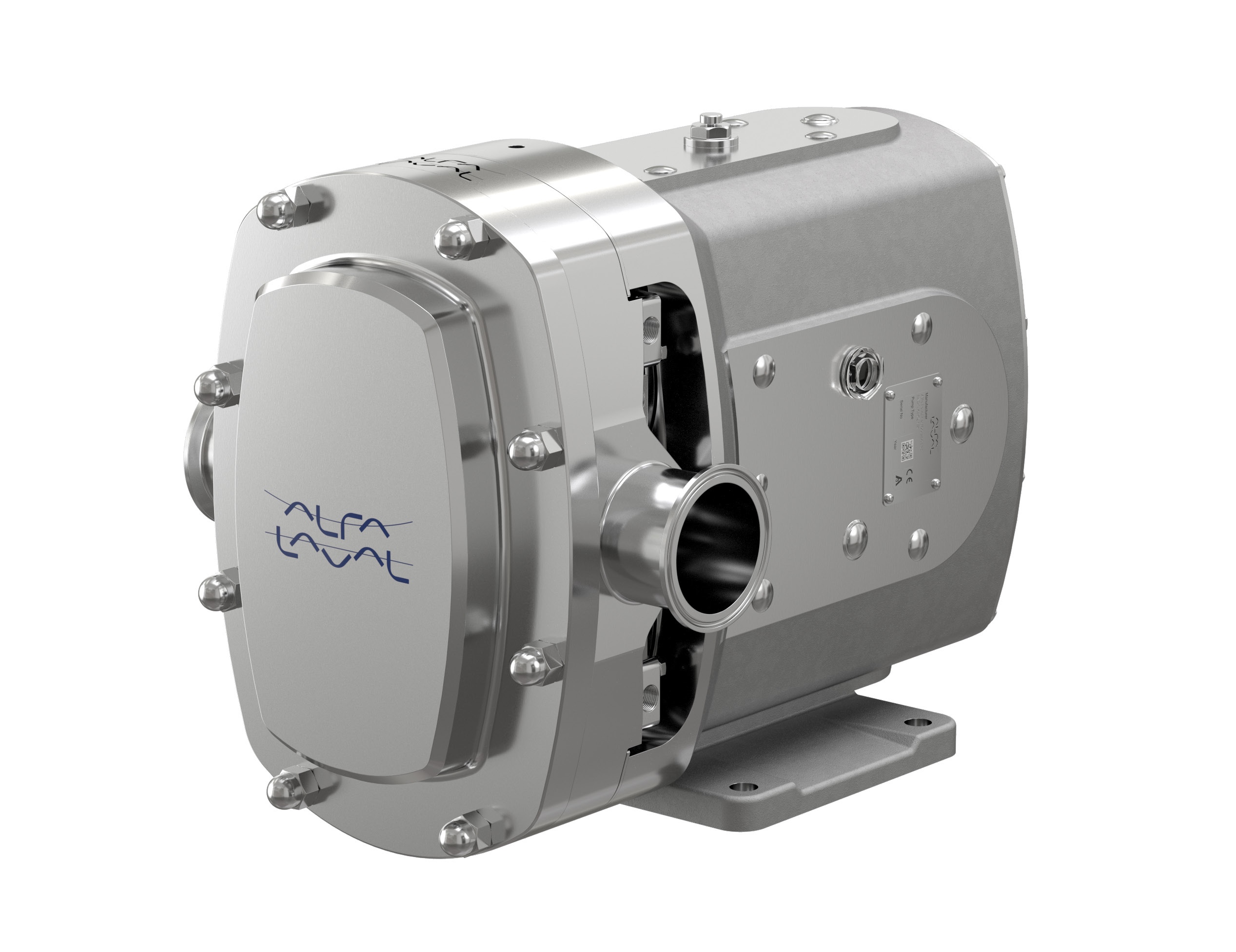
A hygienic circumferential piston pump for low-viscosity duties that need pressure. Certified to EHEDG and 3-A, in 13 displacements.
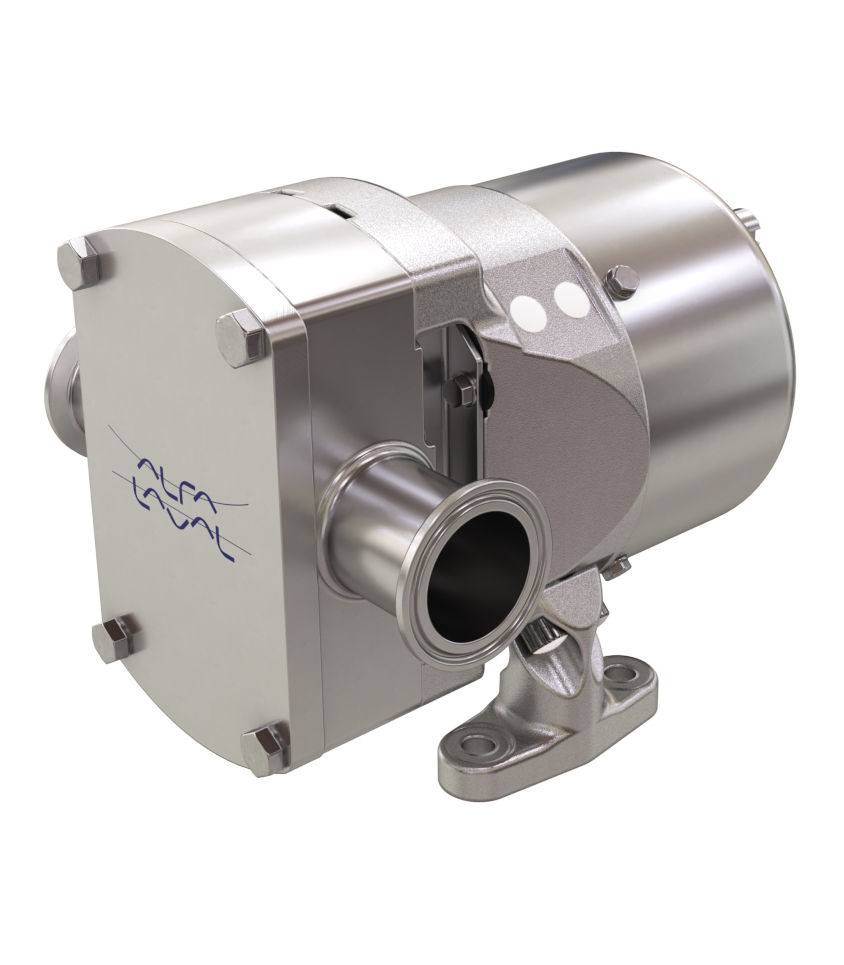
Alfa Laval's cost-effective hygienic rotary lobe pump, in 10 displacements to 77 m³/h and 8 bar, with an all-stainless exterior.
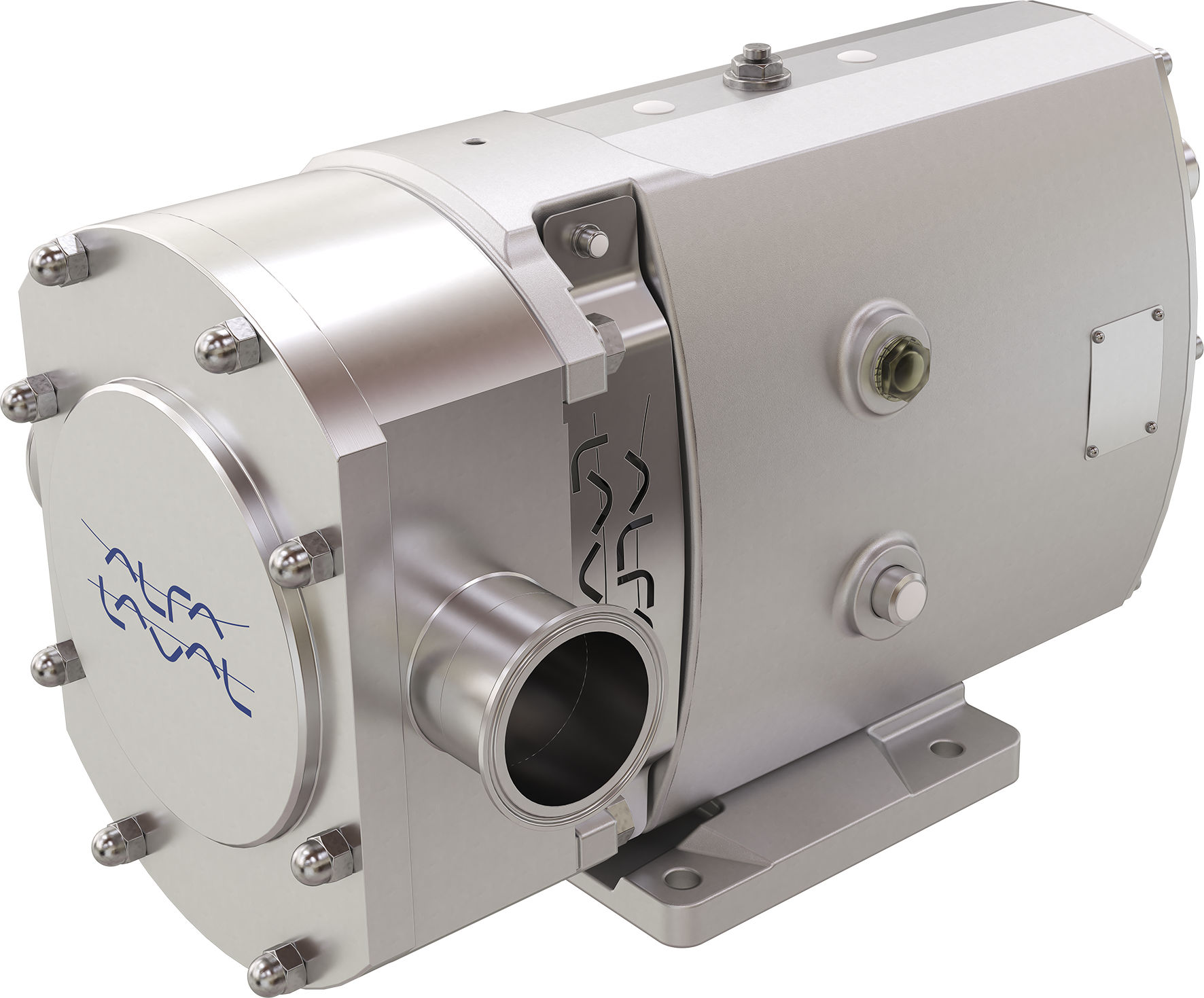
Alfa Laval's hygienic rotary lobe pump for shear-sensitive and viscous product, in 12 displacements to 106 m³/h and 20 bar.
Standards, and who issues them
Certification is the manufacturer's to issue, not ours to assert. That is the rule, and it matters more in dairy than almost anywhere, because an audit will ask to see the paperwork rather than the claim.
Two design frameworks come up on dairy equipment. 3-A Sanitary Standards set hygienic design criteria widely referenced in dairy processing. EHEDG (European Hygienic Engineering & Design Group) publishes hygienic design guidance used across European food and dairy plant. Both describe how equipment ought to be designed. Neither is something a distributor can confer on a pump by telling you it applies.
So tell us which standard your process is audited against, and we will point you at the manufacturer's certification or datasheet for the specific model and build. If that document does not exist for the build you are looking at, we will say so rather than let you infer it from the range.
Where part of a dairy is a classified hazardous area, powder handling being the usual case, ATEX Directive 2014/34/EU governs the equipment in it. The area carries a zone; the equipment carries a category. A pump is certified for use in a zone, not "Zone 1 rated", and the distinction is the one an inspector will check.
Frequently asked
What pump is used in a dairy?
Most dairy transfer uses a hygienic rotary lobe pump, because it moves milk, cream, yoghurt and curd by displacement at low shear and cleans in place. Thin, clean media at higher flow, such as raw milk transfer and whey, suit a hygienic centrifugal pump instead. Higher pressure or more viscous product moves to a circumferential piston pump.
Why do dairy pumps need to be low shear?
Cream, yoghurt and cultured products change texture if the pump beats them, and the change shows up as lost viscosity, mouthfeel or yield. A positive displacement pump run slowly moves the product without working it. Speed is the control you have, and it is a constraint that never appears anywhere on a performance curve.
What is the difference between a rotary lobe and a hygienic centrifugal pump for milk?
The lobe pump displaces a fixed volume per revolution, so its flow stays close to constant as pressure changes and it handles viscous or shear-sensitive product. The centrifugal pump accelerates the medium instead, which is more efficient on thin, clean liquid at higher flow but sensitive to viscosity and to poor suction conditions.
Do dairy pumps have to be 3-A or EHEDG certified?
That depends on what your site is audited against, and the answer comes from the manufacturer rather than from us. 3-A Sanitary Standards and EHEDG guidance both describe hygienic design criteria. Tell us the standard you work to and we will point you at the certification or datasheet for the specific model and build.
What do you need to know to size a dairy pump?
The medium and its worst-case viscosity, the temperature range including the cleaning cycle, how the line is cleaned, the flow rate, and the total dynamic head with the pipework it runs through. Product sensitivity matters too, since a shear-sensitive or abrasive medium has to be pumped slowly whatever the curve says.