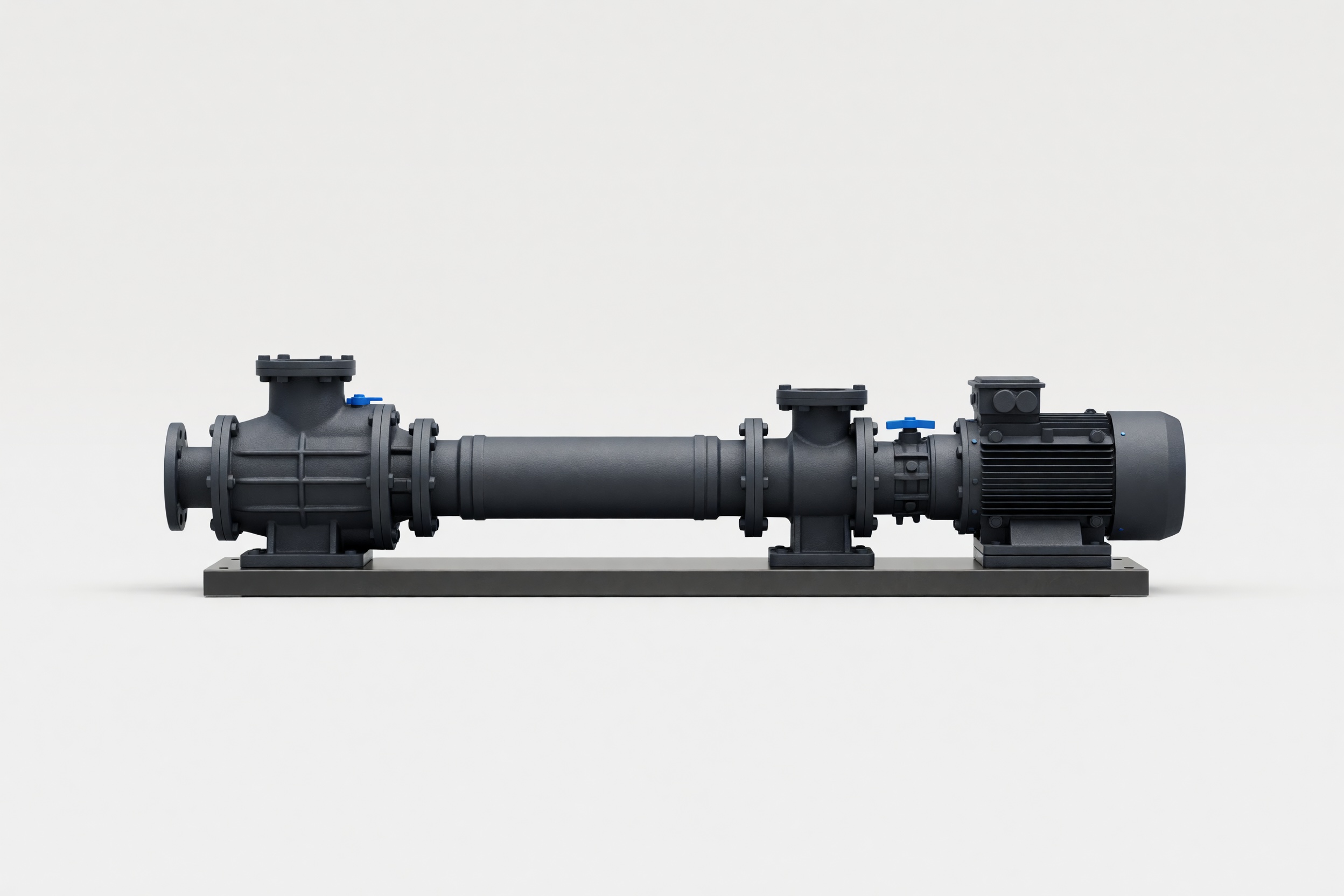
How a progressive cavity pump works
A progressive cavity pump carries the medium in sealed cavities that travel the length of the pump as the rotor turns. The rotor is a single helix, usually hardened steel. The stator is a double-lead elastomer sleeve bonded into the pump tube, and the seal line between the two is what closes each cavity off.
Each cavity carries the same volume every revolution, so flow follows rotor speed rather than pressure. That is why the medium arrives with almost no pulsation and with its solids intact.
When to choose a progressive cavity pump
Choose a progressive cavity pump when the medium is thick, abrasive, shear-sensitive or carrying solids, and you need the flow rate to hold whatever the discharge pressure does. Above roughly 3–4% solids a centrifugal pump starts to struggle, and that is the point where positive displacement earns its cost.
- Sewage sludge and thickened sludge, including dosing into a digester
- Viscous food product, starches and oils, where shear would damage the medium
- Abrasive slurries, run slowly to keep the wear rate down
- Metering and dosing duties, where flow has to track rotor speed
- Media whose viscosity varies through a batch
- Thin, clean liquid at moderate head, where a centrifugal costs less to buy and less to run
- Any duty where the suction can empty, unless you fit dry-run protection
- High flow at low pressure in a tight plant room, where a rotary lobe pump is shorter and easier to strip
- Heavy rag loading, which wants screening or macerating upstream rather than a pump asked to cope with it
Key features & trade-offs
Flow follows rotor speed, not discharge pressure, so the rate holds to within a few per cent as the system changes.
Pumps thin liquid through to thick sludge and food product, and copes when viscosity varies through a batch.
Low shear and low pulsation, so solids, crystals and delicate food product arrive intact.
Primes against a suction lift once the stator is wet, and runs in reverse to clear a line.
The elastomer needs the medium to lubricate it. Lose suction and it burns through, taking the rotor with it.
Stators and rotors wear, grit fastest of all. Budget for the replacement and the downtime to fit it.
Pumps we supply
View all →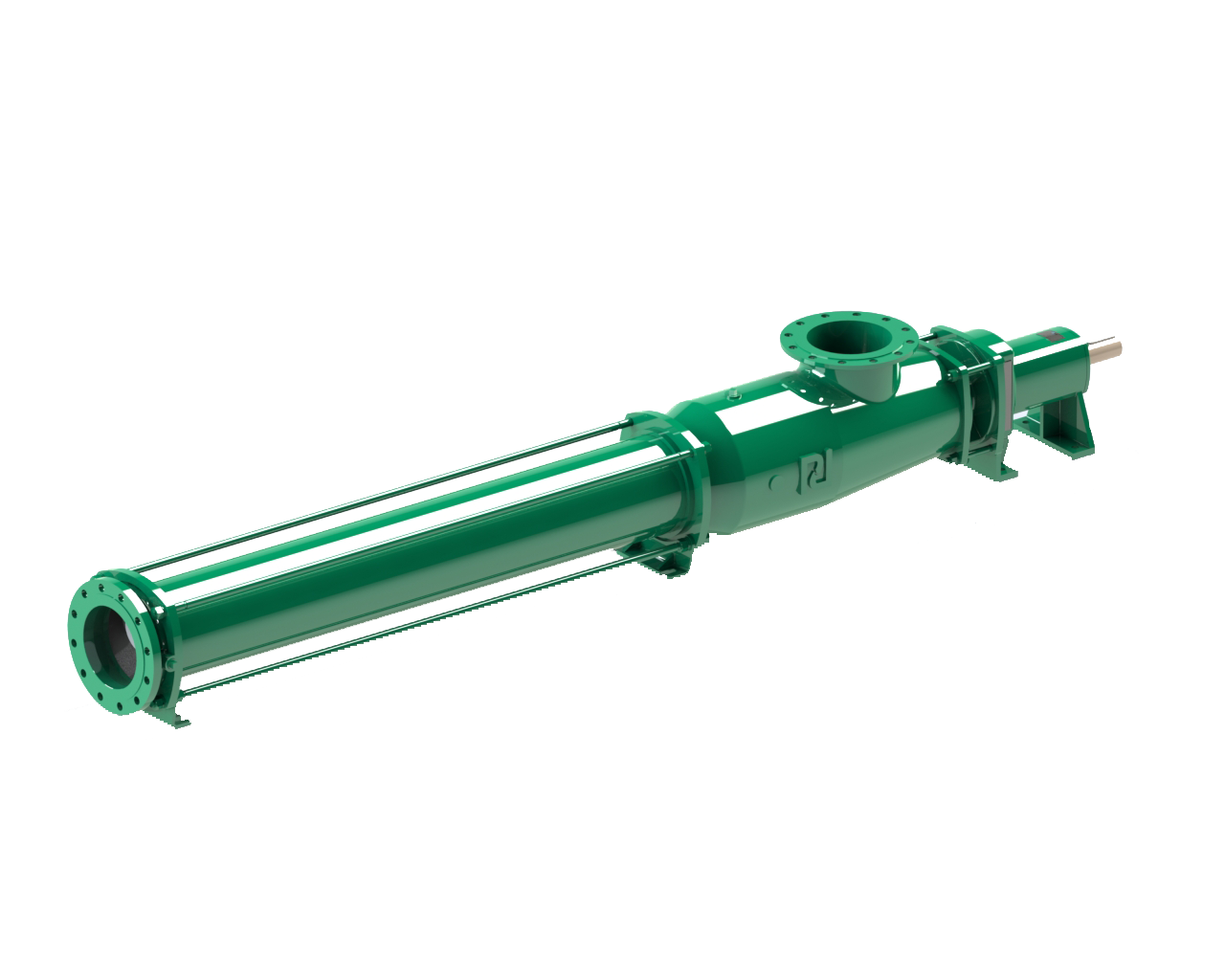
Roto's small-capacity progressive cavity range, for metered dosing and transfer of thick, solids-laden media.
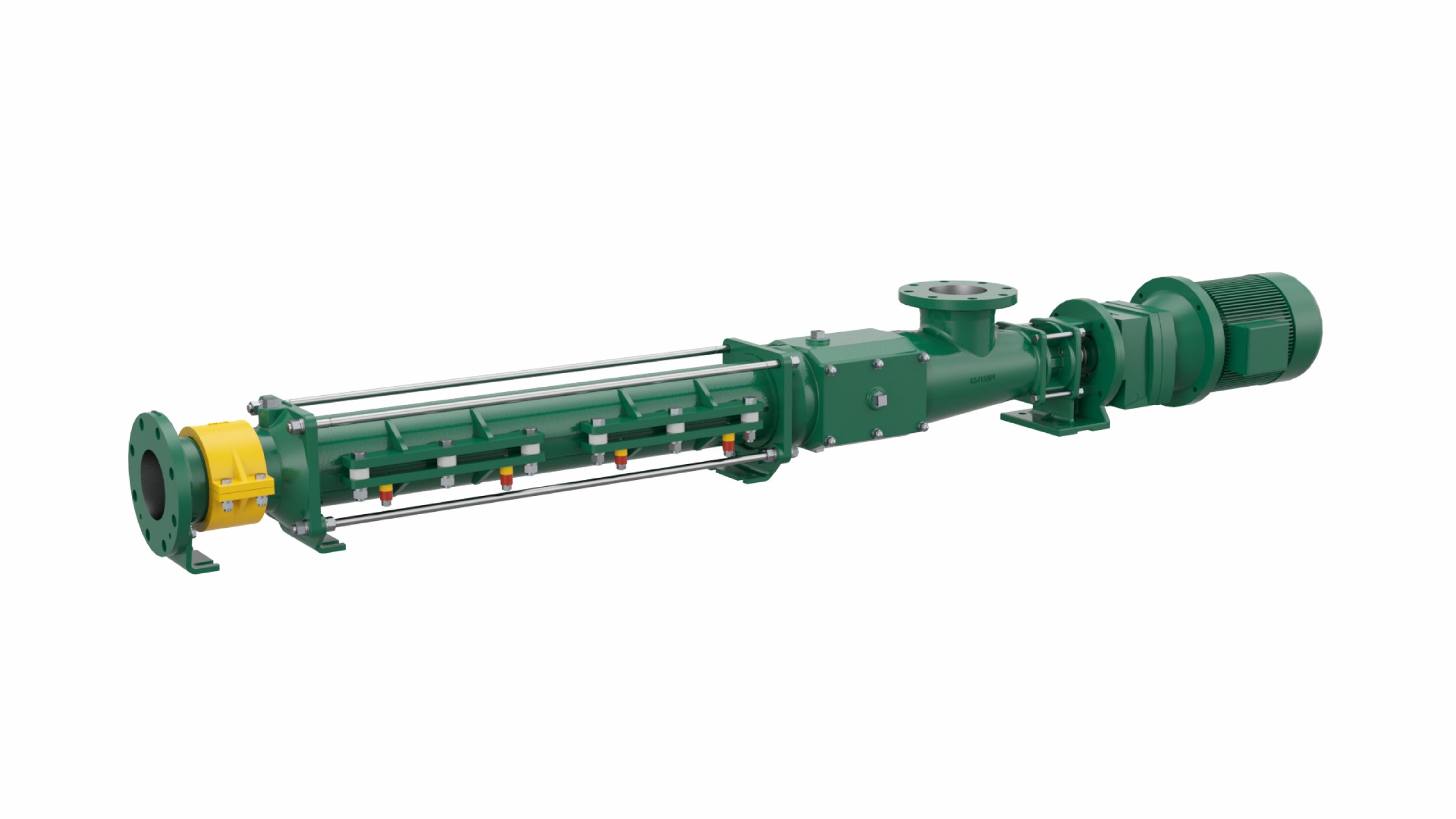
Roto's extra-large-capacity progressive cavity range, on extended geometry, built for volume at low pressure.
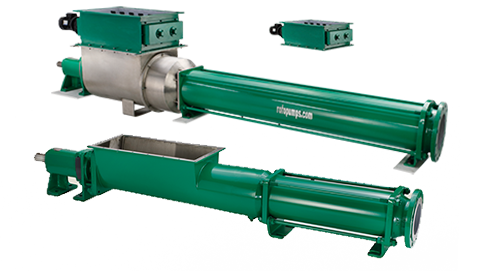
Roto's wide throat progressive cavity pump, with an auger on the coupling rod for media that will not feed themselves into a standard suction.
How to size & spec a progressive cavity pump
Send us the flow rate, the total dynamic head, the medium and its viscosity range, the temperature, and the dry solids content if it is sludge. We size against the worst case rather than the typical one, and run the pump slowly where the medium is abrasive.
Oversizing is the usual mistake, and it arrives by margin stacking: everyone in the chain adds a little. Give us the real duty and we will specify the build around it.
Frequently asked
How do I maintain a progressive cavity pump?
Keep the stator wet and keep grit out, and most of a progressive cavity pump's maintenance looks after itself. Check the suction conditions and the level controls so it cannot run dry, watch the drive current for the steady rise that says the stator is worn, and plan the stator and rotor change instead of waiting for the flow to fall away. Photograph the nameplate: the model and serial number are what get you the right service kit.
Can a progressive cavity pump run dry?
No. The stator is elastomer and the medium is what lubricates it, so running dry burns through the stator and damages the rotor, often within minutes, and that is a wet-end rebuild rather than a seal change. Fit low-level or dry-run protection on any duty where the suction can empty.
What is the difference between a progressive cavity pump and a progressing cavity pump?
Nothing. They are two names for the same pump: UK trade usually says progressing cavity, progressive cavity is the more common search term, and the same pump is also sold as an eccentric screw pump.
What can a progressive cavity pump handle that a centrifugal pump cannot?
Thick and solids-laden media. The trade rule of thumb is that above roughly 3–4% solids a centrifugal starts to struggle, and that is where positive displacement takes over. A progressive cavity pump also holds its flow rate as discharge pressure changes, where a centrifugal's flow falls away as the pressure rises.
Progressive cavity or rotary lobe pump?
Take the progressive cavity pump when the medium is thick or abrasive and you need the flow rate to hold as pressure changes. Take a rotary lobe pump when you want higher flow in a shorter footprint, a wet end you can strip in place, and a pump that cleans in place. The lobe pump also survives a brief loss of suction; the progressive cavity pump does not.