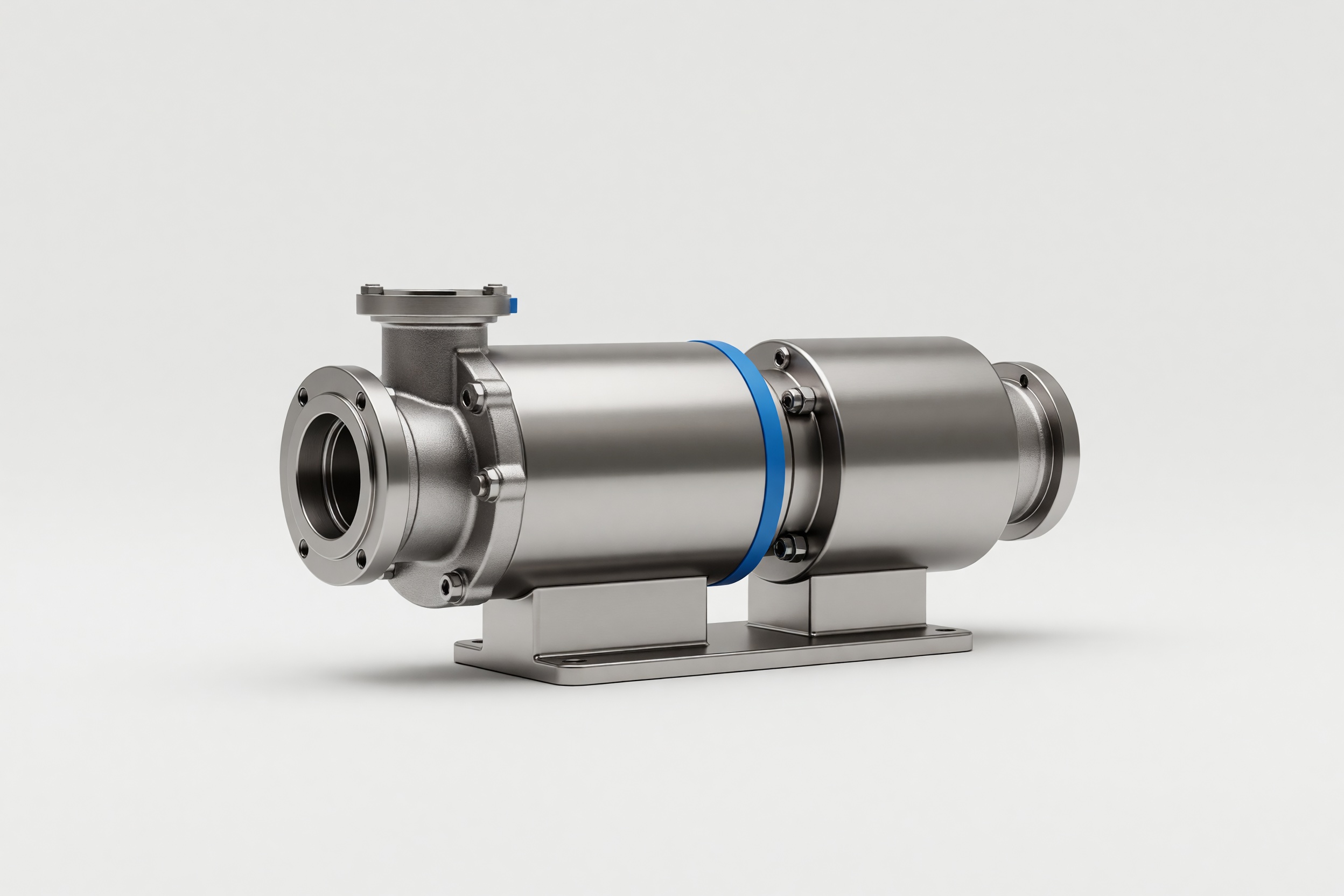
What makes a pump hygienic
Hygienic design removes anywhere product can lodge and bacteria can grow. Wetted parts are crevice-free with radiused corners; surfaces are polished to a fine finish so residue rinses away; the head drains fully when the line stops; and seals are food-grade and cleanable.
Together these let the pump be cleaned in place (CIP). Cleaning fluid is circulated through the assembled pump at set flows, temperatures and times, with no strip-down (some duties add steam, or SIP). The aim is a repeatable, validated clean every cycle.
When to choose a hygienic pump
Choose a hygienic pump whenever the medium is eaten, applied to the body, or dosed into a person.
The other trigger is cross-contamination between batches. If the line has no cleaning-in-place, or the cleaning procedure is weak, the pump is not the part that will fail first: the product is.
- Food and dairy processing, including milk transfer
- Brewing, soft drinks and beverage
- Personal care and cosmetics
- Biotechnology and pharmaceutical manufacture
- High-viscosity product that still has to stay clean
- Water or wastewater duties, where an industrial pump costs far less
- Where cleanability and traceability are genuinely not required
- Abrasive slurries, where a polished hygienic wetted path wears and an abrasive-duty pump lasts longer
What a hygienic pump is good and bad at
Stainless steel, typically 316L, with radiused corners so nothing lodges.
A fine finish so residue rinses away, and a head that drains fully when the line stops.
Cleaning fluid circulates through the assembled pump at set flows, temperatures and times, with no strip-down.
Ranges are designed against 3-A Sanitary and EHEDG. Certification for a given model is the manufacturer's to evidence, so ask for the certificate.
Tighter tolerances and a polished wetted path are what you are paying for. On a duty that does not need them, an industrial pump is far cheaper.
Frying and other hot duties make sealing hard, and the sealing arrangement then drives the selection rather than the flow and head.
Run a positive displacement pump too fast on abrasive product and you shorten its life. Abrasive and shear-sensitive media both want pumping slowly.
Pumps we supply
View all →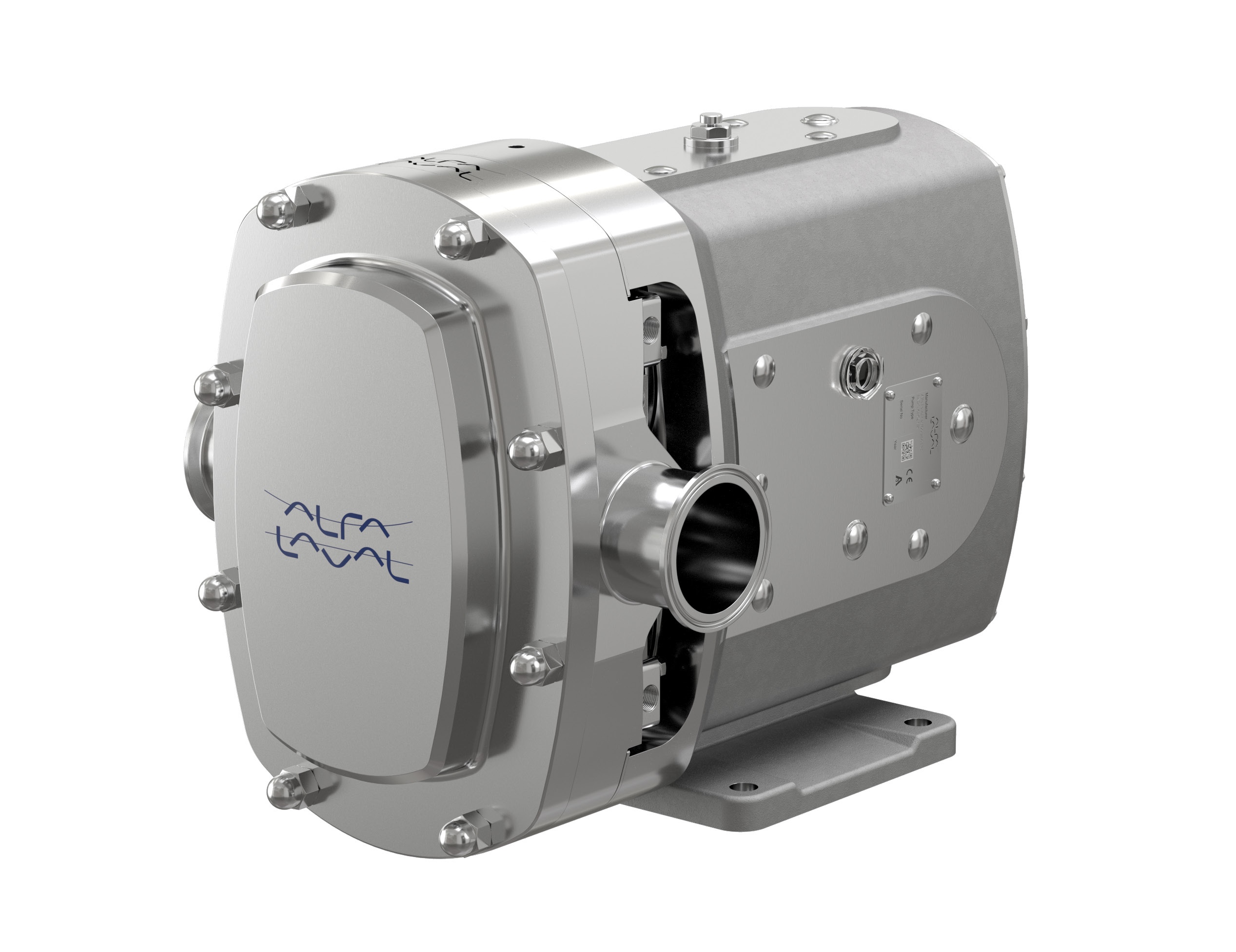
A hygienic circumferential piston pump for low-viscosity duties that need pressure. Certified to EHEDG and 3-A, in 13 displacements.
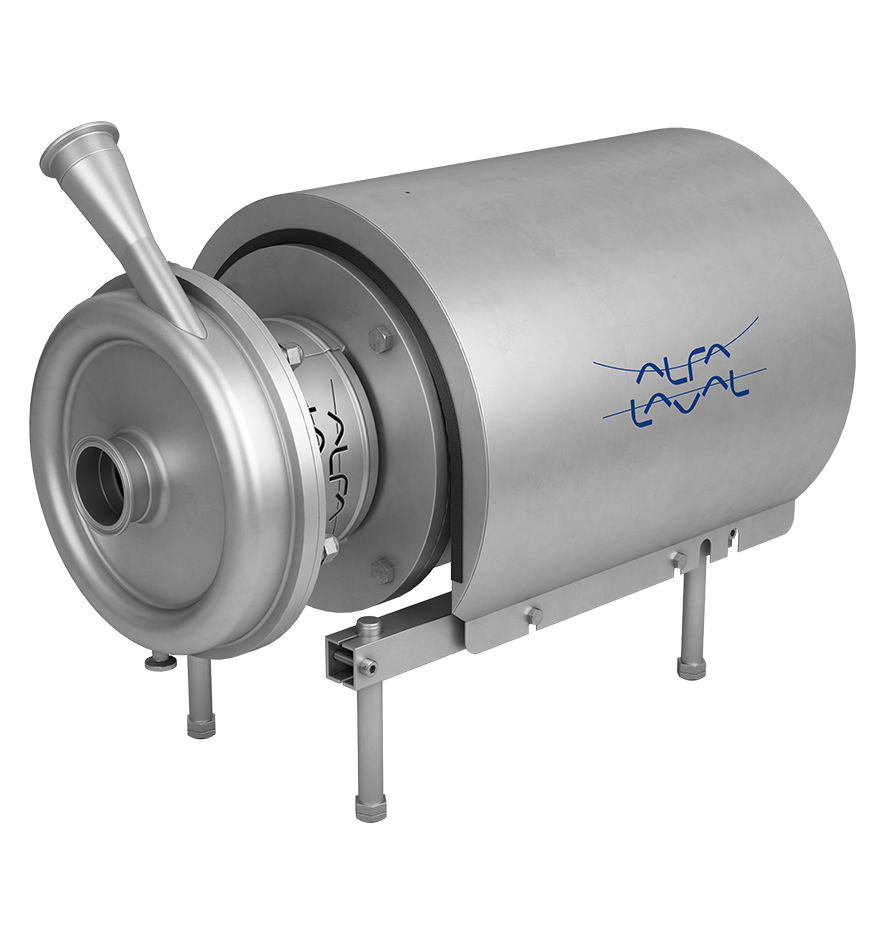
A high-purity hygienic centrifugal pump for biotech and pharmaceutical process duties. EHEDG certificate, full material traceability, eight sizes.
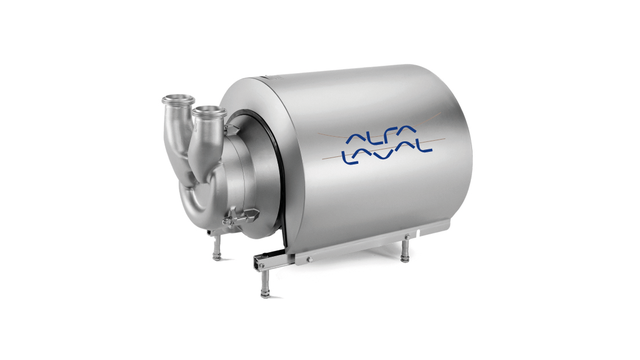
A liquid-ring pump for CIP return and other duties where the liquid arrives with air or gas in it. Three sizes to 80 m³/h.
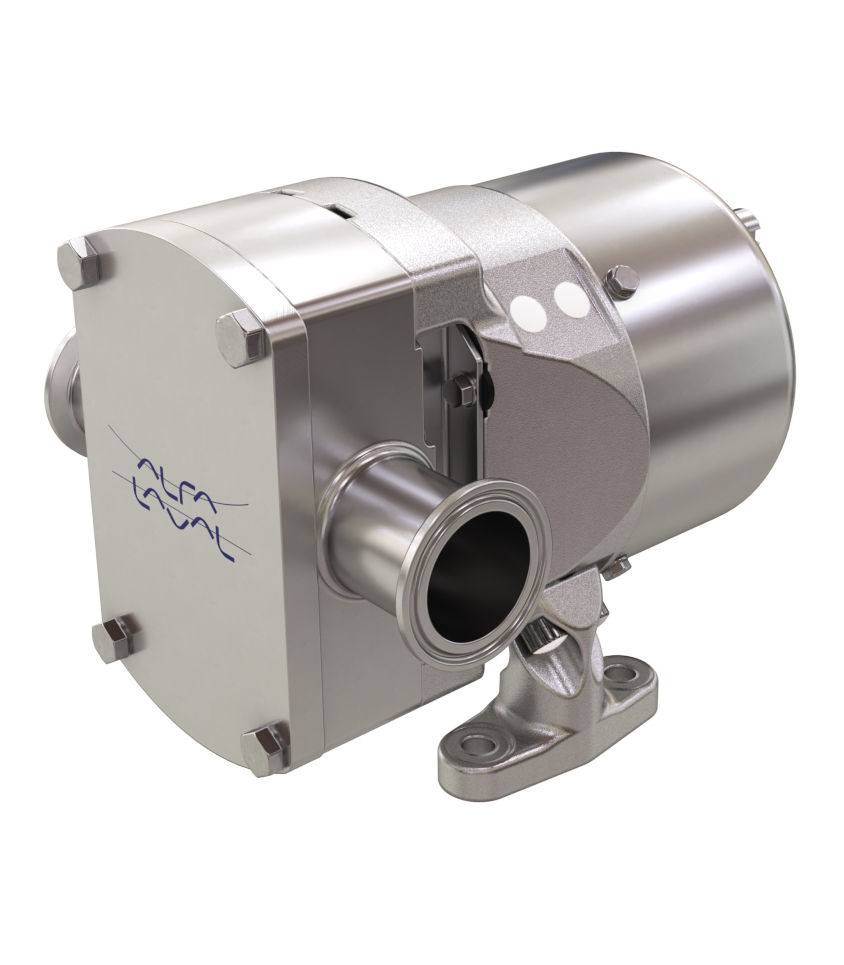
Alfa Laval's cost-effective hygienic rotary lobe pump, in 10 displacements to 77 m³/h and 8 bar, with an all-stainless exterior.
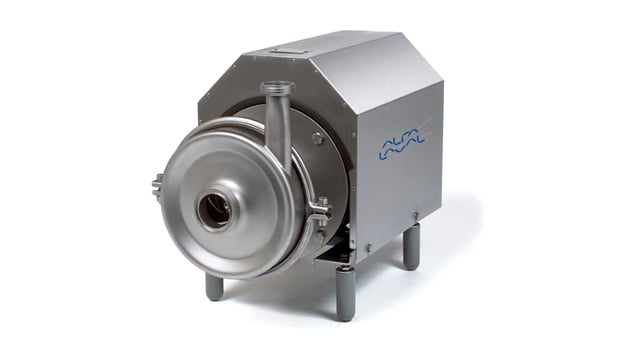
A standardised hygienic centrifugal pump for basic CIP and transfer duties, in four sizes, with an UltraPure execution for pharmaceutical work.
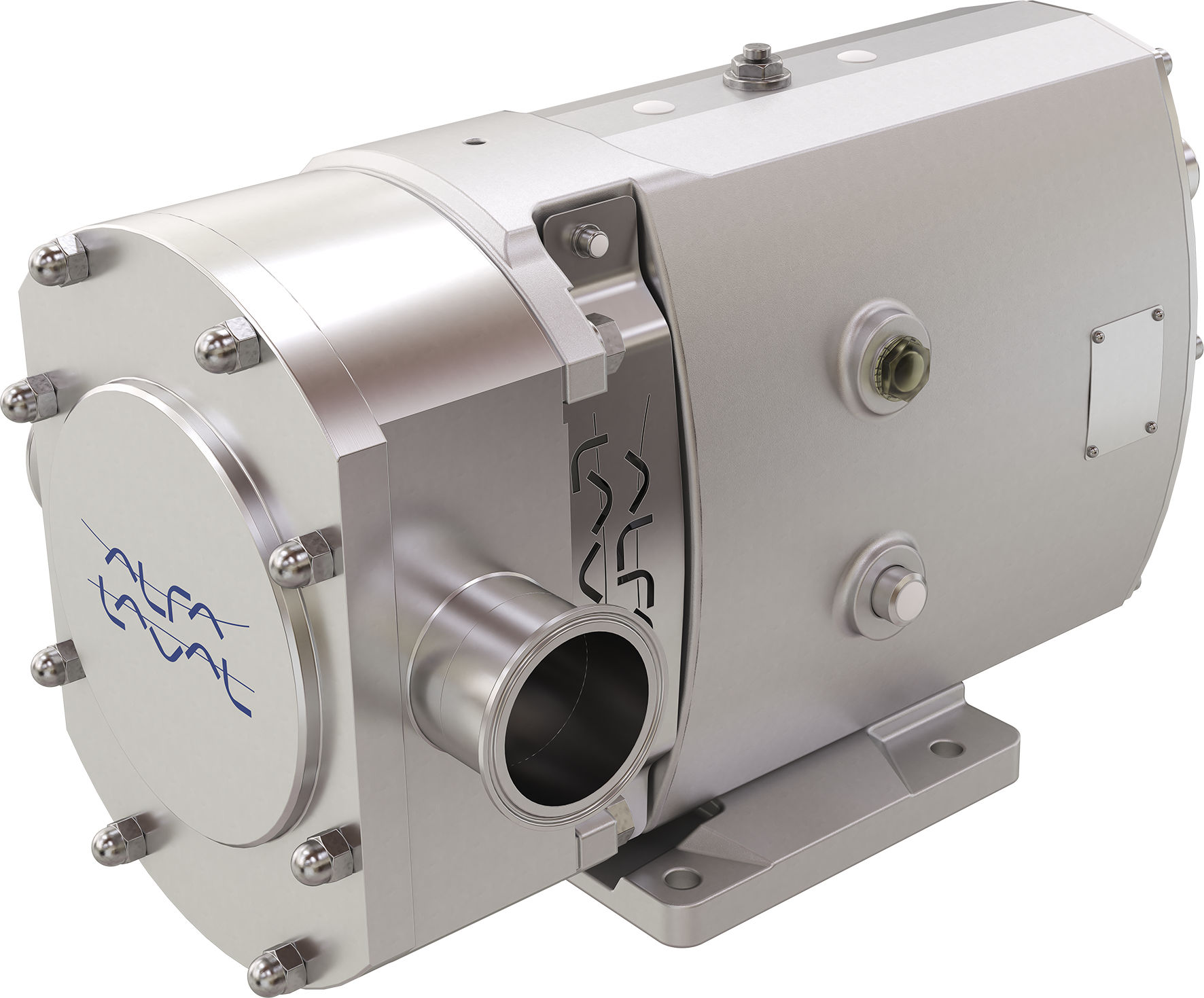
Alfa Laval's hygienic rotary lobe pump for shear-sensitive and viscous product, in 12 displacements to 106 m³/h and 20 bar.
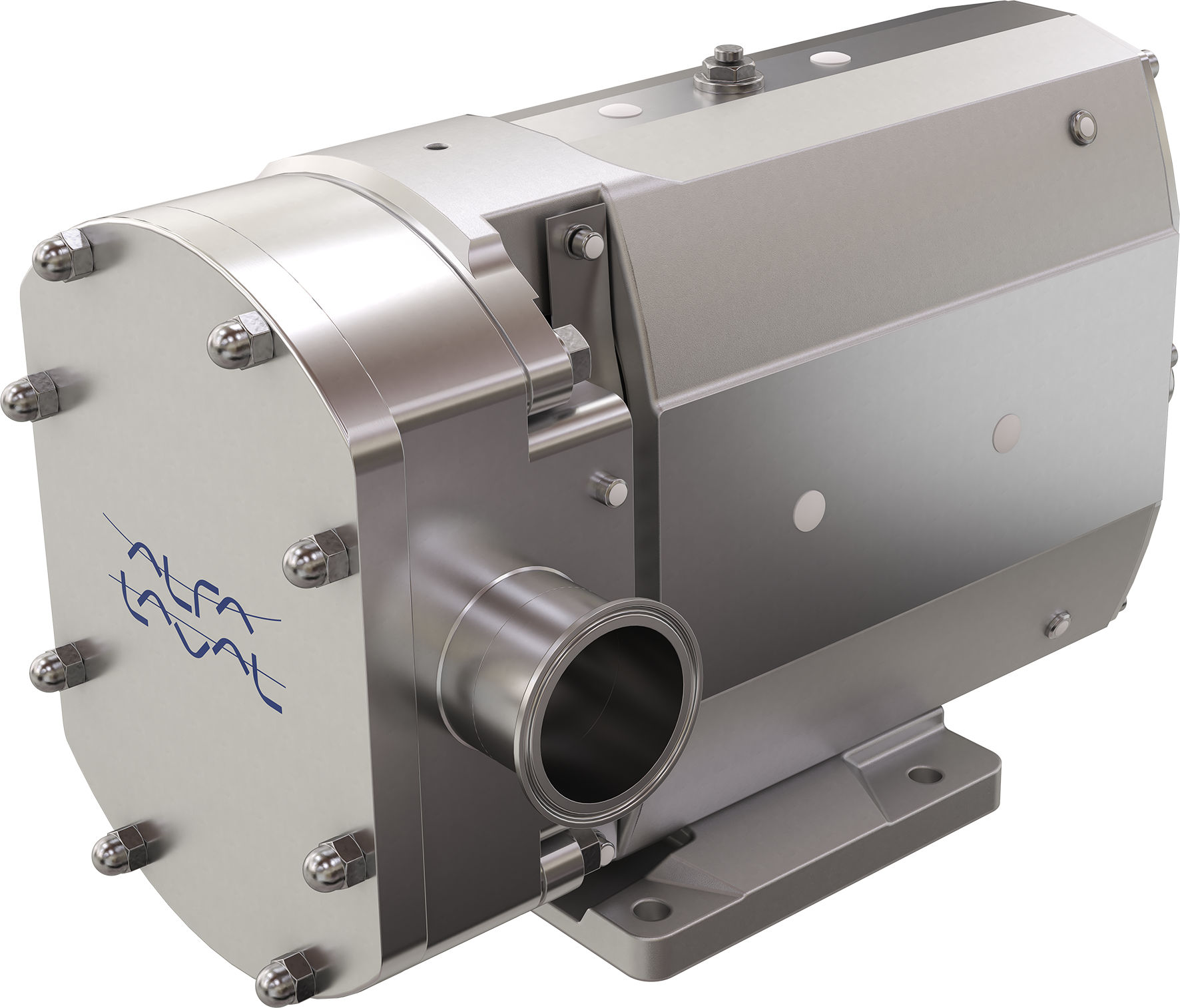
Alfa Laval's premium hygienic rotary lobe pump, in 14 displacements to 115 m³/h and 15 bar, with a fully drainable pump head for CIP and SIP.
How to size and specify a hygienic pump
Match the pump type to the medium first, then specify the build around it.
A hygienic centrifugal suits high-flow, low-viscosity transfer and CIP return. A rotary lobe moves viscous or shear-sensitive product gently.
Then the three questions that decide the build: how thick the product gets at its worst, what temperature it runs at, and what a seal failure would do to the batch. Those set the sealing arrangement, which is where hygienic duties are won or lost.
Frequently asked
What is a hygienic pump?
A hygienic pump, or sanitary pump, is a pump built to a sanitary design standard so it can be cleaned in place and will not harbour bacteria. It has crevice-free wetted parts, polished surfaces, a drainable head and cleanable seals. It is a way of building a pump, not a single pump type.
What is the difference between a hygienic pump and a sanitary pump?
There is no material difference. Hygienic is the common term in Europe and sanitary in the US, but both mean a pump designed for cleanability and product safety in food, dairy and pharmaceutical duties.
Which pump types can be hygienic?
Hygienic design spans several pump types. Rotary lobe and circumferential piston pumps handle viscous and shear-sensitive media by positive displacement, while hygienic centrifugal pumps suit high-flow, lower-viscosity transfer and cleaning in place. Channel Pumps supplies hygienic pumps across these types.
What standards apply to hygienic pumps?
Common standards include 3-A Sanitary Standards in the US, EHEDG (European Hygienic Engineering & Design Group) in Europe, and FDA requirements for food-contact materials. Pharmaceutical duties often add a documentation package that traces materials and compliance. Confirm the standard required for your process, and ask the manufacturer for the certificate rather than inferring it from the range.
What does cleaning in place mean?
Cleaning in place, or CIP, means cleaning the assembled pump and pipework without stripping it down. Cleaning fluid is circulated through the system at set flows, temperatures and times. A hygienic pump is designed to drain fully and clean repeatably each cycle.