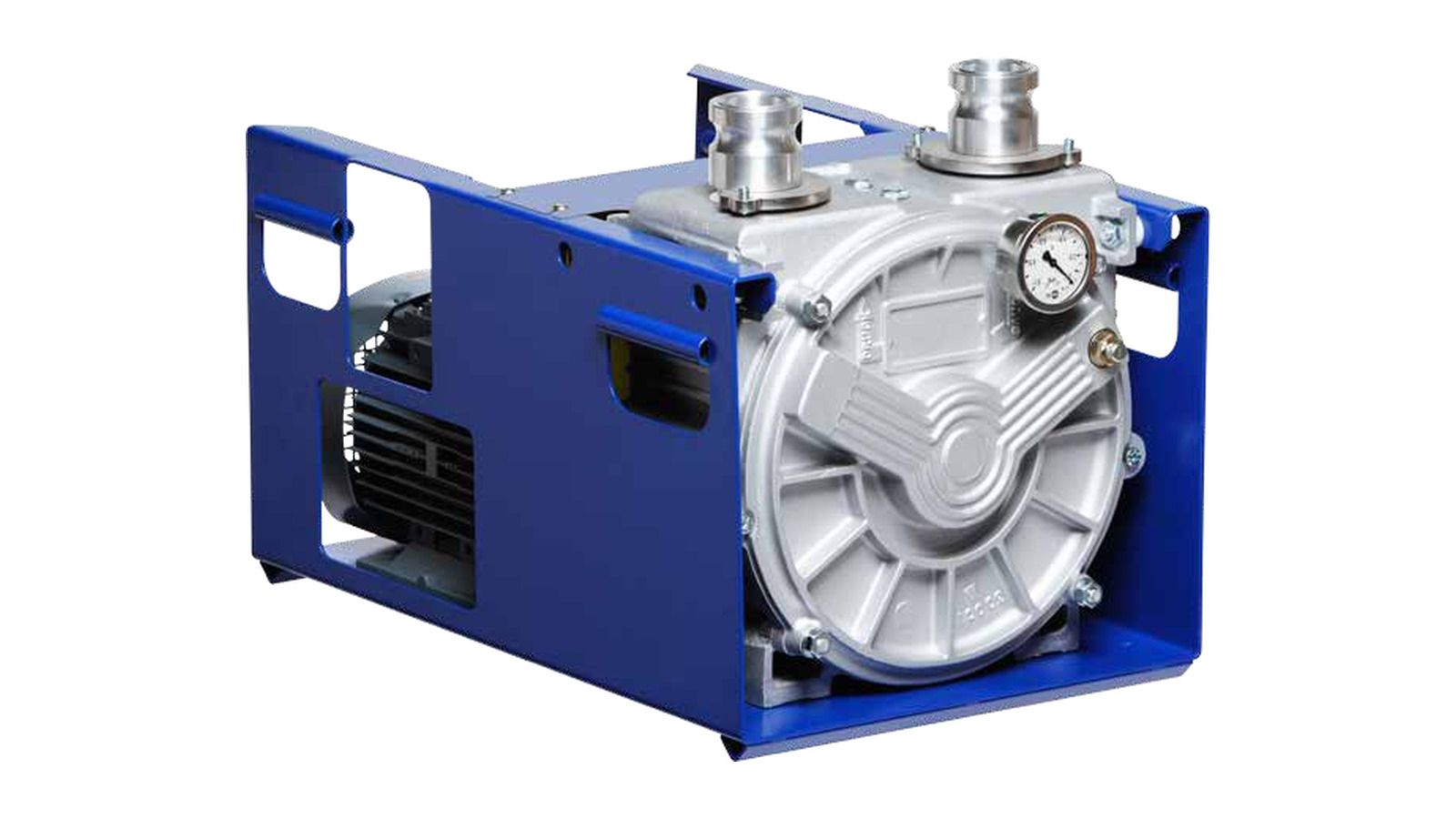
Key features
The medium only touches the hose. There is no mechanical seal and no valve for grit or chemistry to attack.
Crane rates the dry suction height at 9.5 mWs on water with no additional accessories, so it lifts from a sump or a tanker.
T300 takes a 3.6 kW electric, 3.4 kW petrol or 3.5 kW diesel drive. The petrol and diesel builds need no site power.
Contaminated and viscous media go through without the screening a centrifugal would need.
Aluminium, stainless steel 1.4571, electrically-conductive polypropylene or brass, matched to the medium.
59 to 76 kg on a portable base frame, which is a two-person lift rather than a crane job.
About the Crane ELRO Series T
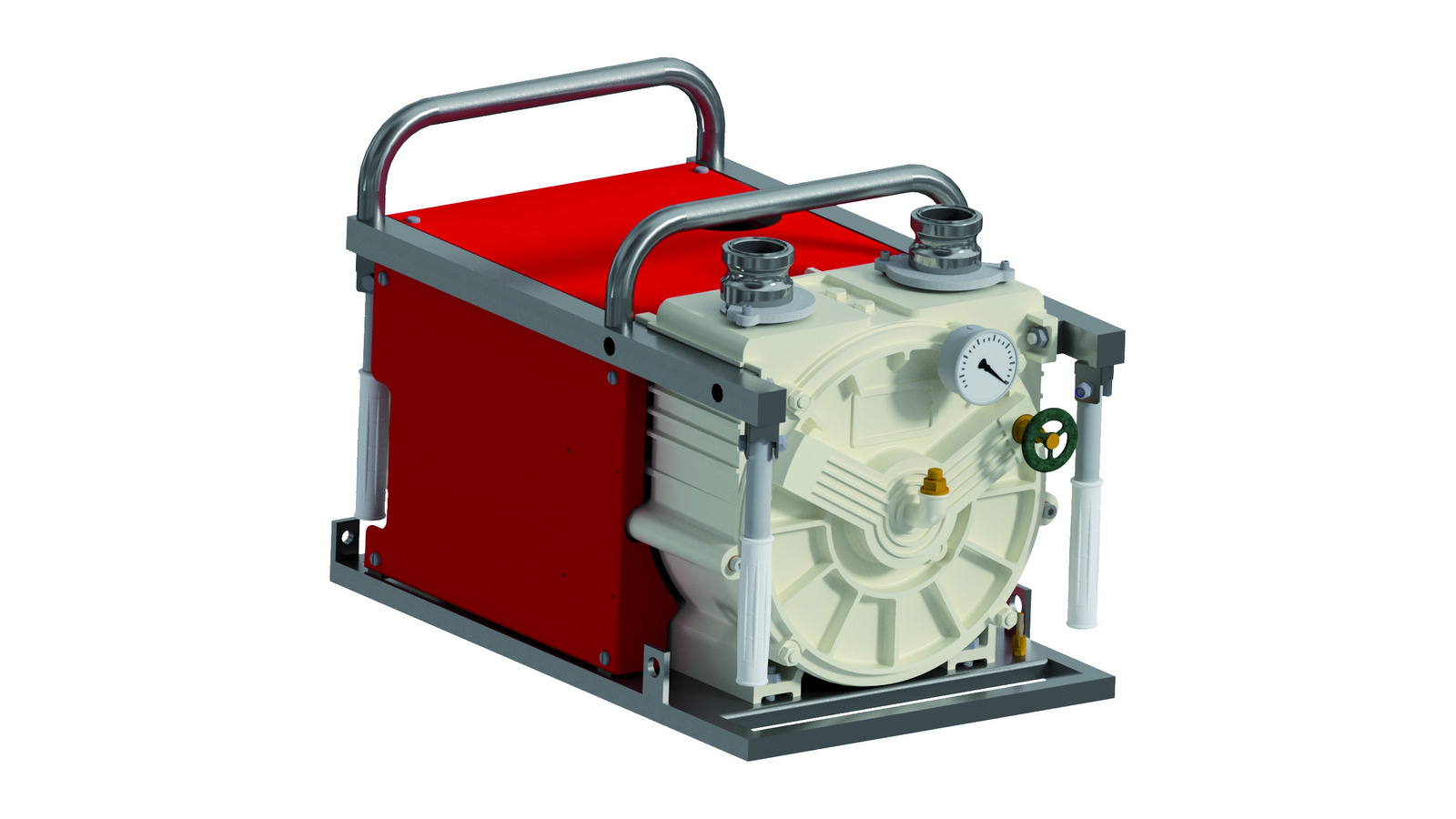
The Series T is the ELRO you specify when the pump has to travel. Tank cleaning, plant hire, docks and truck-mounted work are the duties Crane lists for it, and they share a problem: the medium is contaminated, the site has no clean power, and nobody wants to strip a seal afterwards.
Two sizes cover it. The T150 is electric only, 1.5 kW on single-phase 230 V, and reaches 9 m³/h at 1.0 bar. The T300 reaches 18 m³/h at 1.5 bar and comes as a 3.6 kW three-phase electric, a 3.4 kW petrol or a 3.5 kW diesel.
The ceiling is the thing to check first. 1.5 bar is not much discharge pressure, so if you need to push any distance uphill this is the wrong ELRO and the stationary Series IP and XP is the range to look at. Within its pressure band, though, the Series T takes media that would finish an impeller.
How the ELRO Series T works
A rotor presses the hose flat against the pump body and carries the trapped volume round to the discharge. The hose recovers behind the shoe, and that recovery draws the next charge in. An integrated vacuum system holds the flow rate constant.
Because nothing rotates in the medium, grit does not wear the pump the way it wears an impeller, and there is no mechanical seal to lose on a dry run. What does wear is the hose, and that is a scheduled replacement.
Specifications
| Types | T150E, T300E, T300B, T300D | |
|---|---|---|
| Flow rate | T150E 9 m³/h; T300E, T300B and T300D 18 m³/h | |
| Pumping pressure | T150E 1.0 bar; T300E, T300B and T300D 1.5 bar | maximum |
| Dry suction height | max. 9.5 mWs | based on water, no additional accessories |
| Max. solid size | ≤ 12 mm | |
| Drive | T150E electric 1.5 kW/1400 rpm; T300E electric 3.6 kW/2920 rpm; T300B petrol 3.4 kW/3600 rpm; T300D diesel 3.5 kW/3600 rpm | |
| Power supply | T150E single-phase 230 V; T300E three-phase 400 V | |
| Weight | T150E 64 kg; T300E 70 kg; T300B 59 kg; T300D 76 kg | |
| Hose material | CSM (Hypalon), NBR, NR | |
| Connection material | Aluminium, stainless steel 1.4571, electrically-conductive polypropylene, brass | |
| Temperature range | -20 °C to +80 °C | |
| Protection class | IP54 | electric variants |
| Compliance | Machinery Directive 2006/42/EC, EN ISO 12100, EN ISO 13857, EN 809, RoHS 2011/65/EU |
Documents & downloads
Related pumps
View all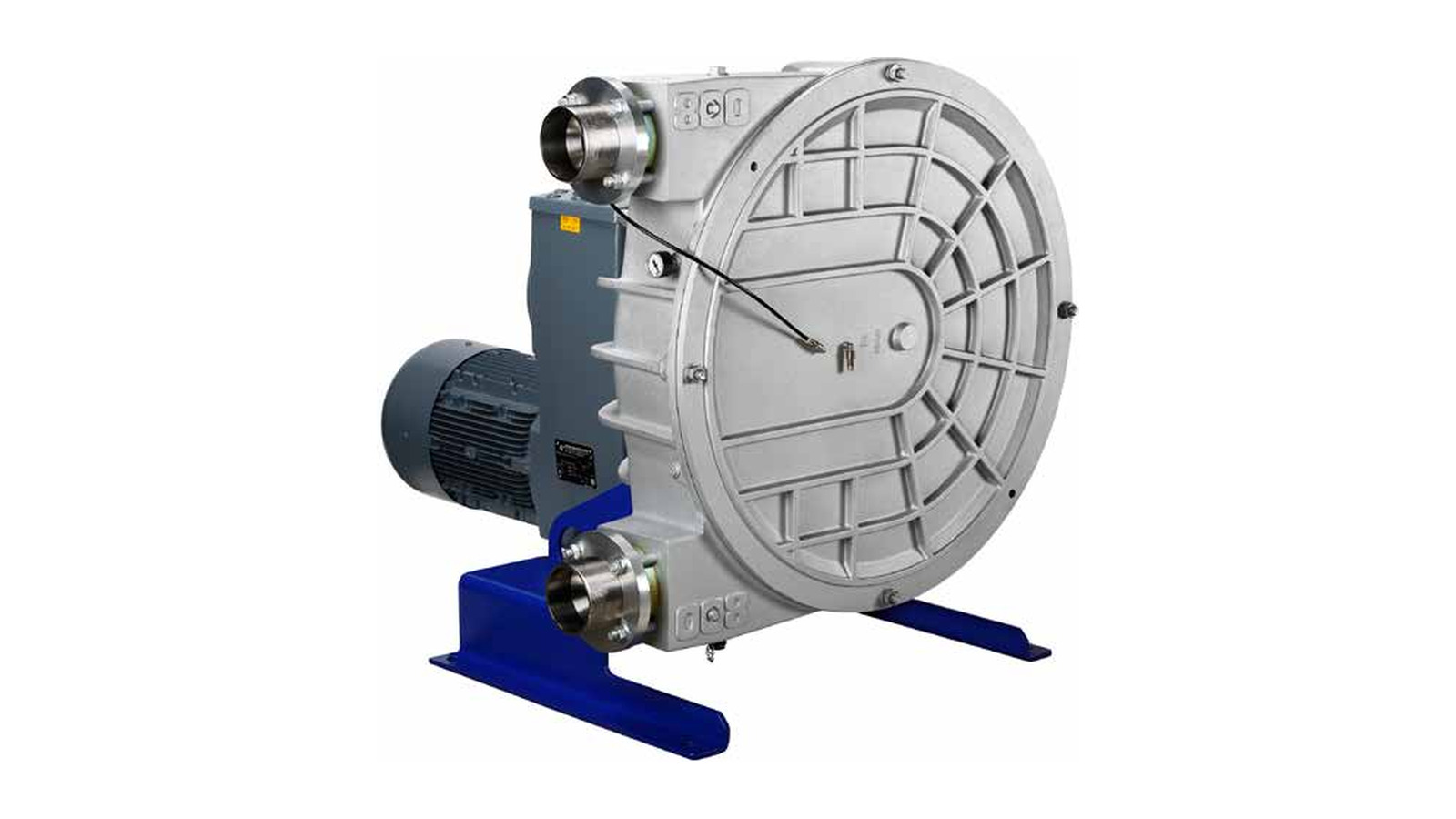
Frequently asked
What flow rate does the ELRO Series T deliver?
The T300 reaches 18 m³/h with an electric, petrol or diesel drive. The smaller T150 is electric only and reaches 9 m³/h. Both are rated on Crane's datasheet.
Can the ELRO Series T run dry?
There is no mechanical seal to lose, so a dry run does not fail the pump the way it fails a lobe or centrifugal. It still works and heats the hose, so treat it as tolerance rather than a duty cycle.
What solids can the Series T pass?
Crane rates the maximum solid size at 12 mm across all four types, which covers the contaminated media the pump is built for.
Does the ELRO Series T need site power?
Not on the T300B or T300D. Those are petrol and diesel builds. The T150E runs on single-phase 230 V and the T300E on three-phase 400 V.