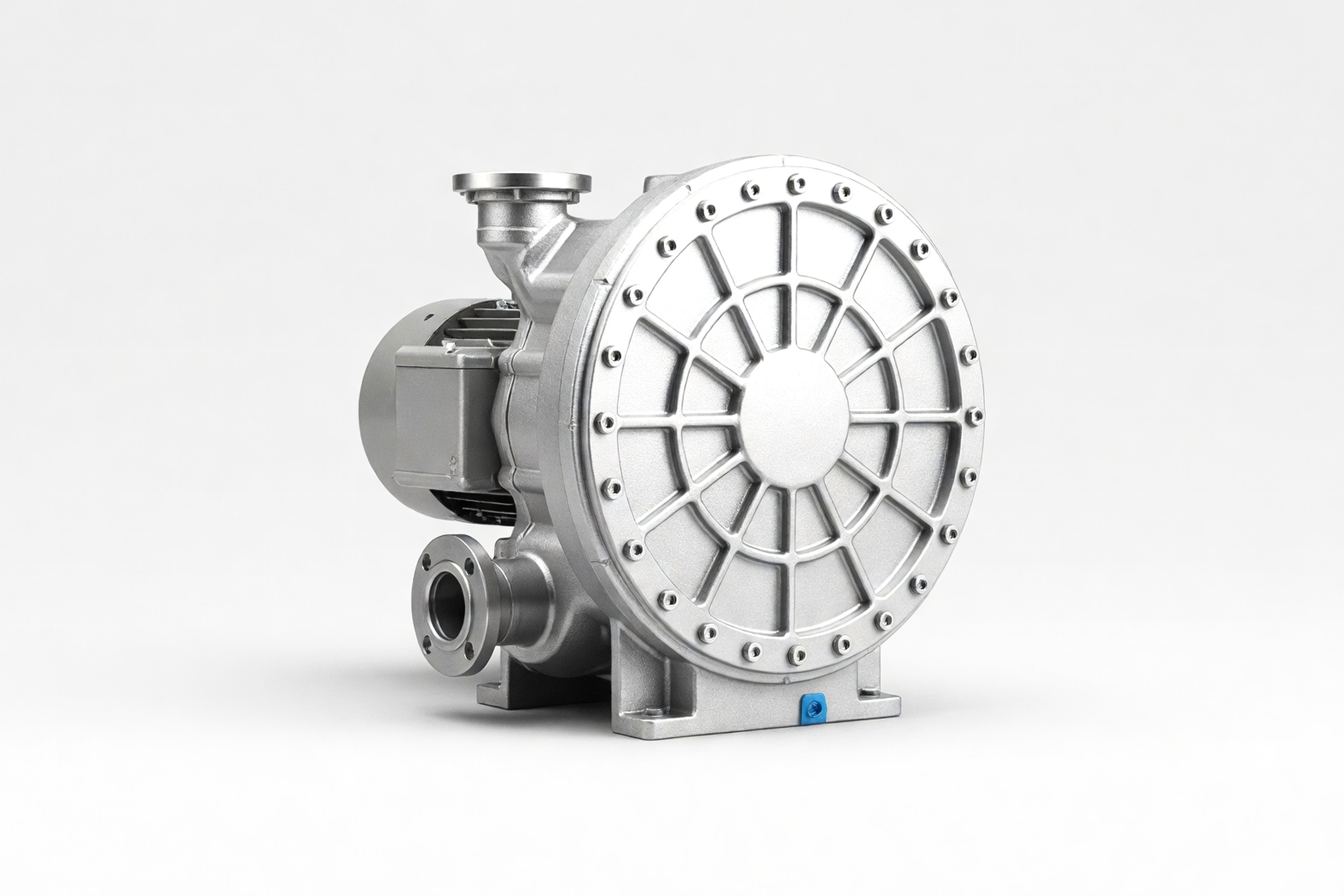
How a peristaltic pump works
A shoe or roller on the rotor presses the hose flat against the pump body. As the rotor turns, that occlusion travels along the hose and carries the trapped volume to the discharge. Behind it the hose recovers its shape, and the recovery is what draws the next charge in. The mechanism in detail.
It is positive displacement, so each turn moves a fixed volume whatever the discharge pressure is doing. Nothing rotates in the medium and nothing passes a tight clearance, which is why grit does not wear the pump the way it wears an impeller.
When to choose a peristaltic pump
Choose a peristaltic when the medium attacks the wetted parts of the obvious alternatives: abrasive slurry, aggressive acid or alkali, or product that has to arrive unsheared. It is also the answer when the duty runs dry between batches.
- Abrasive slurry such as ceramic slip, grit and drilling mud, which eats impellers and rotors
- Acids and alkalis, where on another pump type the seal is the thing that fails first
- Shear-sensitive product that has to reach the outlet intact
- Duties that run dry between batches, because there is no mechanical seal to lose
- Lifts from a sump or a road tanker, where the pump has to prime itself
- Mobile and site work, on the engine-driven and hydraulically driven builds
- Clean, thin water at high flow, where a centrifugal is far cheaper to buy and to run
- High flow and high pressure together, because the hose sets the ceiling
- Installations where you cannot get at the pump to change a hose
- A model you have already specified and just need shipped, where a merchant will beat us on price and we add nothing
Key features & trade-offs
The medium only ever touches the bore of the hose. There is no mechanical seal and no valve to fail or to leak.
The failure that takes out a lobe or centrifugal pump on a dry run does not apply, because there is no seal needing liquid to lubricate it.
The Crane ELRO range lifts 9.5 m dry with no additional accessories, so it will empty a sump or a tanker from above.
A fixed volume per turn, and it reverses when you reverse the drive, which is useful for clearing a line.
It wears and gets changed on a schedule. That is the running cost of a peristaltic, and it is the number to budget for.
Occlusion is discrete, so the discharge pulses and may want a damper. The hose, not the drive, sets the pressure ceiling.
Pumps we supply
View all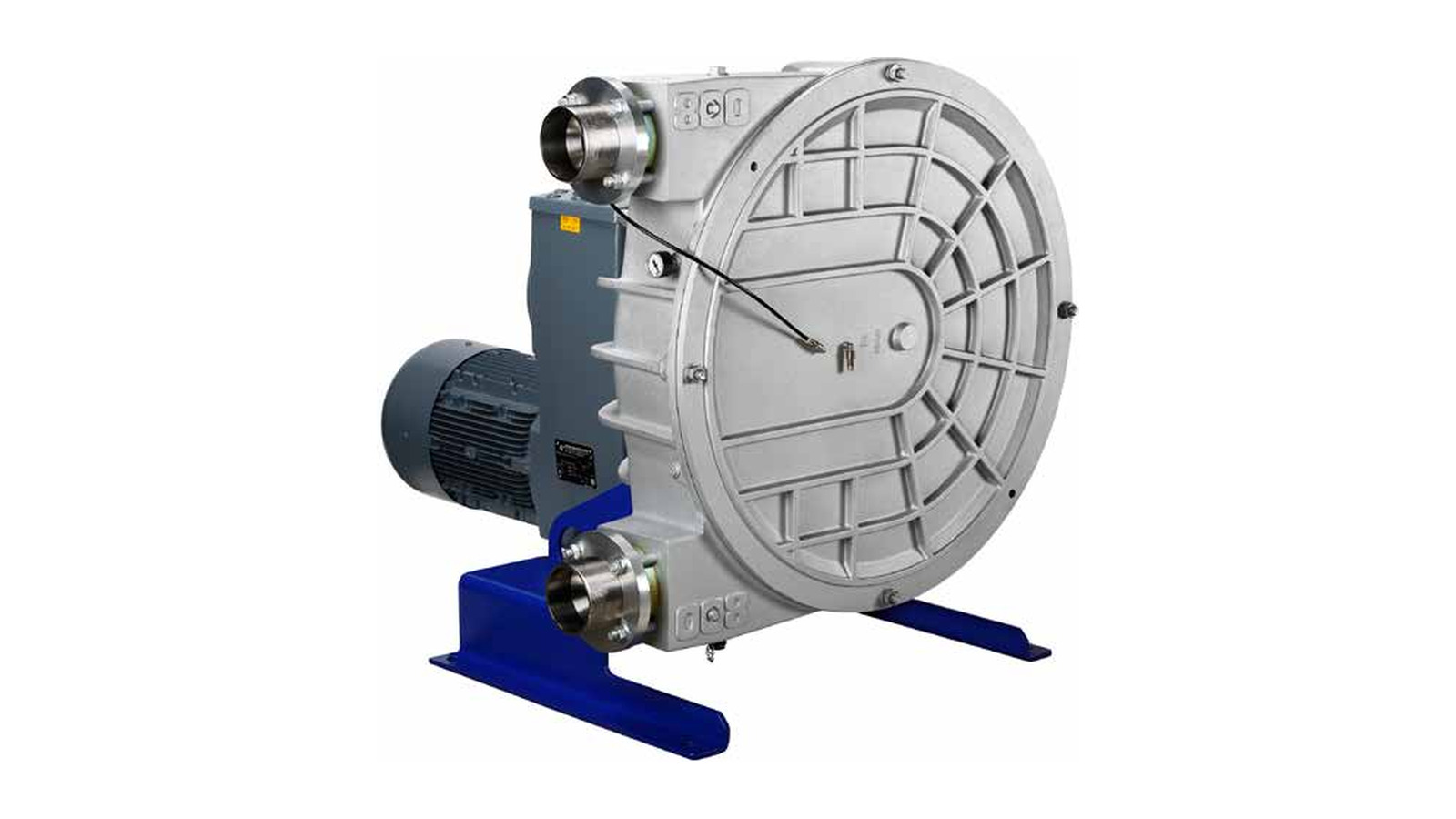
Crane's stationary hose pumps for abrasive and aggressive process duty, in eight sizes from 15 to 91 mm bore.
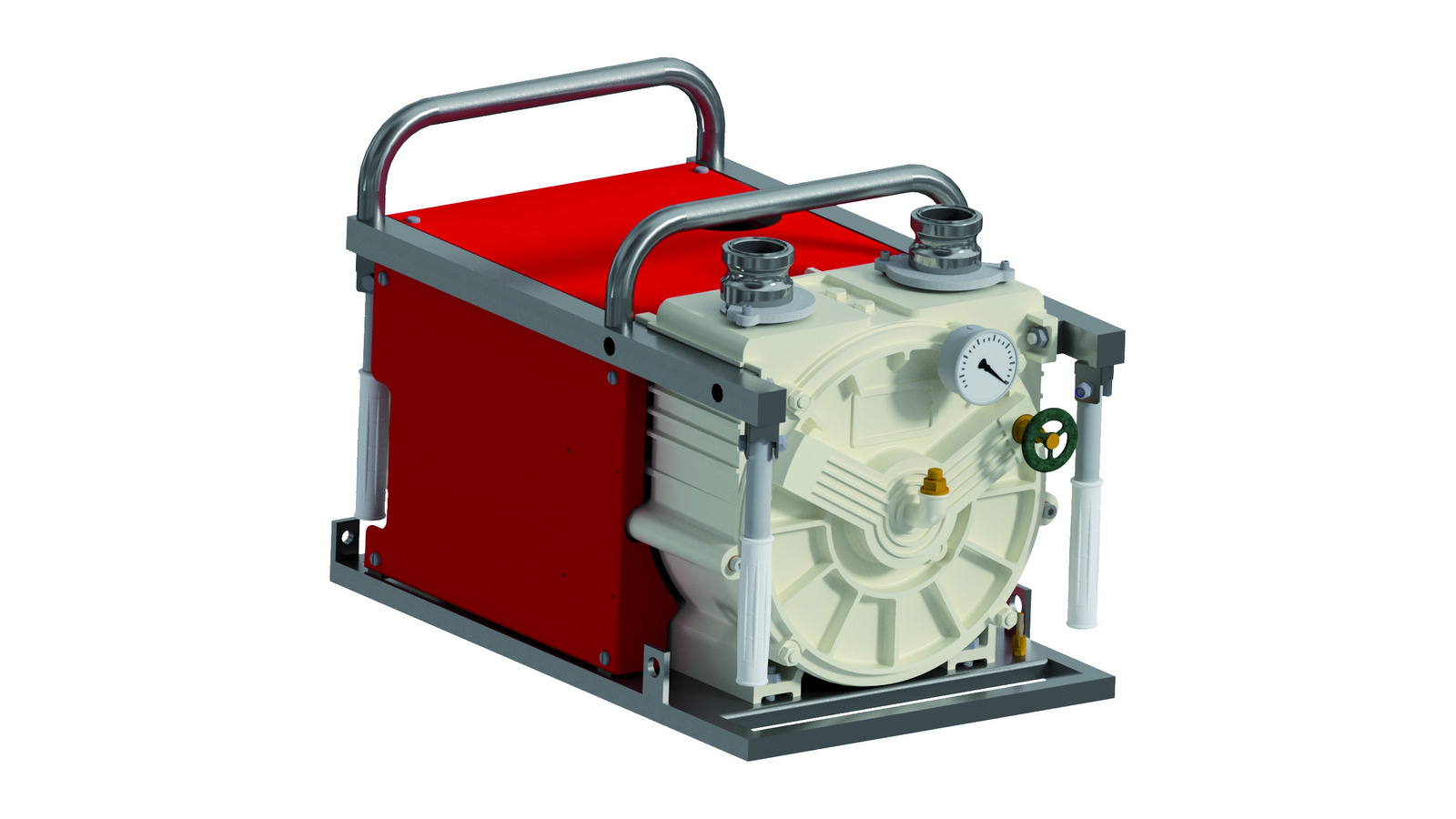
Crane's mobile peristaltic pump in six drive types, including ATEX and DIN 14427 fire-service builds.
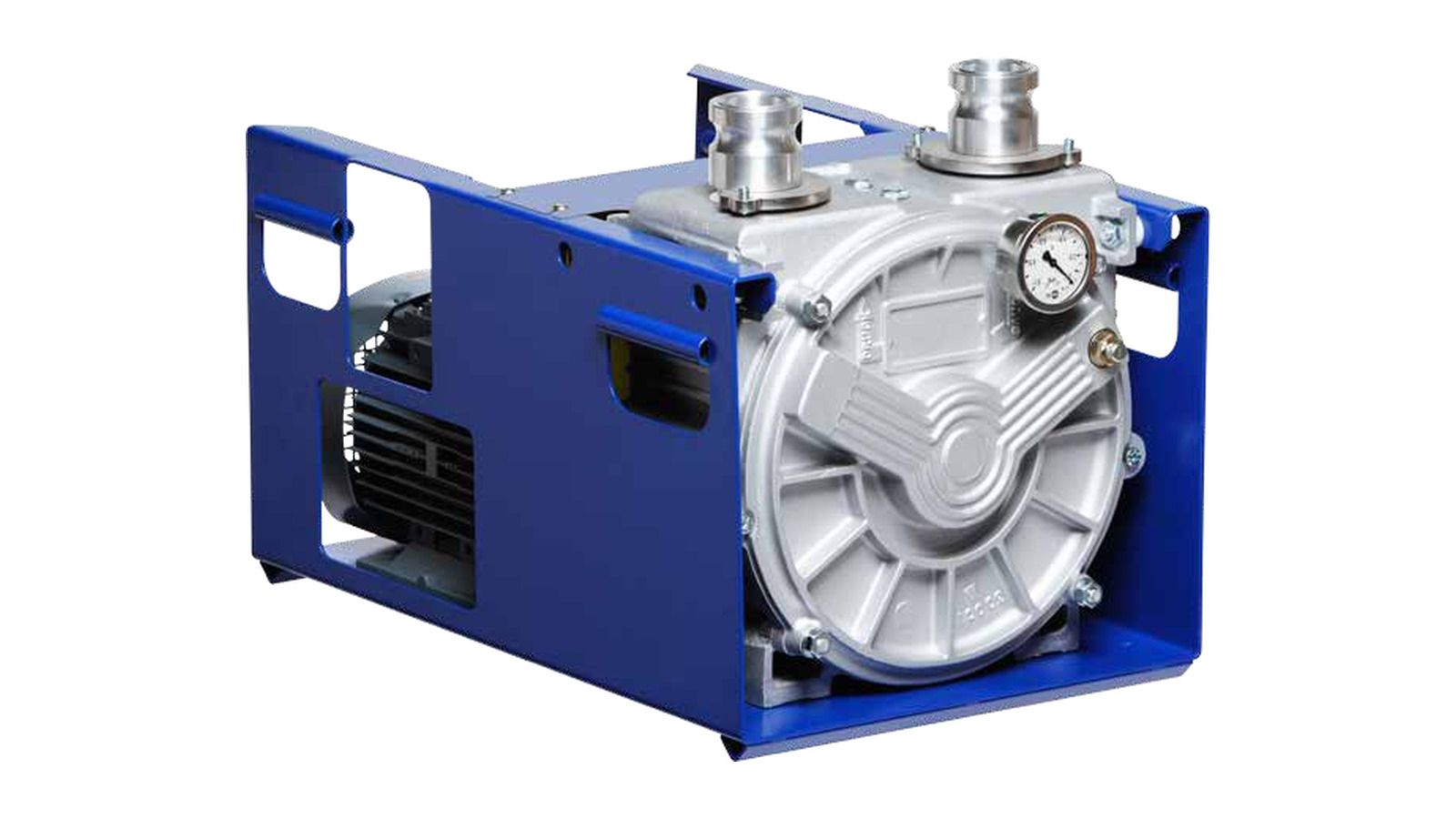
Crane's mobile peristaltic pump on a portable frame, to 18 m³/h, with an electric, petrol or diesel drive.
How to size and spec a peristaltic pump
Send us four things and we will specify it: the duty point, meaning flow and discharge pressure; the medium at its worst case for abrasion and chemistry; the temperature; and whether it has to be mobile or stationary.
The hose compound is the decision that matters. It sets the chemical resistance, the temperature range and how long the hose lasts. Getting it wrong is the usual reason a peristaltic disappoints.
Frequently asked
What is a peristaltic pump used for?
It moves media that would destroy another pump type: abrasive slurry such as ceramic slip and grit, acids and alkalis, and shear-sensitive product. Because the medium only touches the hose, there is no seal or valve for the medium to attack.
How does a peristaltic pump work?
A shoe or roller on a rotor squeezes a flexible hose flat against the pump body. The occlusion travels along the hose, pushing the trapped volume to the discharge, and the hose springs back behind it to draw in the next charge.
Can a peristaltic pump run dry?
There is no mechanical seal to lose, so the failure mode that ends a lobe or centrifugal pump on a dry run does not apply. Running dry still works and heats the hose, so treat it as something the pump tolerates rather than something to design around.
What pressure can a peristaltic pump run at?
It depends on the hose, not the drive. Crane's stationary ELRO IP and XP pumps are coded in pressure bands running up to 10–13 bar, while the mobile Series T and Series M units are rated to 1.5–2 bar.
What is the difference between a peristaltic pump and a hose pump?
They are the same thing. "Hose pump" is the usual name for the larger industrial machines with a thick reinforced hose and a shoe, and "peristaltic" for the whole principle, including small tube pumps used in laboratories.